Lecsó: The Hungarian Pepper and Tomato Stew
Sweet peppers collapsed in lard with paprika and a smoked twist
Contents
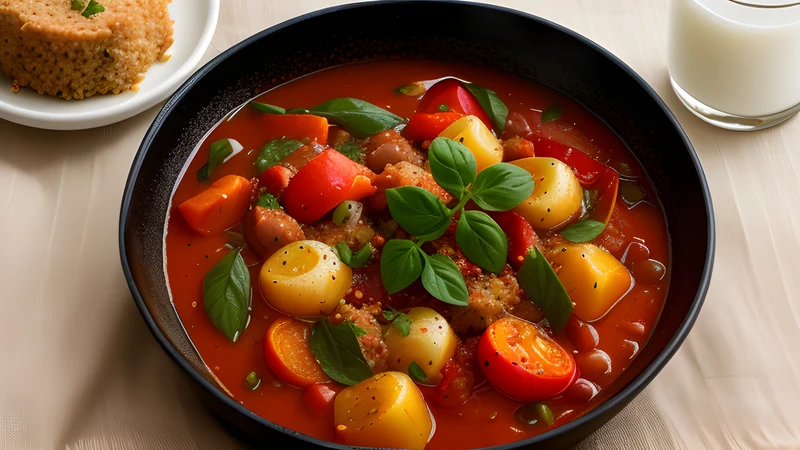
↓ Jump to recipeLecsó is what a Hungarian kitchen does with a glut. Late August, the market stalls in Budapest go pale yellow with pointed peppers, the tomatoes are cheap enough to buy by the crate, and every household with a spare afternoon starts rendering bacon fat and slicing onions. What comes out of the pan is a loose, sweet, paprika-red stew of collapsed peppers that you eat hot with bread, cold from the fridge, spooned over rice, or forgotten in the freezer until February.
My twist is small and it matters: I render smoked bacon into the fat before anything else goes in, and I hold back a little sweet paprika to stir in at the very end. The first gives the stew a bass note that plain lard cannot reach. The second restores the bright fruity top that thirty minutes of simmering quietly cooks away.
Lecsó: The Hungarian Pepper and Tomato Stew
Ingredients
- 80g smoked streaky bacon, cut into 5mm lardons
- 2 tbsp lard (or 2 tbsp sunflower oil)
- 2 medium onions (about 250g), halved and sliced 5mm thick
- 3 garlic cloves, sliced thinly
- 900g sweet pointed peppers (Hungarian TV paprika, or romano/ramiro), deseeded and cut into 2cm rings
- 1 tbsp sweet Hungarian paprika
- 0.5 tsp hot Hungarian paprika (optional)
- 600g ripe tomatoes, skinned and roughly chopped (or 1 x 400g tin plum tomatoes, chopped)
- 1 tsp fine sea salt, plus more to finish
- 0.5 tsp caster sugar
- 1 bay leaf
- 4 large eggs (for the tojásos lecsó variation)
- 200g smoked Hungarian sausage such as csabai or kolbász, sliced 1cm thick (for the kolbászos variation)
Method
- Put the bacon lardons and lard into a wide, heavy pan over a medium-low heat. Render for 6-8 minutes until the bacon is pale gold and swimming in fat. Do not let it crisp.
- Add the sliced onions and a pinch of the salt. Cook gently for 10-12 minutes, stirring often, until they are soft, sweet and translucent with no colour at the edges.
- Add the sliced garlic and cook for 60 seconds until fragrant.
- Slide the pan off the heat. Wait 20 seconds, then stir in the sweet paprika and the hot paprika if using. Stir for 15 seconds so it blooms in the warm fat without scorching.
- Return the pan to a medium heat immediately and tip in the pepper rings. Stir to coat every piece in the red fat. Cook for 5 minutes.
- Add the tomatoes, remaining salt, sugar and bay leaf. Bring to a simmer, then reduce the heat to low.
- Cover and cook for 30 minutes, stirring every 10 minutes, until the peppers are entirely soft and slumped and the tomatoes have broken into a loose red sauce. Uncover for the last 10 minutes if it looks watery.
- Taste and adjust the salt. Remove the bay leaf.
- For tojásos lecsó: beat the eggs with a pinch of salt, pour into the hot lecsó and stir slowly over a low heat for 90 seconds until just set in soft curds. Serve at once.
- For kolbászos lecsó: add the sliced sausage along with the tomatoes at step 6 so it perfumes the whole pan.
- Serve hot or warm with fresh white bread, or cold the next day.
What lecsó actually is
The word comes from a Slavic root shared with Serbian and Romanian dishes of the same family, and the recipe travels the whole Pannonian basin under different names. Serbia has đuveč and its bottled cousin ajvar; Romania has zacuscă; the Basques make piperade with almost identical logic at the other end of the continent. Wherever peppers grow in quantity and the harvest lands all at once, someone works out that fat, onion and time turn them into something that keeps.
The Hungarian version was fixed in place by two things. Peppers arrived through the Ottoman occupation in the sixteenth and seventeenth centuries and were treated at first as ornamental curiosities in aristocratic gardens. It took until the nineteenth century for peasant cooks in the south, around Szeged and Kalocsa, to grind the dried pods into the ground paprika that now defines the entire cuisine. The fresh peppers stayed too, and the variety that matters for lecsó is the one Hungarians call TV paprika — tölteni való, “for stuffing” — a thin-walled, pale yellow-green cone that is sweet, slightly waxy, and collapses into near-nothing when cooked. Bell peppers do a different job. They hold their shape, their walls stay meaty, and the finished dish tastes like a ratatouille that lost an argument.
If you cannot find TV paprika, romano or ramiro peppers are the closest supermarket stand-in: thin-walled, sweet, and willing to fall apart. Turkish and Middle Eastern grocers often carry çarliston peppers, which are essentially the same thing under a different flag.
The one rule about paprika
Paprika burns. This is the single fact that separates good Hungarian cooking from a pan of red-brown bitterness, and it is why step four of the method reads the way it does.
Ground paprika is roughly 10% sugar by weight, and it carries a lot of fine particulate that has already been dried and toasted once. Drop it into fat at frying temperature and the sugars caramelise, then scorch, in under fifteen seconds. The flavour goes from sweet and fruity to acrid, and there is no rescuing it — no amount of tomato or sugar or salt will cover a scorched paprika. So you take the pan off the heat, let the fat drop below about 120°C, stir the powder through so every grain gets a coat of fat, and only then bring the heat back and add something wet.
The blooming step is doing real work. Paprika’s colour and much of its aroma sit in fat-soluble carotenoids, mainly capsanthin and capsorubin. Water pulls out very little of them; hot fat pulls out almost all of them. That is why a lecsó made by stirring paprika into the tomatoes at the end looks orange and tastes flat, while one made properly is deep brick red all the way through with fat pooling scarlet at the edges.
Buy Hungarian paprika if you can, in a tin rather than a jar, and use it within a year. The stuff that has been sitting in a warm cupboard in clear glass since 2019 is a red-brown powder that tastes of dust. Édesnemes (“noble sweet”) is the standard grade and the right choice here. Csípős or erős is the hot one, and half a teaspoon is plenty in a pan this size.
Method notes and what goes wrong
Rendering the bacon. Start it in a cold pan with the lard. Bacon dropped into hot fat seizes, the outside sets before the interior fat has a chance to melt out, and you end up with chewy lardons and a fat that tastes of very little. From cold, over eight minutes, the fat runs out gently and takes the smoke with it. Stop when the lardons are pale gold and still soft. If they crisp, they will be leather by the end of the stew.
The onions. Twelve minutes feels long. It is not long enough by half if your heat is too low, and it is far too long if your heat is too high. You want them slumped and glassy with zero browning — colour here adds a caramel note that fights the fresh sweetness of the peppers. Salt them early; it draws water out and speeds the collapse.
The tomatoes. Fresh ones, skinned, in August. Tinned plum tomatoes the other eleven months of the year, and no apology needed — they are picked riper than anything you can buy loose in a British supermarket in November. Skip passata, which is too smooth and turns the whole thing into a sauce with peppers in it. You want visible tomato flesh that dissolves at its own pace.
The texture. Lecsó is meant to be loose and spoonable, with the peppers holding just enough structure to be identifiable. If yours is watery at the thirty-minute mark, take the lid off and let it reduce for ten. If it is dry and jammy, you have cooked it too hard and the pectin has set. A splash of water and a lower heat will loosen it, though it will never be quite right again.
The seasoning at the end. Taste it hot. Peppers and tomatoes both need more salt than you think, and a stew this sweet takes a surprising amount before it snaps into focus. The half-teaspoon of sugar is insurance against underripe tomatoes; if yours were genuinely good, leave it out.
The variations, which are the point
Plain lecsó is a side dish. Hungarians eat it alongside meat, or as a base under a fried egg, or turned into one of the named versions that are meals in their own right.
Tojásos lecsó — eggs stirred through at the end — is the weeknight default. The trick is to treat it like a slow scramble: low heat, constant motion, off the flame while the eggs still look slightly underdone, because carry-over will finish them. Ninety seconds is the whole window. Overcook them and you get grey rubber suspended in red.
Kolbászos lecsó uses smoked sausage, and this is the version I make most. Csabai from Békéscsaba is the classic, heavy on paprika and garlic; debreceni is milder. Add it early so its fat renders into the stew rather than sitting on top. A chorizo is a defensible substitute, though it drags the dish somewhere Spanish.
Rizses lecsó stirs in cooked rice to make it stretch, which is exactly the kind of thing you do when a crate of peppers cost less than the bread you are eating it with.
You will also find lecsó used as a base rather than a dish — under a piece of pan-fried pork, folded into scrambled eggs, or as the starting point for a pörkölt if you happen to have both on the go. It sits in the same paprika-and-lard world as gulyásleves and töltött káposzta, and once you have the pepper-and-onion base in your hands you understand how the rest of the cuisine is built.
What to put beside it
The Hungarian table answers lecsó’s sweetness with sour things and starch. A bowl of it wants fresh white bread — a fehér kenyér with an open crumb, torn rather than sliced, used as a tool. Boiled potatoes tossed in parsley butter work if you are stretching it into a proper dinner. Rice is common in the south.
The pickles matter more than they look. Hungarians keep csemege uborka (sweet-sour gherkins) and savanyú káposzta (sauerkraut) on hand precisely for dishes like this, and a forkful of something sharp between mouthfuls resets the palate and makes the third spoonful taste like the first. A dollop of thick soured cream — tejföl, which is closer to crème fraîche than to anything sold as sour cream in Britain — does the same job with fat and lactic acid instead of vinegar.
If you want a glass of something, the local answer is a Kékfrankos from Sopron or Villány: light, high-acid red that cuts the lard without arguing with the paprika. A cold Hungarian lager is the honest weeknight version.
And if there is a small amount left in the pan and one egg in the fridge, that is tomorrow’s breakfast decided. Reheat it low, crack the egg in, cover, and give it four minutes until the white sets and the yolk is still running.
The case against
Lecsó is a seasonal dish that people cook year-round, and out of season it is a shadow. Peppers in a British February are Dutch, greenhouse-grown, watery and expensive, and they will not give you the concentrated sweetness the dish depends on. Tinned tomatoes carry the tomato side of things fine; nothing carries the pepper side. If you cannot get decent peppers, cook something else and wait.
It is also, honestly, a bit one-note if you eat a bowl of it plain. The sweetness has no acid to push against and no texture to interrupt it. That is what the bread is for, and the eggs, and the sausage, and the pickled things Hungarians put on the table beside it. A bowl of lecsó on its own is an ingredient pretending to be dinner.
Storage and making ahead
It keeps for five days in the fridge in a sealed container, and it improves for the first two — the paprika continues to bleed into the fat and the flavours settle. Eat it cold, straight from the tub, which is a genuinely good breakfast on bread with a little salt.
It freezes well for three months. Freeze it without the eggs; they turn to weeping sponge on thawing. Sausage freezes fine. Hungarian households traditionally preserve it in sterilised jars for winter, water-bathed at a full rolling boil for 30 minutes, and while I have done this it needs more care than I want to give a recipe I can make in an hour from a tin of tomatoes.
Reheat gently. High heat will split the fat out and, worse, take the paprika somewhere bitter that it has been avoiding all along.
Related Content