Lechon Kawali With a Blistered Crackling
Twice-cooked pork belly, boiled tender first, then fried until the skin shatters
Contents
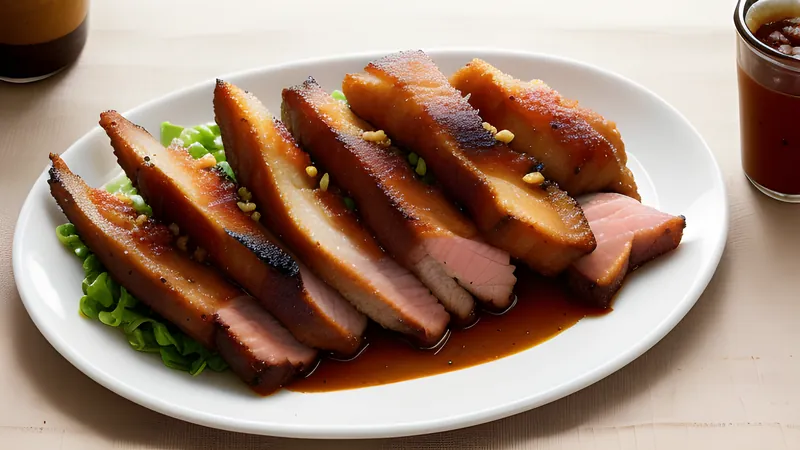
↓ Jump to recipeLechon kawali is the answer to a very specific craving: the shattering, blistered skin of a whole spit-roasted lechon, without needing a spit, a pit or a whole pig. The name gives the method away — kawali means wok or frying pan in Tagalog — and the dish exists because someone worked out that a piece of pork belly, boiled tender first and then fried twice, gets remarkably close to that same crackling in a fraction of the time and equipment.
Lechon Kawali With a Blistered Crackling
Ingredients
- 1.2kg pork belly, skin on, in one piece
- 2 litres water
- 1 onion, quartered
- 8 garlic cloves, crushed
- 3 bay leaves
- 1 tbsp whole black peppercorns
- 2 tbsp salt, plus more for finishing
- 1.5 litres vegetable oil, for deep-frying
- For the sawsawan (dipping sauce): 4 tbsp cane vinegar
- 2 garlic cloves, minced
- 1 red bird's-eye chilli, sliced
- 1 tsp soy sauce
- Pinch of sugar and black pepper
Method
- Place the pork belly in a large pot with the water, onion, garlic, bay leaves, peppercorns and salt.
- Bring to a simmer and cook gently for 45–50 minutes, until a skewer slides through the meat with almost no resistance but the skin hasn't fallen apart.
- Lift the belly out carefully, pat it completely dry with kitchen paper, then transfer to a wire rack and refrigerate uncovered for at least 2 hours, or overnight if you can plan ahead.
- This drying stage is what makes the skin blister properly, so don't skip it or rush it.
- Heat the oil in a deep, heavy pot to 160°C and lower the belly in carefully, frying for 8–10 minutes until pale gold and mostly cooked through.
- Lift out and rest for 5 minutes while you raise the oil to 190°C.
- Return the belly to the hotter oil and fry for a further 5–8 minutes, until the skin blisters, crackles loudly and turns deep golden brown all over.
- Drain on a wire rack, not paper, so steam escapes rather than softening the crackling from underneath, then rest for 5 minutes before chopping into pieces.
- Mix the sawsawan ingredients together and serve alongside for dipping.
Whole-pig food, brought down to a home kitchen
Lechon — a whole pig, gutted, stuffed with lemongrass and seasoning, and turned slowly over charcoal for hours until the skin blisters into an almost lacquered crust — sits near the top of Filipino celebration food, the dish that shows up at Christmas, weddings and the biggest town fiestas because it takes real labour, space and often a specialist cook to pull off well. Most home cooks, and most restaurants serving a daily lunch crowd rather than a fiesta, don’t have a pit or a whole pig on hand, and lechon kawali developed as the practical answer: buy a manageable piece of belly, boil it until tender, then fry it hard enough that the skin does something close to what hours over charcoal does to a whole animal.
It isn’t a lesser version so much as a different tool for a different occasion — nobody fries a whole pig in a kawali, and nobody boils-then-fries meat for a hundred-guest fiesta lechon. The two dishes share a name and a target texture but serve genuinely different tables: lechon kawali is Tuesday-night food that happens to taste like a celebration.
What “kawali” tells you about who cooks this
The name itself carries a small class marker worth noticing: kawali is an everyday cooking vessel, the kind of wide, deep pan every Filipino kitchen already owns, in contrast to the specialised rotisserie equipment or dedicated pit a whole lechon needs. Calling the dish “lechon kawali” rather than just “fried pork belly” keeps the lechon association — the celebration, the crackling, the festive resonance — while being honest that it’s cooked in an ordinary pan by an ordinary cook. It’s food that borrows a special occasion’s flavour for a regular Tuesday, which is a large part of why it turns up on so many Filipino restaurant menus as an everyday order rather than something reserved for fiestas.
Street vendors and carinderias (small eateries) across the Philippines sell lechon kawali by the kilo, chopped to order and bagged up with a side of sawsawan, and it’s common to see whole bellies hanging pre-fried in a display case, ready to be reheated to order. That commercial version, cooked in huge batches in industrial fryers, is part of why lechon kawali reads as casual, everyday food in the Philippines even though the texture it delivers would count as a genuine achievement in most other cuisines.
Why the double cook works
The boiling stage does two jobs at once. It renders a substantial amount of fat out of the belly before frying even starts, which keeps the finished dish from being as heavy as it would be if you fried raw pork belly straight through, and it tenderises the meat fully so the frying stage only has to deal with the skin, not with cooking the interior from raw. A belly that goes into hot oil raw needs a much longer, gentler fry to cook through, by which point the skin has usually burnt before the meat’s ready; pre-boiling sidesteps that entirely.
The two-temperature fry exists because skin and meat want different things from the oil. The first, lower-temperature fry (around 160°C) finishes cooking the meat through and starts drying the skin without burning it. The second, much hotter fry (190°C or above) is purely about the skin: at that temperature, the moisture still trapped in the skin flashes into steam fast enough to blister and puff it dramatically, which is the difference between merely crisp skin and the loud, shattering crackling lechon kawali is actually judged on.
What can go wrong
The single most common failure is skin that fries hard but doesn’t blister — crisp in the sense of tough, not crisp in the sense of shattering. This almost always comes down to insufficient drying before frying. Any moisture left on the skin’s surface delays blistering and can also cause dangerous oil spatter, so pat the boiled belly bone-dry and then, ideally, refrigerate it uncovered for a few hours or overnight. That open-air chilling pulls further moisture out of the skin through evaporation, which is exactly the state you want it in before it meets hot oil.
The second failure is frying at one temperature the whole way through. A single, moderate fry either undercooks the skin’s blister or, if you push the temperature and time to compensate, dries and toughens the meat underneath before the skin is properly done. The two-stage approach — moderate heat to finish the meat, then a hard blast to blister the skin — solves both problems at once, and it’s worth using a thermometer rather than guessing, since the gap between 160°C and 190°C matters more than it sounds.
Draining on paper towel rather than a wire rack is a smaller but real mistake: the pork sitting flat on paper traps steam underneath, and that trapped steam will soften the crackling within minutes, undoing the entire second fry. A wire rack lets air circulate underneath and keeps the skin audibly crisp until it reaches the table.
Substitutions and variations
Pork belly is the standard cut, but some cooks use pork knuckle (pata) for a version with more connective tissue and a different, more gelatinous chew beneath the crackling — worth trying if you want something closer to crispy pata, a related but distinct dish built around the whole trotter rather than a flat piece of belly. A boneless belly is easier to slice cleanly after frying, though a belly with the rib bones still attached, cooked and then cut between the bones, gives you built-in portions with a bit more drama on the plate.
Air fryers get a reasonable approximation of the blister with far less oil, though the crackling won’t puff quite as dramatically as deep-frying achieves — boil and dry the belly exactly as described, then air-fry at the highest setting your machine allows, checking every few minutes since air fryer capacities and hot spots vary a lot between models.
Some regions serve lechon kawali with a thick, sweetish liver sauce rather than the sharp vinegar sawsawan given here — both are legitimate and it genuinely comes down to preference, so it’s worth making a small batch of each the first time you cook this to see which side of that divide you land on.
The vinegar dip does real work
Cane vinegar cut with garlic, chilli and a little soy sauce isn’t an afterthought here — it’s doing the same job the sharp orange or apple sauce does alongside roast pork in other cuisines, cutting through the fat with acidity so the richness doesn’t overwhelm the palate by the third or fourth piece. Filipino sawsawan varies from table to table and even from bottle to bottle, since cane vinegar’s sharpness differs by brand, so taste as you mix and adjust the sugar and chilli to balance whatever vinegar you’re using. Some households add a splash of calamansi juice alongside the vinegar for extra brightness, and others prefer their sawsawan without any sugar at all, leaning into the vinegar’s full sourness rather than rounding it off.
Skipping the dip and eating lechon kawali plain isn’t wrong, but it does change the dish considerably — the fat sits heavier on the palate without something acidic to interrupt it, which is exactly the problem the sawsawan was designed to solve.
Storage and reheating
Lechon kawali is a dish built around a specific, fleeting texture, so it’s genuinely best eaten within minutes of frying, while the crackling is still audibly crisp. If you have leftovers, refrigerate them for up to three days and reheat in a hot oven or air fryer rather than a microwave, which will turn the skin instantly soft and chewy rather than crisp. A hot oven at around 200°C for 10–15 minutes brings back a reasonable amount of crunch, though it won’t be quite as dramatic as fresh from the fryer.
Freezing the boiled, un-fried belly works well if you want to prep ahead — boil and dry it as described, then freeze for up to two months, thaw fully in the fridge, and fry fresh whenever you want it, which gives you nearly the same result as cooking it entirely from scratch that day.
Serve lechon kawali alongside other Filipino classics for a full spread: it pairs naturally with the peanut richness of kare-kare, and the tomato-forward braise in kaldereta gives the table some contrast if you’re serving several dishes at once.
Related Content