Leche Flan: The Steamed Custard With Twelve Yolks
Denser than crème caramel, and there's a reason for every yolk
Contents
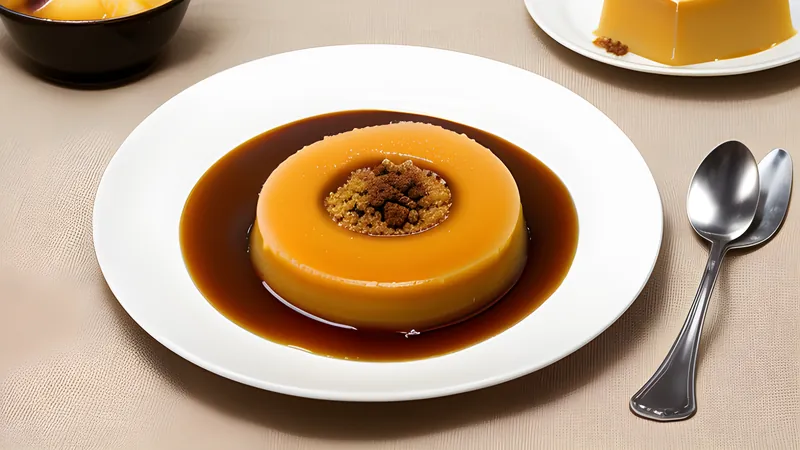
↓ Jump to recipeLeche flan is the dessert that most clearly shows the Manila-Acapulco galleon trade’s fingerprints on Filipino cooking. The name itself is Spanish — leche means milk, flan the custard — and the dish descends directly from the Spanish and, further back, Roman tradition of egg custards set over caramelised sugar, carried across the Pacific during roughly two and a half centuries of Spanish colonial rule that connected the Philippines to Mexico and, through it, to European cooking. What arrived in the Philippines as a fairly standard flan has, over generations, turned into something denser, richer and more distinctly Filipino than its Iberian or Mexican cousins, and the difference comes down almost entirely to one deliberate choice: leche flan uses only egg yolks.
Leche Flan: The Steamed Custard With Twelve Yolks
Ingredients
- 200g granulated sugar, for the caramel
- 2 tbsp water
- 12 egg yolks
- 1 tin (397g) condensed milk
- 1 tin (410ml) evaporated milk
- 1 tsp vanilla extract
- zest of 1 lime (optional)
Method
- Preheat a steamer with enough water to steam for 45 minutes.
- Make the caramel: combine sugar and water in a small pan over medium heat. Cook without stirring, swirling the pan occasionally, until it turns deep amber, about 8 minutes.
- Immediately pour the caramel into the base of a llanera (oval flan mould) or a round cake tin, tilting to coat the bottom evenly. Set aside to harden slightly.
- In a bowl, whisk the egg yolks gently — just enough to break them up, avoiding incorporating air bubbles.
- Stir in the condensed milk, evaporated milk, vanilla and lime zest if using, mixing until smooth but still avoiding vigorous whisking.
- Strain the mixture through a fine sieve into the caramel-lined mould to remove any stringy egg bits and ensure a silky texture.
- Cover the mould tightly with foil to prevent condensation dripping onto the custard's surface.
- Steam over gently simmering (not boiling) water for 35–45 minutes, until the custard is set but still has a slight wobble in the centre.
- Remove and let cool to room temperature, then refrigerate for at least 4 hours, ideally overnight.
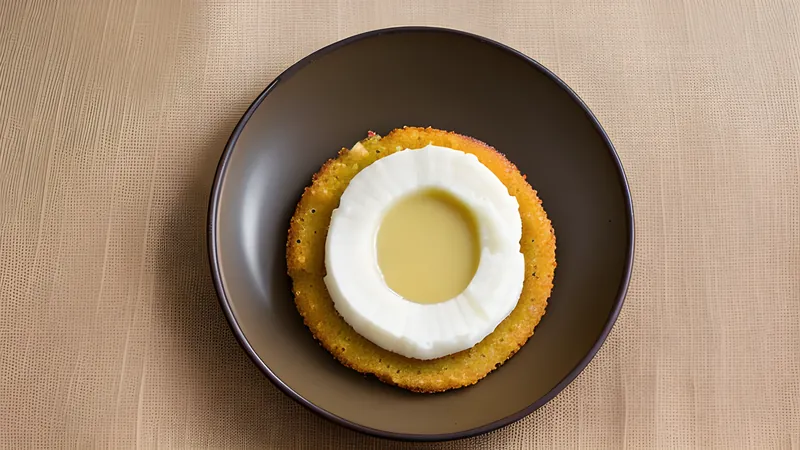
- To unmould, run a thin knife around the edge, place a serving plate on top, and invert in one confident motion. The caramel will run down as a sauce.
Why only yolks
French crème caramel and Spanish flan both typically use whole eggs, sometimes supplemented with extra yolks for richness, but built around a base of complete eggs including the whites. Leche flan strips the whites out entirely, traditionally calling for a dozen yolks per standard llanera mould — the oval tin that gives leche flan its recognisable shape — and no whites at all. Egg whites, once cooked, set into a looser, slightly springier structure; yolks alone, once cooked, set into something denser, silkier and more custard-like in the specific sense of clinging to a spoon rather than holding a clean, jelly-like shape the way a whites-heavy custard does. The result is a leche flan that’s noticeably heavier and richer per bite than a French crème caramel of the same size, closer in mouthfeel to a rich pastry cream than to a light, wobbly custard.
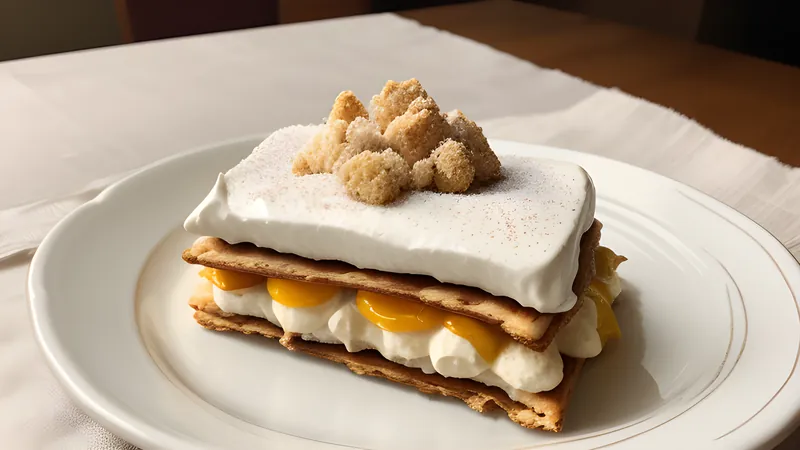
Twelve yolks is the traditional ratio for a reason beyond simple richness: it’s also a practical use for the yolks left over after Filipino kitchens make heavy use of egg whites elsewhere, particularly in meringue-based desserts like brazo de mercedes, which uses the whites from the same dozen eggs a leche flan might use the yolks from. The two desserts are traditionally made as a pair in many households for exactly this reason — nothing goes to waste, and a baking day that produces both uses every part of a dozen eggs between them.
Steamed on the stovetop
Where French crème caramel is typically baked in a bain-marie in the oven, leche flan is steamed on the stovetop, a method more consistent with the equipment available in most Filipino kitchens historically and still the default today even in households with a perfectly functional oven. Steaming gives more direct, controllable heat than an oven’s bain-marie, and it’s genuinely faster — thirty-five to forty-five minutes on the stove against closer to an hour in a low oven for a custard of the same size. The trade-off is that steaming demands more attention to the water’s temperature: it should simmer gently, never boil hard, since a rolling boil under the mould agitates the custard and can introduce small bubbles or an uneven, slightly curdled texture rather than the perfectly smooth set a good leche flan needs.
Covering the mould tightly with foil before steaming matters for the same reason — condensation forming on the underside of a steamer lid will drip onto an uncovered custard’s surface throughout the cook, leaving small pockmarks across what should be a glassy, unblemished top once unmoulded.
The caramel underneath
The burnt-sugar layer at the base of the mould — which becomes a glossy sauce running down the sides once the custard is inverted — needs to be cooked to a proper deep amber rather than stopped early at a pale gold. Underdone caramel tastes purely sweet, with none of the bitter, faintly smoky edge that balances the custard’s richness; that bitterness is doing real work, cutting against twelve yolks’ worth of fat so the dessert doesn’t read as flatly sweet from first bite to last. Watch it closely once it starts to colour, since sugar can go from perfect amber to burnt in under a minute, and a caramel pushed too far turns acrid rather than pleasantly bitter.
Work quickly once the caramel reaches colour — pour it into the mould immediately and tilt to coat the base before it hardens in the pan, since reheating a caramel that’s already set is fiddly and rarely gives as even a coating as pouring it while still liquid.
What can go wrong
The most common defect in a home leche flan is a custard riddled with tiny air bubbles, giving a slightly foamy, less silky texture than the dish is meant to have. This nearly always traces back to whisking the yolks too vigorously at the start — treat the initial mixing gently, just enough to break the yolks and combine them with the milks, and strain the mixture through a fine sieve afterward to catch both stray bubbles and the stringy chalazae that cling to raw yolks.
The second common issue is a custard that never fully sets, staying liquid at the centre even after the full cooking time. This usually means the steaming water was kept at too gentle a temperature throughout, or that the mould was too large relative to the recipe, spreading the custard thinner than the timing accounts for. Test doneness with a light touch to the centre — a properly set leche flan wobbles gently but doesn’t ripple like liquid.
Substitutions and variations
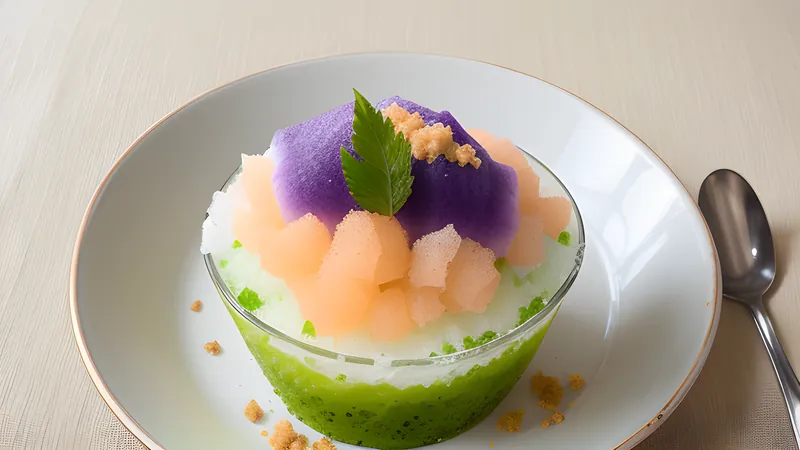
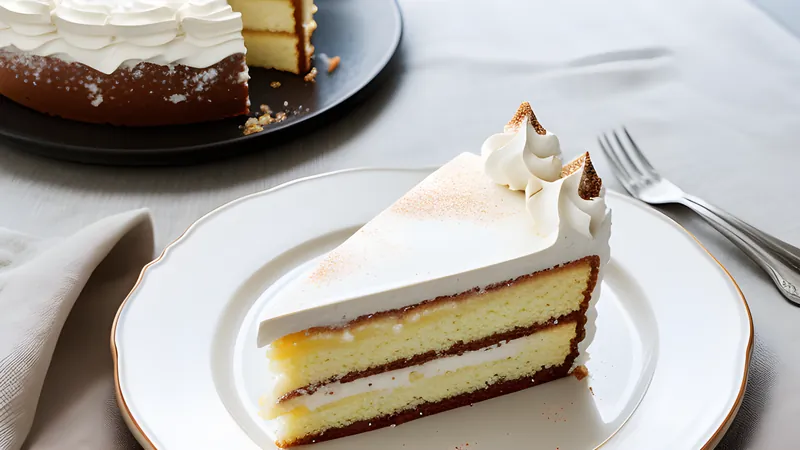
Some households add a spoonful of ube (purple yam) puree to the custard base for ube leche flan, a popular modern variant that tints the whole dessert violet without significantly changing its texture. Others fold pandan-infused milk into the base for a subtle grassy fragrance. A crossover dessert called leche flan cake layers the custard directly over a sponge cake before steaming or baking, unmoulding to reveal cake on top and custard, still bearing its caramel, underneath.
If you don’t have a llanera, any oven-safe round or oval dish that fits inside your steamer works — the traditional oval shape is about presentation and tradition rather than affecting the custard’s set.
Storage
Leche flan keeps for up to five days refrigerated, tightly covered, and it’s genuinely better made a day ahead — the custard needs a minimum of four hours’ chilling to fully firm up enough to unmould cleanly, and the caramel continues to soften into a proper pourable sauce as it sits against the warm custard overnight. It doesn’t freeze well; the texture turns grainy and slightly separated once thawed, so this is a dessert to make within the window you plan to eat it rather than to stock up on in advance.
Serve it alongside halo-halo at a fiesta dessert table, or after something buttery like ensaymada for a merienda spread that runs from bread to custard.
Fiesta food, quietly
Unlike a lot of the loud, garnish-heavy dishes that show up at Filipino gatherings, leche flan does its work quietly. It’s rarely the centrepiece anyone points to first, and it doesn’t come with the theatre of a platter poured over at the table — it sits at the end of the spread, already unmoulded, glossy and dark amber, waiting to be sliced. That understatement doesn’t mean it’s an afterthought. Leche flan is genuinely one of the more labour-intensive desserts in regular rotation, requiring careful caramel work, a gentle hand with the custard, and a minimum half-day of chilling before it’s ready, and most households only make it for genuine occasions — birthdays, Christmas, fiestas — rather than as a casual weeknight dessert. Its ubiquity at those gatherings says something about how central it’s become despite, or perhaps because of, the effort it demands: a dessert worth the wait rather than one thrown together at the last minute.
Egg yolks and household economy
The dozen-yolk ratio also reflects something practical about how Filipino kitchens have historically used eggs. Because whites so often get repurposed elsewhere — meringues, royal icing, egg white omelettes, or simply beaten into other batters — a household making leche flan regularly develops a rhythm where yolks and whites both find a use rather than either going to waste. This isn’t unique to Filipino cooking; French pâtisserie has similar pairings, like crème anglaise using yolks while a dacquoise nearby uses whites. But the specific pairing of leche flan and brazo de mercedes, both showing up at the same fiesta tables, made from opposite halves of the same eggs, is a distinctly Filipino baking habit, born as much from thrift as from flavour preference.
Judging the caramel by sound as well as sight
Experienced cooks often judge the caramel stage as much by sound and smell as by colour, since the visual difference between a perfect deep amber and a caramel one step away from burning can be surprisingly subtle, especially in a dim kitchen or a dark-bottomed pan. As sugar approaches the right point, the bubbling in the pan slows and deepens in pitch, and a faintly smoky, toasted aroma starts to rise from the pan — a sharper, more acrid smell means it’s gone too far. Swirl the pan gently rather than stirring with a spoon throughout the process; stirring encourages sugar crystals to form on the sides of the pan, which can seed the whole batch and turn it grainy rather than glassy-smooth.
A note on mould size
Using a mould too large for the twelve-yolk quantity spreads the custard thinner than intended, and a thinner custard sets faster but with a proportionally larger surface area exposed to the steaming heat, increasing the risk of a slightly rubbery texture at the edges by the time the centre finishes setting. A standard llanera, or a round tin roughly 20cm across, suits this quantity well; if you’re scaling the recipe up or down, keep the custard depth in the mould to around 3–4cm for the timing given here to hold reasonably accurately.
Leftover yolks from other baking, or a surplus after a big holiday cooking session, are a good excuse to make a batch even outside a specific celebration — the custard keeps well enough over its five days in the fridge that a batch made on a quiet Sunday will comfortably see you through a week of small servings.
Related Content