Leberkäse: The Bavarian Loaf That Is Neither Liver Nor Cheese
An emulsion baked in a tin, a dark blistered crust, and the best hot roll in Germany
Contents
↓ Jump to recipeLeberkäse contains no liver and no cheese. This is a fact that German food law goes out of its way to insist on: under the national guidelines a product sold as Leberkäse generally has to contain at least a small percentage of liver, and Bayerischer Leberkäse is specifically exempted and must contain none at all. Bavaria wrote itself an exception to a rule about its own dish, which tells you most of what you need to know about Bavaria.
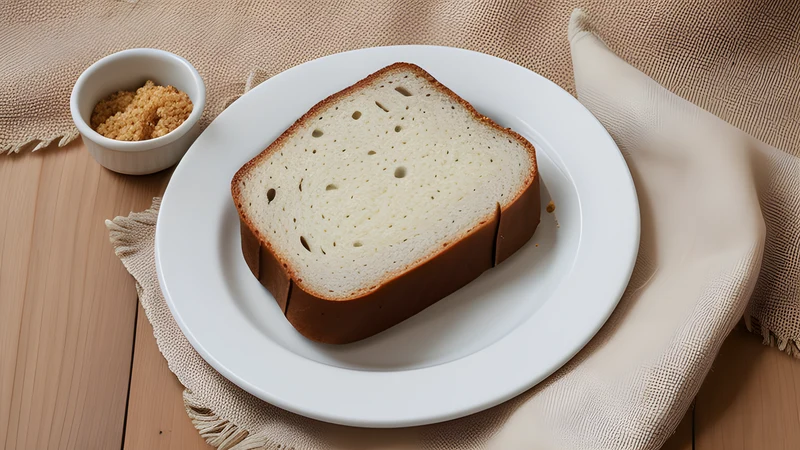
What it actually is: a fine emulsion of beef, pork and back fat, cured pink, packed into a loaf tin and baked until the top blisters into a crust the colour of a chestnut. It is sold by weight from a hot cabinet in every Bavarian butcher and most bakeries, sliced thick, and slid into a Semmel with a swipe of sweet mustard. That roll — the Leberkässemmel — is the single best thing you can eat standing on a German pavement, and it costs about three euros.
Leberkäse: The Bavarian Loaf That Is Neither Liver Nor Cheese
Ingredients
- 500 g beef chuck, trimmed and cut into 2 cm cubes
- 400 g pork shoulder, cut into 2 cm cubes
- 300 g pork back fat, cut into 2 cm cubes
- 22 g nitrite curing salt (Nitritpökelsalz, or Prague Powder #1 at 2.5 g/kg plus 18 g plain salt)
- 250 g crushed ice
- 2 onions, finely chopped
- 20 g unsalted butter
- 2 tsp dried marjoram
- 1 tsp ground mace
- 1 tsp ground white pepper
- 1/2 tsp ground ginger
- 1/4 tsp ground cardamom
- Freshly grated nutmeg, about 1/4 tsp
- Butter, for the tin
Method
- Melt the butter in a frying pan over medium-low heat and cook the onions for 18-20 minutes, stirring, until deeply browned and jammy. Spread on a plate and chill until completely cold.
- Mix the beef, pork, back fat and curing salt in a bowl. Spread on a tray and freeze for 45-60 minutes, until the edges are crunchy with ice and the centres still yield.
- Mince the chilled meat and fat through a 4 mm plate into a bowl sitting in ice. Return to the freezer for 20 minutes.
- In two batches, blitz the mince in a food processor with half the crushed ice each time for 90 seconds, until it becomes a smooth, glossy, sticky pink paste. Probe it: it must stay below 12°C. If it warms, stop and refreeze for 15 minutes before continuing.
- Fold the cold browned onions, marjoram, mace, white pepper, ginger, cardamom and nutmeg through the paste by hand, over ice, until evenly mixed.
- Fry a teaspoon of the mixture, cool it slightly and taste. Correct the seasoning now.
- Butter a 900 g loaf tin generously. Pack the mixture in, pressing firmly into the corners to drive out air, and smooth the top with a wet palm into a gentle dome.
- Score the top in a 2 cm diamond lattice, about 5 mm deep, with a wet knife. Rest the tin in the fridge for 30 minutes.
- Heat the oven to 160°C fan. Bake for 55-70 minutes, until a probe in the centre reads 72°C. Start checking at 50 minutes.
- Turn the oven to 200°C fan and bake for a further 10-15 minutes, until the top is dark brown, domed and blistered along the score lines.
- Rest in the tin for 15 minutes, then turn out onto a board. Cut into 1.5 cm slices and serve hot.
1776, a Palatine cook, and a word nobody can explain
The story that Bavaria tells is that Karl Theodor, Elector Palatine, inherited Bavaria in 1777 and brought his court and his cook from Mannheim to Munich, and that the recipe came with them. He is otherwise remembered in Munich for the Englischer Garten, which he ordered laid out in 1789, and for being deeply unpopular with everyone. The date gets repeated as 1776 in most accounts, and like every good origin story it is tidier than the record supports.
The name is genuinely unsettled and the arguments are entertaining. The most-cited explanation derives it from Laib — a loaf — and Kas, an Old Bavarian word for a pressed or moulded mass of anything, so the whole thing means roughly “loaf-block”, with the liver arriving by pure phonetic accident. A competing theory says it did once contain liver in the Palatinate and Bavaria simply dropped it. Both camps have dictionaries. Neither has a document.
The crust is the part people fight over. The domed, blistered top and the two dark ends are prized, and a Bavarian butcher will ask you whether you want a Randstück — an end piece — because it is a real question with a real answer. The score lines exist to make more of it: they open during baking and give the crust ridges and valleys, which is more surface, which is more Maillard.
The variants have got out of hand and Bavaria permits it. Käseleberkäse has cubes of Emmental through it, which makes the name half-true at last. Pizzaleberkäse has tomato and oregano and exists mostly for children. Pferdeleberkäse, made with horse, still turns up in a few Bavarian and Austrian butchers and is leaner and darker. The plain one, hot, in a roll, remains the point.
The pink, and why it needs nitrite
You cannot make this with plain salt. You can make something — a grey-brown baked meat paste that tastes of nothing in particular — and it will teach you exactly what the cure is doing.
Nitrite curing salt — Nitritpökelsalz in Germany, Prague Powder #1 or cure #1 elsewhere — is ordinary salt with roughly 0.4-0.5% sodium nitrite blended in, dyed pink so that nobody mistakes it for table salt. In the meat, the nitrite reacts with myoglobin to form nitrosomyoglobin, and when that hits the oven’s heat it converts into nitrosylhemochrome, a stable pink pigment that survives cooking indefinitely. That is the colour of every ham, frankfurter and Leberkäse you have ever eaten.
It does two more jobs, and they matter. It generates the specific savoury flavour that everyone recognises as “cured”, which no other ingredient produces. And it suppresses Clostridium botulinum, which is why cured meats sat in medieval larders without killing people. Buy it, weigh it, and respect the dose: 22 g of German NPS per 1.2 kg of meat is standard and correct, and doubling it is genuinely dangerous rather than merely salty. If you can only find Prague Powder #1, use 2.5 g of it per kilo of meat plus plain salt to bring the total to about 1.8% by weight.
Marjoram is the other non-negotiable. It is the herb that makes Leberkäse smell like Leberkäse, and dried works better than fresh here — drying concentrates the terpenes and the flavour survives an hour in an oven, which fresh marjoram does not.
The browned onions are my liberty. A butcher uses raw grated onion, and it gives sweetness and a faint bite. Twenty minutes in butter until the onions collapse to a jam gives you the same sweetness with a layer of caramelised savouriness underneath, and it makes a home version taste like the good butcher’s rather than the supermarket’s. They must be completely cold before they go near the paste, for reasons the next section explains.
The emulsion, and the 12°C ceiling
Leberkäse is a Brät, the same fine emulsion family as a frankfurter or a Weisswurst, and the physics are identical.
Salt dissolves myosin out of the muscle fibres and into solution. Chopping the meat very fine with ice present distributes that dissolved protein everywhere, and it coats each droplet of fat, holding it suspended. Bake it and the protein sets into a gel with all that fat locked inside, which is why a good slice is springy, moist and uniform rather than crumbly.
Back fat begins to smear at about 15°C. Once it smears it stops being droplets and starts being grease, and no protein can hold it. Bake a broken emulsion and the fat runs out as a pool in the bottom of the tin, leaving a dry, mealy, cracked loaf. This failure is total and it is irreversible, and it happens in the food processor rather than the oven.
So: the ice is an ingredient, 250 g of it, which becomes the water in the finished loaf and simultaneously absorbs the heat that the blade puts in. The meat goes to the freezer twice. The bowl sits in ice. The onions go in cold. And you probe the paste — 12°C is where I stop, no argument, and everything goes back in the freezer for fifteen minutes if it climbs. The whole recipe is a fight against a blade that wants to warm the thing it is cutting.
The paste is ready when it is smooth and glossy and clings to an upturned spoon for a beat before it drops. Ninety seconds a batch. Push past two minutes and the gel goes rubbery and bouncy.
The tin, the meat, and the machine
The tin decides the crust, and a 900 g loaf tin is the domestic answer to a butcher’s long shallow Leberkäsform. The professional shape is wider and flatter than a bread tin for a reason: crust is surface, and a butcher wants as much of it per kilo as he can get. If you own a small roasting tin, use it — a loaf 5 cm deep and wide gives a far better ratio than a tall narrow one, and it bakes in about 45 minutes.
Butter the tin properly, into the corners. A non-stick tin still needs it, because the emulsion grips as its protein sets and a loaf that tears coming out has lost its crust to the tin. Do not line it with paper: the sides need to touch hot metal to brown, and paper insulates them into pale, damp walls.
The meat. Beef chuck brings colour, myosin and a deeper flavour than pork alone; it is the reason a Leberkäse tastes beefy under the marjoram. Pork shoulder brings sweetness and a softer set. Back fat has to be back fat — hard, dense subcutaneous fat from along the spine, which melts at a higher temperature than the soft flare fat from around the kidneys and is therefore far more forgiving in the processor. Ask the butcher for Rückenspeck or hard back fat and buy more than you need; it freezes indefinitely.
The machine. A domestic food processor is honestly marginal for this and it is worth knowing that before you start. It has a small bowl, a blade that runs fast, and no cooling, which is the opposite of the bowl chopper a butcher uses. The workarounds are the ones in the method: mince first through a 4 mm plate so the processor is refining rather than cutting, work in two batches so the bowl is never overloaded, and use ice as a heat sink. If your processor is under about 800 watts, do three batches.
A stand mixer with the paddle will not make an emulsion. It will make a coarse, well-mixed meat mixture, which bakes into something perfectly pleasant and closer to a terrine than to Leberkäse. That is a real option if the equipment argument has defeated you, and nobody at your table will complain.
What goes wrong
A pool of fat in the tin and a crumbly loaf. The emulsion broke. Temperature, every time.
Grey inside. No nitrite, or nitrite that has been sitting open for years.
Dry and tight. Overbaked. 72°C in the centre is the target and 78°C is a different, worse loaf; the gel squeezes out its water above that. Use a probe, start checking at 50 minutes, and accept that the timing depends entirely on your tin.
A pale, flat top. The final 200°C blast was skipped, or the top was smoothed flat rather than domed. The dome puts the centre closer to the element and gives you a crust that curves.
Big holes through the slice. Air pockets from packing loosely. Press it into the corners hard and rap the tin on the worktop twice before scoring.
Cracks across the crust. The loaf went into the oven straight from mixing, still soft. The 30-minute rest in the fridge firms the surface so the score lines open cleanly rather than tearing.
Eating it, which is where it gets serious
Hot from the oven, in a crusty white roll, with sweet Bavarian mustard: this is the version, and everything else is a variation on it. A Laugenbrezel split and filled is the same idea with better salt.
Cold leftovers do the second great thing. Cut 1.5 cm slices, lay them in a dry frying pan over medium-high heat with no oil — there is enough fat in there — and fry for 3 minutes a side until the edges curl up and the faces go crisp and dark. Serve with a fried egg on top and a bowl of Schwäbischer Kartoffelsalat, and you have the plate that Bavarian canteens have been putting in front of people since long before anyone thought to write it down. A slice under curry sauce is a Berlin insult to a Munich dish and it is extremely good.
The loaf keeps five days wrapped in the fridge and freezes, sliced and interleaved with paper, for three months. If the emulsion work appeals but the curing salt puts you off, Frikadellen are the coarse and forgiving version that needs no special ingredients, and Schweinshaxe is what to make when you want the same Bavarian afternoon with a thermometer and nothing else.
Related Content