Laugenbrezel: The Bavarian Lye Pretzel
Food-grade lye, gloves, and the only way to get that mahogany skin at home
Contents
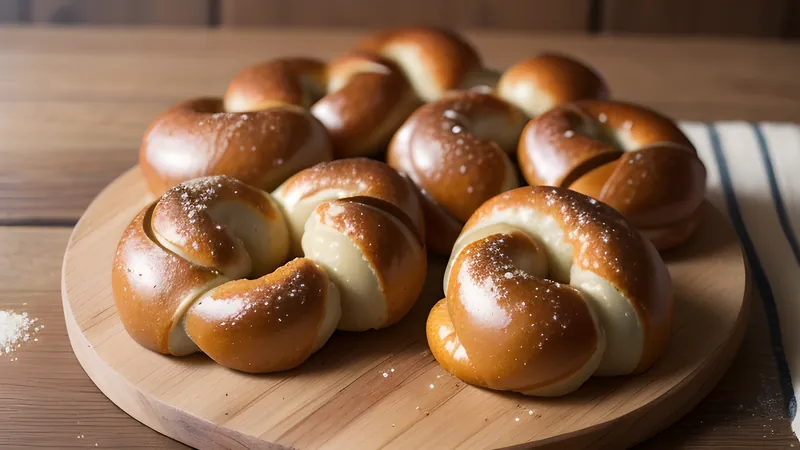
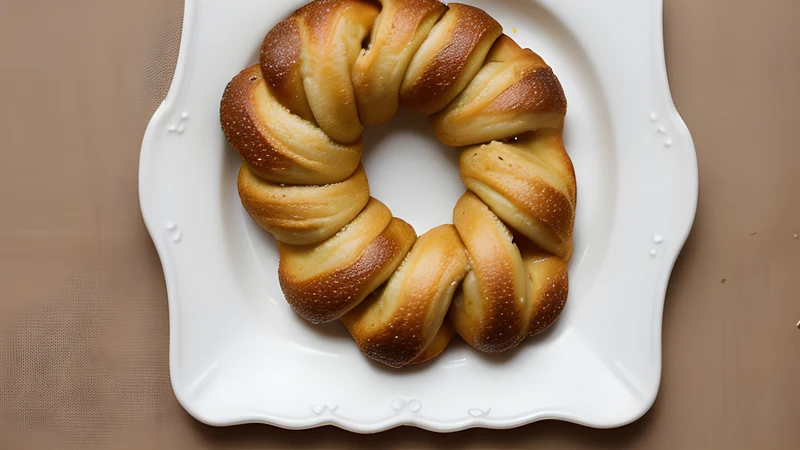
↓ Jump to recipeThe colour is the giveaway. A supermarket pretzel is tan. A Bavarian Laugenbrezel is the colour of a conker — glossy, almost purple-brown in places — and it tastes faintly mineral and slightly bitter under the salt, in a way that makes you want another one immediately. That colour and that taste come from a 4% solution of sodium hydroxide, which is drain cleaner, and there is no substitute that gets you all the way there.
This is the one recipe on this site that involves a genuine chemical hazard, so let me deal with that first and then talk about the bread.
Laugenbrezel: The Bavarian Lye Pretzel
Ingredients
- 500g strong white bread flour
- 300ml water at 20C
- 10g fine salt
- 5g fast-action dried yeast
- 20g unsalted butter, softened
- 10g barley malt extract or 1 tsp caster sugar
- 1 litre cold water, for the lye bath
- 40g food-grade sodium hydroxide pearls (4% solution)
- Coarse pretzel salt or flaky sea salt, for topping
Method
- Mix the flour, water, salt, yeast, butter and malt extract, then knead for 10 minutes to a very firm, smooth dough. It should feel stiffer than bread dough and slightly reluctant.
- Cover and prove at room temperature for 60 minutes; it will rise only modestly.
- Divide into 8 pieces of about 105g. Roll each into a short baton, cover, and rest for 10 minutes.
- Roll each baton into a rope 55cm long, thick in the middle and tapering to thin ends, on an unfloured surface.
- Lift the rope by its ends into a U, cross the ends over each other twice, then fold the twist down onto the belly and press the tips firmly into the dough at four and eight o'clock.
- Place the shaped pretzels on lined trays and refrigerate uncovered for 45-60 minutes, until the surface is dry and slightly leathery to the touch.
- Wearing safety goggles and nitrile gloves, add the sodium hydroxide pearls to the cold water in a stainless steel or plastic bowl, never the reverse, and stir with a plastic spoon until dissolved.
- Dip each cold pretzel in the lye for 20 seconds using a slotted plastic or stainless steel spoon, drain, and place on a tray lined with baking parchment.
- Slash the fat belly of each pretzel with a sharp blade held almost flat, cutting a 5cm line about 5mm deep, then scatter with coarse salt.
- Bake at 220C fan for 13-15 minutes until deep mahogany. Cool on a rack and eat within 4 hours.
Lye, honestly
Sodium hydroxide is a strong base. A 4% solution will cause chemical burns on skin given time, and a splash in an eye is a hospital visit. It will leave your worktop alone; it will not extend the same courtesy to you. It saponifies fat, which is why it feels slippery on your fingers — that slipperiness is your own skin beginning to turn into soap.
The handling rules are short and they are not optional:
Buy food-grade sodium hydroxide, sold for pretzel making and for soap. Do not use drain cleaner, which contains aluminium chips and other additives. It is widely available online in 500g tubs and it keeps indefinitely in a sealed container away from moisture.
Wear nitrile gloves and proper safety goggles. Not spectacles. Long sleeves. Clear the kitchen of children and animals for the fifteen minutes this takes.
Always add lye to water, never water to lye. Dissolving sodium hydroxide is strongly exothermic; a litre of cold water absorbing 40g of pearls will rise to around 30C, which is harmless. Pouring water onto dry pearls can flash and spit.
Use stainless steel, plastic or glass. Lye reacts with aluminium and produces hydrogen gas, which is exactly as bad as it sounds. It will also strip the seasoning from cast iron and damage anodised surfaces.
Line trays with baking parchment, never silicone mats, which lye degrades, and never bare aluminium trays.
Neutralise the waste. When you have finished, stir a large slug of white vinegar into the bath until it stops feeling slippery, then pour it down the sink with the cold tap running hard. Wipe every surface with vinegar afterwards.
Once baked, there is no lye left. It reacts with the dough’s surface and with carbon dioxide in the oven, converting to sodium carbonate and then to harmless salts, and the finished pretzel has a pH of about 7. Bavarian bakers have done this daily for two centuries. It is safe if you respect it.
If you genuinely will not use lye, a baked-soda bath is the fallback: spread 200g bicarbonate of soda on a foil-lined tray, bake at 150C for an hour to convert it to sodium carbonate, then dissolve 50g of that in a litre of water. It is far weaker — pH 11 or so against lye’s 13 — and it gets you perhaps sixty per cent of the colour and thirty per cent of the flavour. The pretzel-flavoured knots in my brown butter and mustard salt recipe use that method and they are good things in their own right. They are not this.
The dough, which is stiffer than you think
Sixty per cent hydration is unusual enough that the first time you make this the dough will feel wrong. It does not slap and stretch the way bread dough does. It resists the heel of your hand, it does not stick to the bowl, and after ten minutes of kneading it goes smooth and dense rather than billowy. That is correct.
The reason is the bath. A dough at 70% hydration has a wet, open surface that drinks lye, and it goes both soapy and grey. A firm dough has a tight surface that takes a thin, even coat and nothing more. The same firmness is what gives a pretzel its close, chewy crumb — the arms of a Laugenbrezel should be almost solid, closer to a bagel than to a roll, and only the belly has any real openness to it.
The butter is there for the crumb rather than the crust. Twenty grams to 500g of flour is a tiny amount, well below the level where fat interferes with gluten, and it makes the eating quality noticeably softer without turning it into an enriched dough. Bavarian bakers use lard, which is better again if you have it.
The prove is short and modest on purpose. Sixty minutes at room temperature, and the dough will grow by perhaps half rather than doubling. An over-proved pretzel dough has too much gas in it, the ropes tear as you roll them, and the shaped pretzel slumps in the fridge instead of holding its knot. If your kitchen is above 24C, cut the prove to forty-five minutes and check by feel: the dough should still be springy and push back when you poke it.
One more thing about the flour. Use a strong bread flour at around 12-13% protein. Plain flour makes a rope that will not stretch to 55cm without tearing, and 00 flour is too extensible — it stretches beautifully and then the pretzel has no chew. Standard supermarket strong white is exactly right, which is a nice change.
What the lye actually does
The skin of a pretzel is a Maillard reaction running at maximum. Maillard browning — sugars reacting with amino acids — accelerates dramatically in alkaline conditions, because a high pH deprotonates the amino groups and makes them far more reactive. A dough surface at pH 13 browns at a temperature and speed that a neutral surface never reaches.
The lye also gelatinises the starch on the very outside of the dough and partially breaks down surface proteins, which is what produces the glassy shine and the thin, crackling skin that a pretzel has and a bread roll does not. And it leaves a faint alkaline tang that is genuinely part of the flavour, the same note you find in ramen noodles and century eggs.
Three things follow from this. The dough must be very firm — 60% hydration against a normal bread’s 68-72% — because a slack dough absorbs too much lye and goes soapy. The pretzels must be cold and surface-dry when they are dipped, or the lye dissolves the wet surface and you get a smeared mess. And the bake must be hot and fast, because the alkaline surface will go past mahogany to burnt in about ninety seconds.
Barley malt extract in the dough is a small addition doing real work: it supplies maltose and amylase, giving the surface more reducing sugar for the Maillard to work with. A teaspoon of ordinary sugar is a passable substitute.
The knot, and the story attached to it
Shaping is the part people dread and it takes about four goes to learn.
Roll on an unfloured surface. Flour is lubricant, and you need friction to stretch a rope evenly. Roll from the centre outwards with both hands, moving them apart as you go, until you have 55cm with a fat belly in the middle and ends thin as a pencil. If the rope fights back and springs shorter, cover it and wait five minutes — the gluten needs to relax, and forcing it produces a lumpy rope.
Then lift by the two ends, let the belly hang, cross the ends over each other, cross them again, and flip the whole twist down onto the belly. Press the tips firmly. That is it. The twist should sit high on the belly, not in the middle, because the belly needs room to swell and split.
The fridge rest is the step most home recipes omit and it is the one that makes it work. Forty-five minutes uncovered in a cold fridge dries the surface to a leathery skin. That skin resists the lye rather than dissolving in it, and it also firms the dough enough that you can pick up a shaped pretzel by one arm without it deforming.
As for the shape: the legend says a Bavarian court baker in 1839, one Anton Nepomuk Pfannenbrenner, working for the coffee house of Johann Eilles in Munich, accidentally brushed his pretzels with the lye solution used for cleaning trays instead of the sugar water he intended, baked them anyway, and invented the Laugenbrezel. It is a good story, and like most origin stories of this shape it is retrospective — Bavarian records mention lye pastry decades earlier, and the pretzel shape itself is medieval and monastic, showing up in the Hortus deliciarum manuscript around 1190 and on the guild sign of German bakers by the fifteenth century. The three holes have been variously explained as the Trinity and as arms folded in prayer. Nobody knows.
The slash on the belly is the Bavarian signature, and it is functional as well as decorative. Hold the blade almost flat and cut a shallow flap; in the oven that flap lifts and the pretzel bursts open along it, exposing pale crumb against the dark skin. Swabian pretzels are cut differently and have fatter bellies and thinner arms; Bavarian ones are more even. People have opinions.
Where it goes wrong
The pretzel is pale. The lye was too weak, the dip too short, or the oven too cool. Four per cent, twenty seconds, 220C fan.
The surface is smeared and grey. The pretzels were not surface-dry when dipped. Back to the fridge rest.
They taste soapy. Too long in the bath, or a dough that was too wet. Twenty seconds is plenty.
The arms burned before the belly cooked. The rope was not tapered enough, or the belly is too fat. It is a real balance and it improves with practice.
They went soft and leathery by evening. That is normal and it is why Bavarian bakeries bake them twice a day. A Laugenbrezel has a four-hour life. Do not put one in a plastic bag; it will steam its own skin off in twenty minutes.
Eating them
Warm, with butter, which the Bavarians call a Butterbrezn and which requires nothing else. Or split and buttered with a Weisswurst and sweet mustard for breakfast, which is the proper Bavarian arrangement and involves a rule about eating them before the church bells strike noon. Or alongside Obatzda, the Bavarian beer-garden cheese — mash 200g very ripe camembert with 50g softened butter, half a grated onion, a teaspoon of sweet paprika and a splash of wheat beer, and let it sit for an hour. That is a pretzel’s natural companion, and it belongs to the same Alpine instinct for cheese and starch that produces Käsespätzle a hundred miles west.
They freeze well, unbaked. Shape, dip, freeze on a tray, bag them, and bake from frozen with three minutes added. That means a pretzel on a Sunday morning without handling lye before breakfast, which is the only real reason to make eight at once.
Related Content