Lamb Rogan Josh with Kashmiri Chilli
Deep red, fragrant and tender
Contents
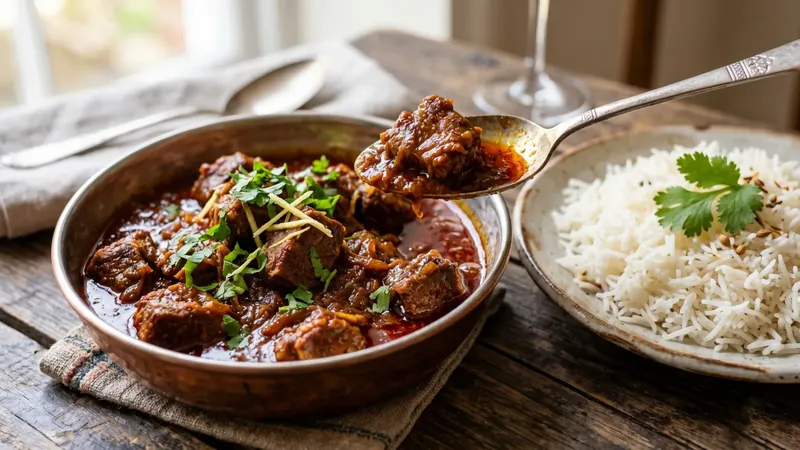
↓ Jump to recipeRogan josh is the aromatic, brick-red lamb curry of Kashmir, and the secret to it tasting right is colour without ferocious heat. The trick I lean on is Kashmiri chilli, prized for its vivid red hue and mild warmth, to give that signature glow, while a yoghurt-and-fennel base builds the gentle, perfumed depth the dish is loved for. Whole warm spices and a long, slow braise do the rest, leaving the lamb fork-tender in a glossy sauce. It is not a quick supper, but almost all of the time is unattended: twenty minutes of browning and building, then an hour and a half on the lowest flame while you get on with your evening. Worth the wait.
The thing to understand before you start is that rogan josh is defined by what it is not. It is not a fiercely hot curry, and it is not built on tomatoes or cream the way a restaurant “medium” curry so often is. The redness and the richness both come from restraint: Kashmiri chilli for colour, browned onion and yoghurt for body, and whole spices for perfume. Get those three right and you barely need to think about heat at all.
Lamb Rogan Josh with Kashmiri Chilli
Ingredients
- 800g boneless lamb shoulder, cut into 4cm chunks
- 4 tbsp ghee or vegetable oil
- 2 large onions, finely sliced
- 150g natural yoghurt
- 4 garlic cloves, crushed
- 1 tbsp grated fresh ginger
- 2 tbsp Kashmiri chilli powder
- 1 tsp ground fennel seeds
- 1 tsp ground cumin
- 1 tsp ground coriander
- 4 green cardamom pods, bruised
- 2 black cardamom pods
- 1 cinnamon stick
- 4 cloves
- 2 bay leaves
- 0.5 tsp ground ginger
- 0.5 tsp garam masala
- Salt, to taste
- Fresh coriander, to serve
Method
- Heat 2 tbsp of the ghee in a heavy casserole and brown the lamb in batches, then set aside.
- Add the remaining ghee and the whole green and black cardamom, cinnamon, cloves and bay leaves, and fry for 30 seconds until fragrant.
- Add the sliced onions and cook for 12-15 minutes until deep golden brown.
- Stir in the garlic and fresh ginger and cook for 2 minutes.
- Lower the heat, add the Kashmiri chilli powder, fennel, cumin, coriander and ground ginger, and stir for 30 seconds.
- Whisk the yoghurt and add it a spoonful at a time, stirring constantly so it does not split.
- Return the lamb and any juices, add 200ml water and a good pinch of salt, then bring to a gentle simmer.
- Cover and cook on a low heat for 1.5 to 2 hours, stirring occasionally, until the lamb is meltingly tender and the sauce is rich and red.
- Stir through the garam masala, rest for 5 minutes, scatter with coriander and serve.
The Story
Rogan josh is one of the signature dishes of Kashmiri cuisine, in the far north of the Indian subcontinent, and a centrepiece of the elaborate multi-course feast known as the wazwan. The name is generally understood to come from Persian: rogan meaning clarified butter or oil, and josh meaning heat or passion, together suggesting meat cooked in oil at an intense, rolling heat. The dish is widely thought to have arrived in Kashmir with Mughal cooking, which carried strong Persian influences, and to have adapted to local ingredients over time.
Its defining visual feature is the deep red colour. Traditionally this came not from large amounts of chilli but from two milder sources: Kashmiri red chillies, which are intensely coloured yet gentle in heat, and ratan jot, the root of alkanet, which lends a natural crimson dye and little else. The version here relies chiefly on Kashmiri chilli powder, which is exactly the small twist that carries the dish: it delivers that glowing red without the sauce becoming punishingly hot. If your chilli powder is a generic hot one rather than true Kashmiri, the curry will end up browner and sharper, so it is worth seeking out the real thing from an Indian grocer or online. A teaspoon of sweet paprika stirred in alongside is a reasonable way to top up the colour if all you can find is a hotter chilli.
The other traditional colouring, ratan jot, is worth a mention even though most home cooks skip it. The dried root is steeped briefly in hot ghee, which turns a deep ruby, and the coloured fat is then strained and used to cook the dish; it contributes almost no flavour, purely that natural crimson stain. It is hard to find outside specialist shops, and the Kashmiri chilli powder used here gets you most of the way to the colour without it, which is why the recipe leaves it out.
There is a meaningful divide in how rogan josh is made. The Kashmiri Pandit (Hindu) tradition typically avoids onion and garlic, using asafoetida and ground spices instead, while the Kashmiri Muslim style builds on browned onions, garlic and yoghurt. The version here follows the latter, more widely cooked outside Kashmir, with a yoghurt base whisked in slowly to enrich and thicken the sauce. Fennel, in ground form, is the other characteristic note, giving a sweet, faintly aniseed fragrance that is very much part of the Kashmiri spice palette, often alongside dried ginger.
The cut matters as much as the spice. Lamb shoulder, with its connective tissue and gentle marbling, rewards the long, slow braise that defines the dish: over an hour and a half or more, the collagen breaks down into gelatine, the meat turns spoonably tender, and the sauce thickens and deepens. Whole spices — cardamom, cinnamon, cloves and bay — perfume the oil at the start and are left in to infuse throughout. Rushed, rogan josh disappoints; given time, it is one of the most satisfying curries there is.
Technique, and where it goes wrong
Two steps decide whether this works. The first is the onions. Cook them longer than feels necessary, a full 12 to 15 minutes over a medium heat, stirring, until they collapse and turn a deep golden brown. This is where much of the sauce’s body and sweetness come from; pale, half-cooked onions leave the curry thin and raw-tasting. The second is the yoghurt. It splits into curds the moment it hits a hot pan, so lower the heat first, whisk the yoghurt smooth, then add it a spoonful at a time, stirring each addition in fully before the next. Full-fat yoghurt is far more forgiving than low-fat, which curdles at the slightest provocation.
If the sauce looks thin at the end, lift the lid for the last twenty minutes and let it reduce; if it catches and tastes scorched, you had the heat too high, so keep it at a bare, occasional-bubble simmer throughout. The whole spices are left in the pot, so warn anyone at the table that a bitten cardamom pod or clove is a strong mouthful, or fish out the obvious ones before serving.
The garam masala goes in right at the end for a reason. It is a finishing blend, not a base spice, and its volatile aromatics fade if they cook for long. Stir it through off the heat, put the lid back on and let the curry rest for five minutes before serving so that final layer of fragrance settles over the top of the deeper braised notes underneath. The same goes for the coriander: scatter it fresh at the table, not during cooking, where it would simply disappear.
What to serve it with
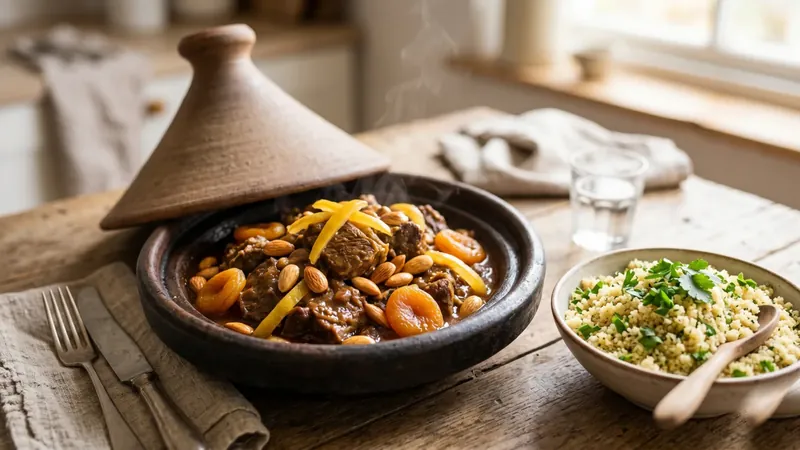
Rogan josh wants plain steamed basmati or warm flatbread to soak up the sauce, and little else. A cooling side earns its place, though. A simple raita of yoghurt, grated cucumber and a pinch of toasted cumin is traditional and takes minutes; if you like the yoghurt-and-chilli contrast, the chilli butter poured over Turkish eggs, çılbır works on the same principle of cool dairy against warm spice. For a bigger spread, it sits happily next to another slow-cooked lamb braise like a lamb tagine, each pulling from a different corner of the same slow-cooking tradition.
Storage, make-ahead and variations
Like most braises, rogan josh is better the next day, once the spices have settled and the sauce has thickened in the fridge. It keeps for three days chilled and freezes for up to three months; reheat it gently with a splash of water to loosen the sauce. Making it a day ahead is the smart move for guests, since it needs nothing but reheating and a fresh scatter of coriander.
For variations, bone-in lamb neck or leg on the bone gives an even richer sauce thanks to the marrow, though it needs a little longer to tenderise. Goat is traditional in many Kashmiri kitchens and works beautifully with the same timings. To stretch the dish, add a handful of new potatoes for the last 40 minutes so they cook through in the sauce. Avoid the temptation to add tomato or cream; both push the flavour towards a generic curry-house register and away from the clean, perfumed, chilli-red character that makes rogan josh worth the afternoon.
Related Content