Lagman: The Hand-Pulled Central Asian Noodle
A Uyghur noodle in a lamb-and-vegetable broth, pulled by hand at the table
Contents
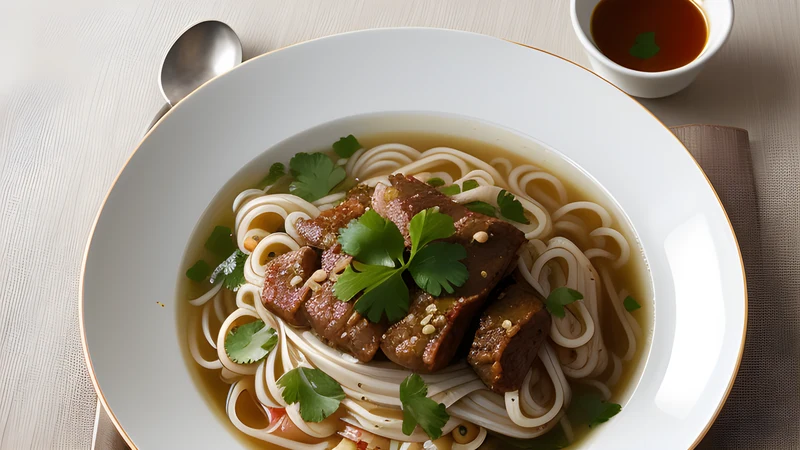
↓ Jump to recipeThe first time I watched someone pull lagman, in a canteen kitchen with steam fogging the windows, I assumed it was a trick reserved for people who had done it since childhood. The cook took a rope of dough the thickness of my thumb, gave it a lazy stretch, doubled it, stretched again, and inside a minute had a fistful of noodles the width of bootlaces. He was talking the whole time and not looking at his hands. That casualness is the thing to steal. Lagman is more forgiving than it looks. It is a dough that has been persuaded, through salt, alkali and rest, to stretch instead of tear, and once you understand what makes it stretch you can pull it in your own kitchen without any equipment beyond a bowl and your two hands.
Lagman: The Hand-Pulled Central Asian Noodle
Ingredients
- 500g plain flour (or 00 flour), plus extra for dusting
- 260ml warm water
- 1 tsp fine salt (for the dough)
- 1 tsp bicarbonate of soda dissolved in 2 tbsp water
- About 100ml neutral oil, for coiling the ropes
- 500g boneless lamb shoulder, cut into 1.5cm dice
- 3 tbsp neutral oil (for the sauce)
- 1 large onion, sliced
- 1 green pepper, cut into 2cm squares
- 1 red pepper, cut into 2cm squares
- 2 carrots, halved lengthways and sliced on the angle
- 4 garlic cloves, sliced
- 1 tbsp tomato puree
- 3 tomatoes, chopped (or 200g tinned)
- 1 tsp ground cumin
- 1 tsp sweet paprika
- 1/2 tsp chilli flakes, or to taste
- 500ml lamb or chicken stock
- 2 tbsp soy sauce
- 1 tbsp Chinese black vinegar
- Large handful coriander, chopped
- 2 spring onions, sliced, to finish
Method
- Make the dough: mix flour and 1 tsp salt, add the warm water and bring together into a shaggy mass. Knead 10 minutes until smooth and elastic, then brush with the bicarbonate solution and knead 2 minutes more. Cover and rest 30 minutes.
- Roll the rested dough into a 2cm-thick rope, coil it in a bowl, and film every surface with oil so it cannot dry. Cover and rest another 30-60 minutes. This oiled rest is what lets you pull the noodles later.
- Sear the lamb: heat 3 tbsp oil in a wide pan over high heat and brown the diced lamb hard, in batches, until deeply coloured. Remove and set aside.
- Build the sauce base: in the same pan soften the onion 4 minutes, add carrots and cook 3 minutes, then the peppers and garlic for 2 minutes. Stir in tomato puree and cook 1 minute until it darkens.
- Add chopped tomatoes, cumin, paprika and chilli flakes; cook 3 minutes to a thick paste. Return the lamb, pour in the stock, soy and vinegar, and simmer uncovered 25 minutes until the lamb is tender and the sauce coats a spoon.
- Pull the noodles: take a length of oiled rope, roll it thinner between your palms on the worktop to pencil width, then hold both ends and gently bounce and stretch it, doubling and re-stretching, until it is spaghetti-thin. Drop straight into a large pan of boiling salted water.
- Cook the noodles 2-3 minutes until they float and are tender with a slight chew. Lift out and divide between warm bowls.
- Ladle the lamb sauce over the noodles, finish with coriander and spring onions, and serve at once with black vinegar and extra chilli at the table.
Where lagman comes from
Lagman belongs to the Uyghurs, the Turkic people of the oasis towns strung along the old Silk Road through what is now northwest China, and it travelled with them across Central Asia. You will eat versions of it in Kazakhstan, Kyrgyzstan, Uzbekistan and among the Dungan communities scattered through the region, each with its own accent. The name is a cousin of the Chinese la mian, the pulled noodle of Lanzhou, and the family resemblance is obvious the moment you see the dough worked: the same doubling and stretching, the same reliance on a well-developed gluten network.
What makes lagman distinctly Central Asian rather than Chinese is the sauce. This is a hearty stew rather than a clear noodle soup: lamb and peppers and tomato, cut with cumin and a slug of vinegar, spooned thickly over the noodles so that the dish sits halfway between a soup and a stir-fry. In the guesthouses of the Fergana Valley it arrives in a deep bowl with the sauce (called kawurma or waju) heaped on top and the noodles hiding underneath, and you are expected to fold the two together yourself with your chopsticks or fork. A fried-egg-topped, drier version called guiru lagman exists too, but the soupy one is where I would start.
The dish sits comfortably alongside the other great Central Asian one-pots. If you have made plov, the Uzbek rice that feeds forty, you already know the flavour grammar here: cumin, lamb, onion sweated slow, and the confidence to cook a single pot for a table of people.
The dough, and why the alkali matters
Three things turn ordinary flour and water into something you can pull. The first is a strong knead: you need to develop the gluten properly, ten full minutes, until the dough is smooth and springs back when you press it. The second is the alkali. A little bicarbonate of soda, kneaded in after the initial rest, raises the dough’s pH and relaxes the gluten just enough that the strands slide past one another under tension instead of snapping. Traditional cooks used a mineral alkali water called kansui; bicarbonate is the household stand-in and it works.
The third, and the one people skip, is the oiled rest. Once the dough is smooth you roll it into a fat rope, coil it, and coat every millimetre of the surface in oil so no skin can form. Then you leave it alone for at least half an hour, an hour is better. During that rest the gluten network fully relaxes. Rush this and the dough fights back; give it the time and it will stretch like warm chewing gum. If your kitchen is cold, put the covered bowl somewhere gently warm.
When you come to pull, work with lengths about the size of a fat sausage. Roll each one thinner on the worktop first, palms flat, until it is the width of a pencil. Then lift it, hold both ends, and let gravity and a gentle bouncing motion do the stretching. Fold it in half over itself, stretch again, and keep going. If a strand snaps, your dough needed more rest or more knead; ball it up, oil it, and give it another twenty minutes. Nobody’s first rope is perfect. Uneven noodles taste exactly as good.
Building the sauce
While the dough rests you make the kawurma. Brown the lamb hard and in batches, because a crowded pan steams and you want colour, that fond is half your flavour. Then build the vegetables in order of how long they take: onion and carrot first, peppers and garlic later so they keep some bite. The tomato puree goes in on its own for a minute to cook off the raw tin taste and deepen, then the fresh tomato, spices, stock and the two seasonings that make it sing, soy for savoury depth and black vinegar for a sour lift at the back of the throat.
Let it simmer uncovered for a good twenty-five minutes. You are after a sauce thick enough to cling to a noodle, glossy from the rendered lamb fat, with tender meat and peppers that still hold their shape. Taste for salt and for chilli; the heat should warm rather than dominate.
Getting the timing right
The one genuinely tricky part of lagman is coordination. Noodles cook in two or three minutes and go gluey if they sit, so you want the sauce finished and barely ticking over before you start pulling. Get your pan of salted water at a rolling boil, pull a couple of ropes into it, cook until they float and have a slight chew, then lift them straight into warm bowls and top with sauce. If you are cooking for four and pulling by hand, work in two rounds rather than trying to hold everyone’s noodles hot at once. A friend to stir the pot while you pull makes the whole thing a pleasure.
Reading the rope, and rescuing a stubborn dough
Every batch of dough has a mood, and learning to read it is most of the skill. A rope that is ready to pull feels alive: press a thumb into it and the dent fills back slowly, the surface is satiny under its film of oil, and a gentle tug lengthens it without any sense of fighting back. A rope that snaps or refuses to thin is telling you one of two things — it has not rested long enough, or it was under-kneaded and the gluten never fully formed. The cure for both is patience. Ball the reluctant dough back up, oil it, cover it, and walk away for another twenty minutes; nine times in ten it comes back willing. Warmth helps too, so on a cold day I stand the covered bowl on top of the simmering sauce pot where it catches a little gentle heat.
The pulling motion itself is worth breaking down, because most first-timers try to stretch too hard and too fast. Roll the length to pencil width on the board first, then lift it clear, hold both ends, and let the weight of the dough do the work as you bounce it lightly against the worktop. Each bounce lengthens it a little; fold it back on itself, re-oil your hands if it drags, and repeat. You are coaxing rather than yanking, and the noodles come out even because the tension is even. If one strand runs fat and another thin, it bakes no crime — uneven hand-pulled noodles are the honest sign of a home kitchen, and they carry sauce beautifully.
The wider lagman family
Once the basic bowl is in your hands, a whole map of variations opens up. The soupier Uyghur suyuq lagman floods the noodles with more broth for a dish you eat with a spoon as much as chopsticks. The drier guiru lagman keeps the sauce thick and clinging and often crowns each bowl with a fried egg. Kyrgyz and Dungan cooks make ashlyanfu, a cold, sour cousin that sets some of the starchy cooking water into a jelly and cuts it through the noodles for hot-weather eating. Uzbek versions lean harder on the tomato and the cumin; Kazakh ones sometimes fold in more root vegetables for a heartier winter pot. What unites them is the pulled noodle and the lamb-and-pepper logic of the sauce, which means once you can pull a rope you can cook any of them by adjusting the liquid and the garnish. Treat this recipe as the trunk and the regional versions as branches you grow into as your hands get surer.
Tips, swaps and storage
Beef chuck works in place of lamb if that is what you have, though it wants a slightly longer simmer to tenderise. For the vegetables, treat the recipe as a template: green beans, celery, Chinese cabbage and daikon all belong, and a handful of any of them added with the peppers is welcome. Vegetarians can build a genuinely good version on mushrooms and extra peppers with a spoon of miso for depth in place of the lamb.
If pulling noodles feels like a step too far the first time, the sauce is delicious over shop-bought fresh wheat noodles or even good dried udon; you lose the springy hand-pulled texture but keep everything else. Make the noodles the star once you are comfortable.
The sauce keeps three days in the fridge and reheats beautifully, in fact it improves overnight as the cumin settles. Cook noodles fresh to order rather than storing them; leftover cooked noodles clump. If you want to get ahead, you can pull the noodles, toss them in a little oil and refrigerate them uncooked for a few hours, then boil straight from cold.
Serve lagman the way it is served across the region: bowls on the table, a dish of extra chilli, the black vinegar bottle within reach, and no ceremony. It is weeknight food that happens to involve a small piece of theatre. If this has given you an appetite for hand-worked dough, the steamed dumplings in my manti with cumin and lamb use the same spice palette in a completely different shape, and the tandoor-baked samsa rounds out a proper Central Asian spread.
Related Content