Labneh with Za'atar, Olive Oil, and Warm Flatbread
Strained yogurt, the Levant's gift to breakfast
Contents
↓ Jump to recipeIf you have ever wished yogurt could be a meal rather than a side note, labneh is the answer, and it is almost embarrassingly easy. You salt some good yogurt, hang it in a cloth overnight, and the next morning the whey has drained away to leave something thick, tangy and rich, halfway between yogurt and soft cheese. Spread it on a plate, flood it with olive oil and snow it with za’atar, and you have one of the great breakfasts of the Levant. My one quiet twist is grating a tiny bit of raw garlic into the yogurt before it strains, so the whole thing carries a low savoury hum that plays off the lemony za’atar. Make the flatbreads to scoop it and you will not miss anything else on the table.
Labneh with Za'atar, Olive Oil, and Warm Flatbread
Ingredients
- 750g full-fat natural or Greek yogurt (live, not low-fat)
- 0.75 tsp fine salt
- 1 small garlic clove, finely grated (optional)
- 3 tbsp good extra virgin olive oil, plus more for storing
- 2 tbsp za'atar
- A squeeze of lemon (optional)
- For quick flatbreads: 250g plain flour
- 0.5 tsp salt
- 0.5 tsp baking powder
- 150g natural yogurt
- 2 tbsp olive oil, plus extra for cooking
Method
- Stir the salt (and grated garlic, if using) into the yogurt. Line a sieve with a double layer of muslin or a clean tea towel and set it over a bowl.
- Tip in the yogurt, fold the cloth over the top and refrigerate for 12 to 24 hours, until thick and spreadable like soft cream cheese. Longer gives a firmer, drier labneh.
- For the flatbreads, mix the flour, salt and baking powder, then stir in the yogurt and oil to a soft dough. Knead briefly until smooth, then rest for 15 minutes.
- Divide into 6 pieces and roll each thinly. Cook in a hot dry or lightly oiled pan for 1 to 2 minutes a side, until puffed and charred in patches.
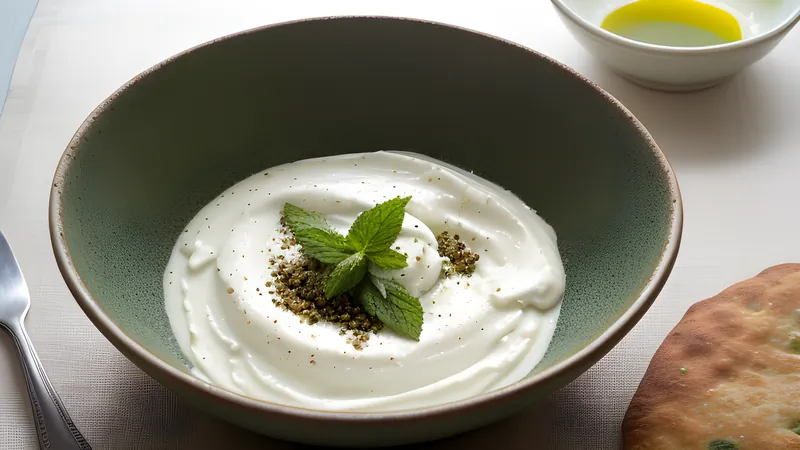
- Spread the labneh over a plate or shallow bowl, making swooshes with the back of a spoon.
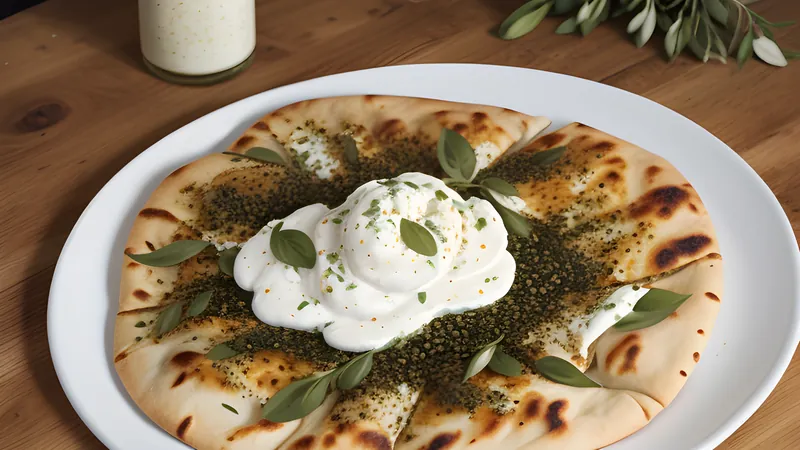
- Drizzle generously with olive oil and scatter over the za'atar. Add a squeeze of lemon if you like.
- Serve with the warm flatbreads alongside, for scooping and tearing.
A Cheese Made by Subtraction
Labneh is one of the oldest foods imaginable, and one of the simplest: it is just yogurt with the water taken out. Across the Levant and the wider Middle East, from Lebanon and Syria to Palestine, Jordan and beyond, it has been a daily staple since long before refrigeration, a clever answer to the problem of keeping milk in a hot climate. Souring milk into yogurt is the first line of defence, since the acid the bacteria produce slows spoilage; straining and salting that yogurt is the second, concentrating the solids and driving off the moisture that microbes need. The by-product is a thin, perishable thing turned into something rich enough to last for days and substantial enough to anchor a breakfast.
It sits at the heart of the morning table, the spread of small plates that might also hold olives, tomatoes, cucumbers, boiled eggs, flatbread and tea. The word comes from the Arabic root for milk, laban, and you will hear it spelled labneh, labne or labni depending on where you are. Rolled into little balls and stored under olive oil, it keeps for weeks and becomes a different pleasure entirely, sharper and denser. If you want to see that from-scratch straining process broken down on its own, without the flatbreads, there is a fuller guide to labneh from scratch that treats the strained yoghurt as the main event.
The Magic of Za’atar
If labneh is the canvas, za’atar is the paint. The word refers both to a family of wild Mediterranean herbs, related to thyme and oregano, and to the spice blend built around them. A typical mix combines dried wild thyme or oregano with toasted sesame seeds, tart crimson sumac and salt, sometimes with a little cumin. The result is herbal, nutty and sour all at once, and it is glorious against the cool richness of strained yogurt.
Za’atar is deeply personal across the region; families guard their blends and argue gently about the right ratio of sumac to sesame. Buy a good one from a Middle Eastern grocer rather than a dusty supermarket jar, as freshness makes an enormous difference, or make your own. Toast the sesame seeds yourself in a dry pan until golden and fragrant, then grind them roughly with dried thyme or oregano, sumac and a little salt. If the sumac tastes muted, the blend is old; good sumac is vivid and sour and does most of the lifting.
Straining, and Getting the Texture Right
The only skill here is patience and a cloth. Full-fat live yogurt is essential; low-fat versions are too watery and the strained result is thin and sad. Greek yogurt is already partly strained, so it firms up faster, while ordinary natural yogurt takes a little longer but works beautifully. Twelve hours gives you a soft, spreadable labneh; push it to a full day or more and it becomes firm enough to roll into balls.
Do not throw away the whey that collects in the bowl. It is pleasantly sour and can go into bread doughs, smoothies, soups or a marinade, lending the same tang back to whatever you add it to. It also makes a surprisingly good poaching liquid for chicken, and bakers use it to feed sourdough starters; in short, it is far too useful to tip down the sink.
One question that comes up is how thick to strain the yogurt for this plate specifically. For a spread you drag a spoon through and flood with oil, you want it soft enough to hold a groove but not so firm it sits in a solid lump: 14 to 18 hours in the fridge is the sweet spot for most yogurts. If your kitchen or fridge runs warm and the labneh strains faster than expected, no harm done; a firmer labneh loosens beautifully with an extra splash of olive oil beaten in at the end, which also makes it glossier on the plate.
The garlic, my one small addition, is optional but transformative. Grate it in finely so it disperses through the yogurt and softens as it strains overnight, losing its raw bite and leaving behind a gentle savoury warmth that meets the lemony za’atar halfway. Leave it out for a purer, cleaner labneh; add it when you want the plate to taste like supper as much as breakfast.
Two ways to shape the labneh
Once the yogurt has strained, you have a choice. For the plate here, keep it soft and spreadable, scoop it out after 12 to 18 hours and treat it as a dip. If you strain it a full 24 hours or more it firms up enough to roll: wet your hands, take walnut-sized pieces and roll them into balls, then pack them into a clean jar and cover completely with olive oil. Tuck in strips of lemon peel, a few thyme sprigs or a pinch of chilli flakes and they will keep for two to three weeks in the fridge, taking on those flavours as they sit. Lift them out with a fork and they make an instant lunch with bread and tomatoes.
The flatbread dough is forgiving, but two things help. Rest it a full 15 minutes so the gluten relaxes and it rolls without springing back, and get the pan genuinely hot before the first one goes in, so the surface blisters rather than dries out. If you want a fuller yeasted flatbread instead of this quick soda-style version, the same toppings sit just as well on shop-bought pitta warmed through. A tangle of quick pickled red onions on the side cuts the richness and adds colour if you are building this out into a proper spread.
Bringing It to the Table
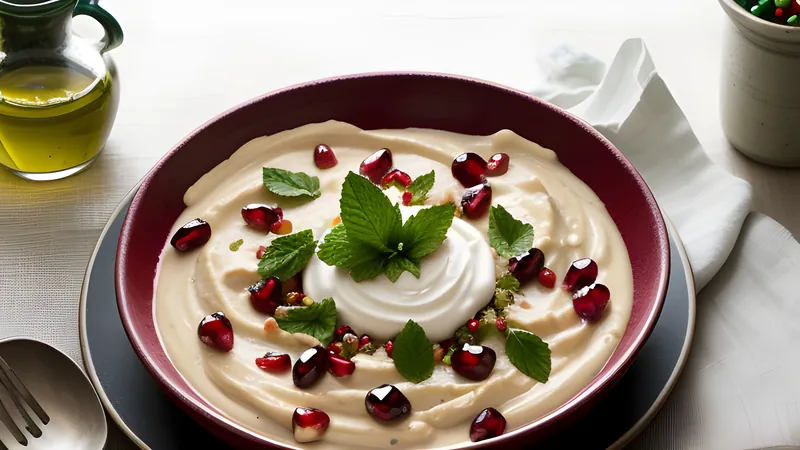
Presentation is half the joy. Spread the labneh thickly across a wide, shallow plate and drag the back of a spoon through it to make grooves and swirls that catch the oil. Pour over far more olive oil than feels reasonable, then scatter the za’atar so it pools in the dips. A squeeze of lemon brightens everything, and you can pile on extras: chopped tomatoes, cucumber, a few olives, soft herbs, or a handful of toasted nuts. Do not be shy with the oil; it is not a garnish here but part of the dish, and the way it pools in the grooves and mixes with the za’atar as you scoop is half the pleasure. A good peppery extra-virgin oil earns its place, so use the bottle you like enough to drink.
The warm flatbreads are there to be torn and used as edible spoons, and they take minutes. Eat it slowly, with strong tea or coffee, and you will understand why so much of the eastern Mediterranean starts the day exactly this way.
Related Content