Labneh from Scratch: Strained Yoghurt, Olive Oil, Za'atar
Thick, tangy and almost effortless
Contents
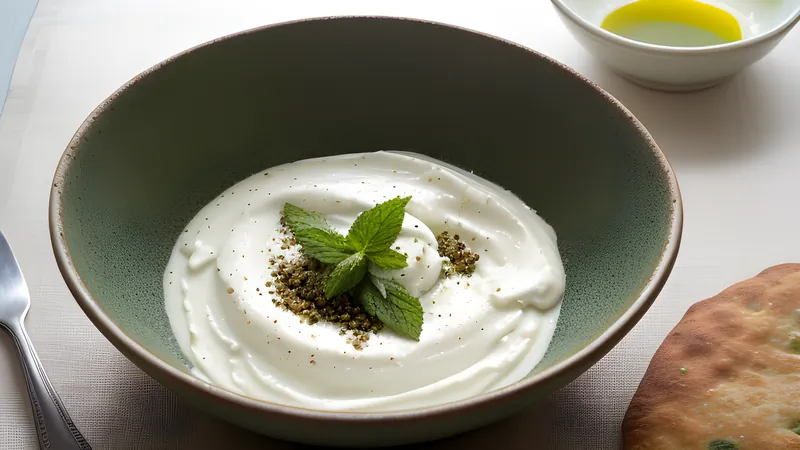
↓ Jump to recipeLabneh is the closest thing I know to conjuring cheese out of thin air. You take a tub of ordinary yoghurt, stir in salt, tie it up in a cloth and leave it in the fridge overnight. By morning the watery whey has dripped away and what remains is thick, dense and tangy, somewhere between clotted cream and a young soft cheese. Spread it in a bowl, drag the back of a spoon through the surface to make grooves, pour over more olive oil than feels sensible and shower it with za’atar, and you have the centrepiece of a mezze table or the best thing to put on toast all week. My one small twist is a little grated lemon zest stirred through before straining: it sharpens the tang and stops the richness turning heavy.
There is genuinely no cooking involved. The only ingredient that matters is time, and the only skill is patience with a piece of cloth. That makes it the ideal thing to start on a Friday evening for a lazy Sunday breakfast, or to keep going in the fridge as a running project you dip into all week. Once you have made it once, you will stop buying tubs of cream cheese for it entirely; a plain 500g pot of yoghurt costs a fraction of a good soft cheese and turns into something with far more character.
Labneh from Scratch: Strained Yoghurt, Olive Oil, Za'atar
Ingredients
- 500g full-fat natural yoghurt (Greek-style is ideal)
- 0.75 tsp fine salt
- Finely grated zest of 0.5 lemon (the twist)
- 2 tbsp extra-virgin olive oil, to serve
- 1 tbsp za'atar, to serve
- A few mint leaves, to serve (optional)
- Warm flatbread, to serve
Method
- Stir the salt and lemon zest thoroughly through the yoghurt in a bowl.
- Line a sieve with a double layer of clean muslin or a thin tea towel and set it over a deep bowl.
- Tip the seasoned yoghurt into the lined sieve, gather the cloth and twist gently to enclose it.
- Refrigerate for 12 to 24 hours, until thick and spreadable, occasionally pouring off the whey that collects.
- Scrape the labneh into a bowl, spread it with the back of a spoon and create a few swirls.
- Drizzle generously with olive oil, scatter with za'atar and mint, and serve with warm flatbread.
Method
- Stir the salt and lemon zest thoroughly through the yoghurt in a bowl. The salt seasons it and, just as importantly, draws moisture out of the curd so it strains faster and firmer.
- Set a sieve over a deep bowl, leaving space beneath it for the whey to collect, and line it with a double layer of clean muslin or a thin, clean tea towel.
- Tip the seasoned yoghurt into the lined sieve. Gather the cloth up around it and twist gently to enclose it, which helps it hold its shape and speeds the draining.
- Refrigerate for 12 to 24 hours. Pour off the whey that gathers in the bowl once or twice so the yoghurt keeps draining freely. The longer you leave it, the thicker and firmer it becomes.
- Scrape the labneh out into a serving bowl. Spread it with the back of a spoon, making a few generous swirls to catch the oil.
- Drizzle heavily with olive oil, scatter over the za’atar and a few torn mint leaves, and serve with warm flatbread.
Why the twist works
The lemon zest is a small thing that does real work. Yoghurt is already tangy from lactic acid, but that tang is round and dairy-led. The oils in citrus zest, rather than the juice, add a bright, aromatic top note that reads as freshness rather than sourness, and because it is the zest and not the juice, you get that lift without adding liquid that would slow the straining or thin the finished labneh. Stir it through at the start so it perfumes the whole batch as it sits overnight. Do not be tempted to add lemon juice instead; the extra acid can make the curd weep more whey than you want and pushes the flavour towards sharp rather than fragrant.
The salt is doing double duty too. Beyond seasoning, it draws water out of the yoghurt proteins by osmosis, which is why a salted batch strains faster and firmer than an unsalted one. Three-quarters of a teaspoon for 500g is a gentle level that seasons without tasting salty; if you plan to store the labneh in oil for weeks, you can push it up to a full teaspoon, since the extra salt helps preservation.
Getting the texture right
Full-fat yoghurt is not negotiable. Low-fat and no-fat versions are mostly water held together with stabilisers, and they strain to something thin and slightly chalky rather than rich and dense. Look for a live yoghurt with nothing but milk and cultures on the label. Greek-style yoghurt is already partly strained, so it firms up fastest and gives the most reliable result; ordinary natural yoghurt works too but takes a little longer.
Time controls everything. After about 12 hours you will have a soft, spreadable labneh with the texture of thick cream cheese, ideal for scooping. Push on to a full 24 hours and it dries and firms enough to shape into balls. If it ever comes out looser than you wanted, simply tie the cloth back up and give it a few more hours; there is no way to over-strain it short of leaving it for days.
Two practical notes on the cloth. Muslin, sometimes sold as cheesecloth, is ideal because it lets whey pass while holding the curd, but a fine, clean tea towel that has not been washed in scented detergent works just as well; avoid anything terry or fluffy, which sheds fibres into the labneh. And do not fill the sieve so full that the yoghurt sits in its own drained whey, or the bottom will stay wet however long you wait. Set the sieve high enough that a good 3 to 4cm of clearance sits beneath it, and pour off the collected whey whenever it climbs close to the base.
Do not tip the whey down the sink. It is mildly acidic and genuinely useful: swap it for some of the water in bread doughs for a subtle tang, whisk it into smoothies, or use it to thin a soup. It freezes well in a tub, so keep it if you are not cooking that day.
Substitutions, storage and variations
Beyond za’atar, labneh takes happily to almost any bold finish. A spoonful of chilli oil with crispy shallots turns it into something with real heat and crunch; toasted pine nuts, a dusting of extra sumac, chopped soft herbs, caramelised onions, dukkah or a drizzle of pomegranate molasses all work. For a sweet version, fold in a tablespoon of honey and serve with sliced stone fruit, or simply spread it on toast with jam.
If you want to turn this into a proper meal, warm flatbreads for scooping make all the difference; see the labneh with za’atar and warm flatbread version for a quick yoghurt flatbread dough that comes together while the labneh strains.
Stored in a sealed container, plain labneh keeps for about a week in the fridge, thickening slowly as it sits. To keep it longer, roll firm labneh into balls, pack them into a clean jar and cover completely with olive oil; they will hold for two to three weeks and take on the flavour of anything you tuck in with them, such as thyme sprigs, chilli flakes or strips of lemon peel. Make a batch and let it earn its keep across the week: a dip for crudités, a bed under roasted vegetables, a swipe beneath grilled meat, or just something to eat with bread when you are hungry and cannot be bothered to cook.
Related Content