Lablabi: Tunis Chickpea Soup Over Stale Bread
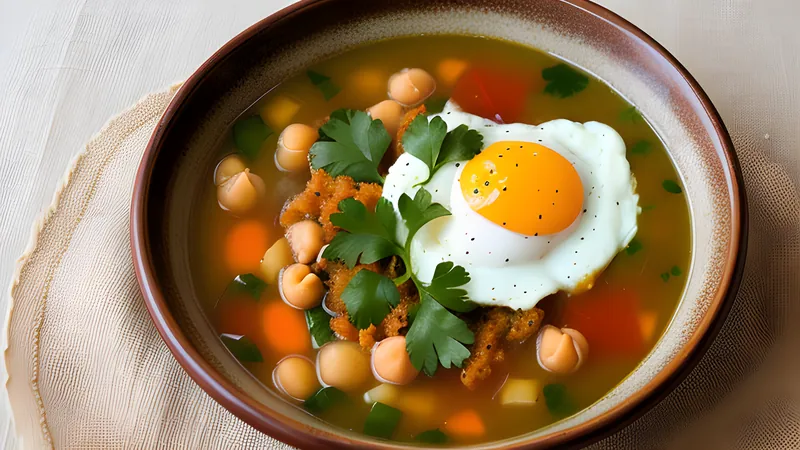
Cumin-scented chickpeas ladled over torn bread, capped with a soft egg and a spoon of harissa
Contents
↓ Jump to recipeLablabi is what Tunis eats when it is cold, or hungover, or simply hungry before eight in the morning: a pot of cumin-heavy chickpea broth poured straight over stale bread, crowned with a soft egg, harissa, capers and the salt-sour hit of preserved lemon. It is sold from steam-clouded carts outside the medina gates and from proper sit-down cafés alike, ladled into the same deep bowls, eaten standing up with a spoon in one hand and more bread in the other. It is peasant food in the best sense: cheap, filling, built to use up what would otherwise go stale, and better for the improvisation.
Lablabi: Tunis Chickpea Soup Over Stale Bread
Ingredients
- 3 tbsp olive oil, plus more to finish
- 1 onion, finely chopped
- 6 garlic cloves, thinly sliced
- 2 tsp ground cumin, plus more to serve
- 1 tsp caraway seeds, lightly crushed
- 1 tbsp tomato purée
- 1 tbsp harissa, plus more to serve
- 2 x 400g tins chickpeas, drained (liquid reserved)
- 1 litre vegetable or chicken stock
- 2 bay leaves
- 1 tsp salt, plus more to taste
- 4 thick slices day-old crusty bread or baguette, torn
- 4 eggs
- 2 tbsp red wine vinegar (for poaching)
- 4 tsp capers, drained
- 1 preserved lemon, flesh discarded, rind finely chopped
- Small bunch parsley, chopped
- Ground cumin and olive oil, to serve
Method
- Heat the olive oil in a heavy pot over medium heat. Add the onion and cook 8 minutes until soft and translucent.
- Add the garlic, cumin and caraway and cook 1 minute until fragrant.
- Stir in the tomato purée and harissa and cook 2 minutes, letting them darken slightly.
- Add the chickpeas, stock, bay leaves and salt. Bring to a simmer and cook uncovered for 25 minutes, mashing roughly a third of the chickpeas against the side of the pot with a spoon to thicken the broth.
- Taste and adjust salt, cumin and harissa; the broth should be assertive.
- Bring a wide pan of water to a bare simmer and add the vinegar. Poach the eggs 3 minutes for a soft, runny yolk, then lift onto kitchen paper.
- Divide the torn bread between four deep bowls.
- Ladle the hot chickpea broth over the bread, letting it soak for a minute before serving.
- Top each bowl with a poached egg, a scattering of capers and chopped preserved lemon, a spoon of harissa, a pinch of cumin, a drizzle of olive oil and the parsley.
A soup built to waste nothing
The genius of lablabi is structural before it is culinary. Bread goes stale in a hot climate within a day, and Tunisian households have never thrown it out. Chickpeas are cheap, dried and stored for months, and rehydrate into something substantial with almost no effort. Put the two together with a pot of cumin-spiked water and you have breakfast, lunch or a midnight meal that costs almost nothing and takes half an hour. The soup is not poured over the bread as a garnish; the bread is the base the whole bowl is built on, and it is meant to go soft and swell with broth, closer to a savoury bread pudding than to soup with croutons on top.
This economy of means runs through Tunisian cooking generally, and it shows up again in kafteji, where whatever vegetables are on hand get fried and chopped into one dish, and in mloukhia, a stew built to stretch a small amount of meat over a large pot of greens. Lablabi is the most democratic of the three: it needs no meat at all, and the version served on street corners is often entirely vegetarian bar the egg.
Where the bowl came from
Chickpea soups thickened with bread have deep roots around the Mediterranean and into the Levant, but Tunis’s version is distinct for the sheer volume of cumin and caraway it carries, and for the way it is finished at the table rather than in the kitchen. A proper lablabi vendor keeps a pot of broth on a low flame all morning and assembles each bowl to order: bread torn in first, hot broth ladled over, then the customer or the vendor building the top with whatever combination of egg, harissa, tuna, olives and capers is wanted. It is closer to a build-your-own bowl than a fixed recipe, which is why every Tunisian will tell you their family’s version is the correct one and mean it.
The cumin carries real weight here. It is the spice most associated with Tunisian cooking generally, turning up in merguez, in the marinade for grilled meats, in the dukkah-adjacent spice mixes rubbed onto fish. In lablabi it does the work that black pepper does in a French soup: it is the backbone flavour everything else sits on top of, and a bowl that tastes flat is almost always a bowl that has been shy with it.
The broth: cumin, garlic and a slow mash
Start the broth by cooking a chopped onion in olive oil until it turns properly soft, pale gold and genuinely sweet, which takes a full eight minutes over a medium flame and cannot be rushed without losing depth. Garlic goes in generously — six cloves is entirely the point here — along with cumin and lightly crushed caraway seeds, and a minute in the hot oil is enough to bloom their oils without scorching them.
Tomato purée and a spoon of harissa go in next and get a couple of minutes to darken and lose their raw edge, which deepens the colour of the broth and adds a base note of chilli that carries through the whole pot without making it fiery. Chickpeas, stock, bay leaves and salt follow, and the pot simmers uncovered for twenty-five minutes. Partway through, mash roughly a third of the chickpeas against the side of the pot with the back of a spoon. This is the single move that turns a thin bean soup into the thick, almost silky lablabi broth: the starch released by the crushed chickpeas thickens the liquid naturally, no flour or cornflour required, while the remaining whole chickpeas keep the texture from turning to purée. Taste before you serve. The broth should taste distinctly of cumin and garlic and carry real warmth from the harissa; if it tastes like plain bean water, it needs more of both.
Building the bowl
This is where lablabi earns its reputation as a build-it-yourself meal. Torn bread goes into the bottom of a deep bowl first — day-old bread is genuinely better here, since fresh bread turns to mush too fast and loses all texture, while bread with a day or two on it holds a little bite even after the broth soaks in. Ladle the hot broth straight over the bread and let it sit for a full minute before eating, which gives the bread time to soften through without collapsing entirely.
The egg is poached separately in barely simmering water with a splash of vinegar, which helps the white set quickly around the yolk rather than trailing into wisps. Three minutes gives a properly runny yolk that breaks into the broth the moment you cut it, enriching everything underneath. From there, the toppings are where personal and regional variation shows: capers for their brine, chopped preserved lemon rind for a salt-sour top note that lablabi genuinely needs, another spoon of harissa for anyone who wants more heat, a pinch more cumin, a generous drizzle of good olive oil, and parsley for a little green freshness against all that warm spice.
Tips and things that go wrong
The most common mistake is under-salting. Chickpeas absorb a surprising amount of salt as they sit in the broth, and a pot that tastes right at the fifteen-minute mark can taste flat by the time it is ladled at forty. Taste again right before serving and adjust.
The second mistake is skipping the mash. Without crushing some of the chickpeas, the broth stays thin and watery no matter how long you simmer it, because chickpeas hold their shape well and release very little starch on their own unless you break some open. A potato masher works if a spoon feels too slow.
If you are short on time, tinned chickpeas work perfectly well and are what most home cooks actually use; dried chickpeas cooked from scratch give a slightly creamier broth but add an hour or more, and the reserved cooking liquid from dried chickpeas (aquafaba) can replace some of the stock for extra body.
Substitutions and variations
Vegetarians can skip the egg entirely and lean harder on capers, olives and a scattering of chopped hard-boiled egg instead, which is a common café variation. Tuna is another classic addition, flaked over the top with the capers, turning the bowl into something closer to a Tunisian niçoise-in-a-bowl. For extra richness, a spoon of harissa mixed with a little olive oil and swirled through just before eating, rather than stirred in during cooking, keeps its heat and colour more vivid.
If you cannot find Tunisian harissa, a rose harissa or even a simple blend of chilli paste, garlic and a pinch of caraway will get you close; the recipe for harissa makes a paste with real depth and keeps for weeks in the fridge under a film of oil, which is worth having on hand for this soup and for ojja alike, since both dishes lean on the same chilli backbone.
Across Tunisia, and who eats it when
Lablabi does not belong to one time of day. In Tunis proper it is a working man’s breakfast, eaten fast at a counter before a shift starts, the kind of place with a single enormous pot and a queue that moves quickly because the vendor has made the same bowl ten thousand times. In Sfax and along the coast it turns up later in the day too, often heavier with tuna and olives, closer to a full lunch than a quick start. Inland towns tend to keep it plainer — chickpeas, bread, egg, harissa, done — while the capital’s cafés compete on how many toppings they can pile onto one bowl without it collapsing into chaos.
Winter is when lablabi is at its most popular, unsurprisingly, since a bowl of hot cumin broth is exactly what a cold, damp Tunis morning calls for. But it never fully disappears from the menu even in the height of summer, because the ingredients are shelf-stable and the cook time is short enough that a vendor can keep a pot going through even the hottest months without much fuss. What changes with the season is less the dish than the pace at which it is eaten: lingered over on a cold morning, wolfed down standing in the heat.
What makes a bowl fail
Beyond under-salting and skipping the mash, the other common failure is bread that is either too fresh or too far gone. Bread straight from the oven has too much internal moisture already and turns to a gluey paste the second broth hits it, losing all structure within seconds. Bread that has sat for the best part of a week, on the other hand, has often dried out enough that it never properly softens and stays chalky at the centre even after a long soak. The sweet spot is a loaf one or two days old — dry on the crust, still with a little give in the crumb — which is precisely the stage most home bread reaches naturally if you simply leave it out on the counter rather than sealing it in a bag.
The other quiet failure is serving the broth lukewarm. Because the bread needs a genuinely hot pour to soften properly and to warm the egg sitting on top, a broth that has cooled even slightly produces a sad, tepid bowl no amount of harissa can rescue. Keep the pot on a low simmer right up until you ladle, and warm the bowls themselves if your kitchen runs cold — an old trick from the vendors, who keep their serving bowls stacked near the pot for exactly this reason.
Storage
The broth keeps beautifully in the fridge for up to four days and freezes well for up to three months, since it contains no bread or egg at that stage — always store the base broth on its own and assemble bowls fresh, adding bread and egg only when you are ready to eat. Reheat the broth gently on the hob, loosening with a splash of water or stock if it has thickened too much in the fridge, and taste again for salt and cumin before serving, since both mellow slightly on standing.
Lablabi rewards a slow, unhurried breakfast: bread going soft under hot broth, a yolk breaking over the top, harissa staining the whole bowl orange-red. It costs almost nothing and asks for nothing more than a good pot of chickpeas and the patience to let the cumin and garlic do their work.
Related Content