Laal Maas: Mutton in Mathania Chilli
Rajasthan's fiery red mutton curry, built on dried chilli and yoghurt
Contents
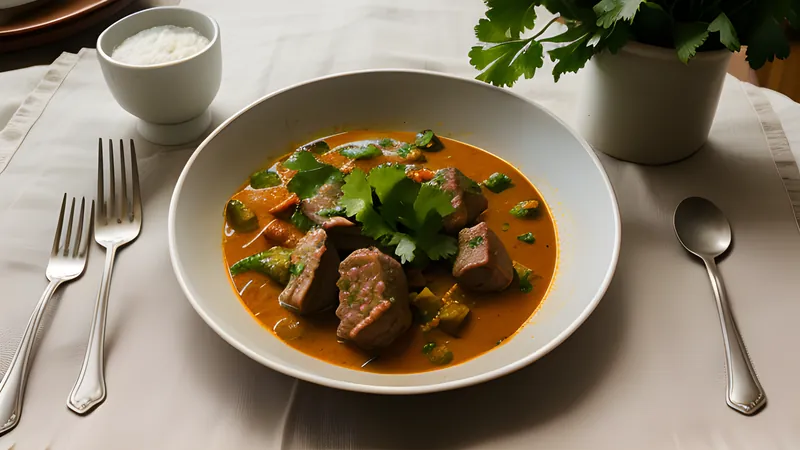
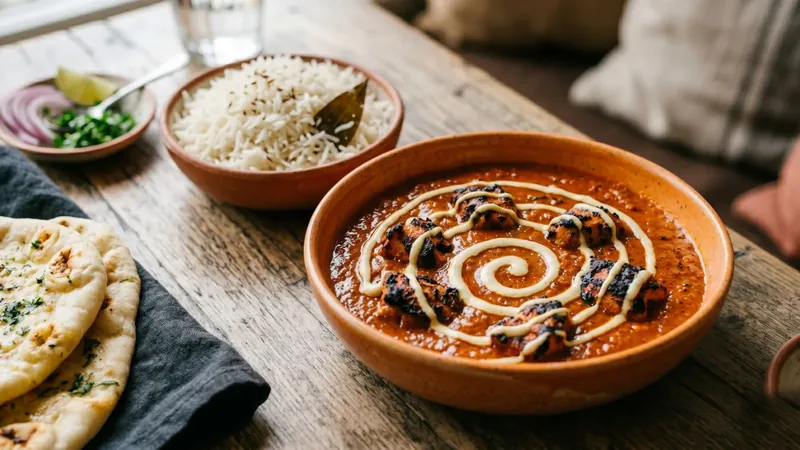
↓ Jump to recipeLaal maas is Rajasthani mutton cooked hard in dried red chilli, and it does not apologise for the heat. This is the curry that emerged from the royal kitchens and hunting camps of Mewar and Marwar, built to use up game meat and preserved through winters on a base of little more than chilli, garlic and yoghurt. Done properly it is deep, dark red rather than orange, thick enough to cling to a torn roti, and hot in a way that builds rather than shocks.
Laal Maas: Mutton in Mathania Chilli
Ingredients
- 900g mutton or lamb shoulder, bone-in, cut into 4cm pieces
- 200g plain yoghurt, whisked
- 2 tbsp ginger-garlic paste, divided
- 0.5 tsp ground turmeric
- Salt, to taste
- 12 dried Mathania or Kashmiri chillies, stems removed
- 3 dried whole red chillies, extra hot, optional
- 200ml warm water, for soaking the chillies
- 100g ghee
- 2 onions, finely sliced
- 4 green cardamom pods, bruised
- 2 black cardamom pods, bruised
- 1 cinnamon stick
- 4 cloves
- 1 bay leaf
- 1 tsp cumin seeds
- 1 tsp coriander powder
- 1 tsp garam masala
- 200ml water, plus more to loosen
- 2 tbsp chopped coriander, to finish
Method
- Toss the mutton with the yoghurt, 1 tbsp ginger-garlic paste, turmeric and salt. Marinate in the fridge for at least 1 hour, ideally overnight.
- Soak the dried chillies in the warm water for 20 minutes until soft, then blend to a smooth paste with the soaking water.
- Heat the ghee in a heavy pan over a medium heat. Add the onions and fry 10-12 minutes until deeply golden.
- Stir in the remaining ginger-garlic paste and cook 1 minute until the raw smell disappears.
- Add the cardamom, cinnamon, cloves, bay leaf and cumin seeds, and fry 1 minute until fragrant.
- Sear the mutton in batches over a high heat for 6-8 minutes per batch, until browned on all sides.
- Return all the mutton to the pan, stir in the coriander powder, and cook 2 minutes.
- Add the chilli paste and the water, scraping up the browned bits, and bring to a simmer.
- Cover and cook on a low heat for 60-75 minutes, topping up with hot water if it catches, until the mutton is completely tender.
- Stir in the garam masala, check the seasoning, and rest 5 minutes. Scatter with coriander and serve.
The Story
The name gives the whole dish away: laal is red, maas is meat. What it does not explain is why the red here is so specific. Mathania chillies grow around the village of Mathania near Jodhpur, and they are prized for a colour and aroma that outstrip their actual heat; a Mathania-heavy laal maas looks incendiary and eats hotter than it looks, but a good cook balances it with enough yoghurt and slow cooking that the fire never overwhelms the meat underneath. This is a Rajput dish by origin, cooked in the kitchens of Mewar’s warrior aristocracy for hunting parties that came back with wild boar or venison and needed a preservation method as much as a recipe. Chilli and salt were both natural preservatives in a hot, dry climate without reliable refrigeration, and a thick, chilli-forward gravy kept meat edible for days on campaign.
Water was, again, the limiting factor in how this dish developed. Marwar’s kitchens leaned on yoghurt and ghee rather than tomato-heavy gravies, both because tomatoes are a relatively late arrival to Indian cooking and because a fermented dairy base tenderises meat without needing gallons of water to simmer down. The result is a curry with real body from fat and dairy rather than from a reduced liquid, which is part of why laal maas tastes so much richer than its short ingredient list would suggest.
Laal maas today is as likely to turn up at a Jodhpur wedding banquet as it is on a home stove, and hotels across Rajasthan built around the region’s fort tourism trade have made it something of a signature dish for visitors, often toning down the chilli for an international palate in a way that would read as bland to anyone who grew up eating the real thing.
Building the heat without losing the meat
The trick with a proper laal maas is treating the chilli as a paste, not a powder. Whole dried chillies, rehydrated and blended, release their colour and aroma gradually as the curry simmers, rather than dumping a raw, one-note heat straight into the pot the way chilli powder does. Soaking the chillies in warm rather than cold water speeds up the softening and pulls out more of their red pigment, which is what gives the finished gravy its lacquered, deep colour rather than a muddy brown-orange. If Mathania chillies are hard to source, a mix of Kashmiri chillies, chosen for colour rather than fire, with two or three genuinely hot dried chillies for punch gets you close; Kashmiri chilli alone will look right but taste flat.
Searing the mutton in batches rather than all at once matters more than it sounds like it should. A crowded pan steams the meat instead of browning it, and that missed Maillard reaction is flavour you cannot get back later in the braise. Give each batch real space and real heat, and be patient about it; the fond left in the pan, scraped up once the chilli paste goes in, carries a savoury depth that no amount of extra spice can substitute for.
Cuts, timing and doneness
Bone-in mutton shoulder is worth seeking out over boneless cuts or lamb leg. The bone contributes gelatine and flavour to the slow braise, and shoulder has enough intramuscular fat to stay moist through the full 60 to 75 minutes it needs to turn properly tender. Test doneness by pulling a piece of meat gently with a fork; it should give with minimal resistance and start to come away from the bone. If it still fights back, keep cooking rather than serving it underdone, since the whole appeal of the dish is meat that yields easily against bread or rice. Lamb shoulder is the closest widely available substitute in the UK and works well, though it cooks slightly faster than mutton and is worth checking from around 50 minutes in.
Not a Mughlai curry
It is worth separating laal maas from the North Indian restaurant curries it sometimes gets lumped in with. Mughlai kitchens built their gravies around reduced onion pastes, cream and a gentler spice profile designed for a royal court that valued richness above aggression. Laal maas comes from a harder tradition: Rajput hunting camps, desert forts, and a climate that made preserving meat a genuine problem rather than a culinary preference. There is no cream in an authentic version, and the ghee is there for cooking and mouthfeel rather than to soften the chilli. A laal maas that tastes mild and pale orange has drifted toward a different, gentler dish, and pushing the chilli quantity back up is the fix.
Whole spices, and when to fish them out
The whole spices, cardamom pods, cinnamon, cloves and bay leaf, are there to perfume the ghee and onions early in the cooking rather than to be eaten whole later. Bruising the cardamom pods before adding them cracks the husk enough to release their oils into the fat without shattering the pod into small fragments that end up in someone’s mouth at the table. Some cooks tie the whole spices in a small piece of muslin so they can be lifted out before serving; it is a fussier step than this recipe strictly needs, but worth doing for guests. Otherwise, simply warn diners that the pods are there for flavour and not for eating.
What can go wrong
Splitting the yoghurt marinade is a common early mistake; whisk it smooth before it meets the meat, and keep the marinating mutton in the fridge rather than at room temperature for anything beyond the initial hour, since yoghurt left warm for too long can turn the meat slightly sour rather than tender.
Reaching for chilli powder instead of a proper soaked-and-blended paste is the second failure, and it is the single biggest reason a homemade laal maas can taste flat despite plenty of heat; powder alone gives capsaicin’s sharpness without the colour, aroma or gradual release of flavour a true paste provides. The third mistake is impatience with the braise itself: mutton needs the full 60 to 75 minutes, sometimes longer for a genuinely old or tough animal, to break down its connective tissue properly, and pulling it off the heat early leaves meat that is merely cooked rather than falling-apart tender. If the sauce reduces faster than the meat softens, top up with hot water rather than letting the pan run dry and risk the spices catching and turning bitter.
Substitutions, storage and serving
For a milder version, halve the dried chilli quantity and stir in an extra spoonful of yoghurt at the end to round out the heat rather than cut it entirely; this is the version many Rajasthani households cook day to day, saving the full-strength recipe for guests. The curry keeps for up to four days in the fridge and, like most slow braises, tastes better on the second day once the spices have settled into the meat. It also freezes well for up to three months. The chilli paste itself can be made several days ahead and kept in the fridge in a sealed container, which is a genuine time-saver on the day, since blending and soaking is the fiddliest single step in the whole recipe. Marinating the mutton the night before is worth doing whenever your schedule allows it; the yoghurt has more time to tenderise the meat, and the dish comes together considerably faster the following day.
Serve laal maas with plain rice or the baked, ghee-rich baati from dal baati churma, which is the traditional pairing in Marwari homes and stands up well to the heat. For a gentler mutton curry from further north that shows a different side of the subcontinent’s slow-cooking tradition, the yoghurt-and-fennel kashmiri yakhni is worth making as a study in contrast.
Related Content