Kubbeh Soup: The Beetroot Dumpling Broth
Crimson broth, semolina dumplings, a Sabbath in a bowl
Contents
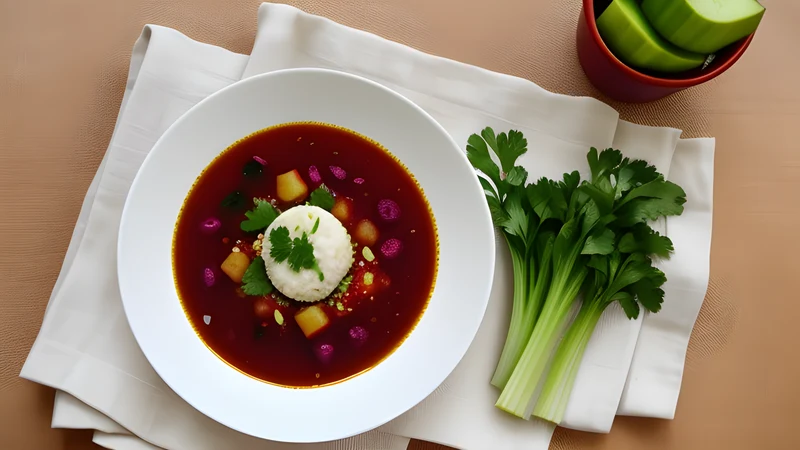
↓ Jump to recipeThere is a particular red that only beetroot makes: a clear, jewelled crimson, quite distinct from the brown-red of tomato or the orange-red of paprika, and it stains the whole bowl. That colour is the first thing you notice about kubbeh soup, and it is the reason this dish stops conversation when it lands on the table. Underneath the colour is something more serious: semolina dumplings, each one sealed around a knot of spiced meat, poached until they turn silky and translucent at the edges.
This is Iraqi-Jewish cooking, carried out of Baghdad and Basra by families who left in the middle of the twentieth century and kept the recipe alive in Jerusalem’s markets, where kubbeh soups of every colour now simmer in enormous pots. The beetroot version — kubbeh selek or kubbeh shwandar — is the showpiece, a Sabbath and festival dish that takes an afternoon and rewards it completely.
Kubbeh Soup: The Beetroot Dumpling Broth
Ingredients
- For the broth: 2 tbsp olive oil
- 1 large onion, finely chopped
- 3 medium raw beetroots, peeled and cut into batons
- 3 celery sticks, sliced
- 2 tbsp tomato purée
- 1.8 litres good chicken or beef stock
- 2 tbsp lemon juice, plus more to finish
- 1 tsp sugar
- 1 tsp ground turmeric
- Salt and black pepper
- For the dough: 300g fine semolina
- 100g plain flour, plus extra for dusting
- 1/2 tsp salt
- About 220ml warm water
- For the filling: 300g minced beef or lamb
- 1 small onion, very finely chopped
- 1 tsp ground allspice
- 1/2 tsp ground cinnamon
- Small handful flat-leaf parsley, chopped
Method
- Make the filling: fry the onion in a little oil until soft, cool, then mix with the mince, allspice, cinnamon, parsley, 1 tsp salt and plenty of pepper. Chill.
- Make the dough: mix semolina, flour and salt, then work in warm water a little at a time until you have a firm, smooth, non-sticky dough. Cover and rest 20 minutes.
- Build the broth: soften the onion in oil, add beetroot and celery and cook 5 minutes. Stir in tomato purée and turmeric, cook 1 minute, then add stock, lemon juice and sugar. Simmer 30 minutes until the beetroot is tender and the broth is deep red.
- Shape the dumplings: roll dough into walnut-sized balls, flatten each into a disc in your palm, place a heaped teaspoon of filling in the centre, seal into a ball and smooth any cracks. You should get 18–20.
- Season the broth well with salt and pepper. Lower the dumplings in gently and simmer 25–30 minutes until they float and the dough is cooked through and tender.
- Finish with extra lemon juice to taste. Rest 10 minutes off the heat, then serve hot with the dumplings and beetroot divided between bowls.
What kubbeh actually means
The word kubbeh travels a long way and means different things depending on where you say it. Across the Levant and the Gulf, kibbeh usually refers to the football-shaped bulgur-and-meat croquette that gets deep-fried. In the Iraqi-Jewish kitchen, kubbeh became something else: a dumpling with a semolina or rice-flour shell, dropped into soup rather than fried. The shell is neutral and slightly chewy, a vehicle for the filling and a sponge for the broth, and the whole genius of the dish is in that contrast between the sharp, sweet-sour soup and the mild, meaty dumpling.
Every Iraqi-Jewish grandmother has a colour and a shape. There is kubbeh hamusta, green and lemony with chard and courgette. There is a golden-orange version built on pumpkin and turmeric. And there is this one, the beetroot kubbeh, which is often the Friday-night soup because its colour reads as celebration. The dumplings are frequently made in bulk and frozen raw, so a pot of soup is only ever thirty minutes away — a practical detail that tells you how central this dish is to the ordinary week as much as to the festival.
A soup that carried a community
To understand why kubbeh matters you have to know how far it travelled. Iraqi Jews were one of the oldest Jewish communities on earth, living in Baghdad, Basra and Mosul for well over two thousand years, since the Babylonian exile. Their cooking was Iraqi cooking — the same tamarind, the same beetroot, the same love of a sweet-sour broth as their Muslim and Christian neighbours — inflected by the laws of the Sabbath and the festivals. Kubbeh was a keystone of it: a dish you could prepare in advance and reheat, which suited a day when cooking was forbidden.
Between 1948 and the early 1950s almost the entire community left, most of them airlifted to the new state of Israel in an operation that emptied a two-millennia-old world in a couple of years. They arrived with very little, but the recipes came intact in people’s hands. Today the loudest monument to that kitchen is the kubbeh stalls of Jerusalem’s Mahane Yehuda market, where Iraqi and Kurdish cooks ladle out red, yellow and green kubbeh soups all day, and where a bowl of beetroot kubbeh is as much a part of the city’s food identity as falafel. The dish outlived the world that made it, which is a heavy thing to carry in a semolina dumpling, and worth remembering while you shape them.
The dough is the hard part, and it isn’t hard
People are frightened of the semolina shell, and they shouldn’t be. It is flour, fine semolina, salt and warm water, worked to a firm dough that behaves like a stiff pasta. The two failure modes are equally avoidable. Too wet, and the dumplings slump and split in the broth; too dry, and they crack when you shape them and let the filling leak out. You want a dough that holds a clean shape, feels smooth rather than tacky, and doesn’t stick to your palm.
Add the water gradually — semolina absorbs unevenly and the last splash is what turns a shaggy mass into a workable dough, so go slowly at the end. Rest it, covered, for twenty minutes. This lets the semolina fully hydrate and relaxes the gluten in the plain flour, which makes the dough far easier to flatten without tearing. If it still cracks at the edges when you shape a disc, wet your fingertips and smooth them; a small crack sealed now is a burst dumpling avoided later.
Shaping takes a rhythm you’ll find after three or four. Roll a ball, press it into a shallow cup in your palm, tuck the filling in, then bring the edges up and over and roll it smooth between both hands. Keep the shell as even as you can — a thin patch cooks faster and can split, a thick patch stays stodgy. Aim for dumplings a bit larger than a walnut, and don’t overfill; a heaped teaspoon of meat is plenty, and greed here is how they burst.
Building a broth with backbone
A beetroot broth can taste flat and vegetal if you let it, so it needs three things pulling in balance: sweetness from the beetroot and a little sugar, sourness from lemon, and depth from a proper stock. Get all three singing and the soup tastes bright and savoury and faintly sweet all at once, which is exactly what you want against the mild dumplings.
Turmeric does quiet work here. It won’t dominate the beetroot’s colour, but it warms the whole broth and rounds out the earthiness. Tomato purée adds a savoury backbone and a touch more acidity. And the lemon goes in twice — once during the simmer, once at the end — because acidity fades as it cooks, and that final squeeze off the heat is what makes the soup taste freshly finished rather than stewed. If you like the sweet-sour register, you’ll recognise it from other Middle Eastern dishes built on the same axis, like the tangle of spiced rice in maqluba.
Use the best stock you can. This is a soup where the liquid is half the dish, so a weak, watery stock cannot be rescued by seasoning. A good homemade chicken stock is ideal; a decent beef stock gives a heartier, more wintry result. Season the broth confidently before the dumplings go in, because the shells are unsalted and will draw seasoning from the liquid as they cook.
Cooking the dumplings without disaster
Lower the dumplings into a gentle simmer, never a rolling boil — vigorous bubbles knock them about and split the shells. They’ll sink at first, then rise as the dough cooks and traps steam; a floating dumpling that has simmered its full time is done, its shell tender and slightly translucent. Give them twenty-five to thirty minutes and resist prodding them constantly, which only encourages tearing.
Cook them in batches if your pot is crowded. Dumplings need room to move or they stick together and cook unevenly, and a wedged pot is where a burst shell starts. If you’re feeding a crowd, poach in two lots and hold the first batch warm in a little broth.
Make-ahead, storage and variations
This is a dish built for getting ahead. The filling can be made a day early and kept chilled. The dough is best used fresh, but shaped dumplings freeze beautifully on a tray, then bagged — drop them frozen straight into simmering broth and add five minutes. The broth itself keeps three days in the fridge and reheats without complaint, though it drinks up liquid as it sits, so loosen it with a little water or stock and re-sharpen with lemon.
For variations, the green hamusta route is the obvious next one: swap the beetroot broth for a lemony chard-and-courgette soup and keep the same dumplings. You can lighten the filling with more onion and herbs, or enrich it with a spoonful of the rendered fat from a chicken. Some cooks add a handful of chickpeas to the beetroot broth for body — an idea borrowed from the wider Iraqi table, where chickpeas turn up everywhere from stews to the warm, loose bowls of msabbaha eaten for breakfast.
What goes wrong, and how to read the bowl
A few honest diagnostics for the first time you make this. If the dumplings dissolve or go ragged, the dough was too wet or the broth was boiling too hard — firm the dough with a little more semolina next time and keep the heat at a lazy simmer. If they come out dense and stodgy in the middle, the shell was too thick; roll them thinner and a touch smaller. If the broth tastes dull despite good stock, it almost always needs more acid and salt rather than more of anything else, so add lemon and salt in small increments until it snaps into focus. And if the colour turns muddy brown rather than jewel-red, you have boiled the beetroot too long or too fiercely; a gentle simmer keeps the pigment bright.
One more note on the beetroot itself. Raw beetroot gives the cleanest colour and flavour, but you can shortcut with vacuum-packed cooked beetroot (not the kind in vinegar) — add it later in the simmer since it only needs warming through, and lean a little harder on fresh lemon to make up for the sweetness. Wear an apron either way; beetroot forgives nothing on a white shirt.
Serve it in wide, shallow bowls so the colour shows, three or four dumplings per person, the beetroot batons and celery divided out with the broth. A final grind of black pepper, a wedge of lemon on the side, and warm flatbread to catch what the spoon leaves behind. Traditionally this is Friday-night food, made in a big pot to feed a full table with dumplings to spare, and it wants nothing more than company and time. It is a long afternoon’s cooking, and every minute of it is visible in the bowl. Make it once for people you love, and it will earn a place in your own week the way it earned one in Baghdad and Jerusalem.
Related Content