Kosha Mangsho: Bengali Slow-Fried Mutton
Mutton fried down to a dark, sticky gravy over a lazy Sunday
Contents
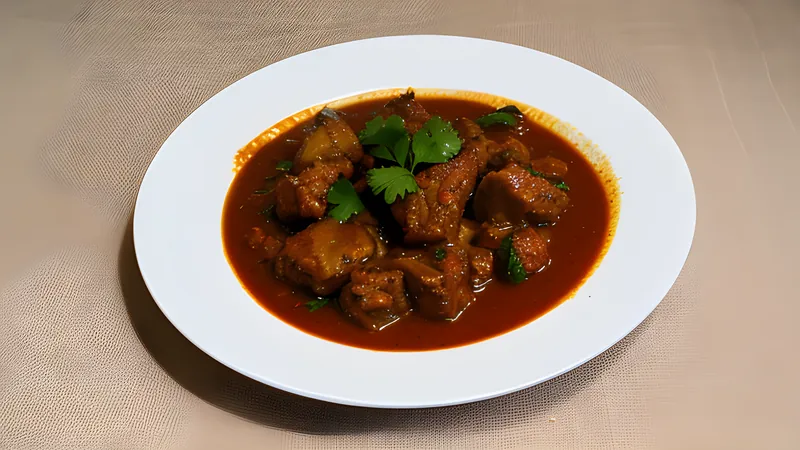
↓ Jump to recipeKosha mangsho translates roughly to fried mutton, and that flat, functional name undersells one of the most technically demanding home dishes in the Bengali repertoire. The word kosha refers to a specific technique: frying meat in its own fat and marinade over sustained heat until every trace of raw liquid has cooked away and what remains is thick, dark, and clinging to the meat rather than pooling around it. It is not a stew and it is not a curry in the usual sense. It sits somewhere between a braise and a confit, built entirely around patience at the stove rather than any single spice or ingredient.
Kosha Mangsho: Bengali Slow-Fried Mutton
Ingredients
- 1kg mutton (goat), bone-in, cut into 4cm pieces
- 300g yoghurt, whisked smooth
- 1 tbsp ginger paste
- 1 tbsp garlic paste
- 2 tsp Kashmiri chilli powder
- 1 tsp ground turmeric
- 1.5 tsp fine salt, plus more to taste
- 5 tbsp mustard oil
- 3 large onions, thinly sliced
- 2 bay leaves
- 4 green cardamom pods
- 2 black cardamom pods
- 1 cinnamon stick, 5cm
- 4 cloves
- 2 tsp coriander seeds, toasted and ground
- 1 tsp cumin seeds, toasted and ground
- 1 tsp sugar
- 1 tsp garam masala
- 200ml hot water, plus more as needed
Method
- Marinate the mutton in the yoghurt, ginger paste, garlic paste, chilli powder, turmeric and 1 tsp salt for at least 2 hours, or overnight in the fridge.
- Heat the mustard oil in a heavy kadai or pot until it just stops smoking, then fry the sliced onions with a pinch of salt over medium-high heat for 20 minutes, stirring often, until deep brown and jammy.
- Add the bay leaves, green and black cardamom, cinnamon and cloves, and fry for 1 minute until fragrant.
- Add the marinated mutton, turn the heat up, and fry hard for 12–15 minutes, stirring frequently, until the yoghurt has cooked off and the meat is browning at the edges.
- Add the ground coriander and cumin, sugar and remaining 1/2 tsp salt, and continue frying for a further 10 minutes until the oil separates and pools at the sides of the pot.
- Pour in 200ml hot water, scrape up anything stuck to the bottom, cover, and simmer on low heat for 45–60 minutes, checking every 15 minutes and topping up water only if it looks close to catching.
- Uncover for the final 10–15 minutes and let the gravy reduce to a thick, dark, clinging consistency, stirring more frequently as it thickens.
- Stir in the garam masala, rest for 10 minutes off the heat, and serve with rice or luchi.
Sunday’s Dish
Kosha mangsho holds a specific place in the Bengali week: it is Sunday food, cooked in the late morning by whoever has the time to stand at the stove for two unbroken hours, and eaten at a leisurely lunch that runs into the afternoon. Mutton itself was historically a Sunday indulgence in Bengali households, more expensive and more occasion-worthy than the fish that dominates the rest of the week, and the dish that showcases it inherited that sense of occasion. Even now, in households that eat mutton more freely, kosha mangsho keeps its Sunday association, partly because the dish genuinely does need the kind of unhurried morning that a working weekday rarely offers.
Bengali cuisine is often characterised, correctly, as a fish-and-rice cuisine, and its meat dishes get comparatively little attention outside the region. Kosha mangsho is the clearest counter-argument to that reputation: a dish built entirely around deep, patient frying rather than the poaching and steaming that define so much of Bengali fish cookery, and one that draws on a completely different set of techniques and expectations. Where shorshe ilish wants gentleness, kosha mangsho wants heat, browning and reduction, with more in common with a French daube than with the mustard-poached fish dishes from the same kitchens. The dish has also become a Kolkata street and roadside-stall staple, sold from huge blackened kadais outside football stadiums and on festival days, where vendors keep a single pot going from mid-morning and sell out by early afternoon, the gravy only getting better as the day wears on and the pot never quite empties before the next batch of onions goes in.
Weddings and pujo feasts treat kosha mangsho differently again, cooking it a day ahead deliberately, since Bengali caterers have long known what home cooks eventually learn too: the dish only gets better as it sits, the fat and spice continuing to work into the meat overnight. At a wedding lunch it usually turns up after the fish courses, near the end of the meal, as the dish that signals the feast has reached its most indulgent point rather than something served early to whet the appetite.
The Yoghurt Marinade and Why It Matters
Marinating the mutton in yoghurt for at least two hours, and ideally overnight, does two jobs. The lactic acid tenderises the meat gently, breaking down surface proteins without turning the texture mushy the way a stronger acid like lime juice can. It also gives the meat a head start on flavour absorption, so that by the time it hits the hot oil, the spices are already partway into the muscle rather than sitting only on the surface. Do not skip the overnight option if you have the time to plan for it; the difference in tenderness with bone-in goat, which is tougher than lamb, is considerable. Full-fat yoghurt matters here too — low-fat versions split more readily under the fierce frying heat later in the recipe, leaving a grainy texture in the finished gravy rather than a smooth one.
Getting the Onions Right
The fried onion base carries a huge amount of the dish’s final flavour, and twenty unhurried minutes at the start is not optional. Underdone onions, pale and merely softened, leave the finished dish tasting thin and one-dimensional; onions cooked hard until they collapse into a deep brown, almost jammy paste give the gravy its characteristic sweetness and body. Resist the temptation to raise the heat to speed this along — high heat catches the onions on the outside before the inside has broken down, giving you bitter, unevenly cooked scraps rather than the smooth base the dish needs. Medium-high with frequent stirring, over the full twenty minutes, is the only route that works reliably. Slice the onions thinly and evenly; thick or uneven slices cook at different rates in the same pan and you end up scraping burnt fragments out from among still-raw pieces.
The Whole Spices
Bay leaf, cinnamon, cloves and both green and black cardamom go in whole, fried briefly in the hot oil before the meat arrives, a technique called phoron or tempering that runs through most Bengali savoury cooking. Frying whole spices in hot fat, rather than adding ground versions directly to a liquid, blooms their essential oils far more thoroughly and gives a rounder, less dusty flavour than powder alone ever achieves. Black cardamom in particular brings a smoky, resinous note that is easy to underestimate; it is doing real work in the background of the finished gravy, and swapping it for extra green cardamom will leave the dish tasting sweeter and flatter than it should.
West Bengal and Bangladeshi versions diverge slightly in their ratio of oil to meat and in how dark the finished gravy is meant to look. Kolkata households tend to cook it drier and darker, closer to a paste clinging to the bone, while versions from Bangladesh often keep a touch more gravy and lean sweeter, sometimes with a pinch more sugar than a West Bengal cook would use. Neither is more correct than the other; they reflect two related but distinct culinary traditions either side of a border that was drawn well after the dish itself had settled into its current form.
The Frying Stage
The technique that gives the dish its name happens after the onions and whole spices are in and the marinated meat goes into the pot. Turn the heat up and fry the mutton hard, stirring often, until the yoghurt’s moisture cooks away entirely and the meat starts to properly brown rather than merely simmer in its own marinade. This stage takes patience and a willingness to stand at the stove rather than walk away, because the transition from still-wet to properly-frying happens gradually and then quite suddenly. You will know it has arrived when the oil visibly separates from the spice paste and pools at the edges of the pot — the same tell you look for in a good dal makhani or a properly reduced curry base, and one of the most reliable indicators in Indian and Bengali home cooking generally.
Only once that separation has happened do you add water and move into the slower braising stage. Adding water too early, before the oil has separated, gives you a dish that tastes boiled rather than fried, missing the deep, almost caramelised note that defines a proper kosha mangsho.
Choosing the Meat
Bone-in goat is the traditional choice, and the bone matters: it releases gelatine slowly into the gravy over the long simmer, thickening it naturally in a way boneless meat cannot replicate. Lamb shoulder, also bone-in, is the easiest substitute outside South Asian butchers and works well, though it cooks slightly faster and softer than goat, so start checking for doneness ten minutes earlier than the goat timing given here. Whichever you use, cut the pieces reasonably large, around 4cm, since the meat shrinks considerably over the long cook and small pieces will disappear into the gravy entirely.
Troubleshooting
A gravy that stays thin and watery even after the full simmer time usually means the frying stage was rushed and the oil never properly separated before water went in; there is no good fix at that point beyond uncovering the pot and reducing harder and longer than the recipe states. Meat that is still tough after the full simmer time is more often a cut problem than a technique problem — older goat, or lamb neck rather than shoulder, simply needs another twenty to thirty minutes of low, covered simmering, with small splashes of water added only if the bottom starts to catch. A gravy that tastes flat despite following the spice measurements exactly is nearly always an onion problem: go back and check whether they were actually fried to a deep jammy brown, not merely softened and translucent.
Storage and Make-Ahead
Kosha mangsho is one of the rare dishes that genuinely improves on the second day, once the spices have had time to settle fully into the meat and the gravy has thickened further in the fridge. It keeps for three to four days refrigerated in an airtight container, and freezes well for up to two months — thaw it overnight in the fridge and reheat gently on the stove with a splash of water to loosen the gravy back to its clinging consistency. Many Bengali households deliberately cook a large batch on a Sunday specifically to eat it reheated through the following week.
Serving and Pairing
Rice is the everyday pairing, but luchi, the puffed deep-fried bread, is the more festive choice and the one you will see at celebrations rather than weeknight tables. If you are building a wider Bengali spread, a lighter dish like shukto or a bowl of tangy rasam at the start of the meal gives the palate somewhere to reset before the richness of the mutton arrives. A simple cucumber and onion salad on the side, dressed with nothing more than lime and salt, cuts through the dish’s density better than anything more elaborate would.
Variations
Some cooks add a small piece of potato, fried separately until golden and stirred in during the last twenty minutes of the simmer, a version called aloo kosha mangsho that stretches the dish across more servings. A garnish of julienned fried onion and a scatter of raw green chilli at the table lets each diner adjust the heat individually. Whatever variation you choose, the core discipline stays the same: fry until the oil separates, and add water only after that point arrives.
Related Content