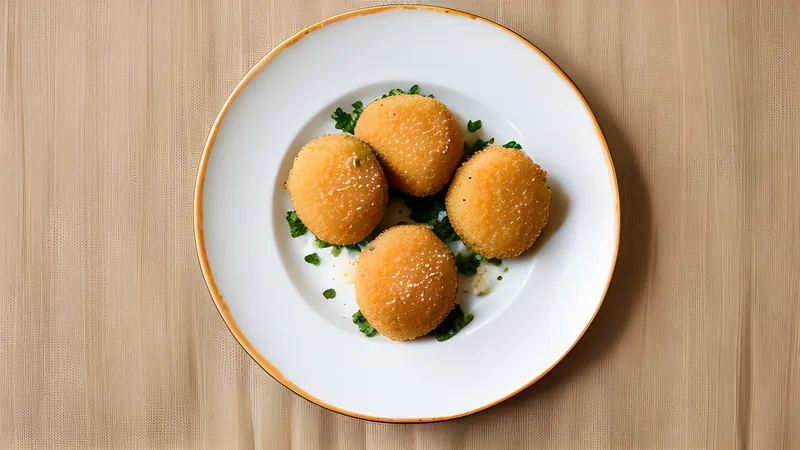
Korokke: Japanese Potato Croquettes
A Meiji-era import that became one of Japan's most common convenience-store snacks
Contents
↓ Jump to recipeKorokke: Japanese Potato Croquettes
Ingredients
- 800g floury potatoes (Maris Piper or similar), peeled and cut into even chunks
- 1 tbsp neutral oil
- 1 small onion, finely diced
- 200g minced beef or pork (or a mix)
- 1 tsp salt, plus more to taste
- 1/2 tsp white pepper
- 1 tbsp soy sauce
- 1 tsp sugar
- 1 tbsp butter
- 80g plain flour, for coating
- 2 eggs, beaten
- 150g panko breadcrumbs
- 500ml neutral oil, for deep frying
- tonkatsu sauce, for serving
- shredded cabbage, to serve
Method
- Boil the potato chunks in salted water until completely tender, about 15–18 minutes, then drain thoroughly and return to the hot pan for a minute to steam off excess moisture.
- Mash the potato while still hot until smooth but not gluey, then set aside.
- Heat the oil in a frying pan over medium heat and cook the onion until soft and translucent, about 5 minutes.
- Add the minced meat, breaking it up as it browns, and cook until no pink remains and most of the liquid has evaporated.
- Season the meat mixture with the salt, white pepper, soy sauce and sugar, stirring to combine, then cook for another minute until it smells savoury rather than raw.
- Fold the meat mixture and butter through the mashed potato while both are still warm, mixing until evenly combined. Taste and adjust salt.
- Once cool enough to handle but still slightly warm, divide the mixture into 8 portions and shape into thick ovals or discs, about 2cm thick.
- Set up three shallow dishes: flour in one, beaten egg in the second, panko in the third. Coat each croquette in flour, then egg, then panko, pressing the crumbs on firmly so they adhere in an even layer.
- Heat the oil to 170–175°C. Fry the croquettes in batches for 3–4 minutes, turning once, until deep golden brown all over.
- Drain briefly on a rack and serve immediately with tonkatsu sauce and shredded cabbage.
A dish that arrived sideways
Korokke is a Japanese adaptation of the French croquette, arriving during the Meiji era in the late 19th century alongside a wave of Western dishes that Japanese cooks reinterpreted with ingredients and techniques already familiar to them — the same historical moment that gave Japan tonkatsu (from cutlet) and omurice (from omelette rice). Where the French original is built on a thick béchamel bound with flour and butter, Japanese korokke largely dropped the sauce base in favour of mashed potato, a cheaper, more available starch that also happened to produce a lighter, drier filling more suited to the thick panko crust Japanese cooks were already using for tonkatsu. By the early 20th century korokke had become one of the “three great Western dishes” of the era alongside tonkatsu and curry rice, and it has stayed a staple of Japanese home cooking and convenience-store counters ever since, sold hot from cases in every konbini in the country.
The potato-and-mince version below is the most common one found at home and at butcher’s-shop counters, though korokke has spread into a genre with dozens of fillings — corn and cheese, crab, curry-spiced, pumpkin — all sharing the same basic structure of a thick, held-together filling, a firm panko crust, and a short, hot fry that crisps the outside before the filling inside has any chance to overheat, since it’s already fully cooked before it ever meets the oil.
What “menchi katsu” gets confused with
Korokke is often mentioned alongside menchi katsu, a similarly panko-crusted fried patty, and the two are easy to muddle from a photograph alone — both golden, both crumbed, both served with the same tonkatsu sauce and shredded cabbage. The difference is structural rather than cosmetic: menchi katsu is essentially a crumbed, fried burger patty of seasoned minced meat with no potato at all, closer to a Japanese take on a Salisbury steak, while korokke’s identity depends specifically on the potato base, with meat playing a supporting, flavouring role rather than being the primary substance of the filling. Get the ratio backwards — too much meat, not enough potato — and what you’ve made is closer to menchi katsu wearing korokke’s name, which isn’t a disaster to eat but isn’t quite the dish this recipe is describing.
Why the potato has to be dry
The single biggest risk in korokke is a filling wet enough to make the coating soggy or, worse, to split the croquette apart in the fryer as steam builds up faster than it can escape through the crust. Floury potato varieties, mashed while still hot rather than left to cool and reabsorb their own moisture, and steamed briefly in the dry pan after draining, give you the driest base to start from. Resist the urge to add milk, cream or extra butter the way you might for a serving mash — korokke potato wants to be firmer and drier than anything you’d want to eat with a spoon on its own, because it needs to hold a shape through coating, resting and frying without collapsing.
The meat filling needs the same treatment. Cook it until the liquid it releases has properly evaporated rather than folding it through the potato while it’s still visibly wet — any remaining liquid in the meat becomes steam inside a sealed panko shell, and steam under pressure is exactly what splits a croquette open mid-fry, dumping hot oil into the filling and the filling into the oil in a mess that’s unpleasant on both counts.
Shaping, resting and the coating itself
Shape the croquettes once the mixture has cooled enough to handle comfortably but is still a little warm — fully cold potato mash is harder to compress into a cohesive shape and tends to crack at the edges once coated and fried, while working with mash that’s still hot enough to burn your hands makes for a miserable shaping process. A thick oval or disc, rather than a perfect sphere, gives you more surface area of crust relative to filling, which is generally the better ratio for this dish — korokke isn’t really about the potato so much as the contrast between a substantial, well-seasoned interior and a shatteringly crisp exterior.
The three-stage coating — flour, then egg, then panko — isn’t optional at any stage. Flour gives the wet egg something to grip that bare potato mash wouldn’t offer on its own; egg is the glue that lets the panko stick in an even, generous layer; and panko itself, coarser and drier than ordinary breadcrumbs, is what gives Japanese fried food its characteristic shattering crunch rather than the denser, more uniform crust of a Western-style crumbed cutlet. Press the panko on firmly rather than just rolling the croquette through it — a light dusting leaves gaps that fry unevenly and can expose the filling directly to hot oil.
Frying without splitting
Because the filling is already fully cooked before frying, the entire job of the fry is to crisp and colour the crust — there’s no need for a long, gentle cook the way you’d manage a raw cutlet. A properly hot oil, checked with a thermometer rather than guessed, does this fast: three to four minutes total, turned once, is usually enough for a croquette of the size given here. Frying at too low a temperature stretches this window out and gives the oil more time to work its way into the coating before it’s had a chance to seal, leading to a greasier result rather than a crisp one.
If a croquette does split in the fryer, it’s almost always because the filling was warmer or wetter than it should have been when shaped, building enough internal steam pressure to force its way out through the weakest point in the crust — usually a spot where the panko was pressed on thinly. Letting the shaped, coated croquettes rest in the fridge for twenty minutes before frying firms everything up and reduces this risk considerably, a step worth adding if you’ve had trouble with splitting before. Frying more than three or four at once in a small pan drops the oil temperature too far to recover quickly, which extends the time the coating spends absorbing oil before it seals — better to work in smaller batches and keep the finished ones warm in a low oven than crowd the pan to save time.
Choosing potatoes and getting the mash right
Floury varieties — Maris Piper, King Edward, or a similar high-starch, low-moisture potato — mash drier and fluffier than waxy varieties, which hold their shape better boiled whole but release far more moisture when mashed and never quite dry out the same way under a quick pan-steaming. If you’re not sure what’s available where you shop, ask for a “baking potato” rather than a “salad” or “new” potato, which is usually a reliable enough proxy for the floury, high-starch type this recipe wants.
Boil the potato in reasonably large, even chunks rather than one whole potato per person — smaller, even pieces cook through at the same rate, which matters because an unevenly cooked chunk left slightly firm in the centre will mash lumpy no matter how hard you work it, and those lumps show up as an unpleasant surprise texture once the croquette is fried and you bite into what should have been smooth mash. Drain thoroughly and don’t skip the brief return to the dry, hot pan afterwards — a minute or two shaking the potatoes over low heat drives off surface moisture that clinging water would otherwise leave behind, and it’s a genuinely useful trick worth applying to mashed potato served on its own, too.
Onion and meat: getting the base flavour right
A finely diced onion, cooked slowly enough to turn properly soft and translucent rather than just warmed through, contributes a sweetness that balances the meat’s savoury weight — rushing this step over high heat leaves the onion raw-tasting and sharp at the edges, which reads as an unpleasant surprise against the otherwise mild, comforting flavour of the potato. Beef gives a deeper, more traditional flavour associated with the classic version, while pork makes a slightly milder croquette that some home cooks prefer; a mix of the two is common and gives you a bit of both.
Season the meat mixture more assertively than instinct suggests, since a good portion of that flavour will be diluted once it’s folded through a much larger quantity of comparatively bland mashed potato. Taste the finished, combined mixture before shaping anything — this is the point to adjust salt, since the coating and frying that follow won’t offer another opportunity to correct underseasoned filling once it’s sealed inside a crust.
Serving, storage and variations
Tonkatsu sauce — thick, dark, fruit-and-vegetable-based and pleasantly sharp — is the standard condiment, alongside a pile of finely shredded raw cabbage that does real work cutting the richness of the fried potato rather than sitting there as a garnish. A squeeze of Japanese mayonnaise alongside the sauce is common too, and worth trying if you haven’t.
Korokke keep for a day or two in the fridge once fried, though they’re best reheated in an oven or air fryer rather than a microwave, which will turn the crust soft and slightly damp within seconds. Uncooked, coated croquettes freeze extremely well — lay them out separately on a tray until solid before bagging them together, then fry straight from frozen, adding a minute or two to the frying time; this is the more useful way to keep a stash on hand for a quick meal than trying to keep already-fried ones crisp in the fridge.
Curry korokke, made by folding a spoonful of Japanese curry roux or curry powder through the potato along with the meat, is a common variation worth trying once you’re comfortable with the base method, and corn-and-cheese versions swap the meat filling out entirely for sweetcorn and melting cheese, a popular option for anyone who doesn’t eat meat. Whatever the filling, the core mechanics stay the same: a dry, well-seasoned, fully cooked filling, a firm three-stage coating, and a short, hot fry that leaves the crust as the main event. For something from the same fried, panko-crusted family, my tonkatsu with shredded cabbage and bulldog sauce uses almost the identical coating technique on a pork cutlet rather than mashed potato, and a katsu sando is a good way to use a spare fried cutlet if you’ve made extra alongside a batch of korokke for the same meal.
Related Content