Korean Fried Chicken with Gochujang-Honey Glaze
Double-fried, shatteringly crisp and sticky-sweet
Contents
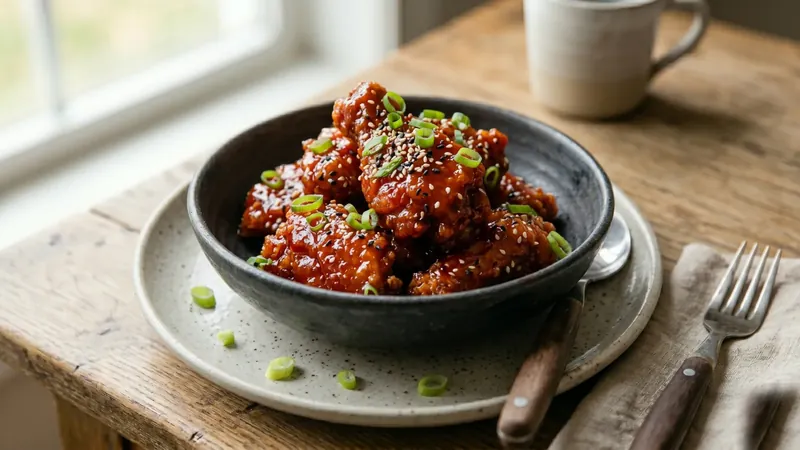
↓ Jump to recipeKorean fried chicken is built on one obsession: crunch that holds even after the sauce goes on. The trick is double-frying, a gentle first fry to cook the meat through and a hot second fry to set a glassy, ungreasy shell. The twist is the glaze, a glossy gochujang-honey sauce that is sweet, savoury and gently fiery, clinging to every piece without softening that hard-won crackle. Serve with cold beer and plenty of napkins; this is food to eat with your hands and no ceremony.
Korean Fried Chicken with Gochujang-Honey Glaze
Ingredients
- 900g chicken wings and drumettes, separated
- 1 tsp fine salt
- 0.5 tsp ground white pepper
- 1 tbsp grated fresh ginger
- 120g plain flour
- 60g cornflour
- 0.5 tsp baking powder
- 180ml cold sparkling water
- 1.5 litres neutral oil, for frying
- 2 tbsp gochujang
- 3 tbsp clear honey
- 2 tbsp soy sauce
- 2 tbsp rice vinegar
- 3 garlic cloves, finely grated
- 1 tbsp toasted sesame oil
- 2 spring onions, finely sliced
- 1 tbsp toasted sesame seeds
Method
- Pat the chicken dry and toss with the salt, white pepper and grated ginger. Leave for 15 minutes.
- Whisk the flour, cornflour and baking powder together, then stir in the cold sparkling water to make a loose, pourable batter.
- Heat the oil in a deep, heavy pan to 160C.
- Dip each piece in the batter, letting the excess drip off, then fry in batches for 6 to 7 minutes until pale gold. Drain on a rack and rest for 5 minutes.
- Raise the oil to 190C and fry the pieces a second time for 3 to 4 minutes until deep golden and crisp. Drain again.
- For the glaze, simmer the gochujang, honey, soy sauce, rice vinegar and garlic in a wide pan for 2 minutes until glossy, then stir in the sesame oil.
- Add the hot chicken to the glaze and toss until every piece is coated.
- Scatter with spring onions and sesame seeds and serve at once.
A modern national obsession
Korean fried chicken, often shortened to KFC by people who enjoy the joke, is a relatively modern dish that has spread far beyond the peninsula. Fried chicken reached Korea through several routes in the mid-twentieth century, with the presence of American forces after 1945 an important channel, but it was the 1970s and 1980s that turned it into a national fixture, as cooking oil became cheap and dedicated chicken shops, or chikin jip, appeared on seemingly every street. The 1997 financial crisis pushed many newly unemployed Koreans into opening small fried-chicken franchises, entrenching the dish further. The pairing of fried chicken with beer earned its own affectionate name, chimaek, blending chikin with maekju, the Korean word for beer, and the hit 2014 television drama My Love from the Star sent the craze across the rest of Asia, with fans ordering chicken and beer in tribute to the show’s heroine.
Why the double fry works
What sets the Korean style apart from American-influenced versions is texture. The batter is thin and leans on cornflour rather than heavy seasoned flour, and the cooking happens in two stages. The first, gentler fry at 160C cooks the meat through and drives off surface moisture. The pieces then rest for five minutes so trapped steam can escape. The second, hotter fry at 190C crisps the coating into something closer to glass than crust. That rest in between is not optional: fry twice back to back and the moisture has nowhere to go, and the shell stays chewy rather than shattering. Cold sparkling water in the batter helps too, keeping it light and lacy. The reward is chicken that stays crunchy even once it is sauced, which is the entire point. The same low-then-hot logic drives my buttermilk fried chicken with hot honey, though there the crust is a dry dredge rather than a wet batter.
Gochujang, the hero of the glaze
Gochujang is a deep red fermented paste made from gochugaru chilli powder, glutinous rice, fermented soybeans and salt, aged traditionally in earthenware pots called onggi. It is a genuinely old Korean staple: recipes appear in eighteenth-century texts such as the Jeungbo sallim gyeongje of 1766, and it brings a rounded, savoury, slow-building heat rather than a sharp burn. Loosened with honey, soy and a splash of rice vinegar, it becomes a lacquer that balances sweetness, salt and acidity against the richness of the fried chicken, while a final hit of toasted sesame oil adds a nutty perfume. If you want to explore the paste’s fermented, savoury depth in a different register, it does similar work in the miso-adjacent umami builds of my red lentil and coconut dal style of layered seasoning.
This saucy, spicy style is called yangnyeom chicken. There is also a bare, unsauced school known as huraideu, prized purely for its crackling crust, if you ever want to taste what the coating does on its own.
Choosing and preparing the chicken
Wings and drumettes are the classic cut for this dish, and for good reason: they carry a high ratio of skin and connective tissue to meat, which crisps beautifully and turns succulent under the double fry. Separating the wings into flats and drumettes at the joint gives you neater, more even pieces that cook at the same rate, and it makes them easier to coat and to eat. Ask your butcher to do it, or use kitchen scissors and press through the joint where it gives.
Patting the chicken thoroughly dry before you season it matters more than people expect. Surface moisture is the enemy of a crisp fry; it lowers the oil temperature the moment the chicken goes in and makes the batter slide. The fifteen-minute rest with salt, white pepper and grated ginger does double duty, seasoning the meat and drawing out a little more surface water. Ginger is the traditional aromatic here, and it also helps counter any faint smell from the frying, leaving a cleaner-tasting result.
The small habits that make it work
A few disciplines separate great home Korean fried chicken from a greasy pile. Keep the oil temperature steady and let it recover between batches; a probe or a clip-on thermometer earns its place here. Give the chicken room in the pan rather than crowding it, which drops the heat and steams the coating. Rest the fried pieces on a wire rack, never on kitchen paper, so the undersides do not sit in their own steam and go soft. Grate the garlic finely so it melts into the glaze rather than catching and burning, and simmer the sauce for a full two minutes so it turns glossy and thick enough to coat.
Serve the chicken the very moment it is tossed, while the shell still shatters under the sauce. A side of crisp pickled radish, the bright yellow danmuji served in Korean chicken shops, cuts the richness perfectly, and a cold lager completes the chimaek ritual.
Storage, make-ahead and variations
Korean fried chicken is at its best straight from the pan, and the glaze softens the crust over time, so this is not a dish to make hours ahead and reheat. You can, however, split the work sensibly. Do the first fry up to a couple of hours in advance and leave the pieces on a rack at room temperature; then heat the oil to 190C, give them the quick second fry, and toss in the freshly made glaze just before serving. The sauce itself keeps in a jar in the fridge for up to a week and only improves, so a double batch is never wasted.
For heat that builds further, add half a teaspoon of gochugaru to the glaze, or a little grated fresh chilli. To dial it back for younger eaters, cut the gochujang and lean on the honey and soy, which still gives a glossy, savoury coat. Swap the wings for boneless thigh, cut into chunks, if you prefer more meat to bone, reducing the frying times by a minute or two at each stage. And if double-frying feels like a commitment, the sweet-savoury-spicy balance of this glaze also works brushed over grilled chicken thighs, giving you a weeknight version of the same flavour without the deep pan of oil.
Leftover glazed chicken, should any survive, is very good cold the next day picked straight from the fridge, though the crust will have yielded to something chewier. Strip the meat from any leftovers and fold it through rice with a little extra sauce and a fried egg for a fast, satisfying lunch.
Getting the batter and oil right
The batter is deceptively important. Cornflour and a little baking powder, slackened with cold sparkling water, give a thin, lacy coat that fries up light rather than the thick, bready jacket of some Western fried chicken. Keep the batter cold and mix it only just before you fry; the colder the batter meets the hot oil, the sharper the contrast and the crisper the result, which is the same reason tempura cooks swear by iced water. Do not overmix it either, as working the flour develops gluten and toughens the coating. A few lumps are fine.
Oil volume and temperature are the other half of success. A litre and a half in a deep, heavy pan gives enough thermal mass that the temperature does not crash the moment the chicken goes in, which is what causes greasy, pale results. Fry in modest batches, let the oil come back up to temperature between them, and use a thermometer rather than trusting your eye. Between the first and second fry, let the pieces rest uncovered on a rack so steam escapes and the surface dries; skipping this rest is the single most common reason home cooks fail to get the glassy crust that defines the style. Strained and stored cool, the used oil is good for another fry or two.
Get those two things right, the cold, light batter and the steady, well-managed oil, and everything else falls into place. The glaze takes minutes, the aromatics are forgiving, and the technique is more about patience and temperature than any special skill. What you end up with is chicken with a shell that genuinely shatters under a sticky, savoury, gently spicy lacquer, the kind of plate that disappears the moment it hits the table and has everyone reaching for another piece. Serve it with beer, in good company, and you have the whole spirit of chimaek on a plate at home.
Related Content