Klepon: Pandan Rice Balls That Burst With Palm Sugar
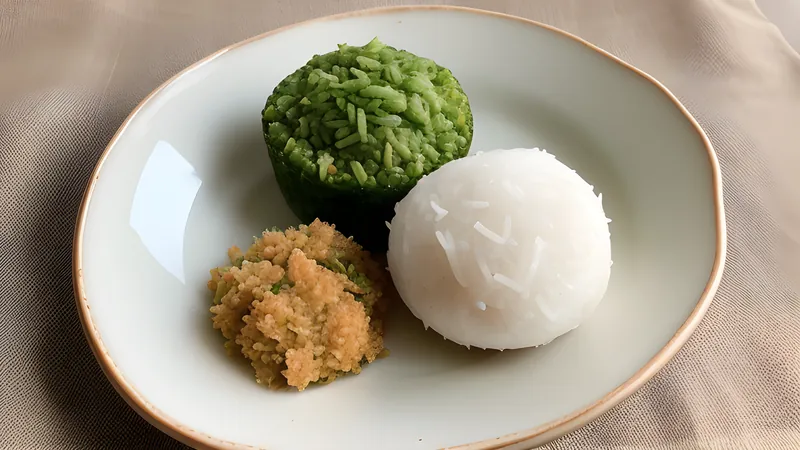
green glutinous rice balls hiding a molten centre, rolled in fresh coconut
Contents
↓ Jump to recipeThe first bite of a klepon is always slightly dangerous, and that’s the point. Bite down too fast and molten palm sugar sprays out — a small, sweet, slightly comic hazard that every Indonesian child learns to manage early. The trick, once you know it, is simple: bite gently, let the shell give first, and the syrup floods the mouth in one warm hit rather than shooting sideways onto your shirt. Klepon is built entirely around that single moment of surprise, and everything else about the dumpling — the pandan-green shell, the fresh coconut coating — exists to set it up properly.
Klepon: Pandan Rice Balls That Burst With Palm Sugar
Ingredients
- 250g glutinous rice flour
- 30g tapioca starch
- 1/4 tsp salt
- 180-200ml pandan juice (from blending 10 pandan leaves with water and straining), or water plus 1/2 tsp pandan extract
- 150g palm sugar (gula melaka or gula jawa), finely chopped into small pea-sized pieces
- 1 whole fresh coconut, grated (or 200g frozen grated coconut, thawed)
- 1/4 tsp salt, for the coconut coating
- 1 pandan leaf, tied in a knot, for steaming the coconut
Method
- Steam the grated coconut with the knotted pandan leaf and 1/4 tsp salt for 10 minutes to keep it fresh for longer and bring out its sweetness, then spread out to cool. Set aside for coating.
- Whisk glutinous rice flour, tapioca starch and salt together in a bowl.
- Gradually add the pandan juice, mixing with your hands, until you have a smooth, pliable dough that doesn't crack at the edges when pressed — add a little more liquid if it feels dry.
- Pinch off pieces of dough about the size of a walnut and flatten each into a disc in your palm.
- Place a pea-sized piece of chopped palm sugar in the centre and gather the dough up around it, pinching firmly to seal completely and rolling into a smooth ball.
- Repeat with the remaining dough, keeping finished balls covered with a damp cloth so they don't dry out.
- Bring a large pot of water to a rolling boil. Drop the balls in a few at a time, not overcrowding the pot.
- Boil until the balls float to the surface, then let them bob for another minute to make sure the centre has fully melted, about 4-5 minutes total.
- Lift out with a slotted spoon and roll immediately, while still hot and wet, in the steamed grated coconut until fully coated.
- Serve within a few hours of making, at room temperature.
A dessert engineered around a single mouthful
Klepon belongs to the broad family of Southeast Asian glutinous rice sweets built on the same basic mechanism: a chewy, starch-based shell wrapped around a filling that changes state during cooking. Here the filling is solid palm sugar, chopped small and tucked into the raw dough before it’s sealed and boiled. As the ball cooks, the sugar inside melts completely into liquid caramel while the rice-flour shell around it firms up and turns chewy. By the time the klepon floats to the surface of the boiling water, you have a soft, springy exterior wrapped around a pocket of hot syrup — a textural and thermal contrast that a filling added after cooking could never replicate, because a pre-melted syrup poured in afterwards would simply sit inert rather than exploding on the bite.
This is the same rice-flour-and-palm-sugar logic that shows up across the region in slightly different forms — Filipino palitaw, Thai khanom tom, Vietnamese versions with mung bean rather than sugar at the centre. What sets klepon apart is the pandan colouring worked directly into the dough rather than added as a garnish, and the fresh grated coconut rolled on immediately after boiling, while the balls are still hot and slightly wet, so the coconut actually adheres rather than falling straight off.
The name itself carries a small joke. In Javanese, klepon is thought to derive from a word describing something small and round, and in parts of Indonesia — particularly on Java itself — the same dumpling is called onde-onde, a name that in other regions refers to an entirely different sesame-coated fried ball with a sweet mung bean filling. The overlap causes exactly the kind of good-natured regional confusion food names tend to generate, and it’s worth knowing both names if you’re ordering from a street vendor rather than making them yourself, since asking for “onde-onde” in Jakarta and in Surabaya can get you two completely different desserts.
Getting real pandan colour and flavour, not just green
Bottled pandan extract will get you the colour, but it’s a pale imitation of what fresh pandan leaf actually contributes, which is a genuinely distinctive grassy, faintly vanilla-and-coconut aroma that has no single substitute. If you can find fresh or frozen pandan leaves — increasingly common in larger Asian grocers — blend eight to ten leaves with a little water, then strain through a fine sieve or muslin cloth to extract a vivid green juice. Use this juice in place of plain water when you mix the dough, and you get both the colour and the actual flavour the dish is named for, since klepon in much of Indonesia is simply called kue klepon or onde-onde depending on region, and either name assumes pandan is doing real work in the recipe rather than sitting there for looks.
If fresh pandan genuinely isn’t available, a mix of pandan extract and a drop of green food colouring will get you a passable version, but be honest with yourself that you’re making a good approximation rather than the real thing. It’s worth checking a local Asian supermarket’s freezer section before giving up on fresh leaves — they’re often sold frozen in bundles specifically because they lose potency quickly once cut.
Working the dough and sealing the sugar in
Glutinous rice flour dough is forgiving compared to most doughs, but it does have one real failure point: if the balls aren’t sealed completely around the sugar, the filling will leak out into the boiling water rather than staying trapped inside, and you’ll end up with plain, faintly sweet dumplings rather than the ones that burst. Flatten each portion of dough properly into a disc before adding the sugar — don’t just poke a hole into a ball and stuff sugar in, since that method leaves a thin, weak point in the dough right where the pressure from the melting sugar will be greatest. Gather the edges of the flattened disc up and around the sugar piece, pinch firmly to close, then roll the whole thing between your palms into a smooth, seamless sphere. Any visible seam or crack is a place the syrup will find on its way out.
Keep unfinished dough and shaped balls covered with a damp cloth while you work through a batch. Glutinous rice dough dries out at the surface surprisingly quickly, and a dry patch won’t seal properly no matter how hard you pinch it.
The boil, and why the float matters
Klepon are done when they float, which is a genuinely reliable visual cue rather than a rough guideline — the dough is denser than water while raw, and once the starch has cooked through and the structure has firmed up around the melted sugar, trapped air and the change in the dough’s density bring the ball to the surface on its own. Let the balls float freely for another minute after they surface, rather than fishing them out the instant they appear, to make sure the sugar right at the centre has actually reached full melt rather than just going soft at the edges. Underboiled klepon will have a grainy, half-melted lump at the centre instead of the smooth, hot syrup you’re after.
Don’t overcrowd the pot. Too many balls dropped in at once will lower the water temperature sharply and cause them to stick together before the shells have firmed up enough to hold their shape independently. Work in batches of eight to ten in a standard large saucepan.
Coconut coating: fresh, lightly steamed, and salted
The grated coconut coating is not a neutral garnish — it’s doing real seasoning work, balancing the intense sweetness of the melted palm sugar centre with a savoury, faintly salted contrast. Steaming the grated coconut briefly with a pinch of salt and a knotted pandan leaf before use does two things: it extends how long the coconut stays fresh-tasting rather than turning sour, and it lets the salt and pandan aroma penetrate the coconut evenly rather than sitting only on the surface where you roll the balls.
Roll the klepon in the coconut the moment they come out of the boiling water, while they’re still hot and their surface is slightly tacky from the cooking starch. This is the window where the coconut actually sticks; once the balls cool and the surface firms up, grated coconut will mostly fall straight off rather than adhering.
Choosing your palm sugar
Gula melaka and gula jawa are both palm sugars, but they’re not interchangeable without a little adjustment. Gula melaka, made from the sap of the coconut or aren palm and common in Malaysia and Singapore, tends to be a touch softer and more caramel-forward. Gula jawa, the Javanese version usually sold pressed into hard discs or cylinders, is denser and can taste slightly smokier depending on how it’s been processed. Either works for klepon, but chop whichever you’re using into genuinely small, even pea-sized pieces — larger chunks take longer to fully liquefy during the short boil, and you can end up with a ball that floats and looks done on the outside while the sugar in the centre is still only half-melted. A sharp knife and a steady hand chopping off a cutting board works better than trying to break the sugar apart by hand, since palm sugar tends to shatter unevenly rather than crumble.
What can go wrong
Balls that split open in the boiling water are almost always a sealing problem rather than a boiling one — go back and check that every seam was pinched fully closed before it went into the pot, since even a pinhole is enough for pressure to force molten sugar out as it expands with heat. If you’re consistently losing filling, flatten your discs a little thicker next time and take an extra few seconds smoothing the seal shut with a rolling motion between your palms rather than just pinching once and moving on.
A tough or gummy shell usually comes down to the tapioca starch ratio or overworking the dough. Tapioca starch is there to add a slight elasticity and shine that pure glutinous rice flour doesn’t have on its own, but too much makes the shell rubbery rather than tender — stick close to the ratio above rather than guessing at it. Overmixing the dough once it’s come together can also toughen it, in the same way overworking any starch-and-water dough builds a stretchier network than you actually want; mix just until it’s smooth and holds together without cracking.
If the coconut coating won’t stick, the balls have usually been out of the water too long before rolling. Have your steamed coconut ready in a wide, shallow bowl before you start boiling, so each batch can go straight from the slotted spoon into the coconut within seconds, while the surface is still hot and tacky.
Variations worth trying
A less common but genuinely good variation fills the balls with a smooth, sweetened mung bean paste instead of palm sugar, for anyone who wants the same shell and coating with a milder, less syrupy centre. If pandan leaf and extract are both unavailable, a plain white version — dough left uncoloured, sugar centre and coconut coating unchanged — is a legitimate and traditional fallback in parts of Indonesia, sometimes called klepon putih.
Serving, timing and what klepon pairs with
Klepon is best eaten within a few hours of being made, at room temperature rather than chilled, since refrigeration firms the shell up in a way that dulls the chewy texture and can make the sugar centre re-solidify rather than staying syrupy. It’s traditionally served on a banana leaf as part of a mixed platter of Indonesian kue — small traditional sweets — alongside other pandan and coconut-based bites, which is worth keeping in mind if you’re serving a crowd; klepon rarely appears entirely alone at an Indonesian table.
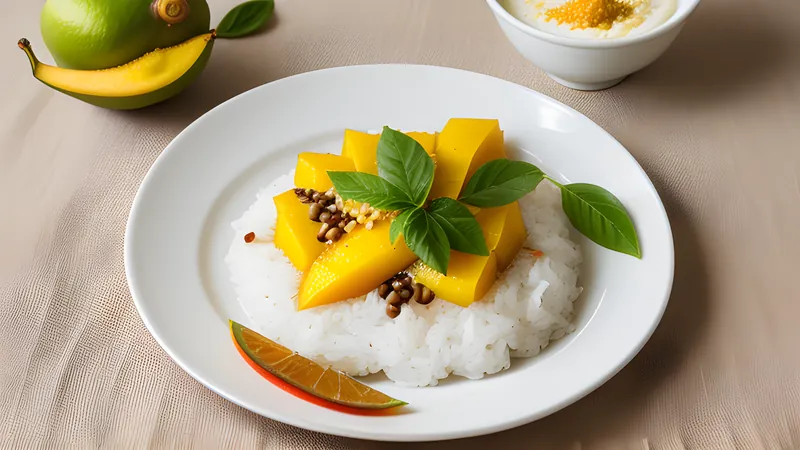
It sits well next to other palm-sugar-and-coconut desserts on a spread — a bowl of black sticky rice pudding with coconut or coconut sago pudding with palm sugar both share the same base flavour vocabulary and make sense on the same table without competing for attention, since each has a different texture doing the work.
Leftover shaped, unboiled balls can be kept covered in the fridge for up to a day before cooking, though the dough is genuinely best used the same day it’s made — glutinous rice dough loses some of its pliability with time and can crack rather than seal cleanly once it’s been sitting. Boiled klepon don’t keep or reheat well; the whole appeal is the fresh, hot, molten centre, and a klepon that’s been sitting for a day is a fundamentally different, lesser thing.
Related Content