Kjøttkaker: Norwegian Meat Cakes With Brown Gravy
Ginger in the mince, brown butter in the roux, and a packet you must refuse
Contents
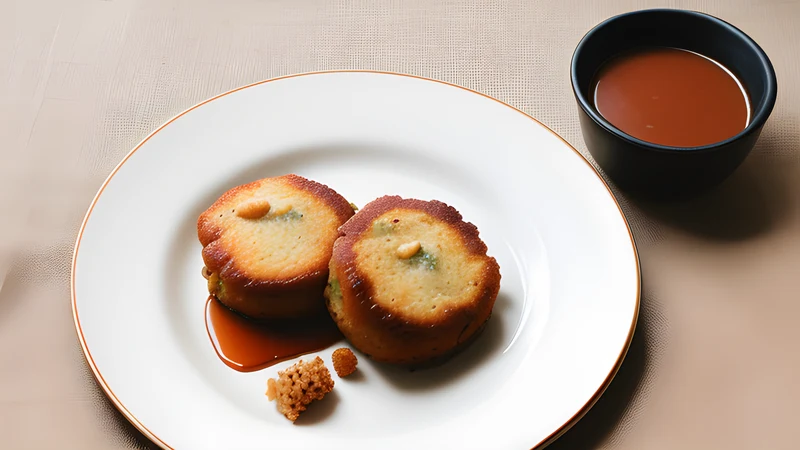
↓ Jump to recipeThe first thing to establish is that these are not small. A Norwegian kjøttkake is roughly the size of a digestive biscuit and considerably thicker, and there are three of them per person. Anyone arriving from Sweden expecting something dainty is about to have a different evening.
Kjøttkaker: Norwegian Meat Cakes With Brown Gravy
Ingredients
- 600 g minced beef, about 15% fat, very cold
- 1.5 tsp fine sea salt
- 3 tbsp potato flour (potetmel)
- 1 tsp ground ginger
- 0.5 tsp freshly grated nutmeg
- 0.5 tsp finely ground white pepper
- 1 small onion, about 100 g, finely grated
- 250 ml whole milk, ice cold
- 2 tbsp butter, for frying
- 60 g butter, for the gravy
- 50 g plain flour
- 700 ml hot beef stock
- 1 tsp dark soy sauce or sukkerkulør, for colour
- 0.5 tsp cider vinegar
- 1 kg waxy potatoes, to serve
Method
- Chill the mince, the mixing bowl and the milk until everything is at 4°C or below. Put the bowl in the freezer for 15 minutes if your kitchen is warm.
- Put the cold mince in the bowl with the salt and nothing else. Work it hard with a wooden spoon or a stand mixer's paddle for 3 minutes, until it turns visibly tackier and starts clinging to the spoon.
- Add the potato flour, ginger, nutmeg, white pepper and grated onion. Work for 1 minute more.
- Add the ice-cold milk in five additions, working each one fully in before adding the next. The mixture will look broken after each addition and come back together within 20 seconds. Stop as soon as the last milk is absorbed — about 4 minutes in total.
- Fry a teaspoon of the farse in a hot pan and taste it. Adjust the salt now.
- Shape into 12 cakes, about 7 cm across and 2 cm thick, wetting your hands between each. Chill for 20 minutes.
- Melt 2 tbsp butter in a large frying pan over medium-high heat. Fry the cakes in two batches, 4 minutes per side, until deeply browned. Transfer to a plate.
- For the gravy, melt 60 g butter in the same pan over medium heat and let it foam, subside and turn hazelnut brown with a nutty smell — about 4 minutes. Whisk in the flour and cook for 3 minutes, stirring, until the roux smells like toast.
- Whisk in the hot stock a ladle at a time, scraping the pan base. Add the soy sauce or sukkerkulør. Simmer for 8 minutes until it coats the back of a spoon.
- Return the cakes to the gravy, cover, and simmer very gently for 15 minutes. Stir in the vinegar off the heat.
- Boil the potatoes in salted water for 20 minutes and serve alongside, with stewed peas and lingonberry.
Norway’s cake, Sweden’s ball
The two dishes are cousins who stopped speaking.
Swedish köttbullar are small, round, finely textured, bound with breadcrumbs soaked in milk, and served in a pale cream sauce. They are elegant. They are also, in a Norwegian’s view, a starter pretending to be a dinner.
Norwegian kjøttkaker are flat, wide, coarse, bound with potato flour, and served in brun saus — a dark, glossy, unapologetically old-fashioned brown gravy. The mince is beef alone, where Sweden favours a beef-and-pork mixture. The spicing is different in a way that surprises people. And where köttbullar are browned and then finished in sauce for a few minutes, kjøttkaker are browned and then stewed in the gravy for a quarter of an hour, which is what gives them their particular soft, saturated texture.
Danish frikadeller sit somewhere else again — pork, egg, no gravy at all in the classic serving. Finnish lihapullat come closest to the Norwegian, sharing the brown sauce, though they keep the ball shape. Four countries, one mince, four completely settled positions and no interest whatever in compromise.
A dish the machine invented
Kjøttkaker is younger than it feels, and it exists because of a piece of hardware.
Before the hand-cranked mincer, minced meat meant a bowl, a heavy knife and an hour of chopping, so it was a dish for households with staff. The grinder was patented in the 1840s and became cheap enough for ordinary Norwegian kitchens through the last two decades of the nineteenth century, and mince dishes appeared across the country within a generation. That is late enough that kjøttkaker never acquired the medieval mystique of fårikål and early enough that it is now thoroughly, immovably traditional.
It also arrived at the right economic moment. A mincer lets you cook the parts of the animal nobody wanted — shin, neck, flank, the tough working muscle — and a farse padded out with potato flour and a quarter of a litre of milk turns 600 g of cheap beef into dinner for four. This is husmannskost, cottager’s food: the category of Norwegian cooking built on stretching protein, and the category that Norwegians, now considerably richer, cook out of affection rather than necessity.
The dish’s grip is not nostalgic vagueness. Kjøttkaker i brun saus wins Norwegian favourite-dinner polls with a regularity that irritates chefs, and it is a fixture of every workplace canteen in the country. It is the thing a Norwegian abroad describes when asked what they miss, usually with the caveat that nobody makes it right outside Norway, which is true and is mostly a ginger problem.
One distinction to get straight. A karbonade is not a kjøttkake. Karbonadekaker are pure minced beef, salt, pepper, no starch and no milk, fried hard and served with fried onion. They are a burger patty with a Norwegian passport. Kjøttkaker have the farse, the starch, the milk and the gravy. Norwegian shops sell the mince for both, labelled differently, and confusing them in a Norwegian kitchen is a reliable way to be corrected.
The ginger question
Ground ginger in a beef meat cake reads as bizarre if you did not grow up with it, and it is the single most Norwegian thing in the recipe.
The habit is old. Ginger arrived in Scandinavia through the Hanseatic spice trade in the medieval period and, unlike pepper, it stayed cheap enough for ordinary use because it travelled dried and ground and did not spoil. It embedded itself deep in Norwegian savoury cooking at a point when most of Europe was moving ginger firmly into the biscuit tin. Norway never got the memo.
What it does is real. Ginger’s gingerols and shogaols provide a warm, slightly resinous pungency that sits directly on top of beef fat and cuts it. A kjøttkake made without ginger tastes flat and vaguely of nothing in particular, which is the standard experience of anyone following an internet recipe that dropped it for being strange. One teaspoon in 600 g of mince is right. Two and you have made a curry.
The nutmeg is doing the same job from the other direction, and white pepper rather than black because black pepper’s fruitier notes fight the ginger.
The farse: salt first, cold always
Farse is the Norwegian word for the worked mince, and the sequence is the technique.
Salt goes in first, alone. Sodium chloride solubilises myosin, the principal muscle protein. Work salted mince and the myosin dissolves out of the muscle fibres into a sticky exudate that coats every particle; when it hits heat, that exudate sets into a continuous protein gel. This is the same mechanism behind a sausage, a terrine and a fish ball, and it is why three minutes of hard mixing with salt and nothing else turns a crumbly bowl of mince into something that clings to the spoon like putty.
Skip that step, add everything at once, and the salt has to compete with starch and milk for access to the protein. The cakes will hold together, more or less, and they will be grainy and they will weep fat in the pan.
Then the starch. Potato flour rather than breadcrumbs, and the distinction matters. Potato starch granules gelatinise at a low temperature — around 60°C, well below wheat starch — and they swell enormously, holding several times their weight in water. In practice this means the cake sets its moisture early in the fry, before the meat proteins contract and squeeze liquid out. Breadcrumbs work by soaking, which is a cruder solution.
Then the milk, in stages. Two hundred and fifty millilitres into 600 g of mince sounds like far too much, and it is exactly right. Add it in five goes, working each fully in. Each addition looks like a disaster for about fifteen seconds and then comes together as the protein gel takes the water up. Dump it in at once and the emulsion breaks and never recovers.
Everything cold. Below about 15°C, beef fat stays solid and disperses through the farse as discrete particles held in the protein matrix. Above it, the fat softens and smears, coating the protein and preventing the gel from forming — the same failure that ruins a sausage. If your hands are warm, the mixture is warmer than you think. Bowl in the freezer for fifteen minutes; milk from the coldest shelf.
Brun saus, and the packet problem
Norway has a national embarrassment, and it comes in a sachet.
Powdered brown sauce mix is so entrenched in Norwegian kitchens that a great many people under forty have never seen brun saus made from scratch, and the packet has become a kind of affectionate national joke — the thing everyone uses and nobody defends. It is salty, it tastes faintly of yeast extract, and it is genuinely difficult to make a bad version with it, which is the whole problem.
The real thing takes eight minutes.
A brown gravy is a roux taken further than a béchamel would tolerate. Cook butter and flour until the flour’s starch has partly dextrinised and the proteins have browned — the roux smells like toast and goes the colour of a digestive biscuit — and you get flavour at the cost of thickening power. Browned flour thickens roughly half as well as white, which is why a brun saus uses 50 g of flour where a white sauce would use 30.
The twist: brown the butter first. Before the flour goes in, let the butter foam, subside, and turn hazelnut brown. You are browning the milk solids — the roughly 2% protein and lactose in the butter — through the Maillard reaction, producing exactly the nutty, deep, slightly caramel notes that the sachet is trying to counterfeit with sugar colouring. It costs four minutes and it is the difference between a gravy people finish and a gravy people leave.
Then the flour, then hot stock a ladle at a time, whisking. Cold stock into a hot roux will lump; hot stock into hot roux will not. A teaspoon of dark soy or sukkerkulør for colour is traditional and slightly cynical, and I do it anyway, because brun saus that is beige rather than brown tastes worse to everyone at the table regardless of what is actually in it.
The half-teaspoon of vinegar at the end is mine and I will not apologise for it. Fifteen minutes of stewed beef in a butter-and-flour gravy has no acid in it anywhere.
What goes wrong
Cakes fall apart in the pan. The farse was warm, or the salt went in with everything else. Chill the shaped cakes for twenty minutes and they will hold.
Dry and bouncy. Overworked after the milk went in. Once the last milk is absorbed, stop. Another two minutes of mixing tightens the gel into rubber.
Greasy pool in the pan. The fat broke. Warm mince again, or mince that was too lean to begin with — under 12% fat and there is not enough to emulsify properly.
Lumpy gravy. Cold stock, or too much at once. Whisk a ladle at a time and accept that the first two ladles look wrong.
Gravy thin after ten minutes. Browned flour thickens weakly. Give it another five minutes of simmering rather than adding more flour, which will taste raw.
Variations
Medisterkaker. Swap the beef for coarse minced pork with about 20% fat, drop the ginger to half a teaspoon and add a pinch of ground cloves. Softer, sweeter, and the classic Christmas version — served with sauerkraut rather than peas.
Half and half. 400 g beef and 200 g pork gives a juicier cake without losing the beefiness. Purists will tell you this is Sweden creeping in. They are right and it is still good.
Baked rather than stewed. Brown the cakes, then finish them in the gravy in a 160°C oven, covered, for 25 minutes. Gentler heat, fewer broken cakes, and useful if you are cooking for eight.
Larger. Some Norwegian households make them the size of a side plate — one per person, 2.5 cm thick, twenty minutes in the gravy. The ratio of soft interior to browned crust shifts and the dish gets better.
At the table
Boiled waxy potatoes, always. Ertestuing — stewed peas, made by simmering dried green peas soft and folding them into a thin white sauce — is the orthodox vegetable, and mushy peas are an acceptable stand-in. Surkål, Norwegian sweet-sour cabbage cooked with caraway, is the other option.
And lingonberry preserve, which is doing the same job as the vinegar in the gravy, more loudly and better. A plate of kjøttkaker without something red and sour on it is a plate of brown food, and after four forkfuls you will understand why every Nordic country independently arrived at the same solution.
Any left over go straight into tomorrow’s lapskaus, quartered and dropped in for the last twenty minutes, where they are frankly better than they were tonight.
Related Content