Kitsune Udon: Udon With Sweet Fried Tofu
A clear dashi broth topped with a whole sheet of sweet simmered fried tofu
Contents
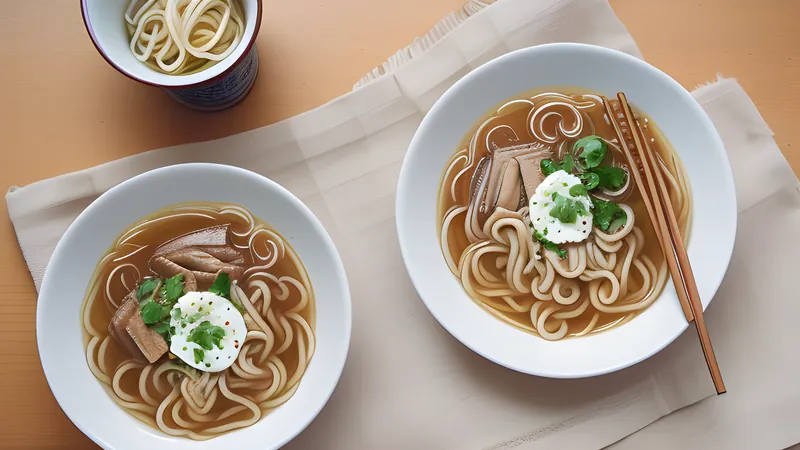
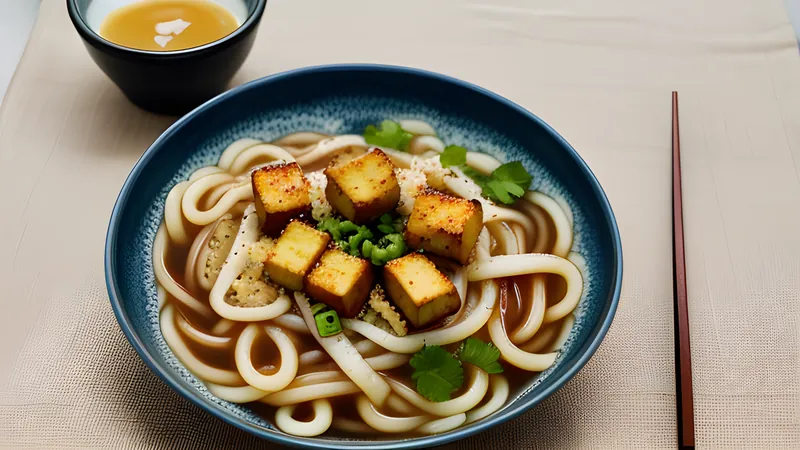
↓ Jump to recipeKitsune udon is one of the simplest bowls in the Japanese noodle repertoire in terms of ingredient count, and one of the easiest to get wrong, because almost everything depends on a single component: a whole sheet of aburaage, fried tofu, simmered separately in a sweet soy broth until it turns deep gold, then laid whole over noodles in a plain, clear dashi soup.
Kitsune Udon: Udon With Sweet Fried Tofu
Ingredients
- 2 sheets aburaage (fried tofu pouches)
- 200ml dashi (for the aburaage)
- 3 tbsp soy sauce
- 3 tbsp mirin
- 2 tbsp sugar
- 2 portions fresh or frozen udon noodles
- 700ml dashi (for the soup)
- 3 tbsp soy sauce (light/usukuchi if available)
- 2 tbsp mirin
- 1/2 tsp salt
- 2 spring onions, finely sliced
- Shichimi togarashi or a few slivers of yuzu peel, to serve
Method
- Pour boiling water over the aburaage in a heatproof bowl and let sit for 1 minute, then drain and squeeze gently — this removes excess surface oil.
- Combine 200ml dashi, 3 tbsp soy sauce, 3 tbsp mirin and the sugar in a small pan, add the aburaage, and simmer uncovered for 12-15 minutes, turning once, until the liquid reduces by half and the tofu turns a deep golden-brown.
- Remove the aburaage and set aside; reserve the sweet cooking liquid.
- In a separate pot, bring the 700ml dashi to a simmer with the remaining soy sauce, mirin and salt, and taste to check the seasoning is clean and savoury rather than sweet.
- Cook the udon noodles according to packet instructions, then drain and divide between two bowls.
- Ladle the hot broth over the noodles.
- Unfold or leave whole one piece of sweet simmered aburaage per bowl, laid over the noodles, and spoon a little of its reserved cooking liquid over the top.
- Scatter with spring onion and finish with shichimi togarashi or yuzu peel.
Why “fox” udon
Kitsune means fox, and the name comes from Japanese folklore rather than any resemblance in appearance. Inari, the Shinto deity associated with rice, fertility and prosperity, is traditionally attended by fox messengers, and fried tofu is the offering most commonly left at Inari shrines — the connection between foxes and fried tofu became so entrenched in popular culture that “kitsune” eventually became a generic culinary shorthand for any dish featuring aburaage. Inari-zushi, the sushi rice stuffed into a pouch of the same sweet fried tofu, draws on exactly the same association. Small shrines to Inari across Japan, from major sites like Kyoto’s Fushimi Inari to countless neighbourhood shrines, still commonly feature fox statues holding or standing near offerings of fried tofu, a visual link that most Japanese diners would recognise instantly even without knowing the specific culinary history behind the udon dish’s name.
The dish itself is generally traced to Osaka in the late nineteenth century, and Kansai-region food culture still claims a particularly strong association with it — Osaka is famous across Japan for its udon and its love of aburaage more broadly, and kitsune udon sits at the intersection of both. Tokyo-style versions of the dish exist too, typically with a darker, saltier broth using regular soy sauce rather than the lighter usukuchi soy sauce more common in Kansai cooking.
The tofu is the entire dish
Aburaage is tofu that’s been sliced thin, deep-fried until it puffs up and develops a golden, slightly chewy exterior, then typically fried a second time at a higher temperature to develop more colour and crispness. Sold pre-fried and usually frozen or vacuum-packed at Japanese and Asian grocers, it needs no further frying at home — the entire job left to the home cook is simmering it in a sweet soy liquid until it absorbs that flavour fully and turns a deep amber-brown.
Pouring boiling water over the aburaage before it goes into the sweet broth removes excess surface oil, which otherwise makes the finished broth greasy and dulls the clean sweetness of the simmering liquid. Squeeze it gently after this step, just enough to remove surface oil and excess water while keeping the tofu’s light, airy structure intact.
Sourcing aburaage
Aburaage is sold frozen or vacuum-packed at Japanese grocers and increasingly at well-stocked Asian supermarkets, usually in packs of several thin sheets. It’s worth checking the ingredient list for a short one — tofu, oil and little else — since some mass-market versions include additives that affect how evenly the sheets absorb the sweet simmering liquid. If you can only find the thicker, denser style of fried tofu sometimes labelled atsuage rather than the thin, puffed aburaage this dish calls for, it will still work, but expect a chewier result and a slightly longer simmering time to let the sweetness penetrate through the denser structure.
Frozen aburaage should be thawed in the fridge overnight rather than at room temperature or in a microwave, both of which can affect its texture unevenly. Once thawed, it keeps in the fridge for a couple of days before it needs cooking, though it’s best used as soon as reasonably possible after thawing.
Simmering it properly
The sweet simmering liquid for aburaage is deliberately more concentrated than the soup broth it eventually sits in — dashi, soy sauce, mirin and a generous amount of sugar, simmered uncovered so the liquid reduces and thickens as it cooks, coating the tofu in a glossy, deeply flavoured glaze rather than staying thin and watery. Twelve to fifteen minutes at a gentle simmer, turning the tofu once partway through, is usually enough for the liquid to reduce by roughly half and the aburaage to properly darken and absorb the sweetness through to its centre.
Resist the urge to rush this by turning up the heat — a hard boil reduces the liquid unevenly and risks scorching the sugar before the tofu has had time to properly absorb the flavour. A patient, low simmer gives a far more even result, with the sweetness penetrating the whole piece rather than just coating the surface.
This step can and should be done well ahead of serving — the sweet aburaage keeps for several days in its cooking liquid in the fridge and, if anything, improves as it sits, since the tofu keeps absorbing flavour from the liquid it’s stored in.
Why the soup broth stays plain
The soup itself is a plain, clean dashi broth, lightly seasoned with soy sauce and mirin — deliberately restrained, since the sweet aburaage already carries a concentrated flavour and would overwhelm the bowl if the surrounding broth competed with it rather than acting as a neutral backdrop. This is the opposite balance to a dish like miso ramen, where the broth itself carries the dominant flavour; here the broth’s job is to season the noodles gently and let the tofu topping do the flavour work.
Kansai-style versions traditionally use usukuchi soy sauce, a lighter-coloured but often saltier variety than standard soy sauce, which seasons the broth without darkening it — a clear, pale golden broth is the visual signature of a proper Osaka-style kitsune udon. If usukuchi isn’t available, standard soy sauce works, though you may want to use slightly less of it and taste as you go, since standard soy sauce is generally less salty by volume but darker in colour than the usukuchi it’s replacing.
Fresh, frozen or dried noodles
As with most udon dishes, fresh udon gives the best texture — a firm, springy chew that holds up well against the hot broth without turning soft too quickly. Frozen udon is a close substitute and often performs even better than fresh, since the freezing process firms the noodle’s starch structure in a way that resists overcooking slightly more than fresh dough does; cook it directly from frozen according to the packet, usually one to two minutes in boiling water. Dried udon works too, though it needs a longer boil, generally eight to twelve minutes depending on thickness, and a thorough rinse under cold water afterwards to remove surface starch before it goes into the hot broth, otherwise the broth turns cloudy and slightly gluey.
Whichever noodle you use, drain it well and shake off excess water before plating — carried-over cooking water dilutes the carefully balanced broth if it goes into the bowl along with the noodles.
Noodles and assembly
Udon here plays a genuinely secondary role to the broth and tofu — thick, chewy noodles that need only a few minutes to cook from fresh or frozen, drained well before the hot broth goes over them so they don’t dilute the carefully balanced seasoning. Lay the whole piece of sweet aburaage over the noodles rather than slicing it into pieces; part of the visual and textural appeal of kitsune udon is the single, substantial sheet of tofu draped across the bowl, distinct from dishes where similar ingredients get chopped and scattered.
Spoon a little of the reserved sweet cooking liquid from the tofu over the top of the finished bowl — this adds pockets of concentrated sweetness through the broth as you eat, rather than confining all of that flavour to the tofu itself. Spring onion adds sharp, fresh contrast, and a few slivers of yuzu peel, when in season, bring a citrus note that Kansai-style versions particularly favour.
What to serve alongside
Kitsune udon’s clean, restrained flavour makes it a good base for adding a side dish with more punch — a few pieces of yakitori glazed in a sweet soy tare, or a side of pickled vegetables for acidity, both round out the meal without clashing with the udon’s deliberately understated broth. Avoid pairing it with another dish built around aburaage or a similarly sweet glaze in the same sitting, since the specific balance of clean broth against concentrated sweet tofu is easiest to appreciate when nothing else on the table is competing for the same flavour space.
Common mistakes
Skipping the boiling-water step on the aburaage is the most common oversight, and it leaves the finished dish tasting greasier than it should — that quick blanch genuinely changes the texture and cleanliness of the final result. Simmering the tofu too briefly is the second common error: a rushed five-minute simmer leaves the centre of the tofu pale and under-seasoned even if the outside looks appropriately dark, so give it the full twelve to fifteen minutes rather than judging doneness by colour alone.
Over-seasoning the soup broth to compensate for a weak batch of sweet tofu is a mistake worth avoiding in the other direction too — if your aburaage hasn’t turned out as flavourful as you’d like, it’s better to simmer it for longer next time than to oversalt the broth trying to make up the difference in the bowl.
Variations
A few slices of kamaboko fish cake or a soft-boiled egg are common additions that don’t fight the dish’s essential simplicity. Tanuki udon, a related dish, swaps the sweet tofu for tenkasu — crunchy leftover tempura batter scraps — giving a completely different, crispier texture while keeping the same clean broth base; the two dishes are often listed side by side on the same udon menu. Combining sweet aburaage with tempura, as in some versions of nabeyaki udon, gives a heartier bowl that borrows from both traditions.
Storage
The sweet simmered aburaage keeps for up to five days in the fridge, stored in its own cooking liquid in a sealed container, and reheats well by simmering gently for a minute or two to warm through. This makes it worth batch-cooking a larger quantity than you need for one meal, since it’s genuinely useful to have on hand — chopped and added to rice, or as a topping for a quick bowl of zaru soba style noodles reheated with fresh broth, whenever you want a fast meal without starting the tofu component from scratch. Cook the noodles and assemble the plain broth fresh each time, since neither keeps or reheats particularly well once combined.
Related Content