Kitfo: Ethiopian Steak Tartare With Niter Kibbeh
Warm minced beef, spiced butter and the chilli blend that makes it sing
Contents
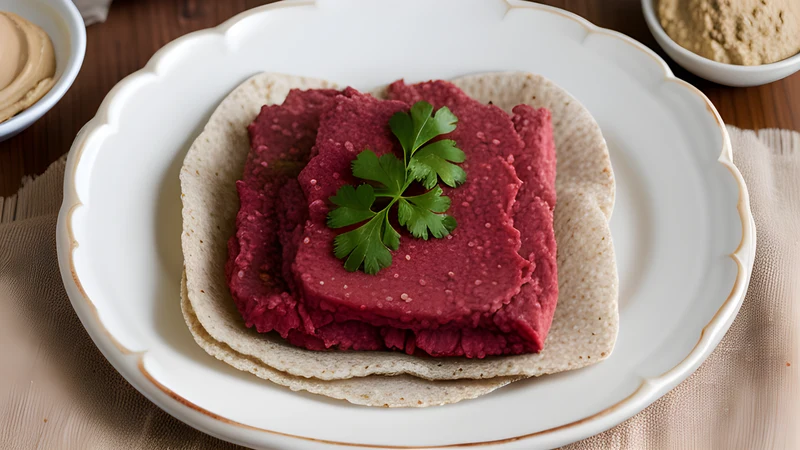
↓ Jump to recipeSteak tartare gets treated as the height of French restraint, a dish of raw beef and its whispered seasonings. Kitfo is its Ethiopian cousin, and it is anything but restrained. The mince is barely warmed through a slick of spiced butter, hit with a chilli blend fierce enough to make you sit up, and served with fresh cheese and garlicky greens to catch fire against. It is one of the great celebratory dishes of the Gurage people in central Ethiopia, the food you put on when someone is worth honouring, and once you understand the three or four moving parts you can put it together in half an hour.
The whole thing turns on temperature. Kitfo lives in a warm middle state the Ethiopians call leb leb, poised between the cold-raw of French tartare and fully cooked mince — the beef gently warmed by the butter until it loses its refrigerator chill and takes on a soft, almost silky texture, while staying red and rare. You can order it tere (fully raw) or fully cooked if you prefer, but leb leb is the classic, and it is the version that shows off what the butter and chilli are doing.
Kitfo: Ethiopian Steak Tartare With Niter Kibbeh
Ingredients
- 500g very fresh beef fillet or lean topside, well chilled
- 5 tbsp niter kibbeh (spiced clarified butter)
- 1.5 tsp mitmita (Ethiopian bird's-eye chilli blend), plus more to serve
- 1/2 tsp fine salt, or to taste
- 1/4 tsp freshly ground korarima (Ethiopian cardamom) or green cardamom
- For the ayib: 500ml whole milk
- 2 tbsp lemon juice
- For the gomen: 200g collard greens or cavolo nero, finely shredded
- 1 tbsp niter kibbeh
- 1 small onion, finely diced
- 1 clove garlic, grated
- 2cm ginger, grated
- Injera or warm flatbread, to serve
Method
- Make the ayib first: heat the milk to a bare simmer, stir in the lemon juice and turn off the heat. Once it curdles, ladle the curds into a muslin-lined sieve, rinse briefly with cold water, drain 15 minutes and season with a pinch of salt. Keep cold.
- For the gomen, soften the onion in 1 tbsp niter kibbeh over medium heat for 5 minutes, add garlic and ginger for 1 minute, then the greens and a splash of water. Cover and cook 8 to 10 minutes until tender but still green. Set aside.
- Trim the beef of all sinew and mince it finely by hand with a sharp knife, or pulse very briefly in a chilled processor. Keep it cold throughout.
- Warm the 5 tbsp niter kibbeh in a small pan until just melted and barely warm to the finger, not hot. Stir in the mitmita and korarima and let them bloom off the heat for 1 minute.
- Pour the warm spiced butter over the beef and fold together quickly with the salt until every strand is coated and the mince is warmed through but still raw and glistening. Taste and adjust salt and mitmita.
- Serve at once, mounded on injera, with the ayib and gomen alongside and extra mitmita on the side for those who want it.
A Gurage dish that conquered a country
Kitfo is Gurage before it is Ethiopian. The Gurage people, from the fertile highlands south-west of Addis Ababa, built the dish around two things their land gives in abundance: cattle and the enset plant, the false banana whose fermented pith becomes kocho bread. For generations kitfo was festival food — the meoraj, a communal feast to mark a wedding, a homecoming or a holy day, when a beast was slaughtered and the freshest, leanest cut was minced while it was still barely off the animal and dressed at the table.
In the twentieth century it travelled. Gurage traders and cooks carried kitfo into Addis Ababa, where dedicated kitfo houses — kitfo bet — turned it from an occasional celebration into something you could order any day, mounded on injera and rushed to the table before it lost its warmth. From there it followed the Ethiopian diaspora to Washington, London and beyond, which is why you can now find a proper leb leb kitfo in a strip-mall Ethiopian restaurant six thousand miles from the Gurage hills. It remains, though, a dish that carries the weight of an occasion. Ordering it still feels like a small event.
Everything depends on the beef
There is no seasoning trick that rescues indifferent meat here, because you are eating it essentially raw. Buy the freshest beef you can from a butcher you trust, ask when it was cut, and use fillet or a very lean piece of topside with no gristle running through it. Keep it cold from the shop to the board, and mince it by hand if you possibly can: a sharp knife, a steady rhythm, and you chop it fine rather than crushing it. Machine mincing warms and smears the meat and pushes out juices; hand mincing keeps the strands distinct and the texture springy.
If hand mincing feels like too much on a weeknight, a food processor works provided the bowl, blade and beef are all thoroughly chilled and you pulse in short bursts, checking constantly. The moment it turns to paste you have gone too far. Aim for a coarse, even mince with visible texture.
Niter kibbeh and the bloom
The seasoning arrives in the butter. Niter kibbeh is clarified butter simmered with garlic, ginger, cardamom, fenugreek and turmeric until the milk solids toast and fall out — the same aromatic fat that anchors doro wat and tibs, and worth keeping a jar of in the fridge at all times. For kitfo it does double duty: it seasons the beef and it provides the gentle warmth that brings the mince to leb leb.
My small twist is to bloom the mitmita directly in the warm butter before it meets the meat. Mitmita is a searing red blend built on Ethiopian bird’s-eye chilli with korarima cardamom, cloves and salt, and like all ground spice it tastes fuller when it has had a moment in warm fat. Melt the niter kibbeh until it is barely warm to the finger — genuinely just above body temperature, never hot, or you will start to cook the beef the instant it touches — stir in the mitmita and korarima, and let them open up for a minute off the heat. Then fold the whole fragrant slick through the mince.
Get the temperature wrong in one direction and the beef stays fridge-cold and stiff; wrong in the other and you have made a sad grey stir-fry. Warm-to-the-finger is the target. Trust it.
If you want to build your own mitmita, toast and grind roughly two tablespoons of dried Ethiopian bird’s-eye chillies (or the hottest dried chilli you can get) with a teaspoon of korarima or green cardamom seeds, half a teaspoon of cloves and a teaspoon of salt. It should be fierce, fragrant and a little fruity — a different animal from the deeper, longer-cooked berbere that goes into stews like zigni. Keep the two blends separate in your cupboard; they are not interchangeable, and mitmita’s raw, bright heat is exactly what raw beef wants.
Ayib and gomen, the two companions
Kitfo is never served alone. It comes with ayib, a mild fresh cheese with the crumble of ricotta and none of the salt, and with gomen, collard greens stewed soft with onion and garlic. The cheese is a cooling counterweight to the mitmita; the greens bring an earthy, garlicky depth. Together they turn a plate of spiced beef into a balanced meal.
Ayib takes ten minutes and no special kit: heat whole milk, add lemon juice, and the curds separate almost at once. Drain them in muslin, rinse off the sourness, and season lightly. Do not press it dry — ayib should stay loose and moist, closer to a soft curd than a firm cheese. If you are short on time a good ricotta stands in respectably, though it is a touch richer than the real thing.
For the gomen, cavolo nero is my go-to when proper collards are hard to find; it holds its texture and keeps its green through the braise. Cook it until tender but still bright, not stewed to khaki. The greens want to taste of themselves under the garlic, so they can push back against the chilli.
Serving, and eating it right
Mound the warm kitfo on a sheet of injera, the spongy teff sourdough that soaks up every drop of spiced butter, with the ayib and gomen at its sides. In the Gurage heartland it is often eaten with kocho, a dense flatbread made from the fermented pith of the false-banana enset plant, but injera or any warm flatbread does the job. Tear, scoop, and alternate bites: fiery beef, cool cheese, earthy greens. Keep a small dish of extra mitmita on the table for anyone who wants to push the heat further.
Serve it the moment it is mixed. Kitfo does not sit — the beef keeps warming and the texture slips, and part of the pleasure is that first-minute freshness. Have the cheese and greens ready and waiting, mince and season the beef last, and carry it straight to the table.
What to drink with it
Ethiopia gives you two classic answers. Tej is a honey wine, floral and lightly fizzy, aged with the bitter gesho plant, and its gentle sweetness is a lovely foil for the mitmita’s heat. Tella, the everyday home-brewed barley beer, is drier and more bracing and does the same cooling work. If neither is to hand, a cold lager or a sharp, unoaked white wine both stand up to the chilli without fighting the beef. And whatever else is on the table, the meal ends with coffee: the full jebena buna ceremony if you have the afternoon, or simply a strong dark cup roasted almost black, which resets the palate after all that spiced butter.
Because kitfo is so rich, keep the rest of the spread light and sharp. A simple tomato-and-green-chilli salad dressed with lemon, or a plate of pickles, gives the meal somewhere cool to land between fiery mouthfuls.
Safety, honestly
Because you are eating beef essentially raw, the usual rules apply and matter more than usual. Buy from a reputable butcher, use the meat the day you buy it, keep it below fridge temperature until the last minute, and use scrupulously clean boards and knives. If you are cooking for anyone pregnant, very young, elderly or immune-compromised, cook the kitfo through — the fully cooked version is common in Ethiopia too and loses none of its character, since the butter and mitmita still carry the flavour. There is no shame in the cooked version; there is real risk in cavalier raw meat.
Make-ahead and variations
Almost everything except the beef can be prepped in advance. The ayib keeps two days in the fridge, the gomen reheats happily, and the niter kibbeh lives for weeks. On the day, all that remains is mincing and mixing, which is a five-minute job. That front-loading is what makes kitfo realistic for a dinner where you would rather talk to your guests than stand at the stove.
For heat control, start with a teaspoon of mitmita and build up — blends vary wildly in ferocity, and you can always add more at the table. If you cannot find mitmita, a rough substitute is cayenne with a little ground cardamom, clove and salt, though the real blend has a fruitier fire that is worth seeking out from an Ethiopian grocer. And if raw beef simply is not for you, the same butter-and-mitmita treatment over quick-seared strips gives you something close to tibs, its sizzling sibling — proof again that a good niter kibbeh is the most useful thing in an Ethiopian kitchen.
A last word on portioning: 500g of beef feeds four generously as a main with the cheese, greens and injera, or six as part of a larger spread with other dishes to share. Scale the mitmita to the crowd as much as to the weight of meat — a table of chilli-lovers will want the full amount and a dish more besides, while a mixed group is better served by a milder mix and a bowl of extra heat passed round for the brave.
Make it once and you will understand why kitfo is the dish reserved for the people who matter. It is generous, a little dangerous, and entirely about the quality of what you started with.
Related Content