Khinkali: The Georgian Soup Dumpling
A twisted knot of dough holding spiced meat and a mouthful of its own scalding broth
Contents
↓ Jump to recipeThe first khinkali I ever ate went straight down my wrist. I stabbed it with a fork, the way you would a ravioli, and a tablespoon of scalding broth ran out onto the tablecloth while a Georgian at the next table watched with the pained expression of a man seeing money burned. There is a correct method, and once you know it the dumpling makes complete sense: it is a bag of soup with the handle built in.
Khinkali: The Georgian Soup Dumpling
Ingredients
- 500g plain flour, plus extra for dusting
- 250ml cold water
- 1 tsp fine salt
- 1 tbsp sunflower oil
- 250g minced beef (chuck or shin, 20% fat)
- 250g minced pork shoulder
- 1 medium onion (about 150g), grated on the coarse side of a box grater
- 3 fat garlic cloves, crushed
- 25g fresh coriander, leaves and thin stalks, finely chopped
- 1 tsp dried blue fenugreek (utskho suneli), or 1/2 tsp ground fenugreek seed
- 1/2 tsp caraway seeds, lightly crushed
- 1 1/2 tsp fine salt, for the filling
- 1 tsp coarsely ground black pepper, plus more to serve
- 1/4 tsp dried chilli flakes
- 200ml well-jellied beef stock, chilled solid and chopped into 5mm dice
Method
- Mix the flour and 1 tsp salt in a large bowl. Add the cold water and oil and bring together into a shaggy mass. Knead 8-10 minutes until firm, smooth and distinctly stiff. Wrap and rest at room temperature for 45 minutes.
- Grate the onion and squeeze it hard in a clean tea towel over a bowl. Keep the juice; discard the dry pulp only if it is bitter, otherwise use both.
- Combine both minces, the onion and its juice, garlic, coriander, blue fenugreek, caraway, 1 1/2 tsp salt, black pepper and chilli. Mix with your hand for 2 minutes until it turns tacky and starts to cling to the bowl.
- Fold the diced chilled jellied stock through the filling. Chill for 20 minutes.
- Divide the dough into 20 pieces of about 38g. Keep them covered. Roll each into a disc 12-13cm across and 1-1.5mm thick, leaving the centre very slightly thicker than the rim.
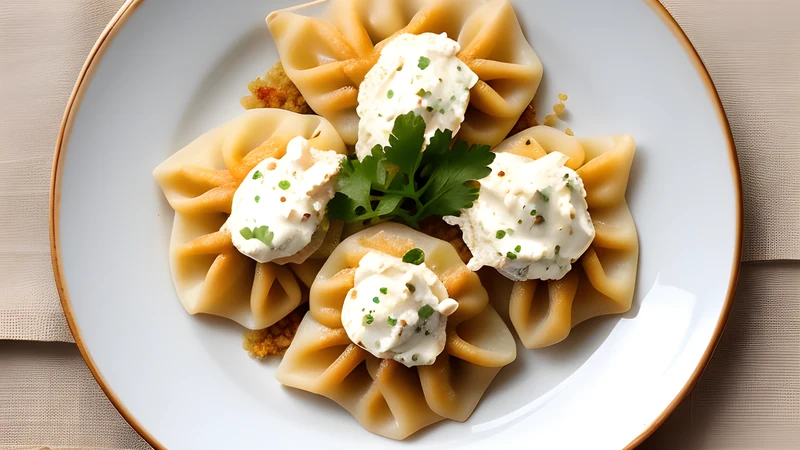
- Place 30-35g of filling in the centre. Lift and pleat the rim between finger and thumb, working around the circle and aiming for 18-20 folds. Gather the pleats at the top, twist the knot firmly and pinch off any excess dough tail.
- Bring a wide, deep pan of well-salted water to a rolling boil, then stir it into a whirlpool and lower the heat to a steady simmer.
- Drop in 5-6 khinkali at a time, knot side up. Stir gently once with the back of a spoon so they do not stick to the base. They will rise to the surface after about 4 minutes.
- Once they float, simmer a further 4 minutes for a total of 8. The dough will look glossy and slightly translucent over the filling.
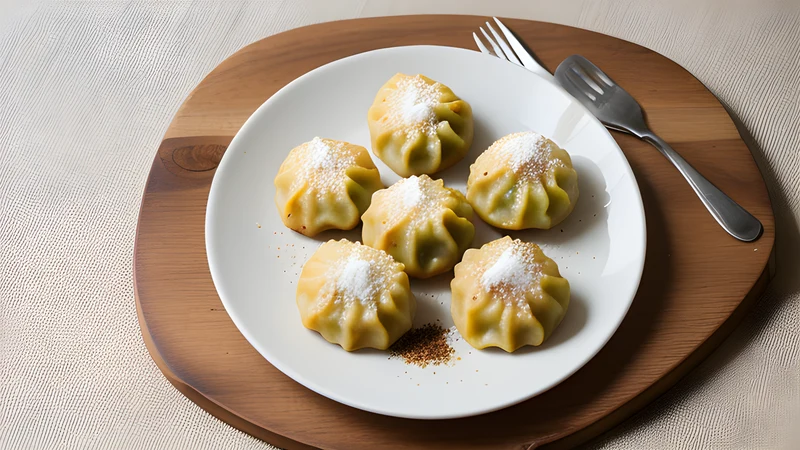
- Lift out with a slotted spoon, drain for 10 seconds, and pile on a warm plate. Dust generously with coarse black pepper and serve at once.
- To eat: pick one up by its knot, turn it upside down, bite a small hole in the side and drink the broth before eating the rest. Leave the knot on the plate.
Shepherds, mutton and a spice that only grows here
Khinkali comes down out of the mountains. The dumpling is claimed most convincingly by Tusheti, Pshavi and Khevsureti, the high, hard north-eastern provinces along the Greater Caucasus ridge where the summer pastures are, and where the flocks and the people who follow them have always spent the warm months. The original filling was mutton or lamb, chopped rather than minced, seasoned with salt, black pepper and whatever grew near the shieling: wild caraway, mountain thyme. Water went in with the meat because water was free and stretched the filling, and because a dumpling that gives you soup as well as meat is worth two dumplings.
That highland version still exists and is worth asking for by name, but the one most people meet is kalakuri, “city-style”, made with a mix of beef and pork and a great deal of fresh coriander. Pork and coriander are the tell of the lowlands and of Tbilisi restaurant cooking. The mountain version, mtiuluri, keeps to lamb and skips the herb entirely.
The seasoning that makes khinkali taste Georgian rather than generically Eurasian is blue fenugreek, utskho suneli. The name translates roughly as “foreign spice”, which is a Georgian joke of sorts, since Trigonella caerulea is grown in the Caucasus and almost nowhere else in the region’s cooking. It is the dried, ground seed and pod of a small blue-flowered clover relative, and it tastes like fenugreek seed with the bitterness sanded off: hay, maple, a green sweetness. It turns up again in the walnut sauces, in pkhali and in the sour beef soup kharcho. Buy it from a Georgian or Russian grocer if you can. Ordinary ground fenugreek seed at half the quantity gets you within reach.
Then there is the knot. The pleats are counted, and the count is a matter of pride: nineteen is the number people quote as the standard a good khinkali-maker hits, and there are cooks who go well past thirty. The knot itself, the kudi or tail, has been kneaded and twisted into a dense plug of raw dough, and nobody eats it. You leave them on the plate, and at the end of the meal the pile of tails is your score. In the old Tbilisi khinkali houses the bill was worked out that way.
Why the dough has to be uncomfortable
A khinkali dough is stiffer than any pasta you have made. Around 50% hydration, no egg, nothing enriching it. It feels wrong under the hands for the first three minutes of kneading, like a dough that has gone badly short of water, and the temptation to splash more in is strong. Resist it. That knot at the top has to hold a hot liquid under pressure for eight minutes in simmering water. A soft, slack dough tears at the pleats, the broth escapes, and you have boiled meatballs.
The 45-minute rest matters as much as the kneading. It lets the gluten relax so the disc rolls out thin without springing back, and it lets the flour finish hydrating, which is what turns the dough from sandy to silky without adding a drop.
Roll the discs so the centre is a touch thicker than the rim. The rim is going to become twenty layers of pleat, and the centre has to take the weight of the filling and the abuse of the simmer. Get this the wrong way round and the base blows out.
The broth, and one borrowed trick
Traditionally the broth in a khinkali is simply water, sometimes stock, mixed into the raw meat until the filling is loose and sloppy. As the dumpling cooks, the fat renders and the meat’s juices join the water, and you get a mouthful of hot soup. It works, and if you want to make it exactly as the mountains do, add 150ml of cold water to the filling and stir until it is absorbed.
I use chilled jellied stock instead, diced small and folded in at the end. This is a straight borrowing from Shanghai — it is how xiaolongbao get their soup, and the trick has no history in Georgia whatsoever. I use it because it solves the one genuine problem with the traditional method: loose, watery filling is miserable to pleat. It slumps, it wets the dough, it leaks onto the seam before you have closed it. Solid cubes of stock sit still while you work, then melt in the pan into a broth with more body and more savour than water ever produces. Make the stock from beef shin and a split trotter or two, reduce it until a chilled spoonful sets to a firm wobble, then chill it overnight in a shallow tray. If your stock will not set, dissolve two sheets of gelatine per 200ml into it while warm and chill that.
Same idea, entirely different dumpling, but the prawn and chive har gow will teach your hands the pleating rhythm faster than khinkali will, because the wrapper is more forgiving of a bad fold.
Filling: work it until it clings
Mix the filling with your bare hand for a full two minutes. You are looking for the point where the mince stops behaving like loose crumbs and turns tacky, pulling away from the bowl in a single mass. That is the salt drawing out myosin, the muscle protein that sets into a mesh when heated. That mesh is what holds the meat in a coherent, juicy plug instead of letting it fall apart into grey grit.
Grate the onion rather than dicing it. Dice gives you crunchy nuggets that puncture the dough from the inside; the coarse grater gives you a wet shred that disappears. Squeeze it and keep the juice — that liquid is most of the onion’s flavour, and it goes back in.
Pleating without swearing
Hold the disc in your non-dominant palm, filling in the centre. With the other hand, lift a fold of the rim and press it against the next fold along, working in one direction around the circle. Each new pleat overlaps the last by about half. Your palm gradually closes into a cup as you go. When you have gone all the way round, you have a small purse with a gaping mouth: pinch the pleats together, twist a half turn to lock them, and tear off the excess.
If a khinkali develops a hole, patch it with a coin of dough and a wet fingertip, and boil that one first.
Keep the water at a simmer
A rolling boil batters the pleats apart. Bring the water up hard, salt it like pasta water, then drop the heat until the surface is trembling with the occasional large bubble. Stir a whirlpool before each batch goes in so nothing settles on the base. They sink, then rise after roughly four minutes; give them four more once they float. Eight minutes total is enough for 250g-of-each-mince dumplings this size, and the dough turns faintly translucent where it stretches over the filling.
What can go wrong
Blow-outs at the base. The disc was too thin in the middle, or the pan was at a hard boil.
A leaky knot. The pleats were not pinched hard enough before twisting, or there was filling smeared on the rim. Keep the rim clean and dry.
Grey, crumbly filling. Under-mixed. Two minutes with your hand, until it clings.
Chewy, tough dough. Over-thick rim, or boiled too long. Eight minutes.
Variations worth making
Mtiuluri, the mountain one. Swap both minces for 500g of coarsely chopped lamb shoulder — chopped by hand with a heavy knife, not minced, so you get texture. Drop the coriander entirely. Keep the caraway, double it, and add a pinch of dried summer savory. This is the version that tastes of altitude.
Kalakuri with more fat. Restaurant khinkali in Tbilisi are richer than mine. If you want that, take the pork up to 300g and use shoulder with the fat left on. The broth comes out cloudier and more unctuous.
Mushroom. A genuine Georgian variant, and a good one. Fry 500g of chestnut mushrooms, chopped fine, in 40g butter over a high heat until the pan is dry and they have taken colour, about 12 minutes. Cool, then bind with 100g of grated sulguni or low-moisture mozzarella and the same spicing. Cheese replaces the fat that meat would have given, so the filling still runs.
Kalakuri with beef alone. For anyone avoiding pork: 500g of beef chuck at 20% fat, plus an extra 30g of the jellied stock to make up for what the pork fat would have contributed.
Reading the pleats
Once you have made a couple of hundred of these your hands stop needing instructions, and the pleat count creeps up on its own. The reason cooks chase the number is practical as much as it is showing off. More folds means more, smaller pleats, which means a thinner, denser plug at the top, which means less raw dough in the knot and a better seal against the broth. A twelve-pleat khinkali works. A twenty-pleat khinkali works better, and looks like it was made by someone who cared.
Serving, storing, and what goes alongside
Black pepper, coarsely ground, over the top, and nothing else. No dipping sauce; Georgians will tell you a khinkali that needs sauce has failed. Drink something cold and sharp with them.
They freeze superbly. Open-freeze the raw dumplings on a floured tray until solid, then bag them. Cook from frozen, adding three minutes: they will rise later and need about eleven minutes in total. Cooked leftovers are a lost cause as far as the broth goes, so fry them the next morning in butter, cut side down, until the base is crisp and the filling is hot.
A Georgian table would have a bowl of pickles and something bready alongside. If you are cooking a whole spread, the Adjaruli cheese boat and khinkali on the same table is how most people first meet this food, and it is a good introduction, if a heavy one. For a lighter afternoon, Turkish manti in garlic yoghurt sits at the other end of the same dumpling family — tiny where khinkali is enormous, drowned in sauce where khinkali is naked.
Related Content