Kharcho: The Sour Georgian Beef Soup
Beef shin, rice and ground walnut in a broth soured with plum and loaded with coriander
Contents
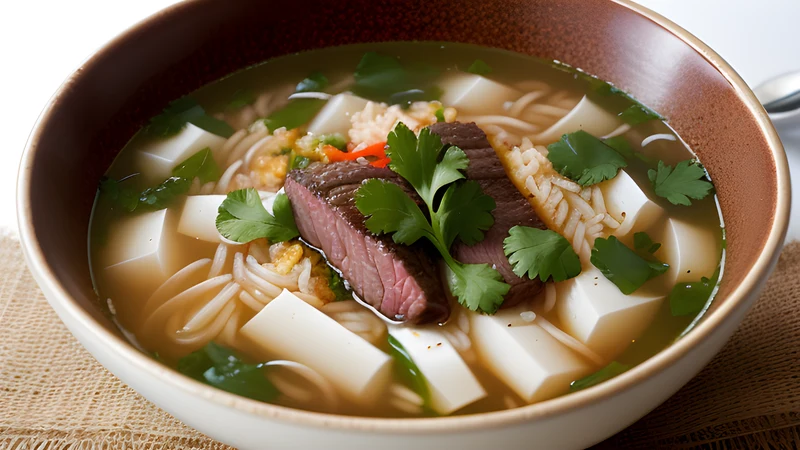
↓ Jump to recipeSourness is a load-bearing flavour in Georgia, built into a dish from the start, running through it, doing the same structural job that a good stock does elsewhere. Kharcho is the clearest demonstration: beef, rice, walnut and a broth so sharp with plum that the first spoonful makes you blink. Then you have another one.
Kharcho: The Sour Georgian Beef Soup
Ingredients
- 900g beef shin on the bone, or 700g boneless shin cut into 3cm chunks
- 2.5 litres cold water
- 1 bay leaf
- 2 tsp fine salt, plus more to finish
- 3 tbsp sunflower oil
- 2 medium onions (about 300g), finely diced
- 6 fat garlic cloves, crushed
- 150g shelled walnut halves
- 100g white long-grain rice, rinsed until the water runs clear
- 60g tklapi (dried sour plum leather), torn into strips, or 200g fresh sour green plums, stoned
- 2 tsp dried blue fenugreek (utskho suneli)
- 1 tsp dried marigold petals (Imeretian saffron), or 1/4 tsp turmeric
- 2 tsp coriander seed, toasted and ground
- 1/2 tsp ground cinnamon
- 1 tsp dried chilli flakes
- 40g fresh coriander, chopped, plus extra to serve
- 20g flat-leaf parsley, chopped
- 1 tbsp red wine vinegar, if needed
- 1/2 tsp coarsely ground black pepper
Method
- Put the beef in a large pot with the cold water, bay leaf and 2 tsp salt. Bring slowly to a bare simmer and skim the grey scum for the first 10 minutes until the broth runs clear.
- Cover and simmer very gently for 2 hours, until the beef pulls apart under a fork. Never let it boil hard.
- Lift the beef out. Strain the broth and skim the fat; you should have about 1.8 litres. Return it to the pot. Pull the meat off any bones into large shreds and set aside.
- Heat the oil in a frying pan over a medium heat. Fry the onions with 1/2 tsp salt for 12 minutes until soft and pale gold. Add the garlic and cook 1 minute more, then scrape the lot into the broth.
- Add the tklapi (or fresh plums) to the broth and simmer 10 minutes until the leather has dissolved or the plums have collapsed. If using fresh plums, push them through a sieve and return the pulp, discarding the skins.
- Add the rinsed rice and simmer for 12 minutes. Add the shredded beef, blue fenugreek, marigold, ground coriander, cinnamon and chilli flakes, and simmer 5 minutes more, until the rice is tender.
- Blitz the walnuts in a food processor in short pulses to a coarse, damp meal, stopping before they turn to paste. Loosen with 150ml of the hot broth to make a slurry.
- Take the pot off the heat and wait until it stops bubbling. Stir in the walnut slurry. Return to the lowest heat for 5 minutes, stirring, keeping it below a simmer.
- Off the heat, stir in the fresh coriander, parsley and black pepper. Taste: it should be distinctly sour. Add the vinegar and more salt if it falls short.
- Rest for 10 minutes, then serve in deep bowls with more coriander scattered over.
A Megrelian soup and a name that means soup
Kharcho comes from Samegrelo in western Georgia, the Mingrelian-speaking lowlands between the Black Sea and the mountains. The full name in the older sources is kharcho shechamandi, and shechamandi is simply the Megrelian word for a soup or a thick broth. The dish is beef, and specifically beef simmered a long time, in a country where the everyday meats were lamb from the mountains and pork from the villages.
The souring agent is tkemali, the small green cherry plum, Prunus cerasifera, picked hard and unripe. Georgians preserve it two ways. Cooked down with garlic and herbs it becomes tkemali sauce, which sits on the table year-round. Puréed and dried in sheets in the sun it becomes tklapi, a plum leather that looks like a roll of brown suede and keeps indefinitely. Tklapi is the winter form, and it is what most kharcho is made with — you tear off a piece, drop it in the pot, and it dissolves back into a sour purée. The same plum, in the same green state, is what carries chakapuli in spring.
You will find tklapi in Georgian, Armenian, Russian and Persian grocers, often labelled as lavashak or plum leather. Read the label: you want plum and nothing else. The sweetened fruit-roll version sold for children’s lunchboxes will wreck the soup.
Tomatoes, and where they came from
Search for kharcho and half the results will show you a red soup with tomatoes in it. That version is real and widely eaten, and it arrived through Soviet canteen cookery in the twentieth century, when kharcho spread out of Georgia across the USSR and picked up tomato paste along the way, partly because tomato paste was available everywhere and tklapi was not. The Book of Tasty and Healthy Food, the Soviet domestic bible, standardised a good deal of this sort of thing.
The Megrelian original gets its acid and its colour from plum. The broth comes out a dusky ochre-brown from the marigold and the walnut rather than red. Both soups are good. They taste substantially different, and if you have gone to the trouble of finding tklapi you should let it be the thing you taste.
Shin, and two hours of nothing
Beef shin is the cut, and there is no shortcut. It is the muscle that does the most work, so it is dense with collagen and, when cooked slowly and wetly, that collagen turns to gelatine and gives the broth a body you can feel on your lips. Diced braising steak makes a thinner, less interesting soup. On the bone is better again for the marrow and the extra gelatine.
Two hours at a bare simmer. Boiling beef hard emulsifies the fat into the broth and turns it cloudy and greasy, and it drives the muscle fibres to squeeze out and toughen. Bare simmer, lid on, and leave it alone.
Skim properly in the first ten minutes. The grey foam is coagulated protein and blood, and if you stir it back in the broth goes murky and tastes faintly of liver.
Rice in a soup that has to sit
A hundred grams of rice in 1.8 litres of broth sounds thin and is deliberate. Rice keeps absorbing liquid as the soup stands, and kharcho is a dish that always stands — this is food for a table where the toasts run long. Put in 200g and by the second helping you have a risotto.
Rinse the rice until the water runs clear. That surface starch would otherwise cloud the broth and, worse, thicken it in competition with the walnut. Long-grain, not basmati and not short-grain: you want separate grains that hold their shape for an hour in hot liquid.
Building the broth in the right order
Kharcho is assembled in stages and the order is doing real work.
The beef goes into cold water rather than boiling. Starting cold lets the soluble proteins leach out slowly and rise as a coherent raft of scum you can lift off with a spoon. Drop beef into boiling water and those proteins seize instantly at the surface of the meat, stay there, and cloud the broth from the inside out over the next two hours.
The onions are fried separately and added later. There is a temptation to sweat them in the pot first and build the soup on top, and it costs you: the onions would spend two hours boiling and would surrender everything they have, leaving the broth vaguely sweet and the onions themselves textureless. Fried for twelve minutes to a pale gold and added at the halfway point, they keep some identity and bring the caramelisation the plum needs to push against.
The dried spices go in near the end, with five minutes of simmering to bloom. Blue fenugreek and marigold are both delicate, and their aromatic compounds are volatile — an hour in an open pot and they are on the ceiling rather than in the soup.
The plum goes in before the rice. It needs ten minutes of simmering to dissolve the tklapi, and doing that with rice already in the pot means the rice cooks in an acid broth, which slows its softening considerably. Acid keeps the pectin in plant cell walls intact; this is the same reason a tomato added early leaves beans chalky.
Judging the sourness
Tklapi has no standard strength. It depends on the plums, the year, the maker and how long the sheet has been drying. A 60g piece from one shop might be twice as sour as 60g from the next, so treat the quantity as a starting point and taste as you go.
The target is a broth that is sour first and savoury second — sharp enough to make you salivate, backed by the beef and rounded by the walnut oil. Georgian sourness sits well past what a British palate expects from a soup, somewhere near a good hot-and-sour or a Thai tom yum, and the walnut is what stops it becoming punishing.
Correct in this order: sourness first, with vinegar or pomegranate molasses; then salt, which will make the existing sourness read as brighter rather than harsher; then, if it is still shrill, a pinch of sugar. Reach for the sugar last and sparingly. It is the difference between a soup with edges and a soup with none.
Walnut, off the boil
The ground walnut is what makes kharcho Georgian rather than a generic Eurasian beef soup, and it is the same technique that runs through lobio and the cold sauces. A walnut is about 65% oil; grind it, and that oil goes into suspension in the broth, thickening it and enriching it far beyond what the ingredient list suggests.
The suspension is fragile. Boiling coalesces the oil droplets and denatures the walnut protein holding them apart, and the soup goes grainy with a slick on top. So the pot comes off the heat, stops bubbling, takes the walnut slurry, and then goes back on the lowest setting for five minutes with a spoon moving through it. This is the same discipline that governs satsivi, where a boiled sauce is an unrecoverable sauce.
Pulse the walnuts to a coarse damp meal and stop there. Kharcho keeps a slight walnut texture in the broth, which is part of its character.
The spices
Blue fenugreek (utskho suneli), the ground pod and seed of Trigonella caerulea, grown across the Caucasus and hardly anywhere else. Hay, maple, celery leaf; fenugreek’s flavour without its bitterness. Half quantity of ordinary ground fenugreek stands in.
Marigold petals (kartsakhura, Imeretian saffron), ground Tagetes florets, for a warm ochre colour and a mild resinous scent. A quarter-teaspoon of turmeric covers the colour.
Both appear in khmeli suneli, the standard Georgian blend, which also carries coriander seed, dill, summer savory, bay and marjoram. Two teaspoons of khmeli suneli will replace the fenugreek, marigold and ground coriander here.
The coriander leaf is the other half of the identity, and 40g of it functions as a bulk ingredient, stirred in off the heat so the volatile aldehydes that make it smell citrus-sharp survive to the bowl.
What can go wrong
Grainy broth with oil on top. The walnut boiled.
Cloudy, greasy broth. The beef boiled hard, or the scum was never skimmed.
A soup that thickens to porridge overnight. Too much rice, or it was left in. This happens; loosen with water and more plum on reheating.
Not sour enough. Tklapi varies enormously in strength. Taste, and correct with the vinegar or with a tablespoon of pomegranate molasses. Kharcho should be assertively sour — sour enough that someone unfamiliar with it raises an eyebrow at the first spoonful.
Bitter. Old walnuts. Walnut oil goes rancid fast. Taste one before you grind 150g, and keep them in the freezer.
Substitutions, storage and the table
No tklapi. 200g of gooseberries, simmered and sieved, is the closest common swap — the same malic-and-citric sharpness and the same green fruitiness. Failing that, 3 tbsp of pomegranate molasses plus 2 tbsp of lemon juice, added at the end and adjusted by taste.
Lamb. Neck or shoulder, 2 hours, works well and makes a rounder, fattier soup.
Chicken. Georgians would send you to a different dish entirely: chikhirtma, soured with lemon or vinegar and thickened with egg yolk. It is the same instinct — sourness plus a thickener — worked out with completely different materials.
Kharcho keeps four days and improves overnight, with the caveat that the coriander fades and should be replaced with a fresh handful each time you reheat. Reheat gently, below a simmer, for the walnut’s sake. It freezes for three months, though the rice softens.
Serve it with bread, and with a plate of raw herbs on the table to pick at — coriander, tarragon, spring onion, eaten by the stalk between mouthfuls, which is how the food is meant to work. A hot bowl of kharcho and a torn piece of khachapuri is about as complete a winter lunch as exists.
Related Content