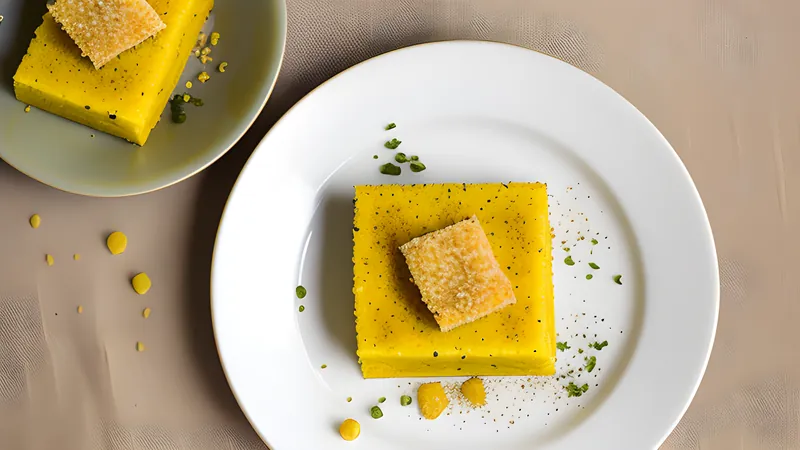
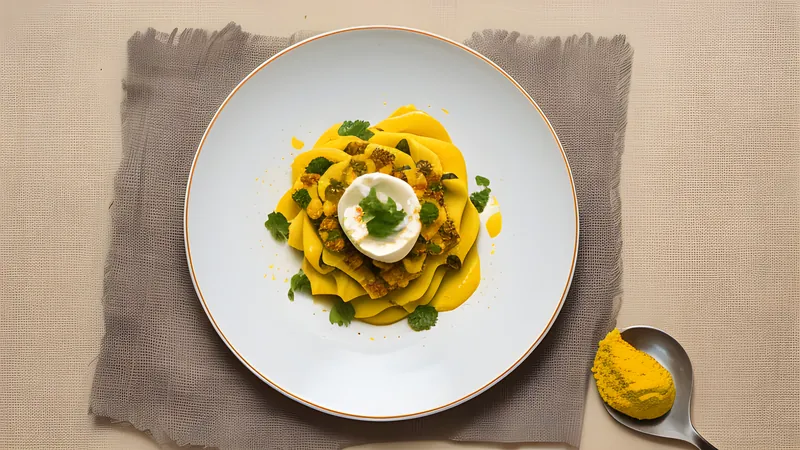
Khandvi: Rolled Gram Flour Ribbons
The snack that punishes hesitation
Contents
↓ Jump to recipeKhandvi is the Gujarati snack that’s all technique and no forgiveness: a besan and buttermilk batter cooked to an exact thickness, spread paper-thin on plates while still hot, then rolled into tight little ribbons before it has a chance to set. Get the timing right and the rolls hold their shape with a smooth, faintly tangy bite; get it wrong in either direction and you end up with something too sticky to roll or too dry to peel off the plate in one piece.
It’s precisely that narrow window that makes khandvi a genuine test of a home cook’s nerve, passed down and practised in Gujarati households the way a French cook might obsess over a proper béchamel — the ingredients are cheap and the process is short, but the margin for error is real.
Khandvi: Rolled Gram Flour Ribbons
Ingredients
- 100g besan (gram flour), sieved
- 300ml buttermilk (or 150ml yoghurt whisked with 150ml water)
- 0.5 tsp ground turmeric
- 1 tsp ginger-green chilli paste
- 2 tbsp vegetable oil, divided
- 1 tsp mustard seeds
- 1 tsp white sesame seeds
- 10 curry leaves
- 1 dried red chilli
- 0.25 tsp asafoetida (hing)
- 2 tbsp chopped fresh coriander, to garnish
- 2 tbsp desiccated coconut, to garnish
- Salt, to taste
Method
- Lightly grease the backs of 3-4 large steel plates or a clean worktop and set them ready before you start cooking the batter.
- Whisk the besan, buttermilk, turmeric, ginger-chilli paste and a pinch of salt in a heavy-based pan until completely smooth with no lumps.
- Cook over a medium-low heat, stirring constantly with a flat spatula or whisk, for 10-12 minutes, until the batter thickens considerably and starts to pull away from the sides of the pan.
- Test by spreading a small dab on a plate: it is ready when it sets within seconds and peels away cleanly without sticking.
- Working quickly, pour the batter onto the greased plates and spread it as thin as possible with the back of a spoon or an offset spatula.
- Let it firm up for 2-3 minutes, then cut into strips about 4cm wide and roll each strip up tightly into a spiral.
- Arrange the rolls on a serving plate.
- Heat the remaining oil in a small pan, add the mustard and sesame seeds, and let them pop, then add the curry leaves, dried chilli and asafoetida and fry for 15 seconds.
- Pour the hot tempering evenly over the rolls.
- Garnish with coriander and coconut and serve at room temperature.
The story: a dish taught by feel
Khandvi is one of those dishes that Gujarati grandmothers teach almost entirely by feel rather than by measurement, because the one variable that actually determines success — exactly how long to cook the batter — can’t be reduced to a reliable number of minutes. Buttermilk’s acidity varies, besan absorbs liquid differently depending on how finely it’s ground, and even the pan’s thickness changes the cooking time by several minutes either way. What gets handed down instead is the plate test: a dab of batter spread thin should set almost instantly and peel away from the plate cleanly, leaving no residue behind. That single check is worth more than any stated cooking time in this recipe, including the one above.
The dish is closely associated with Gujarat generally but especially with Surat and the wider Kathiawar region, where it’s traditionally served as a light breakfast or teatime snack rather than a heavier meal component. It travels reasonably well by Gujarati snack standards too, though nowhere near as robustly as thepla, since the rolled shape can flatten if packed too tightly. A close cousin exists in Maharashtra, sometimes called dahi vadi in some regions or made with a similar gram flour base, a reminder that the technique of a thin, cooked, rolled batter travelled across the border between the two states more easily than any single fixed name for it did.
The thinness of the spread is not a cosmetic preference. A khandvi rolled from a thickly spread batter stays gummy and heavy at the centre of each spiral, never developing the light, almost translucent quality the dish is known for. Spreading it as close to paper-thin as your patience allows is the difference between a good khandvi and a merely edible one. An offset spatula, the kind used for icing cakes, is genuinely the best tool for this step if you have one, since its flat, flexible blade spreads the batter in a single smooth pass rather than the dragging, uneven strokes a regular spoon tends to leave, which show up afterwards as visible ridges once the rolls are cut and arranged.
Technique: reading the batter, and moving fast once it’s ready
The batter needs constant stirring throughout the ten to twelve minutes it cooks, because besan scorches easily on a pan bottom the moment it’s left still for more than a few seconds, and a single scorched patch will show up as a dark fleck through the whole batch once it’s spread thin. A flat wooden spatula or a balloon whisk, worked continuously across the base of the pan, is worth using over an ordinary spoon. A non-stick pan makes this whole process considerably more forgiving than a stainless steel one, since besan and buttermilk together are prone to sticking hard to a bare metal surface exactly at the thickness this batter needs to reach; if all you have is stainless steel, keep the heat a notch lower than you would with non-stick and stir slightly more often to compensate.
Once the batter passes the plate test, everything that follows needs to happen quickly, because it keeps thickening and setting even off the heat, carried by residual heat in the pan and the batter itself. Have the plates greased and ready before you start cooking the batter, and pour it out the moment it’s ready rather than letting it sit in the pan while you find a spreading tool. If it firms up on the plate before you’ve finished spreading a portion thin, a light barely-warm reheat of that portion in a low oven for thirty seconds can sometimes soften it enough to spread properly, though it’s far better to avoid needing that fix by working fast in the first place.
Cutting the strips before the layer has fully cooled, while it’s still pliable but no longer wet, is what allows the tight roll; wait too long and it cracks rather than rolling smoothly, while cutting too early risks the strip tearing as it’s peeled from the plate. A short two to three minute window between spreading and rolling is normal, and worth timing on a first attempt so you get a feel for it.
The grease on the plates matters more than it might seem. A thin, even film of oil, wiped on with a folded paper towel rather than poured, is enough; too much oil and the batter slides around rather than spreading evenly under the spoon, while too little and it tears as you try to lift the edge to start rolling. Steel plates are traditional and worth using if you have them, since they conduct heat evenly and cool at a predictable rate, giving a more consistent window to work in than a ceramic or plastic surface would.
What to serve it with
Khandvi is a teatime and breakfast snack in its own right, needing nothing beyond the tempering it’s finished with, though a bowl of green coriander-mint chutney alongside is common. In a broader Gujarati spread it sits well next to khaman dhokla, another besan-based snack with a completely different, spongier texture, and works as a lighter starter before something as substantial as undhiyu.
Storage, make-ahead and variations
Khandvi keeps for two days in the fridge in an airtight container, though it’s best served at room temperature rather than chilled straight from the fridge, since the cold firms the rolls up in a way that dulls their texture. It doesn’t freeze; both the rolled shape and the delicate mouthfeel don’t survive thawing. If you’re making it for guests, roll the khandvi and refrigerate it unrolled from the tempering, then add the hot mustard-seed oil and garnish just before serving; the tempering loses its sizzle and aroma if it sits for more than half an hour, even though the rolls themselves hold perfectly well without it.
A tablespoon of grated fresh coconut worked into the batter itself, rather than only used as a garnish, is a variation some households prefer for extra richness. If rolling by hand feels unmanageable on a first attempt, cutting the spread layer into smaller squares and folding rather than rolling them is a reasonable shortcut that still gives the right texture, even if it loses the traditional spiral shape. Whatever you do, don’t rush the ten to twelve minutes of cooking to save time; an undercooked batter will never set firmly enough to roll, no matter how thin you manage to spread it.
Buttermilk quality affects the outcome more than most of the other ingredients here. Thin, watery buttermilk needs a longer cooking time to thicken to the right consistency, which raises the risk of scorching before the batter is actually ready to spread; a thicker, well-shaken buttermilk, or the yoghurt-and-water mix used as a substitute, gets there in closer to the ten-minute mark stated in the method. If you’re making your own substitute, whisk the yoghurt and water together thoroughly rather than just stirring, so there are no pockets of thicker yoghurt that cook unevenly once the batter hits the pan. Slightly soured, older yoghurt actually works in this dish’s favour, since khandvi is meant to carry a genuine tang, so there’s no need to reach for the freshest tub in the fridge; a yoghurt a day or two past its most neutral flavour brings a welcome sharpness that a very fresh one lacks.
Related Content