Crispy Pork Katsu Sando
Japan's perfect sandwich, milk bread and all
Contents
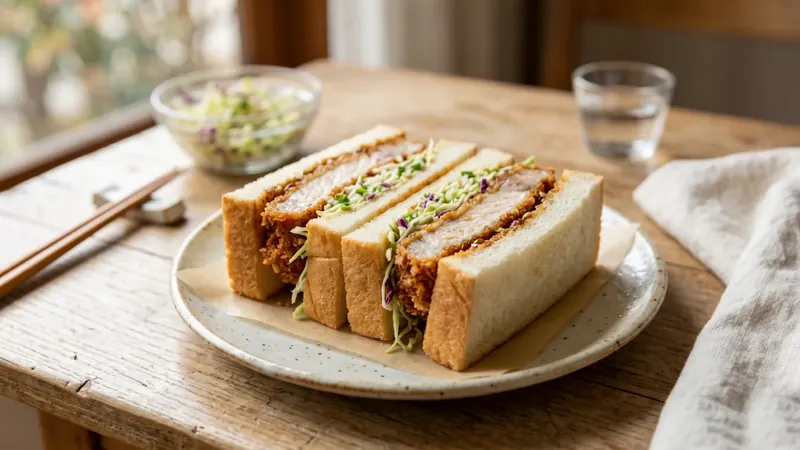
↓ Jump to recipeThe katsu sando is proof that a sandwich can be a destination dish rather than a fallback. A crisp panko-crumbed pork cutlet, brushed with fruity-sweet tonkatsu sauce, is pressed between pillowy slices of Japanese milk bread. The twist is a quick tonkatsu slaw tucked in alongside the cutlet, adding cool crunch and freshness so each bite balances rich and light. Crusts trimmed, cut neatly in two, it is as satisfying to look at as it is to eat, and it comes together in well under half an hour.
Crispy Pork Katsu Sando
Ingredients
- 2 boneless pork loin steaks, about 150g each
- 0.5 tsp fine salt
- 0.25 tsp ground black pepper
- 3 tbsp plain flour
- 1 egg, beaten
- 80g panko breadcrumbs
- Neutral oil, for shallow frying
- 4 thick slices of milk bread (shokupan)
- 20g softened butter, for spreading
- 1 tsp English mustard
- 3 tbsp tonkatsu sauce
- 150g white cabbage, very finely shredded
- 1 tbsp Japanese mayonnaise, plus 1 tbsp for spreading
- 1 tsp rice vinegar
Method
- Sit the pork steaks between two sheets of cling film and bash with a rolling pin to an even 1cm thickness. Snip any sinew at the edges and season with the salt and pepper.
- Set up three plates: one with flour, one with beaten egg, one with panko. Coat each steak in flour, then egg, then press firmly into the panko.
- Heat 1cm of oil in a frying pan to about 175C. Fry the pork for 3 to 4 minutes each side until deep golden and cooked to 70C, then rest on a rack for 3 minutes.
- For the slaw, toss the shredded cabbage with 1 tbsp Japanese mayonnaise and the rice vinegar.
- Spread two slices of bread with butter and English mustard.
- Spread the other two slices with the remaining tablespoon of Japanese mayonnaise.
- Brush the rested cutlets with tonkatsu sauce on both sides, then sit one on each mustard-spread slice.
- Pile the slaw on top, close with the remaining bread, and press gently.
- Trim away the crusts with a sharp knife, then cut each sandwich in half and serve.
From yoshoku to a sandwich worth queuing for
The katsu sando belongs to a category the Japanese call yoshoku: Western-style dishes absorbed and reinvented within Japanese cooking during the Meiji era, from the 1860s onward, as the country opened to foreign trade and ideas. Its centrepiece, tonkatsu, is a breaded and deep-fried pork cutlet whose name joins ton, pork, with katsu, a clipping of the English “cutlet”. Restaurants in Tokyo popularised the thick-cut fried pork cutlet in the early twentieth century, and the Rengatei restaurant in Ginza, which opened in 1895, is often credited with shaping the dish into the standalone plate served with shredded cabbage and rice that Japan still eats today. Crucially, cooks used panko, the light, jagged Japanese breadcrumb, rather than fine European crumbs, which is why tonkatsu has a uniquely airy, shattering crust. Slipping that cutlet between two slices of bread was a natural and inspired next step, and the sando became a fixture of station kiosks, convenience stores and lunch counters.
Bread is half the story
Shokupan, Japanese milk bread, is a soft, faintly sweet white loaf with a tender, cloud-like crumb, usually enriched with milk and a cooked flour paste that keeps it pillowy for days. Its gentle structure is exactly right for a sando: substantial enough to hold a thick cutlet, soft enough to yield in a single bite without fighting you. If you cannot buy good shokupan, it is well worth baking, and I have the full method in my Japanese milk bread rolls, which use the same tangzhong technique in a loaf. The crusts come off not out of fussiness but because the clean, square cross-section is part of the sandwich’s identity, the neatly bisected halves showing off the layers within.
The sauce, and the twist
Tonkatsu sauce is the flavour that defines the sandwich. Thick, dark and glossy, it is a fruit-and-vegetable-based brown sauce, tangy and sweet with a savoury depth, and it sits in the same family as British brown sauces while tasting distinctly its own. Bulldog is the classic bottled brand in Japan. Brushed over the hot cutlet, it soaks just slightly into the crumb and seasons every mouthful.
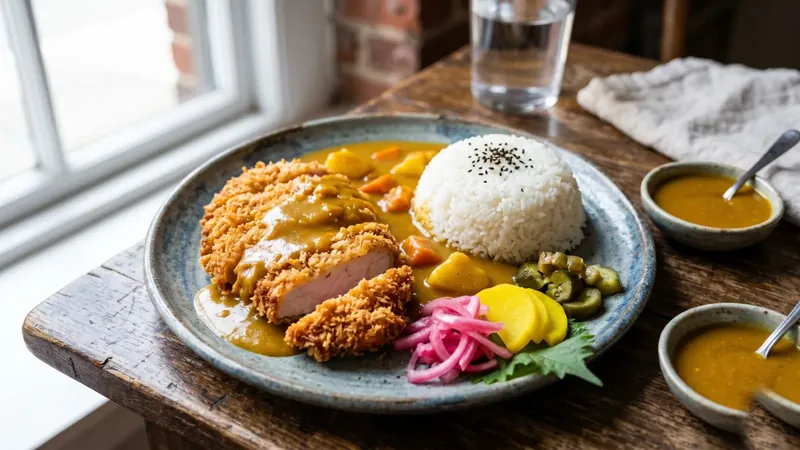
The slaw is my gentle addition. Shredded cabbage is the traditional partner to tonkatsu on the plate, served raw and finely cut as a crisp, cooling counterpoint to the fried pork. Folding it through a little Japanese mayonnaise, which is richer and tangier than its Western cousin thanks to its rice vinegar and egg yolks, turns that classic side into a slaw that lives inside the sandwich itself. It keeps the spirit of the original while adding freshness and crunch. If you love the flavours here, the same fruity tonkatsu sauce is the backbone of a full plate in my chicken katsu curry.
If you cannot find bottled tonkatsu sauce, it is easy to approximate: whisk together three tablespoons of ketchup, two of Worcestershire sauce, one of oyster sauce and one of sugar until smooth. It will not be identical to Bulldog, but it hits the same sweet, tangy, savoury notes and works perfectly well brushed over the cutlet. Shred the cabbage as finely as you can manage, ideally on a mandoline or with a very sharp knife, because coarse cabbage is bulky and awkward in a sandwich; you want fine, almost hair-thin ribbons that pack neatly and stay crisp.
Getting the cutlet right
A few details reward attention and separate a good sando from a soggy one. Pound the pork to an even 1cm thickness so it cooks through before the crumb scorches, and snip the band of sinew around the loin, or the cutlet will curl in the pan. Coat methodically, flour then egg then panko, pressing the crumbs on firmly so they hold. Keep the oil at around 175C; a cube of bread should turn golden in about forty-five seconds. Too cool and the crumb drinks oil; too hot and it browns before the pork is cooked. Aim for 70C in the centre.
Let the fried cutlet rest on a rack for a few minutes before assembly. Resting on a rack rather than paper keeps the underside from steaming and going soft, and it lets the juices settle so they do not soak through the bread. Build the sandwich just before serving, and cut with a sharp, clean knife so the finished halves show their neat strata of bread, pork and slaw, which is half the appeal of a sando in the first place. A serrated knife works well; wipe the blade between cuts so the crumb stays clean.
There is a small assembly logic worth following. The mustard-and-butter slice goes against one side of the cutlet, the plain mayonnaise slice against the other, and the sauce-brushed pork and slaw sit between. The butter forms a thin, water-resistant layer that helps stop the bread going damp, an old sandwich-maker’s trick, while the mustard adds a quiet warmth that lifts the pork without shouting over the tonkatsu sauce. Press the finished sandwich gently and evenly with your palm before cutting; this compacts the layers so the halves hold together and cut cleanly rather than sliding apart.
Make-ahead and variations
Fry the cutlets and make the slaw up to an hour ahead, but assemble at the last minute so the bread stays soft and the crust stays crisp. If you need to hold fried cutlets a little longer, keep them on a rack in a low oven at around 100C rather than covering them, which would trap steam and ruin the crumb.
Chicken breast, pounded thin and crumbed the same way, makes an excellent chicken katsu sando and is the version most people meet first. For a vegetarian sando, thick slabs of aubergine, salted and pressed to draw out moisture first, or firm tofu take beautifully to the panko treatment; both benefit from a slightly longer fry to colour properly. A pork fillet, sliced into medallions and lightly flattened, is more tender than loin if you want to trade a little chew for softness.
And if you have leftover cutlets, do not reheat them for a second sando; instead slice them and lay them over rice with a little dashi, onion and beaten egg simmered together, then finished with the same tonkatsu sauce, for a quick katsu-don-style bowl the next day. The crumb will have softened, which suits that dish perfectly. The slaw, too, is worth making in excess: dressed lightly, it keeps for a day in the fridge and makes a sharp, crunchy side for almost anything fried.
Getting the panko right
The breadcrumb is not a detail here; it is the reason tonkatsu tastes the way it does. Panko is made from crustless white bread that is dried into large, jagged flakes rather than fine crumbs, and those flakes fry into a light, open, shatteringly crisp crust that absorbs far less oil than a dense European breadcrumb. Buy panko rather than substituting ordinary crumbs if you possibly can; the difference in texture is the whole point of the dish. If you must improvise, whizz stale white bread coarsely and dry it low and slow in the oven, then break it into rough flakes.
Season each stage of the coating, not just the pork: a pinch of salt in the flour and a little in the panko means every layer tastes of something. Press the panko on firmly with the flat of your hand so it grips, then leave the coated cutlets to sit for a couple of minutes before frying, which helps the crust set and hold together in the oil. Fry only one or two cutlets at a time so the oil temperature does not crash, and turn them gently so the delicate crust does not shear off. Done well, the crumb comes out pale gold and audibly crisp, ready to soak up just enough of that dark, tangy sauce.
Put all of it together, good bread, a properly crumbed and rested cutlet, real tonkatsu sauce and a sharp, fine slaw, and the katsu sando earns its reputation as one of the great sandwiches. It looks like something from a Tokyo lunch counter and takes barely more effort than any fried cutlet, which is exactly why it is worth learning to make well at home. Make it once and you will understand why an entire country treats the humble sandwich as something worth queuing, and happily paying a premium, for at the counter.
Related Content