Kama: Estonian Toasted Grain Flour With Buttermilk
Four roasted grains, cold buttermilk, and a spoon
Contents
↓ Jump to recipeKama is a bag of flour that tastes like it has already been baked, and it is the most quietly extraordinary thing in the Estonian larder.
The flour is a blend of four toasted grains — rye, barley, oats and dried peas — roasted until they smell of popcorn, then milled together. Everything in the bag is already cooked — it is finished food in powder form, and the standard way to eat it is to stir it into cold buttermilk with a spoonful of sugar and eat it with a spoon, cold, in about four minutes flat. Every Estonian supermarket sells it in a paper bag. Every Estonian grandmother has an opinion about the ratio.
Kama: Estonian Toasted Grain Flour With Buttermilk
Ingredients
- 150 g whole rye grain
- 150 g whole barley grain (pot or pearl)
- 150 g whole oat groats
- 100 g dried yellow peas
- 600 ml cold buttermilk (or kefir)
- 2 tbsp caster sugar, or 2 tbsp honey
- 1 pinch fine sea salt
- 200 g fresh blueberries, blackcurrants or lingonberries, to serve
- 2 tbsp soured cream, to serve (optional)
Method
- Heat the oven to 180°C fan / 200°C conventional. Spread the rye, barley and oats on separate areas of a large baking tray, or use two trays — they toast at slightly different rates.
- Roast for 25-35 minutes, shaking every 10 minutes, until the grains are the colour of milky coffee and smell strongly of toast and popcorn. Watch the oats: they colour fastest and can be done 5 minutes early.
- Toast the dried peas in a dry frying pan over medium heat for 8-10 minutes, shaking constantly, until they are speckled brown and smell nutty. Some will pop. Do these separately — they burn in an oven long before they colour.
- Cool everything completely on the tray, at least 30 minutes. Warm grain grinds badly and goes gummy.
- Grind in batches in a high-powered blender, spice grinder or grain mill for 60-90 seconds per batch, until you have a fine, pale-brown flour. Sieve through a fine sieve and re-grind any coarse fragments left behind.
- Store the kama flour in an airtight jar. It keeps 3 months at room temperature and 6 in the freezer.
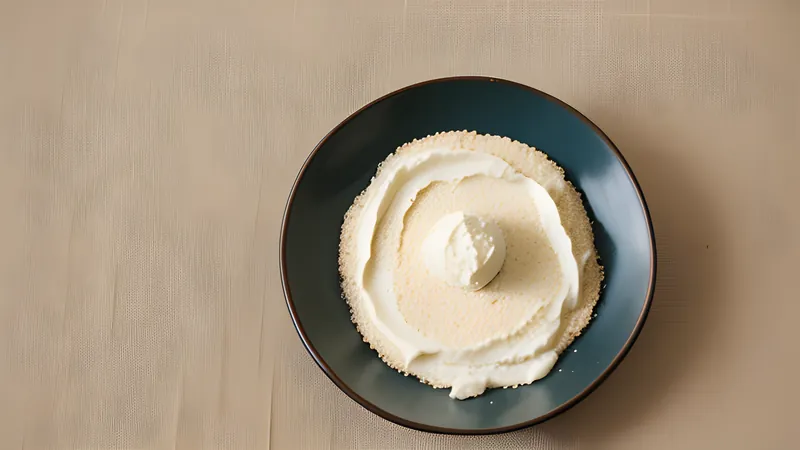
- To serve: whisk 120 g of the kama flour into 600 ml cold buttermilk a spoonful at a time, adding the sugar or honey and the pinch of salt. Whisk until completely smooth with no dry pockets.
- Rest for 10 minutes in the fridge — the flour hydrates and thickens noticeably. Whisk again, loosen with more buttermilk if it has gone past pouring consistency, and divide between four bowls.
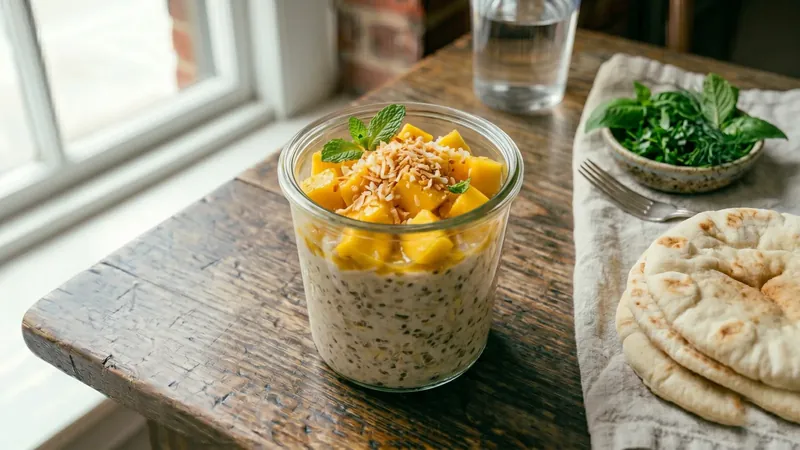
- Top with berries and a spoonful of soured cream, and eat cold.
Food that could survive a winter
The logic of kama is the logic of a country with a long, dark, agriculturally hopeless winter and no refrigeration.
Roasting grain does three useful things at once. It drives the moisture down below the level at which mould and insects can get established, which is the difference between a sack of grain that survives to March and one that doesn’t. It gelatinises the starch, so the resulting flour will thicken cold liquid without cooking — no fire, no pot, no fuel. And the Maillard reaction between the grain’s proteins and its own sugars produces hundreds of aromatic compounds that raw flour simply does not have, which is why kama tastes of something and plain flour tastes of paste.
The peas are the part that surprises people. Dried yellow peas are roughly 22% protein against rye’s 10%, and adding them turns a carbohydrate into something closer to a complete meal. Grain protein is short on the amino acid lysine; legume protein is rich in it and short on methionine, which grain has. Put them together and the protein quality of the mixture is meaningfully better than either alone. Estonian peasants worked this out several centuries before anyone could explain it, by the reliable method of noticing which food kept people working.
Kama was field food. Farm labourers carried the flour dry in a pouch and mixed it with whatever was available — buttermilk, soured milk, water, melted snow — at the edge of the field. There was nothing to cook and nothing to spoil. Similar toasted-flour foods turn up wherever people needed portable calories: Tibetan tsampa is roasted barley flour mixed with butter tea, and Latin American pinole is toasted maize. The Estonian version has the pea in it, and it has buttermilk.
Buy it or make it
You can buy kama flour, and in Estonia everybody does. Outside Estonia you can find it in Baltic shops and online, and it is perfectly good.
Making it yourself takes about an hour of mostly-waiting and produces something markedly better, for the same reason freshly ground coffee beats a tin that has been open a fortnight. Toasted grain is full of volatile aromatics, and volatile means exactly what it says: they leave. A bag of kama that was milled six months ago in a factory has lost most of what made the roasting worthwhile. Yours will smell like the inside of a bakery.
The other argument for making it is control. Commercial kama runs sweeter and finer than I like. Grinding your own lets you leave a little texture in it, which I prefer, and lets you push the roast darker.
Getting the roast right
Roast each grain to the colour of milky coffee. Darker than golden, lighter than chocolate.
The grains do not cook at the same rate. Oats are the smallest and fattiest and will be ready five minutes before the rye. Barley takes the longest. If you are being careful, roast them on separate trays and pull each when it is ready; if you are being realistic, put them all on one big tray in separate zones, shake every ten minutes, and accept some variation. Slight unevenness in the roast gives the finished flour more character.
The peas need the hob. In the oven they sit there for forty minutes taking almost no colour and then burn without warning, because their skins insulate the interior. A dry frying pan over medium heat, shaken constantly for eight to ten minutes, gets them speckled and nutty. A few will pop like tiny popcorn. That is the signal that you are nearly there.
Cool everything completely before grinding. This matters more than it sounds. Warm grain still holds steam, and steam in a grinder condenses into the flour and turns it into a damp, clumping mess that will never sieve. Thirty minutes on the tray.
The grinding problem, honestly
Home kitchens struggle here. Toasted whole grain is hard and the bran is fibrous, and most equipment produces something gritty.
A high-powered jug blender in small batches gets you a good 80-90% fine with a gritty remainder — sieve, re-grind the coarse fraction, repeat. A spice or coffee grinder does a better job on less volume. A proper grain mill does it perfectly and is a lot of money for a flour you will make twice a year. A food processor will not do it at all; the blade sits too high and the grain just spins.
Sieve regardless. The bran fragments that survive grinding are what make bad kama feel like eating sand.
Grind in small batches — a third of a jug at most. Overfilling means the grain at the top never reaches the blade and the grain at the bottom gets pulverised and hot, and heat is the enemy twice over here: it drives off the aromatics you just spent forty minutes creating, and it melts the small amount of fat in the oats into a paste that clogs the sieve. Thirty seconds, pause, shake the jug, thirty seconds more. Let the grinder cool between batches if it starts to smell warm.
The traditional Estonian mill did all four grains together in one pass, which is why kama is sold as a blend rather than four jars. There is no technical reason you cannot grind them separately and blend afterwards, and it gives you control over the ratio, but the classic four-grain proportion has survived a long time for a reason and I would make it that way at least once.
Serving it, and the ratio argument
The standard is roughly one part kama flour to five parts buttermilk by volume, sweetened and eaten cold. My ratio above — 120 g flour to 600 ml — gives something the consistency of thin yoghurt, which is how I like it. Estonians will argue for thicker. Some make it spoonably stiff, almost a paste.
Add the flour to the liquid gradually and whisk hard. Dumping it in at once gives lumps that are impossible to whisk out, because each clump seals itself in a hydrated skin the moment it hits the buttermilk. This is the same reason you add liquid slowly to a roux.
Then let it stand ten minutes. Kama thickens on resting as the gelatinised starch hydrates, and something you mixed to perfection will be stodgy by the time it reaches the table. Mix it looser than you want and let it come to you.
Sweeten with sugar or honey. Salt — just a pinch — is my addition and it does the same job salt does in porridge, which is to make the grain taste of grain instead of nothing.
What goes wrong
It tastes of nothing. You underroasted. Pale grain gives pale flavour, and the whole dish is carried by the roast. Milky coffee is the colour; if in doubt, go a shade darker than feels comfortable. The margin before bitterness is wider than you think — grain has to get properly dark before the Maillard products turn acrid.
It tastes bitter. You overroasted, most likely the oats, which have the most fat and therefore the most to go rancid and burn. Discard and start again. Bitterness in toasted grain does not mellow with time or sugar.
It is gritty. The bran survived. Sieve and re-grind, and if your equipment simply cannot get there, accept a slightly rustic texture — it is honest, and the flavour is unaffected.
It is lumpy. You added the flour too fast, or the buttermilk was not cold. Cold liquid hydrates starch more slowly, which gives you time to whisk. Room-temperature buttermilk grabs.
It split. Real buttermilk is acidic and stable, but if you have used a thin cultured drink and whisked it hard while warm, the casein can flocculate. Keep everything cold.
Buttermilk, and the substitutions
Estonian petipiim is the liquid left after churning butter — genuinely soured, thin, tangy, with a faint dairy sweetness. British cultured buttermilk is a reasonable stand-in and is what most people will use.
Kefir works and is arguably better: more acidity, a little carbonation, and a thicker body. Plain yoghurt loosened with milk to a pouring consistency also works. Soured cream thinned with milk gives a much richer version that eats like a dessert.
Plain milk gives you something sweet and flat. The acidity is doing structural work — it sharpens the toasted grain and keeps 120 g of starch from tasting like wallpaper paste. If milk is all you have, add a tablespoon of lemon juice and let it stand five minutes.
Beyond the bowl
Kama flour is more versatile than its usual breakfast job suggests. Fold it into whipped cream with sugar for kamavaht, a mousse that turns up at Estonian birthdays. Beat it into softened butter and spread it on rupjmaize. Use it to replace a quarter of the flour in a shortbread or a crumble topping, where the toasted flavour does real work. Roll truffles in it instead of cocoa.
It also makes an excellent coating on things that need a nutty crust, and it thickens a soup without the raw-flour taste you get from a beurre manié.
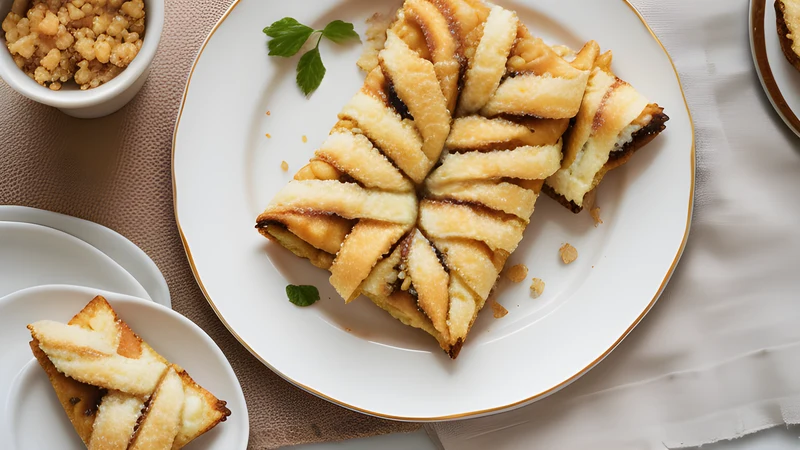
For breakfast in the same register, steel-cut oats with brown butter chase the same toasted-grain flavour by a different road, and served alongside a slice of kringle you have an Estonian breakfast that will hold you until three in the afternoon.
Berries are close to compulsory. Blueberries, blackcurrants and lingonberries all bring acidity, which is the thing a bowl of soft toasted starch is short of. Frozen work perfectly and half-thaw into the buttermilk, which is a bonus.
Related Content