Kalops: Swedish Beef Stew With Allspice
Beef, bay and a great many peppercorns from Jamaica
Contents
↓ Jump to recipeKalops is a stew with almost nothing in it. Beef, onion, bay, allspice, stock, a splash of vinegar, carrots near the end. No wine, no tomato, no garlic, no herbs beyond the bay leaf, no browning aids or stock cubes or clever last-minute additions. It is the sort of ingredient list that makes an experienced cook suspicious, and then you eat it and the suspicion becomes respect.
The whole dish turns on one spice. Twenty allspice berries in a pot of beef is a quantity that looks like a typo. It is correct, and it is the entire reason kalops tastes like kalops and not like a beef stew from anywhere else.
Kalops: Swedish Beef Stew With Allspice
Ingredients
- 900 g beef chuck or shin, in 4 cm cubes
- 2 tbsp plain flour
- 1.5 tsp fine sea salt, plus more to finish
- 40 g unsalted butter
- 1 tbsp neutral oil
- 2 large onions, halved and thickly sliced
- 20 whole allspice berries
- 3 bay leaves
- 10 black peppercorns
- 600 ml beef stock, hot
- 1 tbsp white wine vinegar
- 3 medium carrots, in 3 cm lengths
- 1 tsp caster sugar
- Pickled beetroot and boiled potatoes, to serve
- 1 tbsp chopped flat-leaf parsley, to serve
Method
- Pat the beef thoroughly dry with kitchen paper. Toss with the flour and 1 tsp of the salt in a bowl until evenly coated.
- Heat half the butter with the oil in a heavy casserole over medium-high heat until foaming subsides. Brown the beef in three batches, 4–5 minutes per batch, turning once. Do not crowd the pan. Set the browned meat aside.
- Lower the heat to medium. Add the remaining butter and the onions with a pinch of salt. Cook for 10 minutes, stirring and scraping the base, until soft and pale gold.
- Add the allspice, bay and peppercorns. Cook for 1 minute until fragrant.
- Return the beef and any resting juices to the pot. Pour in the hot stock and the vinegar, scraping the base clean.
- Bring to a bare simmer, cover, and cook over the lowest heat for 1 hour 30 minutes. The surface should barely move.
- Add the carrots and the sugar. Cover and simmer for a further 30–45 minutes, until the beef pulls apart under a fork and the carrots are tender.
- Taste and adjust the salt. If the sauce is thin, uncover and simmer for 10 minutes to reduce.
- Rest off the heat for 10 minutes. Scatter with parsley and serve with boiled potatoes and pickled beetroot.
The name, and a wandering word
Kalops comes into Swedish from the English “collops” — a collop being an old word for a slice or cutlet of meat, from the same root that gives Scotland its collops and eventually gives us the escalope. The word arrived in Sweden some time in the eighteenth century, likely through the trade traffic across the North Sea, and it kept the meaning of “beef cut into pieces and stewed” while the English original faded to a regional archaism.
This is a small piece of evidence for something larger: Sweden’s food vocabulary is full of imports that arrived by ship and then went native. Pannbiff, plättar, sås — the borrowings are constant, and the dishes that resulted are entirely Swedish anyway. Kalops is now firmly husmanskost, the canon of Swedish home cooking that got codified in the nineteenth and twentieth centuries and that a Stockholm lunch place will still put on the board in November. It sits alongside köttbullar and pea soup in that repertoire, and like both of them it survives on being reliably good rather than on being interesting.
Regional versions exist. Skånsk kalops, from the far south, sometimes takes a little cream at the end. Some cooks add a splash of dark beer. The Finnish neighbours across the Gulf of Bothnia make a very close relation. What none of them do is drop the allspice.
Allspice, which is one berry
The English name is a translation of an error, and the error is instructive. When Spanish sailors found Pimenta dioica in Jamaica in the sixteenth century they thought they had found pepper — pimienta — which is why Sweden calls it kryddpeppar, spice-pepper, and Britain eventually settled on “allspice”, after the way it seems to combine clove, cinnamon and nutmeg in one dried berry.
That combination is not a metaphor. The berry’s dominant aromatic compound is eugenol, which is the same molecule that makes cloves taste of cloves, at around 60–80% of the essential oil. Alongside it sit methyl eugenol, cineole and caryophyllene, which contribute the eucalyptus edge and the woody warmth. So allspice genuinely does contain the chemistry of several other spices at once, and the perception of it as a blend is chemically honest.
Northern Europe adopted it hard. Sweden, Denmark, Poland and the Baltic states all use allspice at volumes that surprise cooks from further south, and it turns up in the pickling brine for herring, in sausage, in gingerbread and in every serious Nordic stew. The reason is probably practical: allspice is a preservative as well as a flavouring — eugenol is meaningfully antimicrobial — and in a climate where a lot of food arrived salted, cured or pickled, the spice that both preserved and covered was the one that got used.
Why the berries go in whole
Twenty berries, whole, dropped into the pot. This matters more than the quantity does.
Ground allspice loses its volatile oils fast — the surface area of a powder is enormous, the eugenol is volatile at room temperature, and a jar that has been open six months is mostly brown dust with a memory. Worse, ground allspice in a long stew turns bitter and slightly gritty, because you have suspended pulverised seed hull in your sauce and it never dissolves.
Whole berries release slowly over two hours, which is exactly the timescale a stew operates on. The oil migrates into the fat phase of the sauce, where it belongs, and the depleted husks stay whole and easy to avoid. Nobody in Sweden fishes them out, incidentally. You get one in a mouthful occasionally and you chew it and it is fine — a small aromatic bomb going off in the middle of a bite of beef is part of the experience.
Toast them for a minute in the butter with the onions before the liquid goes in. Sixty seconds in hot fat drives the oils out of the husk and into the fat, which then disperses through the stew, and it makes a difference you can taste against an untoasted control.
The vinegar
A tablespoon of white wine vinegar, in with the stock, and this is the second thing that makes kalops recognisably itself.
Long-simmered beef produces a sauce that is heavy on glutamates and gelatine and short on anything bright. Without acid, it tastes rounded to the point of being dull — you notice it as a kind of flatness at the back of the palate around the fourth mouthful. The vinegar goes in early so it has time to lose its harshness; what remains is the acid itself, which lifts the sauce and keeps the allspice legible.
The pickled beetroot on the side is doing the same job from outside the plate. Sweden serves inlagda rödbetor with kalops as a matter of course, and the pairing is an acid-and-fat mechanism as sound as apple sauce with pork. If you skip it, add another teaspoon of vinegar at the end.
Cut, browning, and the long simmer
Chuck is the default and shin is better. Shin — the shank muscle — is the hardest-working cut on the animal and correspondingly loaded with collagen, which converts to gelatine between roughly 70°C and 80°C over a couple of hours and gives the sauce a body that no amount of flour will replicate. It needs the full time. Chuck will get there in an hour and forty; shin wants two and a quarter and rewards it.
Dry the meat properly before it meets the flour, and brown in three batches. Crowding the pan drops the temperature below the point where the Maillard reaction runs, the meat releases its water, and you end up boiling grey cubes in their own juice. Three batches costs you fifteen minutes and it is the difference between a stew that tastes of beef and one that tastes of stock.
Then the simmer, and it must be a genuine simmer — the surface trembling, a bubble every few seconds. A rolling boil at 100°C squeezes the muscle fibres shut and forces water out faster than the collagen converts, giving you meat that is simultaneously overcooked and dry. This is the single most common way to ruin a braise. If your smallest burner is too aggressive, put the covered pot in a 140°C oven and forget about it.
Where it goes wrong
The meat is tough after two hours. Almost always heat. A braise that has been boiling rather than trembling will have tightened the muscle fibres and driven out the water, and the cure is counterintuitive: keep going. Another forty-five minutes at a genuine simmer will usually get the collagen conversion far enough that the meat gives up anyway. It will be drier than it should have been, but it will be edible.
The sauce is thin. The two tablespoons of flour on the beef are a light hand deliberately — kalops should just coat a potato. If it is genuinely watery, take the lid off and simmer hard for ten minutes; you will lose about 150 ml and gain body. Resist the urge to add cornflour, which gives the sauce a glossy, slightly slimy quality that reads as gravy from a packet.
It tastes of nothing much. Two candidates. Either the browning was skipped or done in one crowded batch, in which case there is no fix and you will know for next time. Or the salt is short — a litre of stew wants more salt than instinct suggests, and a stew tasted at 70°C always reads saltier than the same stew at eating temperature. Season at the end, hot, and then again after the ten-minute rest.
Bitter. Ground allspice, or the onions caught while you were browning. Scrape the base with the stock and taste before committing; a genuinely burnt fond will poison the whole pot and is worth starting over for.
Cloying. The teaspoon of sugar is there to balance the carrots’ earthiness and to help the sauce gloss, and it is easy to overshoot if your carrots are sweet. Answer it with vinegar, half a teaspoon at a time, off the heat.
Variations worth making
Skånsk kalops takes 100 ml of double cream stirred in at the very end, off the heat, which softens the allspice and turns the sauce a pale coffee colour. It is very good and slightly less austere.
A bottle of dark Swedish lager in place of 300 ml of the stock is common in the west of the country. Use something malty and low on hops — an English brown ale works — because a bitter beer will turn genuinely unpleasant over two hours of reduction as the iso-alpha acids concentrate. The same principle governs a carbonade, where the beer choice is the whole dish.
Some cooks add a strip of lemon peel with the bay, which is a small, clever intervention: the limonene in the peel sits in the same aromatic register as the cineole in the allspice and makes the stew read as brighter without tasting of lemon. Take it out before serving.
The case against
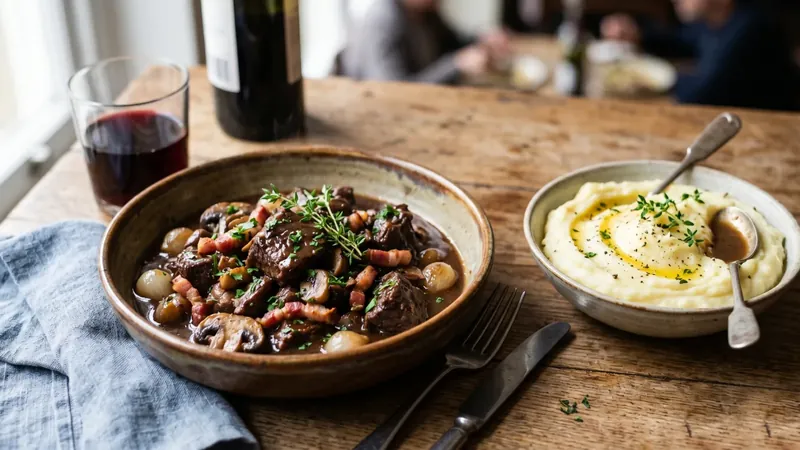
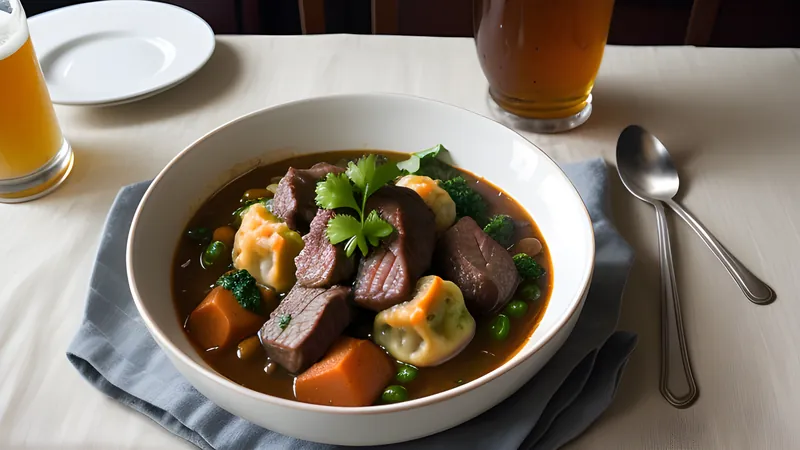
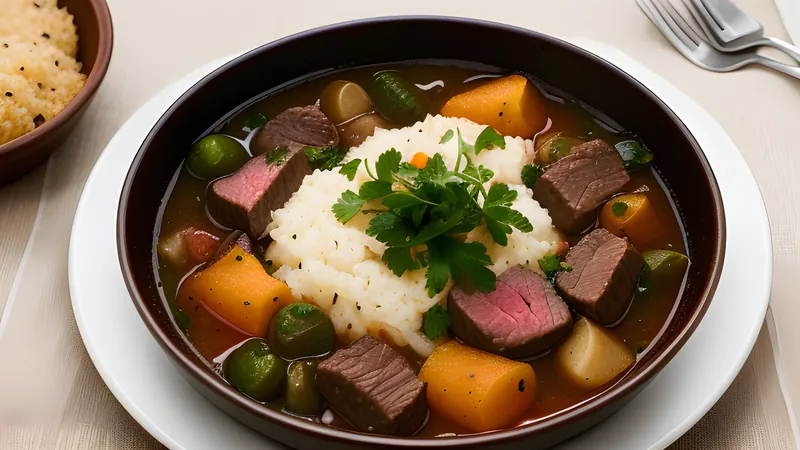
Kalops is beige-brown food with a two-and-a-quarter-hour commitment and no visual appeal whatsoever. It photographs badly, it arrives at the table looking like every other northern European braise, and the pickled beetroot is doing most of the work of making the plate look like anything at all.
The allspice is also genuinely divisive. Twenty berries is a lot, and for a palate that associates eugenol with Christmas or with dentistry, a whole bowl of it can read as strange in a savoury context. If you are cooking this for someone new to Nordic food, start at twelve berries and work up. Going lower than that, though, and you have simply made a plain beef stew with a Swedish name on it.
Storage and the second day
Kalops improves overnight, substantially. The allspice, which is fat-soluble, continues migrating into the sauce as it cools, and the whole thing redistributes. Cook it on Sunday for Tuesday and you will be glad.
It keeps five days refrigerated and freezes for three months. Reheat gently, covered, with a splash of water. Do not add the parsley until it is going to the table.
Serve with plain boiled potatoes — this is a sauce that wants a blank surface — pickled beetroot, and nothing else. Kalops has done all the work it intends to do.
Related Content