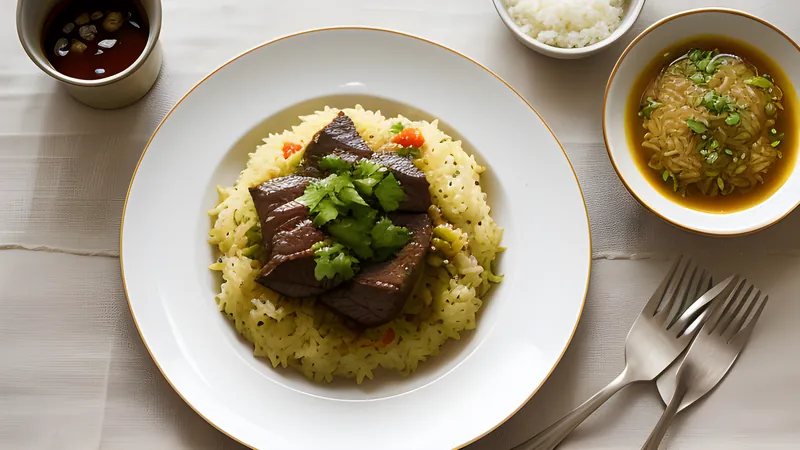
Kaldereta: Beef Braised With Liver Spread
A goat stew that became a beef fiesta dish somewhere along the way
Contents
↓ Jump to recipeKaldereta’s name gives away more than most Filipino dish names do. It comes directly from the Spanish “caldereta,” meaning a stew cooked in a caldera — a large cauldron or kettle — and the dish itself descends from a Spanish and, further back, Basque goat stew tradition brought over during roughly three centuries of Spanish colonial rule. What makes the Filipino version distinct from its European ancestor is almost entirely a matter of what got added along the way: tomato sauce for body, liver spread for a thick, savoury richness that no Iberian original called for, and eventually beef in place of the goat that most regional versions, particularly in Cavite and Batangas, still consider the correct meat.
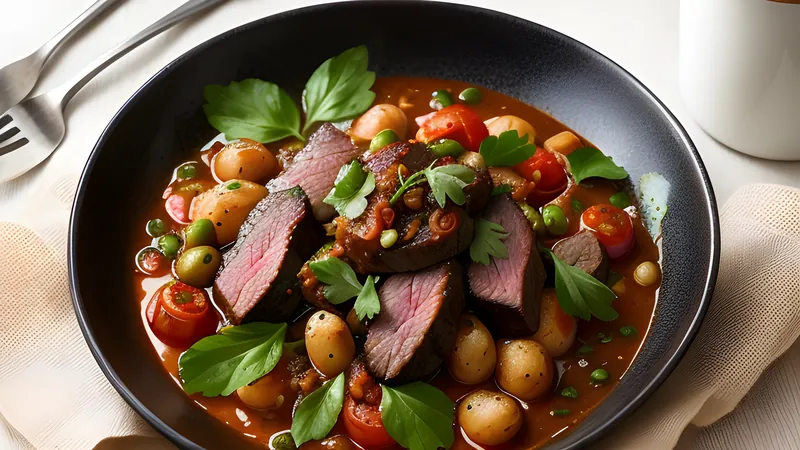
Kaldereta: Beef Braised With Liver Spread
Ingredients
- 900g beef chuck or shank, cut into 4cm cubes
- 3 tbsp oil
- 1 onion, chopped
- 6 cloves garlic, minced
- 1 red bell pepper, sliced
- 1 green bell pepper, sliced
- 400g tinned tomato sauce (passata works well)
- 500ml beef stock
- 2 bay leaves
- 3 tbsp liver spread (pâté), or 100g beef liver, boiled and mashed
- 2 medium potatoes, peeled and cut into large chunks
- 2 carrots, cut into thick rounds
- 80g pitted green olives
- 1–2 siling labuyo (bird's eye chillies), whole or sliced, optional
- salt and black pepper, to taste
- 100g quickmelt or cheddar cheese, grated (optional)
Method
- Season the beef generously with salt and pepper. Heat 2 tbsp oil in a heavy pot over high heat and brown the beef in batches, about 3–4 minutes per batch, then set aside.
- In the same pot, add the remaining oil and cook the onion and garlic until softened, about 4 minutes.
- Return the beef to the pot. Add the tomato sauce, beef stock and bay leaves. Bring to a boil, then reduce to a low simmer, cover, and cook for 1½ hours, stirring occasionally, until the beef is fork-tender.
- Stir in the liver spread until fully dissolved into the sauce.
- Add the potatoes and carrots. Simmer uncovered for 20 minutes until the vegetables are tender.
- Add the bell peppers, olives and chilli if using. Simmer for a further 8 minutes.
- Taste and adjust seasoning with salt and pepper. If using cheese, stir it in at the very end and let it melt into the sauce, about 2 minutes.
- Serve hot with steamed rice.
Goat first, beef later
Ask an older home cook from Batangas what “real” kaldereta is made of and you’ll often get goat as the answer without hesitation — kambing, cooked bone-in, with the stronger, gamier flavour that goat carries and that the dish’s thick, assertive tomato-and-liver sauce was originally built to stand up against. Beef kaldereta, now the more commonly seen version both in the Philippines and abroad, became widespread partly because beef is more consistently available and more familiar to a wider audience than goat, and partly because the dish travelled well beyond its original regional home as a fiesta staple, picking up whatever protein was most practical for a given household along the way. Neither version is more correct than the other in any strict sense — the sauce is what defines kaldereta as a dish, built to work equally well against beef or goat.
The liver spread’s postwar arrival
The most distinctive ingredient in a modern kaldereta — canned liver spread, usually pork or beef liver blended into a smooth pâté — is a relatively recent addition to the dish, understood by food historians to have entered Filipino kitchens in the postwar era, when canned goods including liver pâté became widely available through American commissary supply chains and then through local production once Filipino brands started making their own versions. Before that, some households would have used fresh liver, boiled and mashed by hand, to achieve a similar thickening and depth, and that method still appears in more old-fashioned or from-scratch versions of the recipe. Either approach — canned spread stirred straight in, or fresh liver boiled and pounded smooth — does the same job: thickening the sauce beyond what tomato alone would achieve, and adding a mineral, faintly bitter depth that balances the sauce’s acidity and the sweetness of the bell peppers.
Method notes
Browning the beef properly before it goes anywhere near the braising liquid is not a step to rush. A hard sear in batches, giving each piece space in the pot rather than crowding it, builds a layer of fond on the bottom of the pot that dissolves back into the sauce once the tomato and stock go in, adding a roasted depth that a stew built entirely by simmering raw meat in liquid from the start will never fully achieve. If you crowd the pot, the beef steams rather than sears, releasing its moisture before it has a chance to caramelise, and you lose most of that flavour before the braise even begins.
Stir the liver spread in only after the beef has become properly tender, well into the braise rather than at the very start alongside the tomato sauce. Liver spread thickens the sauce considerably, and a thick sauce simmering for over an hour risks catching and scorching on the bottom of the pot far more easily than a thinner one — adding it late keeps the early simmer loose enough to bubble safely, then finishes the dish with the right body right before serving.
What can go wrong
The most common failure is undercooking the beef because the potatoes and carrots are added too early and start disintegrating long before the meat has actually reached fork-tender — chuck and shank both need a genuine hour and a half of low simmering to break down their connective tissue properly, and rushing that timeline in favour of getting the vegetables cooked leaves you with tough meat sitting in a sauce full of mush.
The second is scorching the sauce after the liver spread goes in, from leaving the pot unattended on too high a heat. Once the liver spread is stirred through, keep the heat low and stir more frequently than you did during the earlier simmer — a thickened sauce needs more attention than a thin one to avoid catching.
Substitutions and variations
Beyond the beef-versus-goat question, some households add cubed liver itself, separate from the liver spread, as an extra ingredient for those who like the flavour more pronounced. Others skip the cheese entirely, considering it a modern, slightly Americanised addition rather than a traditional element — it’s genuinely a matter of household preference rather than a fixed rule, and both versions are common enough that neither reads as wrong.
For a spicier version, more bird’s eye chillies go in, sometimes blended straight into the sauce rather than left whole, which spreads the heat evenly through the dish rather than concentrating it in occasional bites. A vegetarian adaptation swaps the beef for jackfruit or mushrooms and the liver spread for a mushroom-based paste, though this moves further from the dish’s traditional identity than most of the other variations here.
Storage
Kaldereta keeps for up to four days refrigerated and, like most tomato-based braises, improves with a day’s rest as the flavours settle and the sauce thickens slightly further. It freezes well for up to three months — freeze it before adding the cheese if you plan to do so, since dairy doesn’t reheat as cleanly from frozen as the base stew does. Reheat gently over low heat, stirring occasionally, and add a splash of stock or water if the sauce has thickened more than you’d like after storage.
Serve it as part of a fiesta spread alongside bicol express for contrasting richness, or with fried lumpia shanghai on the side for crunch against the braise.
A dish for the table that’s set for company
Kaldereta belongs to the same category of Filipino cooking as kare-kare and mechado — a braise substantial and visually impressive enough to anchor a fiesta table, the kind of dish a household makes when relatives are visiting rather than for a quiet Tuesday dinner. Part of that association comes from cost: beef, particularly a good braising cut simmered for two hours, along with olives and a tin of liver spread, adds up to a meal that’s noticeably more expensive than the everyday rotation of adobo or sinigang most households cook several times a week. Part of it comes from the dish’s presentation — the deep red-orange sauce, studded with green olives and bright bell pepper, reads as a special-occasion plate even before anyone’s tasted it, in a way that a brown, more understated stew doesn’t quite manage. Fiesta menus across the Philippines vary regionally in almost everything except the presence of a beef or goat dish like kaldereta somewhere on the table, alongside a noodle dish and something fried.
Getting the sauce’s thickness right
A properly made kaldereta sauce should cling to the back of a spoon rather than run off it thinly, and getting there depends on more than just the liver spread. The tomato sauce itself reduces somewhat over the long simmer, concentrating as water evaporates from the pot, and the potatoes released some starch into the sauce as they cook, both contributing body before the liver spread is even added. If your sauce still seems thin after the liver spread has been stirred in fully, the fix isn’t more liver spread — which will start to taste overtly of liver rather than rounding out the tomato base — but rather a further ten to fifteen minutes of uncovered simmering to reduce the liquid down. Conversely, if the sauce comes out too thick and paste-like, loosen it with a splash of beef stock rather than water, which keeps the seasoning balance intact rather than diluting it.
Where the recipe splits by household
Ask around and you’ll find real disagreement over small details that each family treats as non-negotiable. Some insist on using tomato paste diluted with water rather than a pourable sauce or passata, arguing it gives a more concentrated flavour from the start. Others swear the dish needs a splash of vinegar early in the cooking, echoing the acidity found in adobo, to balance the sweetness of the bell peppers and olives against the richness of the liver spread. Cheese is perhaps the most divisive addition of all — some households consider a kaldereta without a handful of grated quickmelt stirred through at the end to be simply unfinished, while others view it as an unnecessary modern flourish that dilutes the dish’s original savoury-tangy balance with unneeded creaminess. None of these positions are objectively correct; kaldereta, more than many Filipino dishes, tends to be cooked according to whatever version a particular family grew up eating; and that regional and household variation is part of what keeps the dish interesting across the country rather than a fixed, single recipe everyone follows identically.
Choosing the right cut of beef
Chuck and shank both work well because they carry enough connective tissue and marbling to survive a long simmer without drying out, breaking down gradually into a tender, almost spoonable texture by the two-hour mark. Leaner cuts like sirloin or rump, tempting because they cook faster and look neater in the raw state, actually perform worse here — with little connective tissue to render down, they turn dry and stringy well before the sauce has had time to develop, since the whole braise is built around a long, slow cook that lean cuts simply aren’t suited to. If a butcher offers oxtail, it’s an excellent, if pricier, option for kaldereta, contributing extra gelatin to the sauce that gives it a silkier body than chuck alone provides.
Make-ahead for a fiesta
Because kaldereta genuinely improves with a day’s rest, it’s one of the more forgiving dishes to cook ahead of a gathering rather than fresh on the day. Braise the beef fully, stir in the liver spread, and stop there — refrigerate the base overnight, then finish with the potatoes, carrots, bell peppers, olives and cheese the following day once the sauce has been reheated to a simmer. This staggered approach also means the vegetables retain better texture, since they’re not sitting in the sauce through an overnight rest and a full reheat the way they would if the dish were finished completely a day ahead.
Related Content