Kajmak: The Balkan Clotted Milk Cream
Skimmed skins, salted in layers, left to become something else entirely
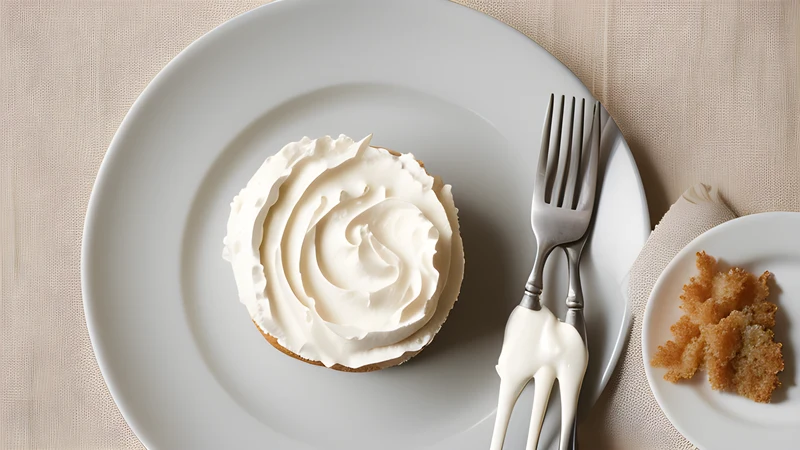
Contents
↓ Jump to recipeI want to be honest at the start: what I make at home is a very good approximation of kajmak, and it is not the thing itself. The real article comes from a wooden vessel called a karlica in a Serbian or Bosnian mountain village, filled with the milk of a cow that ate a particular hillside, left in a stone room at a particular temperature for weeks, and it develops a sharpness and a depth that my fridge cannot reproduce. I have eaten it in Zlatibor, aged perhaps two months, sold from a bucket at a roadside stall by a woman who weighed it with a spoon and a set of scales that predated the Yugoslav dinar, and it was one of the best things I have ever put in my mouth. It tasted like butter and cheese and grass had agreed on something.
What follows gets you perhaps seventy per cent of the way there. That is worth an afternoon of your attention, because the seventy per cent is still better than anything you can buy in Britain.
Kajmak: The Balkan Clotted Milk Cream
Ingredients
- 4 litres whole non-homogenised milk, the highest fat you can find
- 500ml double cream (48% fat), optional but recommended
- 2 tsp fine sea salt, approximately
- 1 pinch ground mace, optional
Method
- Pour the milk and cream into your widest heavy pan. Surface area matters more than depth: a wide sauté pan beats a stockpot.
- Heat gently to 85C over a medium-low heat, stirring occasionally with a wooden spoon to stop the base catching. This takes about 25 minutes. Do not let it boil.
- Hold at 85C for 10 minutes, without stirring.
- Take the pan off the heat and set it somewhere cool and undisturbed, uncovered. Leave for 8-12 hours, or overnight.
- A thick wrinkled skin will have formed. Slide a wide flat slice or a fish spatula under one edge and lift the whole sheet off in one piece.
- Lay the skin flat in a shallow dish. Sprinkle it very lightly with salt, using roughly 1/4 tsp per layer.
- Return the pan to a low heat, bring back to 85C, hold 10 minutes, and cool again for 8-12 hours to form the next skin.
- Repeat until no more meaningful skin forms, usually 4-6 rounds. Stack each salted skin on the last.
- Cover the dish loosely with muslin and refrigerate for 5-7 days. The layers will knit together and the flavour will turn tangy and nutty.
- Fold the mass together gently with a spoon before serving, keeping some of the layered texture intact. Stir in the mace, if using.
What kajmak actually is
The English-language internet will tell you kajmak is clotted cream, or a soft cheese, or the Balkan equivalent of crème fraîche. All three are wrong in useful ways.
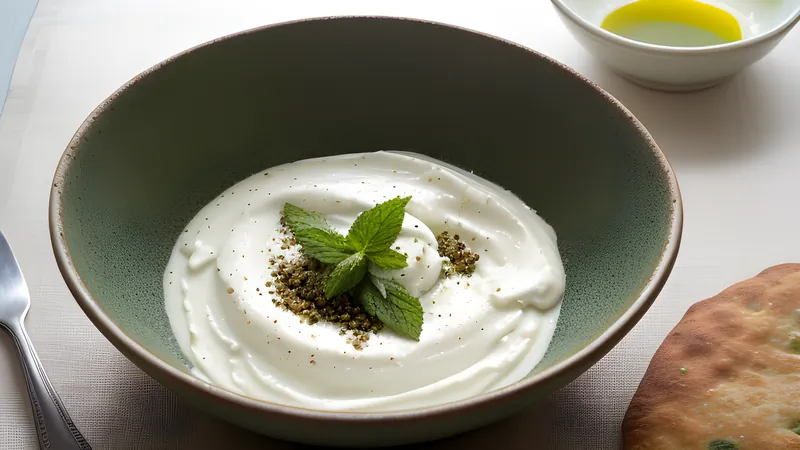
Kajmak is made from milk skins. You scald whole milk, let it cool undisturbed, and a skin forms on the surface — a raft of denatured whey proteins with milk fat trapped in it. You lift that skin off, salt it, and stack it. Then you do it again, and again, and you end up with a dish of stacked, salted skins that are then aged. During the ageing the lactic bacteria go to work, the layers knit, and the whole thing transforms from a stack of cream into something with the tang and body of a young cheese.
So it is a dairy product defined by a process rather than an ingredient: the skimming, the salting, the stacking, the wait. That process has no equivalent in the British or French dairy repertoire, which is why every attempt to translate the word fails.
Clotted cream is the nearest cousin and it is genuinely different. Cornish clotted cream is made by baking cream — the cream, not the milk — at low heat until the fat coalesces into a crust, and it is unsalted, unaged and sweet. Kajmak starts from milk, uses salt as a functional ingredient, and is fermented. The one tastes of caramel and the other tastes of cheese.
Age determines everything about the result. Young kajmak, a few days old, is soft, pale, mild and spreadable — this is mladi kajmak and it is what goes on a hot pljeskavica, where the heat melts it into the bread. Old kajmak, two or three months in a wooden vessel, goes yellow, firm, crumbly and pungent, closer to a strong blue in intensity, and it gets eaten with bread and raw onion and rakija by people who have opinions.
Milk is the whole problem
Here is the bad news for a British kitchen: homogenised milk cannot make kajmak, and almost all British milk is homogenised.
Homogenisation forces milk through a fine valve at high pressure, shattering the fat globules from around four microns down to under one. The point is to stop cream separating in the bottle, and it works: the fragments are too small and too numerous to rise. It also permanently destroys the mechanism kajmak depends on. The skin that forms on scalded milk is a protein raft that catches rising fat globules; if the globules are too small to rise, the skin that forms is a thin, sad, protein-only film with almost no fat in it. You can scald homogenised milk all day and lift off tissue paper.
So: non-homogenised milk. Look for “non-homogenised” or “cream-line” on the label — a few supermarket organic lines qualify, and any decent farm shop or milk vending machine will have it. Jersey or Guernsey milk is the best domestic option available, with fat around 5% and large globules. Raw milk from a registered producer is better still if you can get it legally.
The 500ml of double cream is my concession to reality. Even good British non-homogenised milk runs around 4-5% fat, where the mountain milk this dish evolved around can be 6% or more from a breed and a diet designed for it. Adding cream raises the fat and thickens the skins to something like the right substance. It is a cheat. It is a cheat that turns a disappointing result into a good one.
The twist: a scald at 85C, held
Most instructions say to bring the milk almost to the boil and take it off. I hold it at 85C for ten full minutes on every round, and it makes a measurable difference to both yield and flavour.
Whey proteins — mainly beta-lactoglobulin — begin unfolding around 70C and the reaction runs to completion over time as much as temperature. A quick flash to 90C denatures the surface proteins and gives you a skin. Ten minutes at 85C denatures far more of them through the body of the milk, so more protein migrates upward and the skin comes off thicker, stronger and more willing to lift in one sheet. The held scald also drives a little Maillard browning between the milk sugars and proteins, which is where the faint nuttiness in good kajmak starts.
Above 90C you get boiling, and boiling ruins it. A rolling boil breaks the skin as it forms, throws the fat back into suspension, and coats your pan base in scorched milk solids that taint the whole batch. Use a thermometer. This is one of the few places in cooking where five degrees genuinely decides the outcome.
Lifting, salting, stacking
The lift is a knack. After eight hours the skin is thick, wrinkled and slightly rubbery, and it wants to come off in one piece. Slide a wide flat slice — a fish spatula is ideal — under one edge, then lift slowly and evenly. Rushing tears it, and a torn skin drops fat back into the milk.
Salt lightly and evenly. A quarter teaspoon per layer sounds like nothing across a sheet that size, and it is doing three jobs: seasoning, drawing a little water out of the layer so the stack firms up, and controlling which bacteria get to grow during the week in the fridge. Under-salt and you get an off, yeasty ferment. Over-salt and the layers go hard and weep.
Four to six rounds is normal. The skins get thinner each time as the milk depletes. When a round gives you something translucent, stop — the remaining liquid is skimmed milk and it is excellent for porridge or for a loaf of rugbrød, so do not pour it away.
The week that matters
Five to seven days under muslin in the fridge is where kajmak stops being stacked cream and becomes kajmak. The native lactic bacteria in the milk — the reason non-homogenised, minimally processed milk matters twice over — acidify the layers slowly at fridge temperature, the pH drops, the proteins tighten, and the layers fuse. Taste it on day one and you have salted cream. Taste it on day six and you have something with a lactic tang and a savoury depth that arrived from nowhere.
Muslin rather than a lid. It needs to breathe and lose a little moisture; a sealed container traps condensation and you get a wet, sour, slightly slimy surface.
If you want to push towards aged kajmak, leave it three weeks. It gets sharper, firmer and yellower, and at some point it crosses from delicious to challenging, and where that point is depends entirely on you.
The wooden vessel, and why yours is a fridge
The traditional container is a karlica: a shallow wooden tub, usually spruce or fir, wider than it is deep, kept in a cold stone dairy. It is worth understanding what it does, because it explains the gap between the village version and mine.
Wood is porous, so a karlica breathes — it loses moisture slowly and evenly across a large surface, which concentrates the kajmak without the wet surface a sealed vessel produces. It is also never washed with detergent, only scalded, so it carries a resident population of lactic bacteria from every previous batch. A karlica in use for thirty years is a culture library, and the kajmak made in it inherits a specific microbial signature the way a sourdough starter does. This is why kajmak from two neighbouring villages tastes different, and why the good stuff has a complexity that a first batch in a clean ceramic dish cannot have.
The other half is the milk. Mountain milk in July, from a cow eating a meadow of forty different plants, carries fat-soluble aromatics that end up concentrated in exactly the fraction kajmak captures. Winter milk from the same cow on hay makes noticeably duller kajmak, and every producer knows it.
You can lean the odds slightly. Use a wide shallow earthenware or ceramic dish rather than plastic, keep the muslin on, and — the one genuinely effective trick — save two tablespoons of the previous batch and smear it across the base of the dish before stacking the new skins. You are backslopping, the same principle as a yoghurt culture, and by the third or fourth batch the ferment gets going faster and tastes distinctly more interesting. It is the closest a domestic kitchen comes to owning a karlica.
Failure modes and how to eat it
No skin, or a skin like cling film. Homogenised milk. Nothing else causes this.
Grainy, curdled skins. You boiled it, or the milk was on the turn.
Bitter, scorched flavour. Base caught during the scald. Stir during the heat-up, stop stirring once you hit temperature.
Slimy, off smell after a few days. Under-salted, or covered with a lid.
Weeping, hard layers. Over-salted. Fold the whey back in and use it young.
Fresh kajmak keeps ten days in the fridge and gets stronger throughout. Serve it in a shallow dish at cool room temperature — fridge-cold kajmak tastes of very little.
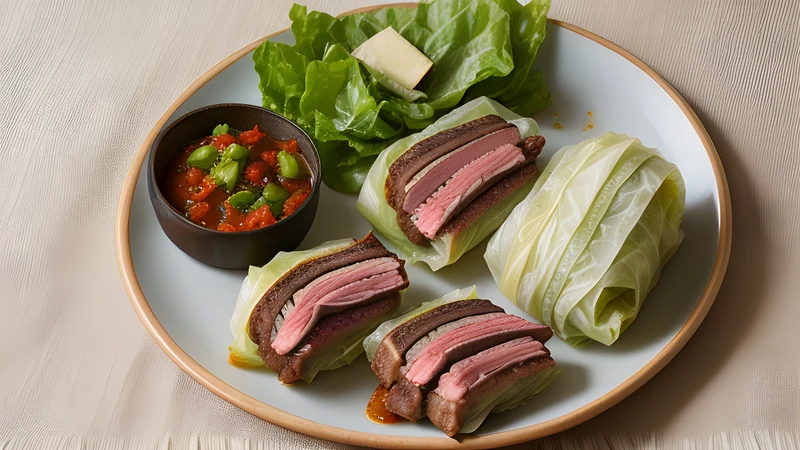
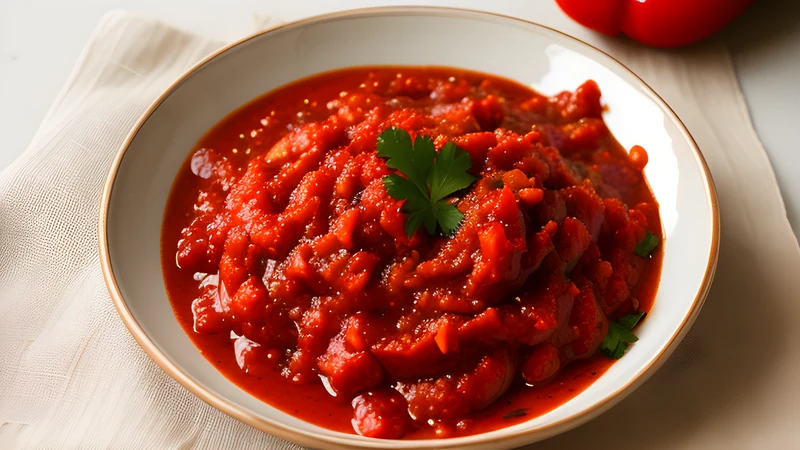
It goes on hot grilled meat, always: a spoonful on the bread under a patty, melting. It goes on hot bread with a spoonful of ajvar next to it, which is the combination that makes the whole Balkan grill tradition make sense. It goes into gibanica, where a few spoonfuls in the cheese mixture add a richness that feta alone cannot reach. It is stirred into hot boiled potatoes with black pepper. And it is eaten, in Serbia, straight from the dish with a spoon by people standing at the fridge, which is how I mostly eat mine.
Related Content