Kafteji: Fried Vegetables Chopped Under the Knife
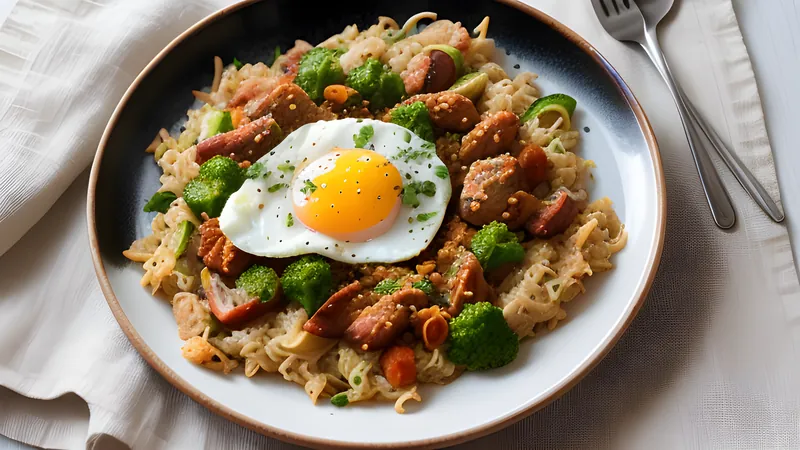
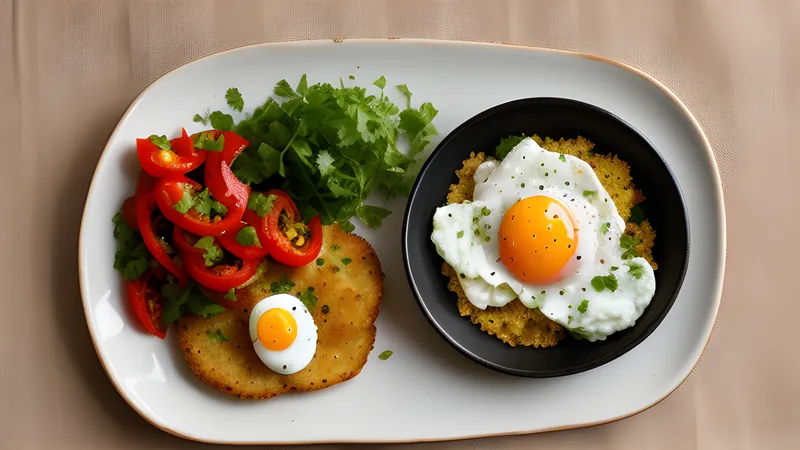
Fried potato, pepper, tomato and egg, all chopped together on the board into one dish
Contents
↓ Jump to recipeKafteji is named for its method, not its ingredients, and the name gives away the whole dish. Kafta means to chop or mince, and that is exactly what separates kafteji from a plate of mixed fried vegetables: everything is fried separately, piled onto a board, and then chopped together with a big knife until the potato, aubergine, pepper, courgette and tomato are coarsely combined into one dense, savoury mixture that gets stuffed into bread and topped with a fried egg. It is Tunisia’s great fried-vegetable street food, sold from carts and hole-in-the-wall stalls across Tunis, usually eaten standing up, the bread doing double duty as plate and cutlery.
Kafteji: Fried Vegetables Chopped Under the Knife
Ingredients
- 3 medium potatoes, peeled and cut into 1.5cm cubes
- 1 large aubergine, cut into 1.5cm cubes
- 2 green peppers, cut into 1.5cm pieces
- 3 tomatoes, quartered
- 1 small courgette, cut into 1.5cm cubes
- Vegetable oil, for shallow frying (about 250ml)
- 4 garlic cloves, crushed
- 1 tsp ground caraway
- 1 tsp ground cumin
- 1/2 tsp chilli flakes, or to taste
- 4 eggs
- Salt, to taste
- 1 tbsp harissa, plus more to serve
- Small bunch parsley, chopped
- 4 small baguettes or a loaf of crusty bread, to serve
Method
- Pat all the cut vegetables dry with a kitchen towel; excess moisture will make them spit and prevent browning.
- Heat 3-4cm of oil in a wide, heavy pan over medium-high heat. Fry the potato cubes in batches until deeply golden and cooked through, about 8 minutes per batch. Drain on kitchen paper and salt immediately.
- In the same oil, fry the aubergine until soft and browned, about 6 minutes. Drain and salt.
- Fry the peppers and courgette together until softened and lightly charred at the edges, about 5 minutes. Drain and salt.
- Fry the tomato quarters briefly, just 2-3 minutes, until they collapse slightly but still hold shape. Drain.
- Pile all the fried vegetables onto a large wooden board. Using a large knife (or two), chop everything together roughly, folding and chopping repeatedly until the mixture is coarsely combined but not a purée; distinct pieces should still be visible.
- Scrape the chopped vegetables into a bowl or back into the pan. Stir through the crushed garlic, caraway, cumin, chilli flakes and harissa while still warm, so the raw garlic mellows slightly in the residual heat.
- Fry the eggs in a little of the reserved oil until the whites are set and the yolks still runny.
- Pile the vegetable mixture into split baguettes or onto plates, top each portion with a fried egg, and finish with chopped parsley and extra harissa.
A dish that is a technique before it is a recipe
Ask a Tunisian how to make kafteji and the answer usually starts with what to fry, not what to buy — the ingredient list is genuinely flexible, and what stays constant is the process. Potato is close to non-negotiable, giving the dish its bulk and its familiar fried-chip flavour underneath everything else. Aubergine is nearly as essential, contributing a soft, almost creamy texture once fried and chopped that binds the mixture together. Beyond those two, peppers, courgette, tomato and sometimes carrot round things out, and the exact ratio varies from stall to stall and household to household without anyone treating that as a problem.
What never varies is the final step: everything gets chopped together on the board, hot from the fryer, with a large knife wielded almost like a cleaver, folding and chopping repeatedly until the pieces are reduced to a coarse, unified mixture. This is not the same as blending or mashing. The point is texture — pieces small enough to eat comfortably from a sandwich, but still distinct enough that you can tell potato from aubergine from pepper in a single mouthful. Done properly, the board work takes real effort and a satisfying amount of noise, and it is genuinely part of the theatre of watching kafteji made at a street stall, where vendors chop with a speed and rhythm that looks more like a drum solo than food prep.
Fry each vegetable on its own terms
The single most important discipline in kafteji is frying each vegetable separately rather than throwing everything into one pan at once. Potato, aubergine, pepper, courgette and tomato all cook at different rates and release different amounts of moisture, and frying them together produces a soggy, unevenly cooked mess rather than the crisp, well-browned pieces the dish depends on. Potato goes in first and takes the longest, needing a full eight minutes per batch to cook through to a soft interior while the outside turns properly golden. Aubergine follows, soaking up oil readily and turning meltingly soft. Peppers and courgette cook fastest and are best fried together, since both benefit from a shorter, hotter fry that chars the edges without turning them to mush. Tomato goes in last and only briefly, just long enough to soften and release a little of its juice without disintegrating entirely — over-fried tomato turns the whole dish watery.
Pat every vegetable properly dry before it goes near the oil. Wet vegetables spit violently in hot oil and, more importantly, steam rather than fry, which leaves them soggy and pale instead of properly browned. This single step, more than any other, determines whether the finished kafteji tastes like a fried dish or a boiled one.
The chop: where the dish actually comes together
Once everything is fried and drained, pile it all onto a large board while it is still warm — the residual heat helps the garlic and spices added afterward release their flavour more readily. Using a heavy knife, chop through the pile repeatedly, gathering it back into a mound between cuts, until the vegetables are broken down into rough, bite-sized pieces that hold together as a coherent mixture rather than a jumble of separate ingredients. This is manual labour, not a food processor job — a processor turns the mixture to paste in seconds and destroys the texture that makes kafteji what it is. Give it the two or three minutes of proper knife work it needs.
Garlic, caraway, cumin and chilli flakes get folded in at this stage, along with a spoon of harissa, while everything is still warm enough for the raw garlic to mellow slightly rather than staying sharp and biting. Taste and adjust the salt here too; because each vegetable was salted individually during frying, the combined mixture can end up either well-seasoned or, if you were cautious with the earlier salting, still needing a little more.
The egg on top
A fried egg, yolk left deliberately runny, is the traditional finish, and it is not optional in any serious version of the dish. Break the yolk over the vegetables just before eating and it runs down through the warm, chopped mixture, adding richness and a glossy sheen that ties the whole thing together. Some vendors offer a second egg for anyone who wants it, and it is a reasonable request — kafteji is a substantial dish, and a single egg can feel like an afterthought against the volume of fried vegetables underneath it.
Serving it properly
Kafteji belongs in bread. A split baguette, warmed slightly and hollowed a little to make room, is the classic street-food format, and the bread’s job is to soak up the oil and juices released by the vegetables as much as to hold the filling together. Served on a plate rather than in bread, it works equally well as a side or a light meal, but something in it does call for bread nearby to mop up what is left. A final spoon of harissa on top, beyond what was mixed through, gives anyone who wants extra heat the chance to add it themselves, much like the harissa served alongside lablabi rather than cooked entirely into the pot.
Street food, board and all
Watch kafteji made at a proper street stall and you understand why the dish has stayed a fixture of Tunisian street food for as long as anyone can remember. The vendor works from a single well-seasoned board, usually scarred deep from years of the same knife strokes, with several fryers going at once so potato, aubergine and peppers can each hit hot oil at exactly the right moment rather than waiting their turn. Customers order by weight or by portion size, and the vendor builds each one to order, chopping a fresh pile for every sandwich rather than working from a pre-made batch sitting under a heat lamp. That freshness is part of the appeal — a kafteji made twenty minutes ago and left to sit loses the contrast between the crisp fried edges and the soft interior that makes the first bite so satisfying.
The dish sits comfortably alongside Tunisia’s other great fried and chopped street foods, most of which share the same underlying logic: take cheap, available vegetables, fry them hard, and turn them into something more than the sum of their parts through sheer knife work and confident spicing. It asks for no special equipment beyond a decent pan and a heavy knife, which is precisely why it has thrived as street food for generations — low overhead, fast turnaround, and a result that tastes far more considered than the ingredient list suggests.
Getting the texture right
The line between good kafteji and a disappointing one usually comes down to two textural decisions made at the chopping stage. Chop too little and the dish reads as a plate of separately fried vegetables that happen to share a bowl, with none of the cohesion that defines the real thing. Chop too much, or use a food processor as a shortcut, and the mixture collapses into a wet, structureless paste that loses the bite fried vegetables should have. The right point sits firmly in between: pieces reduced enough that a forkful (or a bite from the sandwich) contains a genuine mix of textures and flavours, but still coarse enough that individual ingredients register on the tongue. Aim for pieces somewhere between a small dice and a rough mince, and stop chopping the moment you reach that point rather than continuing out of habit.
Tips and common mistakes
The most common failure is overcrowding the frying pan, which drops the oil temperature and steams the vegetables instead of crisping them. Fry in genuine batches, giving each piece room to actually touch hot oil, and let the oil come back up to temperature between batches.
The second is under-seasoning at the frying stage. Salting each vegetable as it comes out of the oil, rather than waiting to season the whole mixture at the end, builds a more even, better-distributed flavour throughout the finished dish than a single seasoning pass at the very end can achieve.
Substitutions and variations
Carrot, cut small and fried until soft, is a common addition in some households and adds a faint sweetness against the chilli and garlic. Some versions include a handful of fried, thin-sliced onion for a little more sweetness and crunch. For a heartier version, small cubes of merguez sausage, fried alongside the vegetables and chopped in with everything else, turn kafteji into something closer to a full meal, echoing the same fried-egg-and-harissa instinct found in ojja, where merguez and egg meet in a similarly spiced tomato base.
Storage
Kafteji is best eaten fresh, ideally within the hour, since the fried texture that defines it softens noticeably on standing and does not really recover on reheating. If you do have leftovers, they will keep in the fridge for a day or two and reheat reasonably in a hot dry pan, though the crisp edges will be gone for good; treat leftover kafteji as a different, softer dish rather than expecting it to match the first serving.
It is loud, oily, faintly chaotic food, made by a method that looks more like carpentry than cooking until you understand what the chopping is actually doing. Give it the board work it needs and it comes together as something greater than the sum of five separately fried vegetables.
Related Content