Japanese Milk Bread Rolls (Shokupan)
Cloud-soft rolls that pull apart in threads
Contents
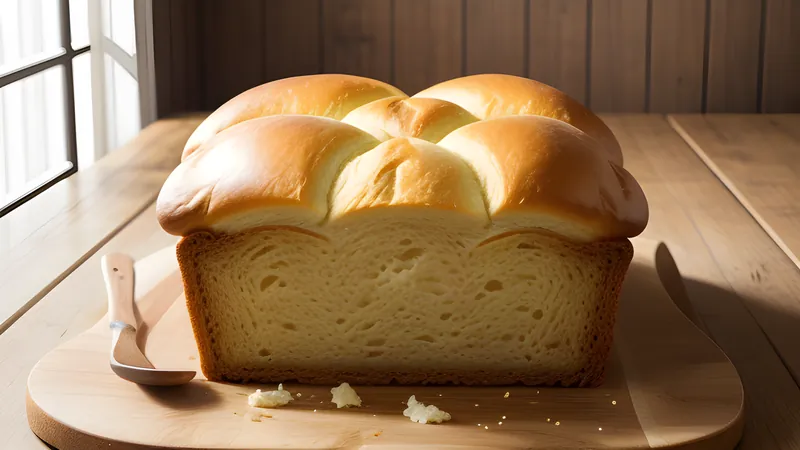
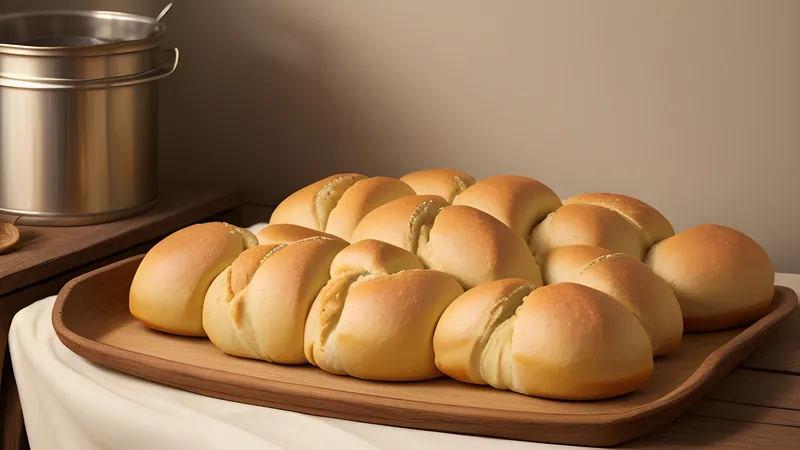
↓ Jump to recipeIf you have ever bitten into a roll in a Japanese bakery and been genuinely startled by how soft it was, feather-light, faintly sweet, pulling apart in fine silky threads rather than tearing, this is the recipe behind that texture. Shokupan, Japanese milk bread, is the gold standard of soft enriched bread, and the rolls made from the same dough are the most comforting thing I know how to bake. They stay tender for days, they make a sandwich feel like a hug, and they are far easier to manage than their luxurious crumb suggests. The clever twist doing all the heavy lifting is a technique called tangzhong, and it takes three minutes.
Japanese Milk Bread Rolls (Shokupan)
Ingredients
- For the tangzhong: 25g strong white bread flour
- For the tangzhong: 50ml water
- For the tangzhong: 75ml whole milk
- 350g strong white bread flour
- 5g instant dried yeast
- 40g caster sugar
- 6g fine salt
- 120ml whole milk, lukewarm
- 1 large egg, beaten
- 40g unsalted butter, softened
- 1 egg beaten with 1 tbsp milk, to glaze
Method
- Make the tangzhong: whisk the 25g flour, 50ml water and 75ml milk in a small pan over a medium heat, stirring constantly, until it thickens to a smooth paste, about 3 minutes. Scrape into a bowl and cool to lukewarm.
- In a large bowl combine the 350g bread flour, yeast, sugar and salt. Add the lukewarm milk, beaten egg and the cooled tangzhong.
- Mix to a rough dough, then knead for 8 to 10 minutes until smooth and elastic. Work in the softened butter a little at a time and knead 5 minutes more until silky and slightly tacky.
- Cover and leave to rise in a warm place until doubled, about 1 to 1.5 hours.
- Knock back gently and divide into 9 equal pieces of about 75g each. Roll each into a tight, smooth ball.
- Arrange the balls in a greased and lined 20cm square tin, three by three, leaving a little space between them.
- Cover and prove again until puffy and almost touching, 45 to 60 minutes. Heat the oven to 180C fan.
- Brush the tops gently with the egg wash and bake for 20 to 22 minutes until deep golden and risen.
- Cool in the tin for 10 minutes, then turn out onto a rack. Pull apart while still slightly warm.
Where shokupan and tangzhong come from
Shokupan, whose name simply means “eating bread”, is the standard Japanese loaf: a tall, square, milky white bread that took hold as Western-style baking spread through Japan in the twentieth century. Its signature softness owes a great deal to the flour-paste technique now widely known by its Chinese name, tangzhong. The method of scalding flour has old roots in Chinese steamed-bun making, and a version was used to develop Hokkaido-style milk bread in mid-twentieth-century Japan, where it is called yudane. It reached home bakers far beyond Asia after the Taiwanese author Yvonne Chen popularised it in her 2007 book 65°C Bread Doctor, named for the temperature at which the trick actually happens.
That is the useful thing to hold onto: sixty-five degrees. Below it, nothing special occurs. At and above it, the starch in the flour changes fundamentally, and that change is the whole reason these rolls behave the way they do.
The science of tangzhong
Before you make the dough proper, you cook a small portion of the flour with milk and water into a thick, glossy paste, almost like a roux. When you heat flour and liquid together past about 65C, the starch granules gelatinise: they swell and lock up far more water than they ever could at room temperature. That pre-cooked, water-laden paste then carries a large amount of moisture into the dough without making it wet, slack or unworkable.
The payoff is twofold. First, the baked bread holds onto that extra water, which is exactly what makes it so soft and pillowy, and what keeps it from staling for several days. Second, all that locked-in moisture turns to steam in the oven, helping the rolls puff up tall and light. Skip the tangzhong and you still have a perfectly nice sweet roll; include it and you have something people ask you about. The same trick transforms all sorts of enriched doughs, which is why it turns up in soft cinnamon buns too, as in my cardamom and cinnamon rolls.
Why this is an enriched dough
Milk bread sits in the family of enriched doughs, built with fat, sugar and egg rather than the lean flour, water, salt and yeast of a baguette or a sourdough. The butter coats the gluten strands for a tender, melting crumb; the sugar feeds the yeast, browns the crust and lends gentle sweetness; the egg adds richness and a soft golden colour.
All of that makes for a heavier dough that the yeast has to work harder to lift, which is why enriched doughs rise a little more slowly and benefit from thorough kneading. Do not rush it. Add the softened butter only once the dough is already coming together, a little at a time, or the fat will coat everything and stop the gluten developing. Knead until the dough is fully developed, smooth, elastic and just barely tacky to the touch, so it can trap gas and rise tall despite all the richness weighing it down. A windowpane test tells you when you are there: stretch a piece thin enough to see light through it without tearing.
Shaping, proving and the pull-apart magic
Dividing the dough into neat, equal balls, about 75g each, and nestling them together in the tin is what gives these rolls their charm. As they prove and bake they swell into one another, so they emerge as a connected square you pull apart by hand. Those torn edges, soft and slightly stringy, are the best bit. Roll each piece firmly into a tight, smooth ball with the seam pinched and tucked underneath; a taut surface makes the rolls rise upward rather than spread, and gives that clean, domed bakery top once glazed and baked.
Watch the second prove rather than the clock. The rolls are ready when they are puffy and just touching, springing back slowly when pressed. Under-prove and they bake up dense; over-prove and they collapse. The egg wash gives the glossy, deep-golden top, so brush it gently to avoid knocking the air out.
Troubleshooting: what can go wrong
Most milk bread failures trace to one of three things. If the dough refuses to come smooth and stays sticky and soupy, the tangzhong was probably too thin, which usually means it was not cooked long enough; it should be thick enough to leave a clear trail when you drag a spoon through it. If the rolls bake up dense and heavy despite a good rise, the butter likely went in too early, before the gluten had developed, and coated the strands so they could not stretch. Add it only once the dough already pulls away from the bowl, working it in a little at a time.
If the yeast never seems to lift the dough, check two culprits: milk hot enough to kill the yeast, which is why it should be lukewarm rather than warm, or salt added directly onto the yeast, which stresses it. Combining the dry ingredients so the salt and yeast are dispersed before the liquid goes in avoids that. And if the crust browns before the insides are done, drop the oven ten degrees and, if needed, tent the tin loosely with foil for the last few minutes; the deep colour from the egg wash can run ahead of the crumb.
Storage, freezing and refreshing
These rolls keep their softness far longer than lean bread, which is the tangzhong doing its work. Cooled completely and sealed in a bag or airtight tin at room temperature, they stay tender for up to three days; do not refrigerate them, as the fridge accelerates staling. To freeze, wrap the cooled rolls individually or in pairs and freeze for up to a month; thaw at room temperature and warm through in a 150C oven for five minutes to bring back the just-baked softness. A day-old roll, split and toasted lightly, or turned into French toast or a quick bread-and-butter pudding, is a small pleasure in its own right, so nothing need go to waste.
Ways to use and vary them
Beyond the butter-and-jam route, these rolls are a blank canvas for the best kind of sandwich. Their softness and structure make them ideal for a Japanese fruit sando, split and filled with lightly whipped cream and slices of strawberry, kiwi and peach arranged so the cut face shows a neat cross-section of fruit. On the savoury side, they are the classic bread for a katsu sando; bake the dough as a loaf instead of rolls and you have exactly the shokupan called for in my crispy pork katsu sando.
The dough itself takes happily to additions. Knead in a handful of raisins or chocolate chips at the end of the mix for a treat, or brush the shaped rolls with a little more butter after baking for a glossier, richer top. A tablespoon of milk powder added with the dry ingredients deepens the milky flavour and colour still further, which is the trick many Japanese bakeries lean on. For a subtly spiced version in the direction of my cardamom and cinnamon rolls, work a little ground cardamom into the flour; the enriched, tangzhong-softened crumb carries warm spice beautifully. Whichever way you take them, keep the technique the same: cook the tangzhong properly, knead until the dough is silky, and let both proves run to a proper, patient finish.
Once you have made these once, the rhythm becomes second nature and you will find yourself keeping a square tin reserved for exactly this. That, in the end, is the quiet reward of the tangzhong: a small, three-minute step that turns an ordinary enriched dough into bread that stays soft for days and makes people ask how on earth you did it.
Eating them and beyond
Warm from the tin, split and buttered, these need nothing else, though a smear of good jam is welcome. They make exceptional sandwich bread, soft enough to fold without cracking yet sturdy enough to hold a filling, and they are the proper bread for a katsu sando, so if you bake a batch you are halfway to my crispy pork katsu sando. Store them well wrapped at room temperature for up to three days, or freeze once cooled and refresh in a warm oven. The same dough scales straight up into a classic shokupan loaf: prove it in a loaf tin and bake ten minutes longer. However you shape it, it stays soft far longer than bread has any right to, and that, in the end, is the gift of the tangzhong.
Related Content