Buttermilk Fried Chicken with Hot Honey
Crunchy, juicy and sweet-hot
Contents
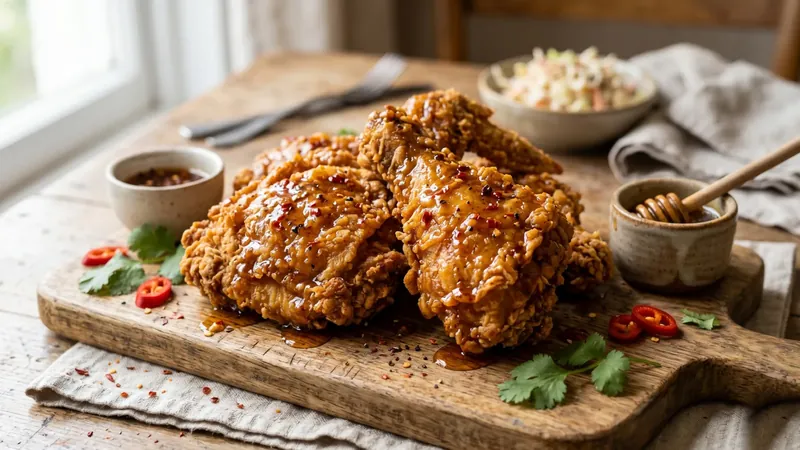
↓ Jump to recipeFew things rival a piece of fried chicken that shatters at the first bite, and an overnight buttermilk brine is what keeps the meat beneath that shell properly juicy. The twist here is a glossy hot honey drizzle, infused with chilli flakes and a splash of cider vinegar, poured over the crust while it is still crackling. Sweet, salty and gently fiery, it turns a familiar plate into something you will think about for days. It is not a quick supper, but almost all the work is done the night before; the frying itself takes twenty minutes.
Buttermilk Fried Chicken with Hot Honey
Ingredients
- 8 chicken thighs and drumsticks, skin on, bone in
- 500ml buttermilk
- 2 tsp fine salt
- 1 tsp smoked paprika
- 1 tsp garlic granules
- 300g plain flour
- 2 tbsp cornflour
- 1 tbsp baking powder
- 1 tsp ground black pepper
- 1 tsp cayenne pepper
- 1.5 litres vegetable oil, for frying
- 150g runny honey
- 1 tbsp hot chilli flakes
- 1 tbsp cider vinegar
- 1 pinch flaky sea salt
Method
- Mix the buttermilk with the salt, smoked paprika and garlic granules. Submerge the chicken, cover and chill for at least 4 hours or overnight.
- Combine the flour, cornflour, baking powder, black pepper and cayenne in a wide bowl.
- Lift each piece from the buttermilk, letting excess drip off, then press firmly into the seasoned flour. Spoon a little buttermilk into the flour and rub through to make craggy clumps for extra crunch.
- Set the coated pieces on a rack and rest for 15 minutes so the crust adheres.
- Heat the oil in a deep, heavy pan to 170C. Fry the chicken in two batches for 12 to 14 minutes, turning, until deep golden and cooked to 75C at the bone.
- Drain on a rack set over kitchen paper. Keep the first batch warm in a low oven.
- Warm the honey gently in a small pan with the chilli flakes and cider vinegar until just loosened, then remove from the heat to infuse for 5 minutes.
- Drizzle the hot honey generously over the hot chicken and finish with flaky sea salt. Serve at once.
Where fried chicken comes from
Fried chicken has deep roots in the American South, where the West African cooking traditions of seasoning and deep-frying met the Scottish habit of frying in fat rather than baking. Over generations it became a cornerstone of Southern and African American home cooking, and cookery writers such as Malinda Russell, whose 1866 book A Domestic Cook Book is among the earliest published by an African American woman, helped record and carry the technique forward. It was a dish for church suppers, Sunday tables and long journeys, valued because it travelled and kept well.
The buttermilk brine is more than a flavouring step. Its mild lactic acidity gently tenderises the surface of the meat and seasons it from within over several hours, while the tang balances the richness of the crust. Buttermilk also clings, giving the flour something to grab onto so the coating stays put in the hot oil. Overnight is genuinely better than four hours here; the salt has time to work through, and the difference in juiciness is real.
The crust, and why each ingredient earns its place
The craggy, shattering coating that separates good fried chicken from a bready disappointment comes down to a handful of small choices. Cornflour lightens the plain flour so the crust fries up crisp rather than dense. Baking powder introduces tiny bubbles that blister the surface as it fries, giving that rough, lacy texture. Spooning a little buttermilk into the seasoned flour and rubbing it through creates loose clumps that fry into extra craggy nubs, which is where a lot of the crunch lives. Then the fifteen-minute rest on a rack matters more than it looks: it lets the coating hydrate and bond to the buttermilk underneath, so it does not slide off in the oil.
Temperature control is the other half of the job. Fry at a steady 170C. Too hot and the crust colours before the inside is cooked; too cool and the coating drinks oil and turns greasy. Fry in two batches so the pieces are not crowded, which drops the oil temperature and steams the crust. A probe thermometer takes the guesswork out entirely: 75C at the thickest part, close to the bone, means it is done. This is the same principle behind the double-fry in my Korean fried chicken, where a low fry cooks the meat and a hotter one sets the shell.
Making hot honey at home
Hot honey is the modern flourish, and it is worth knowing where the current craze comes from. The chilli-and-honey pairing is old and turns up in many kitchens, but the bottled American condiment that popularised the name traces to Mike Kurtz, who first tasted chilli-infused honey at a pizzeria in Brazil in 2004, began making his own, and launched Mike’s Hot Honey out of Brooklyn in 2010 after adding it to pies at Paulie Gee’s pizzeria. It reached Whole Foods shelves in 2014 and spread quickly across menus for wings, pizza and fried chicken.
Making your own takes minutes. Warm 150g of runny honey in a small pan with a tablespoon of chilli flakes and a tablespoon of cider vinegar until it just loosens and smells fragrant, then pull it off the heat and let it infuse for five minutes. The gentle heat coaxes warmth and colour out of the chilli without scorching it, and the vinegar cuts the sweetness so it does not cloy. Drizzle it over the chicken while both are hot; the honey settles into the nooks of the crust rather than soaking through, provided you serve promptly.
What to serve, and the small habits that matter
What makes the whole thing work is contrast: the salty, savoury crust against the sweet-hot drizzle, with the heat building gently rather than shouting. Thighs and drumsticks are the right cut for frying because their higher fat content keeps them forgiving and moist, where breast meat dries out before the crust is ready.
Serve with something cool and sharp to cut the richness: a crisp slaw, quick pickles or a sharp salad all do the job. Rest the fried pieces on a wire rack, never straight onto paper, or the bases steam and go soft. Keep the first batch warm in a low oven at around 120C on a rack while the second fries, and above all serve the moment the honey goes on, while the crust still crackles. If you like this sweet-savoury glaze on poultry, you will find a related balance of chilli, sugar and acid in my butter chicken, built around spice and cream rather than crunch.
Frying safely and without waste
Deep-frying at home is straightforward if you respect a few rules. Use a deep, heavy pan filled no more than a third full, so there is ample room for the oil to bubble up when the chicken goes in. Fill it too high and the wet chicken can cause it to boil over, which is both dangerous and a mess. Have a lid to hand in case of a flare, never a jug of water, and keep the pan handle turned inward. A clip-on or probe thermometer is genuinely worth owning; guessing the temperature is the commonest reason home fried chicken comes out greasy or pale.
Vegetable, sunflower or groundnut oil all work, chosen for their high smoke points and neutral flavour. Once cooled, strain the used oil through a fine sieve or coffee filter back into a clean bottle; kept dark and cool, it is good for two or three more fries before it starts to darken and smell tired. Do not pour it down the sink, where it congeals and blocks drains. Let it cool completely, then bottle it for the recycling bank or the bin.
Storage, make-ahead and variations
The brining is the make-ahead step, and it is the one that matters, so start it the night before. Once fried, the chicken is best eaten straight away; the hot honey and time will soften the crust. If you must reheat leftovers, do it in a hot oven at 200C on a rack for eight to ten minutes to re-crisp, never in the microwave, which turns the crust to leather. Sauce only the pieces you are serving and keep any spare hot honey in a jar, where it keeps for weeks and is superb over roast vegetables, cheese on toast or a pizza.
For a whole-bird version, joint a chicken into eight and adjust the frying times, giving the breast pieces a little less. Boneless thighs make quick, kid-friendly nuggets or a fine sandwich filling; press them into a soft roll with slaw and extra hot honey. To vary the heat, swap the chilli flakes for a single sliced fresh chilli infused in the honey, or add a smashed clove of garlic and a sprig of thyme while the honey warms for a more rounded, aromatic drizzle.
What to serve alongside
Fried chicken is rich, salty and, with the hot honey, sweet, so the plate around it wants to pull in the opposite direction: cool, sharp, crunchy and fresh. A finely shredded white cabbage slaw dressed with cider vinegar and a little mustard is the classic partner and cuts the fat cleanly. Quick pickles do the same job in seconds; thinly sliced cucumber or red onion steeped for twenty minutes in vinegar, sugar and salt bring brightness and acidity. Buttermilk left over from the brine can go into a batch of biscuits or a tangy dressing rather than being tipped away.
For a proper spread, soft rolls, corn on the cob and a green salad turn this into a feast, and a bowl of extra hot honey on the table lets people help themselves. Cornbread is the natural bread here, its faint sweetness matching the honey, while pickled green tomatoes or a sharp coleslaw keep each mouthful from tipping too far into richness. Cold beer or a tart lemonade suits the flavours far better than anything sweet. Whatever you build around it, the chicken is the star, so keep the sides simple and let the crackle and the sweet-hot drizzle do the talking.
A final word on timing, because fried chicken rewards a plan. Get the brine on the night before, mix the dredge and coat the chicken while the oil heats, and have the honey ingredients weighed out ready so the drizzle can be made in the five minutes the chicken rests. Fry, drain, sauce, serve: done in sequence, the whole thing lands hot and crackling on the table with the honey still glossy, which is exactly how it should be eaten.
Related Content