Hoppin' John: The Carolina Rice and Field Pea Plate
Smoky pork, black-eyed peas and long-grain rice, simmered together the way the Low Country has cooked New Year's luck for two centuries
Contents
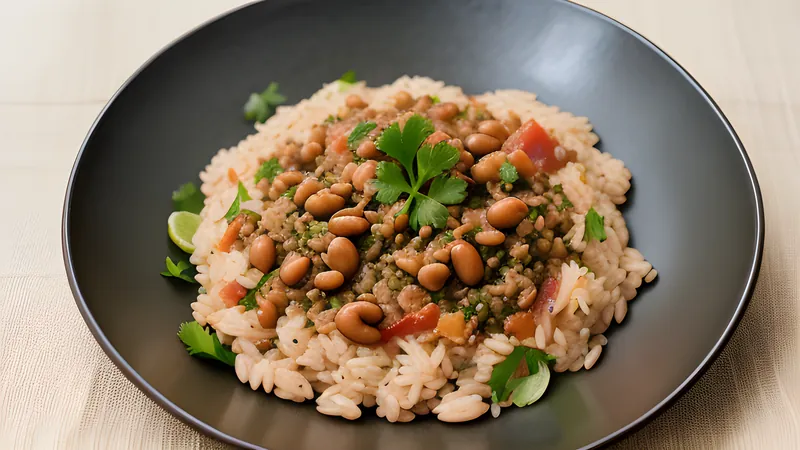
↓ Jump to recipeHoppin’ John is rice and black-eyed peas cooked together in the same pot until the peas’ smoky, savoury liquid has been fully absorbed into the grain, built on a foundation of soaked field peas, a smoked pork bone, and long-grain rice that has fed the Carolina Low Country for generations before it ever became a single day’s New Year’s superstition. Eaten on 1 January, it is supposed to bring luck and prosperity for the year ahead — the peas for coins, a side of collard greens for paper money — but treating it as a once-a-year dish undersells what is, on any other day, simply a very good, very economical pot of rice and beans that happens to have history behind every ingredient in it.
Hoppin' John: The Carolina Rice and Field Pea Plate
Ingredients
- 250g dried black-eyed peas, picked over
- 1 smoked ham hock (about 500g)
- 1 tbsp neutral oil
- 1 onion, finely diced
- 2 celery stalks, finely diced
- 1 green pepper, finely diced
- 4 garlic cloves, minced
- 1 tsp dried thyme
- 0.5 tsp cayenne pepper
- 2 bay leaves
- 1 litre water, plus more as needed
- 300g long-grain white rice, rinsed
- 1 tsp fine salt, plus more to taste
- 4 spring onions, sliced, to finish
- Hot sauce, to serve
Method
- Soak the black-eyed peas in plenty of cold water for at least 4 hours or overnight, then drain and rinse. (Skip this step and add 20 minutes to the simmering time if you are short on time.)
- Heat the oil in a large, heavy-based pot over medium heat. Add the onion, celery and green pepper and cook, stirring often, for 6 to 7 minutes until softened.
- Add the garlic, thyme and cayenne and cook for 1 minute until fragrant.
- Add the drained peas, ham hock, bay leaves and 1 litre of water. The liquid should sit about 3cm above the peas; top up with more water if it does not.
- Bring to a simmer, then partially cover and cook gently for 60 to 75 minutes, stirring occasionally, until the peas are tender but still holding their shape and the ham hock meat is falling from the bone.
- Lift out the ham hock, shred the meat from the bone once cool enough to handle, and discard the skin, fat and bone. Return the shredded meat to the pot.
- Measure the remaining liquid in the pot; you need about 600ml to cook the rice. Top up with water or boil uncovered for a few minutes to reduce, as needed.
- Stir in the rinsed rice and the salt. Bring back to a simmer, cover tightly, and cook on the lowest heat for 18 to 20 minutes, without lifting the lid, until the rice is tender and the liquid absorbed.
- Remove from the heat and rest, covered, for 10 minutes. Fluff gently with a fork, discard the bay leaves, and taste for salt.
- Serve scattered with spring onion and hot sauce at the table.
A dish older than its New Year’s superstition
The name’s origin is disputed and probably always will be — theories range from a corruption of a French term (pois pigeons, “pigeon peas”) to a children’s ritual of hopping around the table before the meal, to an account of a peddler named John who sold the dish on Charleston streets — but the food itself has a clearer lineage. Black-eyed peas travelled to the American South from West Africa, likely aboard slave ships as part of the provisions carried for the crossing, and enslaved cooks combined them with rice, itself grown extensively in the Low Country’s tidal rice plantations using West African cultivation knowledge, to produce a dish built almost entirely from what was cheap, available, and nutritionally sound: a full protein from rice and legumes together, stretched further with whatever smoked pork scraps a household had on hand.
The earliest known written recipe for Hoppin’ John appears in Sarah Rutledge’s 1847 cookbook The Carolina Housewife, by which point it was already an established part of Charleston’s culinary landscape rather than a novelty. Its association with New Year’s Day luck developed later, drawing on a broader Southern tradition that reads round, coin-shaped foods — peas among them — as a good omen for prosperity in the coming year, alongside greens for money and cornbread for gold. That superstition has kept Hoppin’ John visible on tables and in memory for a century and a half after its plantation-era origins, but the dish long predates the ritual and was eaten as ordinary, everyday food across the Low Country long before anyone attached a single date to it.
Why the pork bone matters more than the pork meat
A ham hock does two jobs in this pot, and the meat it eventually yields is arguably the smaller one. Simmered for well over an hour, the hock’s collagen-rich skin and connective tissue break down slowly into the cooking liquid, giving the broth a silky, faintly gelatinous body that a pea broth built on water alone never develops. At the same time, the smoke the hock carries from curing infuses every grain of rice that later cooks in that liquid, which is the entire reason this dish tastes the way it does rather than like a plain pot of beans and rice. Pull the hock out too early, before the connective tissue has had time to render, and you get smoky broth without the body; leave it in exactly as long as the peas need to become tender, and both arrive at the same time.
Shredding the meat back into the pot rather than discarding it is worth doing for texture as much as flavour — the meat has given up most of its taste to the broth by this point, but the small threads of tender pork scattered through the finished rice add substance to what is otherwise a dish of peas and grain. If a ham hock is not available, a smoked turkey leg or wing works as a substitute, giving similar smoke and body with less fat; smoked bacon, added at the softening stage rather than simmered whole, is a faster but less traditional alternative that skips the collagen-rich broth entirely.
Cooking rice and peas in the same pot
The defining technical choice in Hoppin’ John, as opposed to a side of black-eyed peas served next to plain rice, is cooking the rice directly in the pea broth rather than in fresh water. This is what makes the dish more than the sum of its parts: every grain absorbs the ham hock’s smoke and the peas’ starchy, savoury liquid as it cooks, rather than sitting passively alongside a separately seasoned pot of beans. Getting the ratio right matters enormously here — too much liquid and the rice turns to mush before it has absorbed all the broth’s flavour; too little and it scorches on the base of the pot before it is cooked through. Measuring the remaining broth after the ham hock and peas have finished simmering, rather than guessing, is the reliable way to hit roughly 2:1 liquid to rice, the ratio long-grain rice needs to steam properly once covered.
Resist lifting the lid while the rice steams. Every time steam escapes, the pot loses heat and moisture it needs to finish the grain evenly, and rice cooked with a lid lifted partway through routinely turns up undercooked in the centre of the pot even when the top layer looks done. The ten-minute rest off the heat afterwards, still covered, lets the last of the residual steam finish softening any grains at the base that were slightly behind the rest, and settles the rice enough that fluffing it with a fork separates the grains cleanly rather than mashing them.
Getting the peas right
Dried black-eyed peas cook considerably faster than most dried beans — no more than 75 minutes even unsoaked — because their skins are thinner and their starch structure less dense than something like a kidney or black bean. Soaking overnight is not strictly necessary for this reason, though it does shave time off the simmer and gives slightly more even cooking, since every pea starts the actual cooking process already hydrated rather than absorbing water at different rates once the pot is on the heat. A well-cooked pea for this dish should be tender enough to yield easily under a fork but should still hold its shape in the finished rice rather than disintegrating into the broth — cooked black-eyed peas turn to mush quickly past the point of doneness, so start checking a little before the 60-minute mark rather than waiting for the full 75.
Old, long-stored dried peas take noticeably longer to soften and occasionally never fully tenderize no matter how long they simmer, which is worth knowing before you blame the recipe rather than the bag — buying dried peas from a shop with reasonable turnover, rather than ones that have sat in a cupboard for a couple of years, makes a real difference to how reliably this dish comes together.
Carolina Gold and the rice that built the Low Country
The rice in Hoppin’ John is not an incidental grain choice — Low Country rice cultivation was, for around two centuries, one of the most economically significant agricultural industries in the American South, built almost entirely on the forced labour and specialised agricultural knowledge of enslaved West Africans who had grown rice in tidal and floodplain conditions long before being brought to the Carolinas. Carolina Gold, the heirloom long-grain variety most closely associated with the region, nearly vanished entirely by the mid-twentieth century as rice cultivation shifted west to Louisiana and Texas, and has only been reintroduced to wider cultivation in the past few decades through the efforts of seed banks and heritage-grain growers working specifically to recover it. A modern long-grain white rice, the kind specified in this recipe, gives a close approximation of the texture Hoppin’ John has traditionally been built on — a firm, separate grain that holds its shape after steaming — but it is worth knowing, if you ever see Carolina Gold rice for sale, that you are looking at a direct link back to the specific agricultural history this dish comes out of, not simply a regional rice brand.
Whichever variety you use, avoid short-grain or risotto rice here; both release far more starch as they cook and will turn the finished dish gluey rather than giving the loose, distinct grains Hoppin’ John depends on for its texture. Basmati works as a substitute in a pinch, though its more assertive aroma sits slightly oddly against the smoked pork and peas, and its longer, thinner grain cooks a few minutes faster than standard long-grain, so check it a little earlier than the timing given above.
Tips, substitutions and storage
Fresh or frozen black-eyed peas, when available, cut the simmering time roughly in half and give a slightly less broth-forward result, since they release less starch than long-simmered dried peas; adjust the water down accordingly and start checking for doneness at 25 minutes. A pinch more cayenne, or a dash of hot sauce stirred straight into the pot rather than added only at the table, gives a spicier finished dish for anyone who prefers real heat running through the rice itself rather than sitting on top of it.
Leftovers keep well in the fridge for up to 4 days and, like most rice-and-bean dishes, arguably improve slightly by the second day once the flavours have had time to settle through the grain. Reheat gently with a splash of water or stock stirred through to loosen the rice, which tightens considerably once cold. It freezes acceptably for up to 2 months, though the rice’s texture softens somewhat on thawing; freeze the peas and broth separately from freshly cooked rice if a firmer texture on reheating matters to you.
Serving it properly
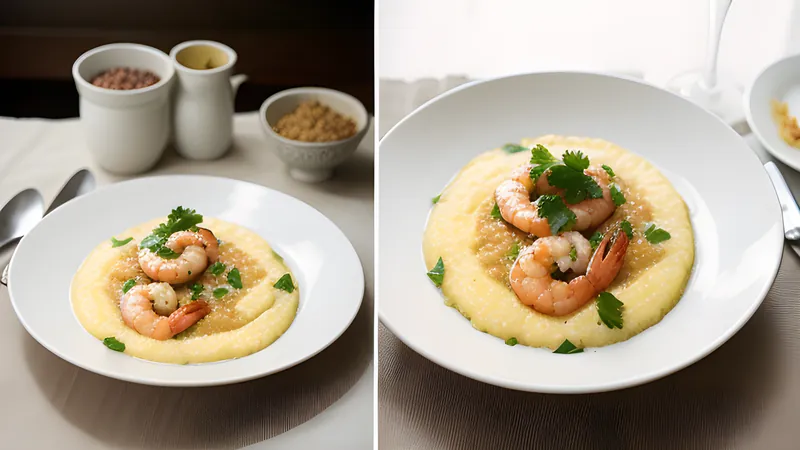
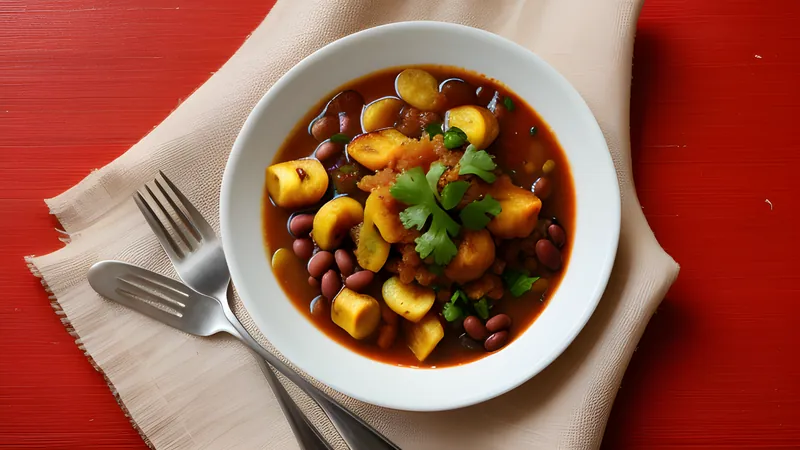
Hoppin’ John is traditionally served with a side of collard greens, simmered low and slow with more smoked pork, and a wedge of cornbread with brown butter and honey for scooping up whatever broth is left on the plate — the greens for the paper-money side of the New Year’s superstition, the cornbread for gold. It sits comfortably on the same table as shrimp and grits, another Low Country dish built on the same instinct for turning a handful of cheap, humble ingredients into something that properly feeds a household, and for a wider tour of how black-eyed peas turn up across different culinary traditions, red red, the West African black-eyed pea stew cooked in palm oil, makes a genuinely illuminating side-by-side with the dish’s ancestral roots.
Related Content