Hokey Pokey Ice Cream With Shattered Honeycomb
New Zealand's favourite flavour, vanilla studded with brittle amber honeycomb
Contents
↓ Jump to recipeAsk a New Zealander their favourite ice cream flavour and there’s a decent chance the answer is hokey pokey before you’ve finished the question. It outsells chocolate in the country’s supermarkets by a wide margin, which is a strange thing to say about a flavour built on nothing more exotic than vanilla ice cream and pieces of honeycomb toffee — no fruit, no chocolate, no imported spice. Its dominance says less about the ingredients and more about how completely it became a fixture of New Zealand childhood.
Hokey Pokey Ice Cream With Shattered Honeycomb
Ingredients
- 500ml double cream
- 250ml whole milk
- 5 large egg yolks
- 150g caster sugar, plus 200g for the honeycomb
- 1 vanilla pod, split and scraped, or 2 tsp vanilla extract
- Pinch of fine sea salt
- 5 tbsp golden syrup, for the honeycomb
- 2 tsp bicarbonate of soda, for the honeycomb
Method
- Make the custard base: heat the cream, milk, vanilla pod and seeds in a saucepan until steaming but not boiling.
- Whisk the egg yolks with 150g sugar and the salt until pale. Slowly pour in the hot cream mixture, whisking constantly.
- Return the mixture to the pan and cook over low heat, stirring constantly, until it thickens enough to coat the back of a spoon, about 6-8 minutes. Do not let it boil.
- Strain through a fine sieve into a clean bowl, cover with cling film touching the surface, and chill for at least 4 hours or overnight.
- Make the honeycomb: line a baking tray with baking paper. Heat 200g sugar and the golden syrup in a deep saucepan over medium heat, without stirring, until it turns a deep amber, about 5-6 minutes.
- Remove from the heat and quickly whisk in the bicarbonate of soda — it will foam up dramatically. Pour immediately onto the lined tray without spreading it.
- Leave to cool and harden completely, about 30 minutes, then break into rough shards and small pieces.
- Churn the chilled custard in an ice cream maker according to the manufacturer's instructions until it holds a soft-serve consistency.
- Fold three-quarters of the honeycomb pieces through the churned ice cream, reserving the rest for topping.
- Transfer to a freezer-proof container, scatter with the remaining honeycomb, and freeze for at least 4 hours until firm.
A toffee with an odd name
“Hokey pokey” as a term long predates the ice cream — it was a common nineteenth-century British and Australian nickname for cheap ice cream sold by street vendors, likely a corruption of the Italian phrase “ecco un poco” (“here’s a little”), used by Italian immigrant ice cream sellers hawking their wares. In New Zealand, though, the name shifted meaning entirely: it now refers specifically to a hard, bubbly honeycomb toffee, made by adding bicarbonate of soda to hot caramelised sugar syrup, which foams up dramatically and sets into a light, aerated, crunchy candy once cooled. Folded through vanilla ice cream, it became its own distinct flavour by the mid-twentieth century, and New Zealand’s biggest ice cream brands have kept it as a permanent, best-selling fixture ever since.
The confusion around the name trips up plenty of visitors — “hokey pokey” elsewhere can mean cheap ice cream generally, or nothing at all, while in New Zealand it means one very specific thing: vanilla ice cream with honeycomb pieces through it, full stop. Ask for hokey pokey anywhere else in the world and you’ll likely get a blank look.
The chemistry of honeycomb
Honeycomb toffee (also called cinder toffee, or seafoam in some American regional traditions) works on a single dramatic chemical reaction. Bicarbonate of soda, whisked into hot caramelised sugar syrup, releases carbon dioxide gas as it reacts with the acidic components in the syrup, and that gas gets trapped inside the setting sugar as thousands of tiny bubbles, the same way a raising agent aerates a cake. The syrup has to be genuinely hot — properly caramelised, not just melted — for the reaction to happen fast enough to trap the bubbles before the mixture cools and sets solid; add the bicarbonate to a lukewarm syrup and it’ll dissolve without much of the dramatic foaming that gives honeycomb its structure.
Timing matters more than almost any other step in this recipe. Once the bicarbonate goes in, you have seconds, not minutes, before the foaming mixture needs to hit the tray — hesitate, and it starts collapsing back down and setting in the pan, losing the light, bubbly structure that makes honeycomb honeycomb rather than a solid toffee slab. Don’t spread it once it’s poured; the syrup is still actively foaming and any interference collapses the bubbles.
Folding it into ice cream without losing the crunch
The trap with hokey pokey ice cream, at home, is honeycomb that turns soft and sticky rather than staying crisp once it’s inside the ice cream. Sugar is hygroscopic — it pulls in moisture from its surroundings — and honeycomb sitting inside a wet custard base for hours before freezing will slowly dissolve at the edges, losing its shatter. Two things help: break the honeycomb into pieces no smaller than a fingernail, since smaller shards have proportionally more surface area exposed to moisture and dissolve faster, and fold it through the ice cream only after churning, right at the point of transferring to the freezer container, rather than earlier in the process.
Even with careful timing, hokey pokey ice cream’s honeycomb softens gradually over days in the freezer — this is normal and not a sign anything’s gone wrong, simply the nature of sugar and moisture in close, cold contact over time. It’s part of why hokey pokey ice cream is best eaten within a week or two of making it, and part of why commercial versions add stabilisers home cooks don’t have easy access to.
The custard base
A proper egg-custard base, rather than a simple cream-and-sugar no-churn mixture, gives hokey pokey ice cream its characteristically dense, rich texture — closer to a good Italian gelato than to a lighter, icier commercial soft-serve. Cooking the custard to nappe stage, where it coats the back of a spoon and holds a clean line when you draw a finger through it, is the one technically fiddly part of the whole recipe. Go past that point and the eggs scramble; a custard base that’s split can sometimes be rescued by blitzing it briefly in a blender, though the texture afterward is never quite as silky as one that never split in the first place.
Straining the custard through a fine sieve after cooking removes the vanilla pod and any small flecks of cooked egg, giving a completely smooth base before it’s chilled. Chilling matters as much as cooking — a custard base churned while still warm won’t set properly in most home ice cream machines, which rely on the mixture already being close to freezing point to churn efficiently into a soft-serve consistency within twenty or thirty minutes.
Without an ice cream machine
A no-churn method works reasonably well if you don’t have an ice cream maker: whip the double cream to soft peaks separately, fold it through a simplified sweetened condensed milk and vanilla base instead of the egg custard, then fold in the honeycomb and freeze in a lidded container, beating the mixture with a fork every hour for the first three or four hours to break up ice crystals as it sets. The texture will be a little icier than the churned custard version but the hokey pokey flavour itself comes through just as clearly, since the honeycomb is doing most of the flavour work regardless of the base.
What can go wrong
Grainy, crystalline ice cream rather than smooth is usually a custard-cooking problem rather than a freezing problem. If the custard was undercooked and didn’t fully thicken before chilling, the base won’t have enough body to resist ice crystal formation during churning, and the finished result comes out icy rather than creamy. Cook the custard properly to nappe stage — thick enough to hold a clean line when you draw a finger across the back of a coated spoon — and don’t shortcut the chilling time before churning; a base that goes into the machine anything less than thoroughly cold churns more slowly and lets larger ice crystals form.
Honeycomb that refuses to foam properly almost always means the syrup wasn’t hot enough when the bicarbonate went in. Caramel needs real colour — a deep amber, not a pale gold — for the reaction to happen vigorously; if your honeycomb sets flat and dense rather than light and bubbly, the syrup likely came off the heat a minute or two early. There’s no fixing it after the fact, so treat the colour, not the clock, as the real signal to pull it off the heat: pale gold isn’t there yet, deep amber (just short of any acrid burnt smell) is correct.
A honeycomb that tastes bitter rather than richly caramelised means the opposite mistake — the sugar went too far and started to burn before the bicarbonate went in. There’s a fairly narrow window between “not caramelised enough” and “starting to taste of ash,” and it’s worth watching the pan closely rather than relying on a fixed time, since stove heat and pan thickness both shift how fast sugar colours.
Variations
Some New Zealand recipes swap golden syrup for a plain sugar-and-water caramel in the honeycomb, which gives a slightly sharper, less rounded sweetness — golden syrup’s mild toffee note is part of what makes hokey pokey honeycomb taste distinct from a plain American-style seafoam candy. A pinch of flaky sea salt scattered over the honeycomb before it fully sets is a modern addition that plenty of home bakers now consider close to essential, cutting the ice cream’s sweetness in small, sharp bursts.
Some households melt a portion of the honeycomb into the custard base itself before churning, rather than keeping every piece solid, which gives the ice cream a faint caramel colour and flavour running through the whole base in addition to the crunchy pieces — a way of using up any honeycomb that’s gone slightly soft or broken into crumbs too small to keep as distinct shards. Chocolate-hokey pokey hybrids, with a ribbon of melted dark chocolate swirled through alongside the honeycomb, turn up on some ice cream shop menus, though purists tend to view this as diluting rather than improving the original.
Serving
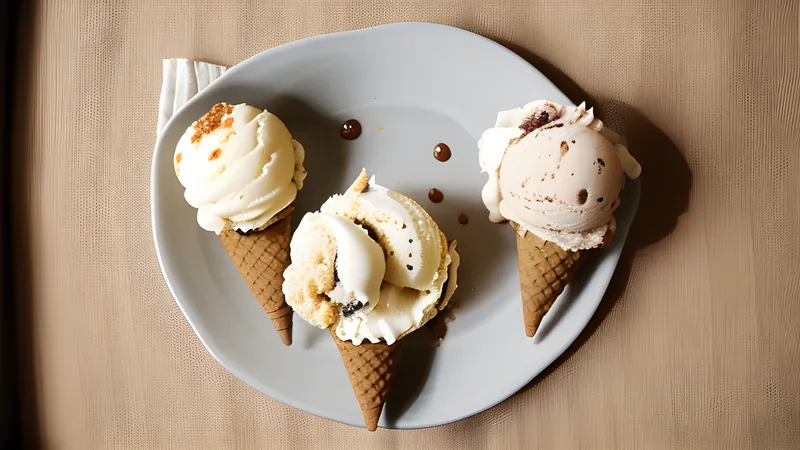
Hokey pokey ice cream is eaten the way any classic vanilla ice cream is eaten — in a cone, in a bowl, alongside a slice of pavlova or a warm dessert that benefits from a cold, crunchy contrast. It rarely gets dressed up further; the honeycomb is already doing the job that a sauce or a second topping would do in a plainer vanilla, providing both sweetness and texture in one component.
A note on equipment
A sugar thermometer takes the guesswork out of the honeycomb stage if you’re nervous about judging colour alone — a syrup around 150-155C is reliably in the deep-amber range this recipe wants, just short of the point where sucrose starts to break down into genuinely bitter compounds. It’s not essential; generations of New Zealand home cooks have made honeycomb by colour and smell alone, but it removes one variable if this is your first attempt.
A heavy-based saucepan matters more for the honeycomb than for most other stages of the recipe, since a thin pan heats unevenly and can scorch the sugar in patches while the rest of the syrup is still pale — an uneven pan is a common cause of honeycomb that tastes burnt in some bites and undercooked in others from the same batch.
Storage
Keep hokey pokey ice cream in an airtight, freezer-proof container with a layer of baking paper or cling film pressed directly onto the surface before the lid goes on — this slows ice crystal formation and keeps the surface from picking up freezer odours. It’s best within the first week or two while the honeycomb still has genuine crunch; by three or four weeks the pieces will have softened noticeably, though the ice cream itself remains perfectly good to eat well beyond that if you don’t mind the texture change.
Extra honeycomb, kept separately in an airtight container away from any moisture, keeps for a couple of weeks at room temperature and makes a good crunchy topping on its own for other desserts. New Zealand and Australia share more sweet-tooth territory than people expect — lamingtons and afghan biscuits both come from the same tradition of turning simple pantry staples into something distinctly regional through one clever technique rather than an unusual ingredient list.
Related Content