Herby Falafel with Tahini Sauce
Green-centred, crisp-shelled and fresh
Contents
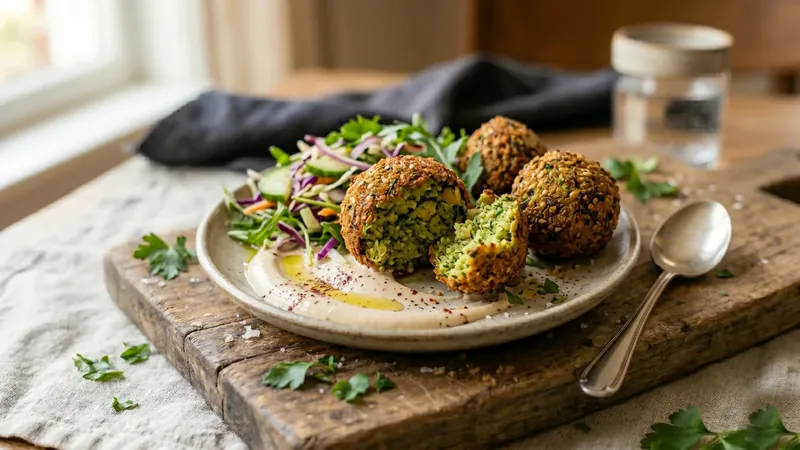
↓ Jump to recipeA great falafel is crisp and deeply browned on the outside but vividly green and fluffy within, and the secret to that lies in a generous quantity of fresh herbs blitzed straight into the mixture. Parsley, coriander and dill keep the centre fragrant and almost springlike, and they colour it a proper grass-green rather than the dull beige of most takeaway versions. Alongside comes a lemony tahini sauce, nutty and tangy, for drizzling and dipping. Made from soaked dried chickpeas rather than tinned, these fry up light and shatteringly crisp every time.
Herby Falafel with Tahini Sauce
Ingredients
- 250g dried chickpeas
- 1 small onion, roughly chopped
- 4 garlic cloves
- 30g fresh flat-leaf parsley
- 30g fresh coriander
- 15g fresh dill
- 2 tsp ground cumin
- 1 tsp ground coriander
- 0.5 tsp baking powder
- 1 tsp salt
- 2 tbsp sesame seeds
- 1 litre vegetable oil, for frying
- 4 tbsp tahini
- Juice of 1 lemon
- 1 small garlic clove, crushed
- 4 to 5 tbsp cold water
Method
- The day before, cover 250g dried chickpeas with plenty of cold water and leave to soak overnight. Do not use tinned chickpeas, as they make the mixture too wet.
- Drain and rinse the soaked chickpeas thoroughly and pat dry. They will not be cooked before frying.
- Put the chickpeas, onion, 4 garlic cloves, parsley, coriander, dill, cumin, ground coriander and 1 tsp salt in a food processor.
- Blitz to a coarse, sandy texture that holds together when pressed; stop short of a smooth paste.
- Tip into a bowl, stir through 0.5 tsp baking powder and 2 tbsp sesame seeds, then chill for 30 minutes to firm up.
- Whisk 4 tbsp tahini with the juice of 1 lemon and 1 crushed garlic clove; it will seize, then loosen with 4 to 5 tbsp cold water added a tablespoon at a time until smooth and pourable. Season with salt.
- Shape the mixture into small walnut-sized balls or patties, pressing firmly so they hold together.
- Heat the oil to 170°C and fry the falafel in batches for 3 to 4 minutes, until deep golden and crisp.
- Drain on kitchen paper and serve hot with the tahini sauce for drizzling or dipping.
Method
- The day before, cover the dried chickpeas with plenty of cold water and leave to soak overnight, at least 12 hours. Do not use tinned chickpeas, as they make the mixture too wet to fry.
- Drain and rinse the soaked chickpeas thoroughly and pat them dry. They will not be cooked before frying.
- Put the chickpeas, onion, garlic, parsley, coriander, dill, cumin, ground coriander and 1 tsp salt in a food processor.
- Blitz in short bursts to a coarse, sandy texture that holds together when you press a handful; stop short of a smooth paste.
- Tip into a bowl, stir through the baking powder and sesame seeds, then chill for 30 minutes to firm up.
- Make the tahini sauce: whisk the tahini with the lemon juice and crushed garlic. It will seize and thicken, then loosen as you add cold water a tablespoon at a time until smooth and pourable, usually 4 to 5 tbsp. Season with salt.
- Shape the chilled mixture into small walnut-sized balls or patties, pressing firmly so they hold together.
- Heat the oil to 170°C and fry the falafel in batches of 5 or 6 for 3 to 4 minutes, until deep golden and crisp.
- Drain on kitchen paper and serve hot with the tahini sauce for drizzling or dipping.
Why the technique works, and what goes wrong
A little baking powder, stirred in at the end rather than blitzed through, helps the falafel puff slightly and stay airy inside. Chilling the mixture before shaping firms up the starches and helps the balls hold together when they meet the oil, which is the moment most home falafel fall apart. If your mixture still feels too loose to shape after chilling, do not add flour — pulse in a spoonful more of the drained chickpeas or a little more sesame, and press each ball harder.
Frying temperature is the other make-or-break. At a steady 170°C the shell browns in the same three or four minutes it takes the centre to cook through. Too hot and the outside burns before the inside is done, leaving a raw, pasty core; too cool and the falafel sit in the oil absorbing it, turning heavy and greasy. Use a thermometer if you have one, and fry in batches so the oil temperature does not crash when you drop the balls in. If you want to test one first, fry a single falafel and break it open: it should be cooked, green and fluffy right to the middle.
The blitz, the herbs and the shaping
How you run the food processor matters more than it looks. You are after a texture like coarse, damp sand that clumps when you squeeze a fistful, not a smooth hummus-like paste. Pulse in short bursts and scrape down the sides between them, rather than letting the motor run, because a smooth paste fries dense and heavy while a coarse mince stays light and gives that characteristic craggy, crunchy shell. If your processor is small, do it in two batches so nothing over-processes at the bottom while the top stays chunky.
The herbs deserve a word on preparation too. Wash them well and dry them thoroughly — a salad spinner is ideal — because water carried in on wet leaves is the enemy of a mixture you want dry enough to fry. There is no need to pick every leaf from the parsley and coriander; the tender upper stems have plenty of flavour and blitz down fine. Dill is softer and can go in stems and all. Do not stint on the quantity: the herbs are the point here, and a mixture that looks aggressively green raw will fry to a more muted olive inside, so err on the generous side.
Shaping is where patience pays off. After the mixture has chilled, press it firmly — really firmly — into small walnut-sized balls or slightly flattened patties, compacting each one so there are no loose crumbs that will shed into the oil. Patties, being flatter, cook through more reliably than fat spheres and are a safer bet if you are new to this. If you have a falafel scoop, use it; otherwise wet hands lightly to stop the mixture sticking and shape as you go, keeping the finished ones under a cloth so they do not dry out.
Tahini, serving and make-ahead
Tahini, a smooth paste of ground sesame seeds, is the classic accompaniment. Whisked with lemon and garlic it seizes and stiffens before loosening into a silky, pourable sauce as water goes in a spoonful at a time — its nutty richness and gentle bitterness balancing the herby, spiced falafel. If you want to go deeper on getting that sauce right, I have written a full guide to the ratio and method behind tahini sauce.
Serve the falafel hot, ideally within a few minutes of frying, when the shell is at its crispest. Pile them into warm flatbread with sliced tomato, cucumber, a handful of the herbs and plenty of tahini, and add something sharp and pickled to cut the richness. And if the idea of a crisp, tahini-drenched plate appeals more than a sandwich, the same balance of nutty sauce against roasted crunch drives my crispy chickpea and sweet potato bowl with tahini dressing. The shaped raw mixture keeps in the fridge for a day, so you can soak and blitz ahead and fry to order.
For a lighter alternative to deep-frying, you can bake the shaped falafel: brush them generously with oil, sit them on a lined tray and bake at 200°C fan for about 25 minutes, turning once. They will not have quite the same crackling shell as the fried version, but they are honest, a good deal less greasy, and easier to manage if you are cooking a big batch. Whichever way you cook them, the uncooked blitzed mixture also freezes well — open-freeze the shaped balls on a tray, then bag them up, and fry or bake from frozen with a couple of extra minutes. Leftover cooked falafel are best revived in a hot oven for five minutes rather than the microwave, which turns the crisp shell soft. A cold falafel crumbled over a salad with plenty of that tahini is no hardship either.
Related Content