Hayashi Rice: Japanese Beef and Tomato Stew
A demi-glace-dark beef and tomato stew, built for a pile of white rice
Contents
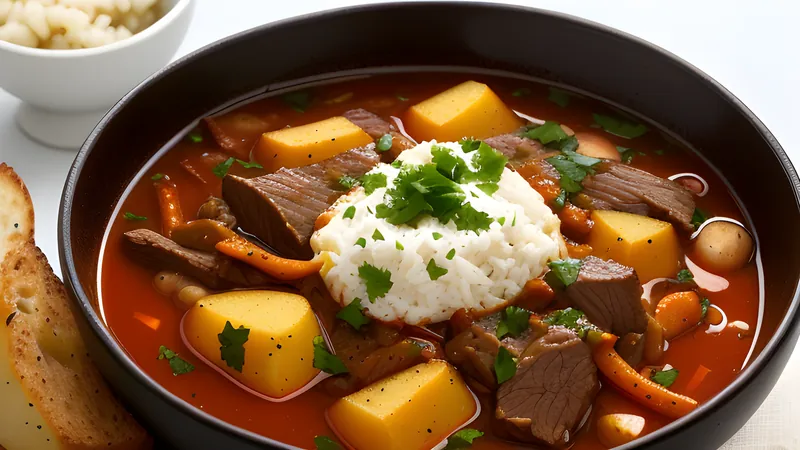
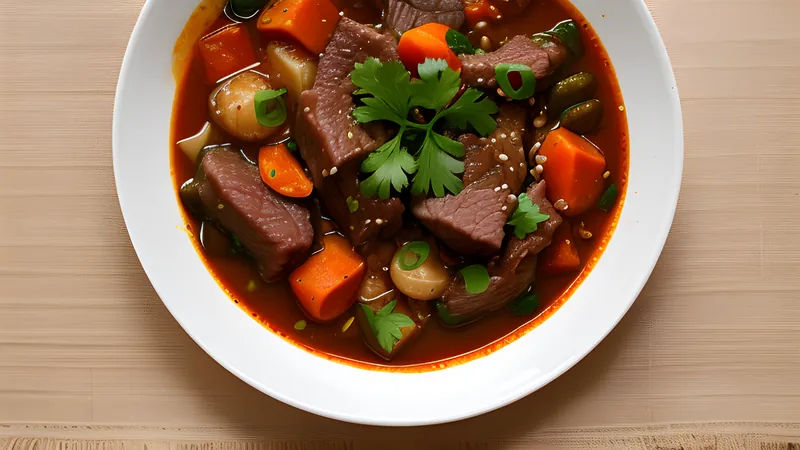
↓ Jump to recipeHayashi rice is a dark, rich beef and tomato stew poured over rice — closer in body and colour to a beef bourguignon than to anything typically thought of as Japanese food, and that resemblance isn’t a coincidence. It’s one of a small family of Japanese dishes built directly from nineteenth-century Western cooking, adapted with local ingredients and a distinctly Japanese sense of how a stew should taste over rice rather than with bread.
Hayashi Rice: Japanese Beef and Tomato Stew
Ingredients
- 500g beef chuck or brisket, cut into 2cm strips
- 2 large onions, thinly sliced
- 2 tbsp butter
- 2 tbsp plain flour
- 1 tbsp tomato puree
- 400g tin chopped tomatoes
- 500ml beef stock
- 2 tbsp red wine (optional)
- 2 tbsp soy sauce
- 1 tbsp Worcestershire sauce
- 1 tbsp sugar
- 2 bay leaves
- 2 tbsp neutral oil
- Salt and black pepper, to taste
- 4 servings cooked short-grain rice
- Chopped parsley, to serve
Method
- Pat the beef dry and season generously with salt and pepper.
- Heat oil in a heavy-based pot over high heat and brown the beef in batches, 2-3 minutes per side, without crowding the pan; set aside.
- Lower heat to medium, add the onions to the same pot, and cook for 15-20 minutes, stirring occasionally, until deeply caramelised and jammy.
- Push the onions to one side, melt the butter in the cleared space, then stir in the flour and cook for 2 minutes to form a light roux.
- Stir the roux through the onions, add the tomato puree, and cook for 1 minute until it darkens slightly.
- Return the beef to the pot, add the chopped tomatoes, beef stock, red wine if using, soy sauce, Worcestershire sauce, sugar and bay leaves.
- Bring to a simmer, then partially cover and cook on low heat for 45-60 minutes, stirring occasionally, until the beef is fork-tender and the sauce has thickened to coat the back of a spoon.
- Taste and adjust seasoning with salt, pepper or an extra splash of soy sauce.
- Serve ladled generously over hot rice, finished with chopped parsley.
A stew with a foreign name
Hayashi rice belongs to yoshoku, the category of Western-influenced dishes that took root in Japan during the Meiji era, starting in 1868, as the country opened up after centuries of restricted foreign contact. Curry rice, omurice and tonkatsu all belong to the same broad movement — foreign techniques and ingredients absorbed and reshaped by Japanese cooks into something that reads as thoroughly its own today, even though the DNA is visibly European.
The name’s origin is genuinely disputed, which is unusual for a dish this established. One popular story credits it to Hayashi Yuteki, a Meiji-era doctor and food writer who is said to have created or popularised the dish; another traces it to “hashed beef rice,” an English phrase describing a beef hash served over rice, which mutated in pronunciation into “hayashi” through the usual process of loanwords bending to fit Japanese phonetics. Both explanations are plausible and neither is definitively proven, and most Japanese food writers today simply present both as competing theories rather than picking a winner.
Whatever its exact origin, hayashi rice was solidly established as a department-store restaurant staple and home-cooking regular by the early twentieth century, occupying a similar cultural slot to curry rice — comforting, filling, associated with a slightly Western sense of occasion without being genuinely foreign to anyone who grew up eating it.
Building flavour through proper browning
The entire depth of this dish comes from two separate browning stages done properly, and skipping either one is the difference between a genuinely rich stew and a flat, watery one. First, the beef needs a hard sear in a very hot pan, in batches small enough that each piece actually touches the metal rather than steaming in its own crowded juices. That Maillard browning on the meat’s surface is where a huge amount of the finished dish’s savoury depth comes from, and it can’t be recreated later by adding more stock or seasoning.
Second, the onions need genuine time — fifteen to twenty minutes of patient stirring over medium heat until they collapse into a deep golden-brown, jammy mass. Rushing this stage with high heat produces onions that are merely softened and pale rather than truly caramelised, and the difference in the final stew’s sweetness and depth is substantial. If the onions start catching before they’ve properly coloured, lower the heat rather than adding liquid to rescue them — a splash of water at this stage stops caramelisation dead rather than encouraging it.
Choosing your cut of beef
Chuck and brisket both work well because they carry enough collagen-rich connective tissue to survive a long simmer and turn tender rather than dry — the same logic that applies to British stewing cuts like shin or blade. Avoid anything leaner, like sirloin or fillet; those cuts are built for fast, high-heat cooking and turn dry and stringy well before the hour mark this stew needs to fully develop. If your butcher sells featherblade or ox cheek, either is a genuinely excellent substitute and often becomes even more tender than standard chuck given the same cooking time.
Cut the beef into strips or chunks around two centimetres across before browning — small enough to sear properly in batches without the pan losing too much heat, large enough that the pieces hold together through the full simmer rather than disintegrating into shreds.
The roux that thickens it
A traditional French-style roux — equal parts butter and flour, cooked together briefly before liquid goes in — is what gives hayashi rice its characteristic silky, clinging thickness rather than the thinner consistency of a simple tomato-based stew. Cook the roux for about two minutes once the flour goes in, just long enough to lose its raw, pasty taste without darkening it into a deep brown roux the way you might for a genuine French demi-glace; a light-coloured roux thickens more efficiently and suits this dish’s balance better than a heavily browned one.
Stir the roux directly into the caramelised onions before adding any liquid, which helps it distribute evenly through the sauce rather than clumping. Add liquid gradually, stirring constantly for the first minute or two, and any small lumps that do form will generally smooth out on their own once the stew comes to a simmer and the starches fully hydrate.
Balancing tomato against demi-glace richness
Commercial hayashi rice mixes, sold as instant roux blocks in Japanese supermarkets much like curry roux blocks, lean heavily on a beef demi-glace base with tomato as a supporting note rather than the dominant flavour. Replicating a proper multi-day demi-glace at home isn’t realistic for a weeknight dish, so this recipe leans on a combination of beef stock, tinned tomatoes, a little tomato puree, soy sauce and Worcestershire sauce to build a similar dark, savoury-sweet-acidic balance without days of reduction.
Soy sauce and Worcestershire sauce both carry concentrated umami and a slight sourness that mimics some of what a real demi-glace contributes, and a spoonful of sugar balances the acidity of the tinned tomatoes so the finished sauce doesn’t taste sharp. Taste as you go and adjust — tinned tomatoes vary considerably in acidity between brands, so the amount of sugar that balances one tin may not suit another.
A note on the stock
Since this recipe substitutes for a proper multi-day demi-glace, the quality of your beef stock matters more than it might in a dish with more supporting flavours. A good shop-bought fresh stock, or a homemade one from roasted bones, gives a noticeably rounder result than a stock cube dissolved in boiling water, which tends to taste one-dimensionally salty rather than genuinely meaty. If a stock cube is what you have, use slightly less salt elsewhere in the recipe to compensate, and lean a little harder on the soy sauce and Worcestershire sauce for savoury depth.
Getting the texture right
The finished stew should coat the back of a spoon in a glossy, fairly thick layer — thinner than a British beef stew, closer to a well-made curry sauce or gravy. If it looks too thin after the full cooking time, simmer uncovered for an extra ten to fifteen minutes to reduce it further rather than adding more roux at this late stage, which risks a raw-flour taste creeping back in. If it’s too thick, loosen it with a splash of hot stock or water, stirred in gradually.
The beef itself needs the full forty-five to sixty minutes of gentle simmering to break down properly — chuck and brisket both carry enough connective tissue that a shorter cooking time leaves the meat tough and chewy, while the full simmer renders that tissue into gelatine that thickens the sauce further and leaves the beef genuinely fork-tender.
Common mistakes
Rushing the onions is the most common failure — pale, merely softened onions instead of a properly caramelised, jammy mass leave the finished stew tasting thin and one-note no matter how carefully you handle the rest of the recipe. Give them the full fifteen to twenty minutes and resist the urge to turn the heat up to speed things along; caramelisation is a chemical process that needs sustained time at a moderate temperature, something a hotter, faster heat can’t substitute for.
Adding the roux too early, before the onions have properly caramelised, is a second common error — the flour can scorch against the base of the pot if it goes in before there’s enough moisture and fat already present to protect it. Wait until the onions are fully done, push them aside, and build the roux in the cleared space rather than stirring flour directly into a dry, hot pot.
Finally, under-seasoning is easy to do with a dish this rich-looking, since a dark, glossy sauce can visually suggest more seasoning than it actually carries. Taste at the end and don’t be shy with salt or an extra dash of soy sauce — tinned tomatoes and stock both vary in saltiness between brands, and this stew wants a confidently seasoned finish rather than a timid one.
Serving
Ladle the stew generously over freshly steamed short-grain rice, keeping the two components separate on the plate the way most Japanese restaurants serve it — rice on one side, stew poured over or alongside rather than fully mixed through, so diners can control the ratio bite by bite. A scattering of chopped parsley adds colour and a little fresh, slightly bitter contrast against the richness. Some households serve a simple side salad or pickled vegetables alongside, similar to how chicken katsu curry is typically plated, since both dishes share the same rich-sauce-over-rice structure and benefit from something crisp on the side.
Variations
Sliced mushrooms, particularly button or chestnut mushrooms, added alongside the onions bring an earthy depth that plays well against the tomato and beef. A splash of red wine, added along with the stock, deepens the sauce further and is common in more considered home versions, though it’s entirely optional if you’d rather keep the dish alcohol-free. Some cooks finish the dish with a small knob of butter stirred in off the heat right before serving, which adds a final glossy richness similar to how a French sauce might be monté au beurre at the very end.
For a version with more immediate depth and less hands-on stirring, a store-bought hayashi rice roux block, available at most Japanese and Asian grocers, dissolves directly into beef stock after the browning stages and produces a very close approximation of the restaurant version with considerably less effort — worth keeping in the cupboard for a faster weeknight take on this same dish.
Storage and make-ahead
Hayashi rice is one of those stews that genuinely improves overnight in the fridge, as the flavours continue to meld and the sauce thickens slightly further. It keeps well for up to three days refrigerated in an airtight container, and freezes successfully for up to two months — a useful trait shared with heartier Japanese stews like nikujaga, since both hold their texture through a freeze-thaw cycle better than dishes built around delicate proteins or fresh vegetables. Reheat gently on the stovetop over low heat, adding a splash of stock or water if the sauce has thickened beyond the consistency you want, and always cook rice fresh rather than reheating it alongside the stew.
Related Content