Harcha: The Semolina Griddle Bread
Morocco's pan-fried bread, gritty and buttery in every bite
Contents
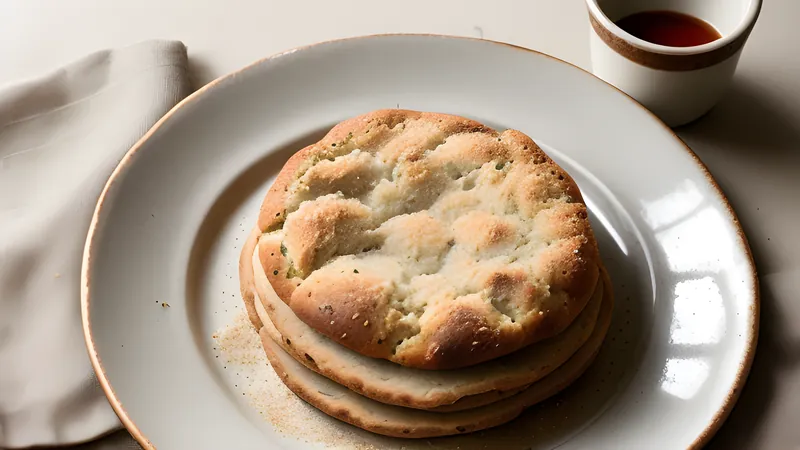
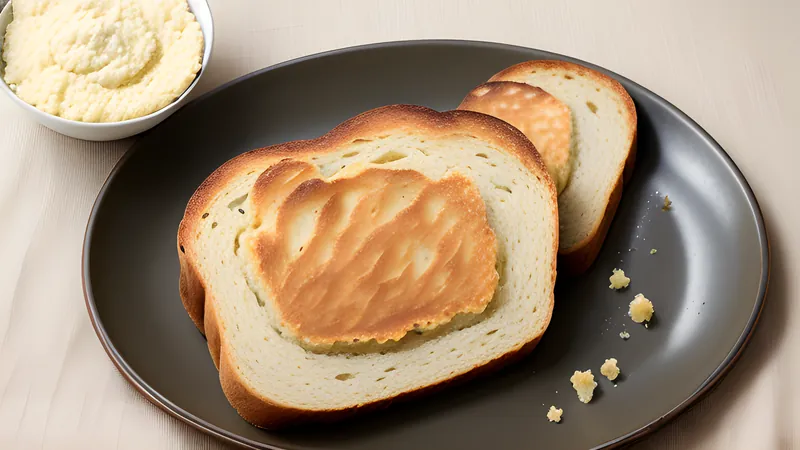
↓ Jump to recipeHarcha means rough, and that is the whole idea. Most bread doughs are coaxed into something smooth and elastic — gluten developed, air trapped, structure built through kneading. Harcha refuses all of it. You want the semolina grains to stay separate and distinct, so that the finished bread shatters slightly under a knife and leaves a faint grit on your fingers, the texture somewhere between shortbread and cornbread. It is one of the few Moroccan breads that has nothing to do with yeast, nothing to do with an oven, and nothing to do with patience. A batch is on the table in well under half an hour.
Harcha: The Semolina Griddle Bread
Ingredients
- 300g fine semolina (smida), plus extra for shaping
- 100g unsalted butter, melted, plus more for the pan
- 150ml whole milk, warmed to lukewarm
- 2 tsp baking powder
- 1/2 tsp fine salt
- 1 tbsp caster sugar (optional, for a sweeter harcha)
- Honey and soft cheese or amlou, to serve
Method
- In a wide bowl, mix the semolina, baking powder, salt and sugar if using.
- Pour in the melted butter and rub it through the semolina with your fingers until the mixture looks like damp sand.
- Add the warm milk a little at a time, pressing the mixture together until it just holds when squeezed. It should be a rough, grainy dough, not smooth.
- Turn the dough onto a semolina-dusted surface and pat it into a round about 2cm thick.
- Cut into 8 wedges.
- Heat a dry heavy griddle or frying pan over medium-low heat.
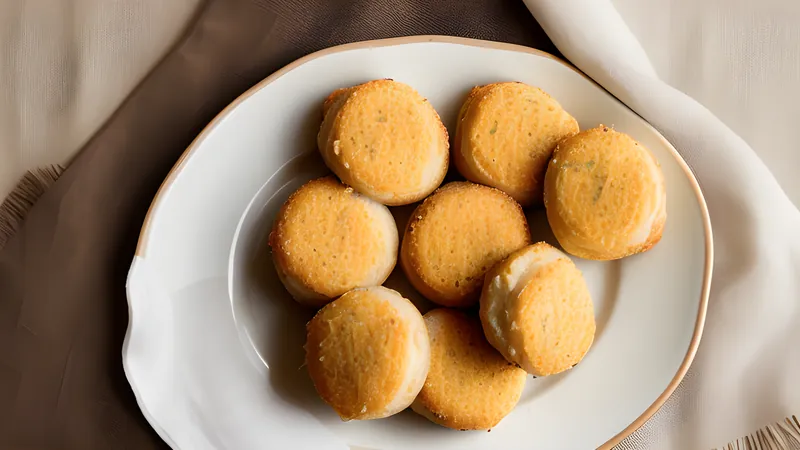
- Cook the wedges in batches, 5-6 minutes a side, until deep gold and a skewer comes out clean from the centre.
- Brush hot harcha with extra butter and serve warm, split and filled with honey or cheese.
Why the grain matters more than the technique
Semolina is the coarse, pale-gold milled endurum wheat used across the Maghreb for couscous, and it behaves differently from soft flour the moment it meets fat. Rubbing the melted butter through the dry semolina coats each grain individually, the same principle as making a crumble topping or a shortcrust pastry. That coating is what stops the grains from binding into a stretchy mass once the milk goes in — you are deliberately sabotaging gluten formation. The result, cooked slowly on a dry griddle, is a bread with a crisp, almost sandy crust and a tender, slightly crumbly interior that soaks up butter and honey without turning soggy.
Fine semolina (sometimes labelled smida or semolina flour, distinct from the coarser semolina used for couscous itself) gives the best texture. Coarse semolina works but produces a rougher crumb that some Moroccan grandmothers prefer and others consider a mistake — this is a genuinely contested point in Moroccan kitchens, and both camps have strong opinions.
A teatime bread with a market-stall pedigree
Harcha belongs to the Moroccan breakfast and afternoon tea table alongside msemen and beghrir, the trio that shows up whenever mint tea is poured. Unlike the laminated, elastic doughs of msemen, harcha needs no rolling, folding or resting, which is exactly why it survives as street food — vendors in Marrakech’s medina cook it to order on flat metal griddles set over gas burners, flipping wedges with a bare hand and wrapping them in paper still steaming. It travels well because the fat is already baked in; a harcha wedge eaten cold on a bus ride to Fes loses little of its appeal, where a delicate flatbread would turn leathery.
The bread’s origins trace to Berber cooking traditions in the Atlas foothills, where semolina from local wheat was more reliably available than fine white flour, and where a hot flat stone or metal disc — the origin of the modern griddle — was standard kitchen equipment long before ovens became common in rural homes. Harcha’s coarse, rustic character is a direct inheritance of that constraint: a bread built around what was on hand, cooked on what was available, ready fast enough to feed a household before the morning’s work started.
Method notes that actually matter
The two failure points are butter distribution and milk quantity. If the butter isn’t rubbed through evenly, some patches of dough will be greasy and others dry and crumbly beyond redemption — take the full two or three minutes to work it through properly, the same care you’d give a scone dough. For the milk, add it gradually. The right consistency holds together when pressed between your palms but crumbles if you try to stretch it; if it feels like bread dough that springs back, you’ve added too much liquid and the harcha will turn gummy rather than short.
Griddle temperature is the other variable worth watching. Too hot and the outside chars before the two-centimetre-thick centre cooks through, leaving a raw, pasty middle. Medium-low heat and patience get you an evenly golden crust and a fully set interior — test with a skewer or a thin knife the way you would a cake. If the outside is browning too fast, drop the heat rather than shortening the cooking time.
Sweet or savoury, and what to put inside
Classic harcha is served split like a scone and filled with a smear of soft cheese (jben or a mild spreadable cheese) and a drizzle of honey — the salt-butter-honey combination is the reason it works as well at teatime as it does at breakfast. For a more indulgent version, spread with amlou, the argan-oil, almond and honey paste that turns up throughout southern Moroccan cooking, similarly built on the idea of fat carrying flavour rather than fighting it. A simpler approach — butter and apricot jam — is just as traditional and considerably faster on a weekday morning.
For a savoury turn, add finely chopped preserved olives or a spoon of harissa-spiked labneh to the split bread instead of honey; the same crumbly base carries savoury toppings just as readily, closer in spirit to a savoury scone than a sweet one.
Substitutions and variations
Butter can be swapped for a neutral oil at a 1:1 ratio, though the flavour is flatter and the crust slightly less crisp — worth doing only if you’re avoiding dairy, in which case swap the milk for a plant alternative too. Some versions add a tablespoon of orange blossom water to the milk for a floral note traditional in southern Moroccan households. A pinch of ground anise seed folded into the dry semolina is another regional variation, giving the bread a faint liquorice warmth that pairs particularly well with honey.
For a version closer to a dessert, press whole blanched almonds into the top of each wedge before cooking and finish with a heavier drizzle of honey once plated — this is the version most likely to appear at a Moroccan wedding breakfast rather than an everyday one.
Storage and reheating
Harcha is at its best within an hour of cooking, while the crust is still audibly crisp. It keeps well wrapped in foil at room temperature for a day, or refrigerated for up to three days in an airtight container. To revive it, reheat in a dry frying pan over low heat for two to three minutes a side rather than microwaving, which turns the crust soft and slightly rubbery. It also freezes well once fully cooled — wrap individual wedges and reheat from frozen in a low oven, about 15 minutes at 160°C, then finish for a minute in a hot dry pan to recrisp the crust.
Serve alongside a pot of mint tea and, if you’re building out a full Moroccan breakfast spread, a plate of dates and a bowl of olive oil for dipping — harcha’s job at that table is to be the sturdy, buttery anchor everything else gets stacked onto.
Scaling up and getting the shape right
A single batch makes eight modest wedges, enough for two or three people at a proper breakfast sitting. The recipe doubles cleanly — work the butter through the semolina in two batches rather than one if you’re using a small bowl, since an overloaded bowl makes it hard to coat every grain evenly. For a crowd, some cooks skip the wedge shape entirely and cook harcha as smaller individual rounds, about 8cm across and a centimetre thick, which cook a little faster and give everyone their own crisp-edged portion rather than a shared wedge.
Rolling pins are unnecessary and slightly counterproductive here; patting the dough out by hand keeps the texture looser and avoids the kind of compaction that makes harcha dense rather than short. If the dough sticks to your palms, dust them with extra dry semolina rather than flour, which changes the surface texture of the finished crust.
Where it sits next to Morocco’s other griddle breads
Harcha is one of three griddle breads that define a Moroccan breakfast table, and each solves the same problem — bread without an oven — differently. Msemen laminates a soft dough with butter and semolina into paper-thin, flaky squares, closer in spirit to a savoury croissant folded flat. Beghrir, the “thousand-hole” pancake, uses a yeasted batter poured thin and cooked on one side only, its surface pocked with bubbles built to soak up honey and butter. Harcha stands apart from both: no lamination, no batter, no yeast, just semolina, fat and enough milk to hold it together. It is the fastest of the three to make and, for that reason, often the first one a Moroccan cook learns.
The comparison matters for anyone building a full breakfast spread — the three breads offer genuinely different textures on the same table, and serving all three alongside honey, several jams, olive oil and a soft cheese is standard practice for a weekend breakfast or a guest’s first morning in a Moroccan home. If you’re only making one, harcha’s speed and forgiving method make it the sensible starting point before attempting msemen’s more demanding lamination.
What can go wrong
The most common failure is a harcha that falls apart the moment you try to flip it. This almost always traces back to insufficient milk rather than a shaping problem — the dough needs to hold a firm ball shape when pressed, and if it crumbles apart in your hands before it even reaches the pan, add another tablespoon of milk and re-test. The opposite failure, a harcha that spreads and thins on the griddle like a pancake, means too much liquid went in; there’s no fixing that batch mid-cook, but noting it for next time saves the following attempt.
A pale, undercooked harcha usually means the heat was too high and the outside coloured before the middle finished — drop to a genuinely low flame and accept the longer cooking time; there is no shortcut that doesn’t sacrifice the centre. If the crust tastes flat despite a good colour, the salt was likely under-measured; semolina is a large volume of bland starch and needs slightly more salt by weight than an equivalent flour dough to taste balanced.
A note on the pan
A well-seasoned cast-iron griddle or a heavy non-stick frying pan both work; what matters is even heat distribution, since a thin pan with hot spots will scorch the semolina before the centre sets. Traditional Moroccan cooks use a flat metal tawa, essentially a shallow, rimless griddle, which is worth seeking out if you make harcha regularly — the lack of raised sides makes it easier to press the wedges flat and flip them cleanly with a wide spatula.
Related Content