Hangikjöt: Icelandic Smoked Lamb
Cured, cold-smoked over birch, then simmered gently and eaten cold at Christmas
Contents
↓ Jump to recipeHangikjöt means hung meat, and Iceland has been making it since the settlement. It is a leg or shoulder of lamb, cured in salt, cold-smoked for a long time over a fire fed with birch and — traditionally, and I am going to be straight with you about this — dried sheep dung, then simmered gently and eaten cold in thin slices at Christmas with flatbread and butter.
It is the centrepiece of the Icelandic Christmas table, it tastes like nothing else in Europe, and about eighty per cent of it can be done in a British kitchen with a fifty-pound cold smoke generator.
My twist, such as it is, is honesty about the fuel. I use birch alone plus a small handful of hay for the grassy note. That gets you close to a modern Reykjavík hangikjöt and some distance from a farmhouse one, and knowing exactly which part you are missing is worth more than pretending.
Hangikjöt: Icelandic Smoked Lamb
Ingredients
- 2 kg boned and rolled lamb shoulder or leg, tied
- 160 g coarse sea salt
- 40 g caster sugar
- 6 g curing salt no. 1 (sodium nitrite 6.25%)
- 2 tsp juniper berries, crushed
- 1 tsp black peppercorns, crushed
- 2 bay leaves, crumbled
- 400 g birch smoking dust or chips
- 1 small handful of dried hay (optional, for the smoke)
- 2 litres water, for simmering
- 1 onion, halved
- 6 whole allspice berries
- 2 bay leaves, for the pot
Method
- Mix the sea salt, sugar, curing salt, crushed juniper, crushed peppercorns and crumbled bay leaves.
- Rub the cure all over the tied joint, working it into every fold and under the string. Put the joint in a non-reactive container or a large zip bag with any loose cure.
- Refrigerate for 5 days, turning the joint every 24 hours and redistributing the brine that collects.
- Rinse the joint thoroughly under cold water for 2 minutes and pat it dry.
- Rest it uncovered on a rack in the fridge for 24 hours until the surface is dry and slightly tacky. This pellicle is what the smoke sticks to.
- Cold-smoke at under 25°C for 8 hours, using birch dust in a cold smoke generator. If the ambient temperature is above 20°C, smoke in 2-hour sessions with the joint returned to the fridge between them.
- Wrap the smoked joint and rest it in the fridge for 48 hours to let the smoke settle and mellow.
- To cook, put the joint in a pot with the 2 litres water, the halved onion, allspice and 2 bay leaves. Bring to 80°C and hold there — the surface should barely shiver.
- Cook at 80°C for 2 hours 30 minutes, until the internal temperature reaches 72°C.
- Turn off the heat and leave the joint in the liquid for 1 hour.
- Lift it out, cool to room temperature, then chill overnight in the fridge, wrapped.
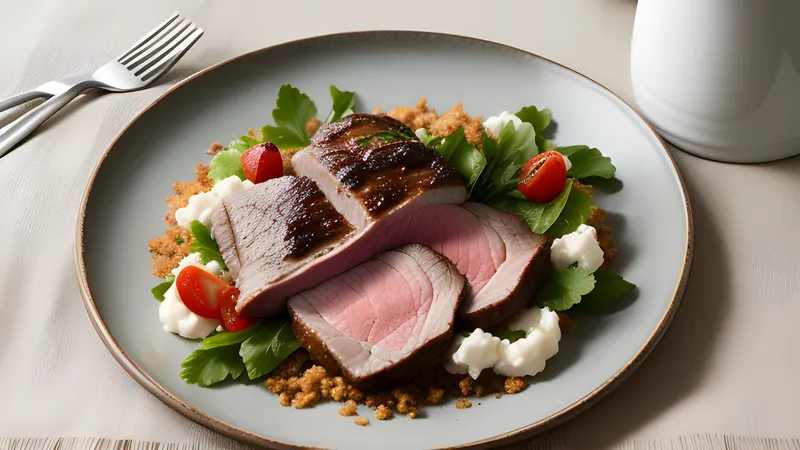
- Remove the string and carve into slices 2 mm thick, across the grain. Serve cold with flatbread, butter and béchamel-dressed peas.
Sheep, smoke, and a country with no trees
Iceland’s food culture is a series of answers to one question: how do you keep meat through a winter on an island with no salt deposits, almost no trees and a growing season of about ninety days?
The answers were fermentation, whey-pickling, wind-drying and smoking, and Iceland used all four with a thoroughness that still unsettles visitors. Wind-drying gave the Faroes skerpikjøt and Iceland its own harðfiskur. Whey-pickling gave súrmatur. Smoking gave hangikjöt.
The fuel is the interesting part. Iceland was roughly a quarter forested at settlement in the ninth century and was almost entirely deforested within three hundred years, largely by grazing sheep and charcoal-burning. By the medieval period there was no wood to spare for a smokehouse fire that had to burn for days.
What Iceland had instead was sheep, and sheep produce dung, and dung dried into bricks — tað — burns slowly, coolly and with an enormous amount of smoke. It was the standard smoking fuel across rural Iceland into the twentieth century, and a handful of producers still sell taðreykt hangikjöt at a premium. It tastes intensely grassy, faintly farmyard, and Icelanders who grew up with it find the birch-smoked supermarket version thin and disappointing.
I am not asking you to source sheep dung. I am telling you that the real thing has a flavour you cannot fully reproduce with birch, and that a small handful of hay in the smoke chamber gets you perhaps a third of the way there by contributing some of the same grassy phenolic compounds.
Salt was the other constraint. Iceland imported all of it at ruinous cost, which is why the earliest hangikjöt was smoked heavily and salted lightly, with the smoke doing most of the preservative work. The modern version inverts that: a proper salt cure first, then a shorter smoke for flavour. That is the version below, because it is safer and because it is what Iceland itself now does.
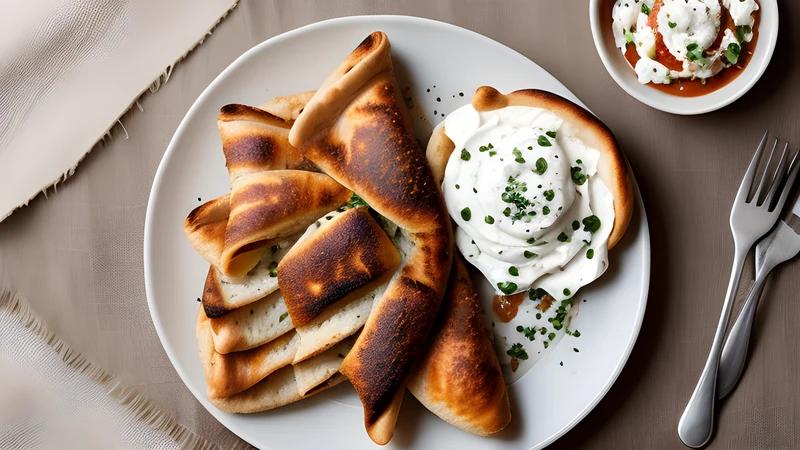
Hangikjöt sits on the Christmas table beside laufabrauð — leaf bread, a fried wheat flatbread scored into snowflake patterns — with butter and a sweet white sauce of peas in béchamel. It also turns up sliced on flatbread all year, in much the role smoked lamb plays across the whole North Atlantic.
The lamb
Icelandic lamb is a distinct thing. The breed is a North European short-tailed sheep, essentially unchanged since the Vikings brought it, and it grazes wild on highland pasture eating moss, angelica, thyme and berries. The meat is small, lean and strongly flavoured in a way British lowland lamb is not.
You will use British lamb. Shoulder is the better choice for a first attempt — more intramuscular fat, which forgives errors and stays succulent through a long simmer. Leg is more traditional and drier, and the difference is real.
Get it boned, rolled and tied by the butcher. A bone-in joint cures unevenly around the bone and is a nightmare to slice at 2 mm.
Two kilos is the practical minimum. Below that the surface-to-volume ratio tips and the joint takes on too much salt and too much smoke.
Curing, and the nitrite question
Five days in a dry cure at roughly 8% salt to meat weight, turning daily.
The 6 g of curing salt no. 1 is not optional, and I want to be clear about why. You are about to hold a large piece of meat between 4°C and 25°C for hours during cold smoking — a temperature window where Clostridium botulinum is perfectly comfortable in a low-oxygen environment. Sodium nitrite at around 150 ppm inhibits it. This is the reason cold smoking is safe at all.
Six grams of cure no. 1 in 2 kg of meat gives you about 190 ppm going in, which drops well below the legal limit after rinsing and cooking. Weigh it on a scale that reads to 0.1 g. Do not eyeball it, and do not scale it up “for safety” — nitrite is genuinely toxic in quantity.
Rinse hard afterwards, two minutes under cold running water, working into the folds. Then the pellicle: 24 hours uncovered on a rack in the fridge, until the surface goes from wet to tacky. Smoke particles adhere to a tacky protein surface and bounce off a wet one, and skipping this step is why a first cold smoke so often tastes of almost nothing.
Cold smoking without a smokehouse
Cold means under 25°C. Above roughly 30°C you enter the danger zone for a long unrefrigerated hold, and above 40°C the fat starts rendering and the surface cooks, which gives you a hot-smoked joint with a completely different texture.
A cold smoke generator — a maze of smouldering dust that burns for eight to ten hours on one fill — is the tool, and it costs less than the lamb. Put it in a kettle barbecue, a cardboard box, a disused filing cabinet, whatever encloses the meat and vents at the top. There is no heat source involved beyond the smouldering dust itself.
Do this in winter. A British summer day at 24°C ambient plus the small heat of the generator puts you over the line. If you must smoke in warm weather, do it in two-hour sessions with the joint back in the fridge between them; total smoke exposure is what matters, and continuity does not.
Birch is the Icelandic wood: mild, sweet, slightly resinous. Beech is a fair substitute. Oak is heavier than the tradition and works. Avoid anything sweet and fruity — apple and cherry read as American barbecue against lamb this salty.
Eight hours. Then wrap it and rest it 48 hours in the fridge, which is the step people skip and should not. Fresh smoke is harsh and ashy, and two days lets the phenolic compounds distribute and mellow into something rounded.
The simmer
Eighty degrees, held. This is the number that matters most in the whole recipe.
At 80°C the collagen in a lamb shoulder converts to gelatine steadily while the muscle fibres contract only moderately. At a rolling boil the fibres contract hard and squeeze out water faster than the collagen can break down, and you get a joint that is simultaneously tough and dry. A probe thermometer in the water and a lid at a slight angle will hold 80°C on the lowest gas burner most kitchens have.
Two and a half hours to 72°C internal. Then an hour in the cooling liquid, then overnight in the fridge.
The overnight chill is compulsory. Hangikjöt is served cold, and warm lamb cannot be sliced at 2 mm — it tears. Cold, with a long sharp knife, it comes off in sheets.
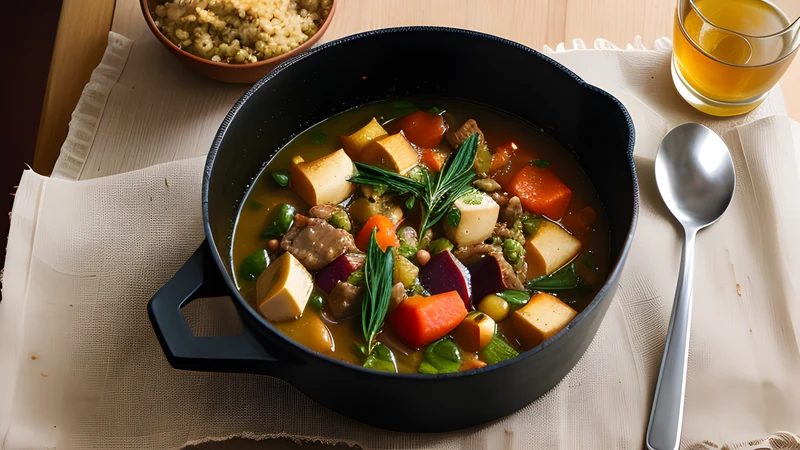
Keep the cooking liquid. It is salty, smoky and gelatinous, and it makes an extraordinary base for a lentil or barley soup, or for something in the direction of plokkfiskur if you thin it hard.
Where it goes wrong
Too salty. Over 5 days, or the joint was under 2 kg. Soak the rinsed joint in cold water for 2 hours, changing the water once, before the pellicle stage.
No smoke flavour. No pellicle, or too short a smoke.
Acrid and bitter. The smoke ran too hot, or the dust flamed rather than smouldered. Good smoke is thin and blue; thick white smoke is bad smoke.
Tough and stringy. The pot boiled.
It tears when sliced. Still warm, or your knife is blunt, or you are cutting with the grain.
A grey ring under the surface. Uneven curing, usually from failing to turn the joint. Harmless and ugly.
The shortcut, honestly assessed
If you have no smoker and no intention of buying one, there is a version of this worth making, and it is worth being clear about what it costs you.
Cure the joint for the full five days as described. Skip the smoke entirely. Instead, add 2 tsp of good-quality smoked sea salt and 1 tsp of hot smoked paprika to the cure, and put a handful of lapsang souchong tea leaves into the simmering liquid.
You will get a salted, gently smoke-scented lamb that is genuinely pleasant on flatbread and that no Icelander would recognise. The phenols in real cold smoke penetrate perhaps 5 mm into the meat over eight hours and carry dozens of aromatic compounds; smoked salt sits on the surface and carries perhaps three. It is a different dish wearing the same name, and it takes an afternoon rather than a fortnight.
Liquid smoke, for what it is worth, is a legitimate product — condensed real smoke, nothing sinister — and half a teaspoon in the cure is defensible. A whole teaspoon tastes of a barbecue restaurant car park.
Serving and storage
Cold, sliced thin, on buttered flatbread or rúgbrauð. Peas in béchamel on the side, which sounds wrong, is what Iceland does, and works completely — the sauce’s sweetness meets the salt head on.
Leftovers go into an Icelandic sandwich with butter and nothing else, or diced into a potato hash. A slice alongside kleinur and coffee is a genuinely common Icelandic afternoon.
Wrapped tightly, the cooked joint keeps 10 days in the fridge and freezes for 3 months. Slice from the whole joint as you need it; sliced meat dries within a day.
Start the cure on the first weekend of December. It will be ready for Christmas, and it will be the only thing on the table anyone asks about.
Related Content