Hallacas: The Christmas Parcel
Banana-leaf parcels of maize dough and slow-cooked stew, made once a year with the whole family
Contents
↓ Jump to recipeHallacas are a weekend-and-holiday project, and no one pretends otherwise. They are the great Venezuelan Christmas undertaking, made in enormous batches by a whole family working in shifts around a kitchen table, and they carry more sentiment per parcel than almost anything I cook. One person browns the guiso, another spreads dough, another lays out the garnishes and folds, someone ties, and the pot boils steadily in the corner. By the end you have dozens of neat green parcels and a kitchen that smells of annatto and banana leaf, and the freezer is full for the season.
I am giving you a home-scale batch of about fifteen, which is enough to understand the process and to freeze a stash, without needing to clear the whole kitchen for a day. Once you have made them once, you will understand why families guard their recipes and argue gently about whose grandmother’s were best.
Hallacas: The Christmas Parcel
Ingredients
- 500 g pork shoulder, in 2 cm dice
- 500 g beef skirt or chuck, in 2 cm dice
- 300 g boneless chicken thigh, in 2 cm dice
- 3 onions, finely diced
- 1 red pepper and 1 green pepper, finely diced
- 6 garlic cloves, minced
- 4 tbsp annatto (achiote) oil, plus more for the dough
- 3 tbsp tomato purée
- 150 ml dry white wine
- 200 ml chicken or beef stock
- 2 tbsp brown sugar
- 2 tbsp red wine vinegar
- Salt and black pepper
- 1 kg pre-cooked maize flour (masarepa, e.g. P.A.N.)
- 1.4 litres warm stock (for the dough)
- To garnish each parcel: green olives, capers, raisins, strips of red pepper, blanched onion rings
- 1 large pack banana leaves, plus kitchen string
Method
- Make the guiso a day ahead: heat 4 tbsp annatto oil and soften the onions, peppers and garlic for 10 minutes. Add all three meats and brown lightly.
- Stir in the tomato purée, wine, stock, brown sugar and vinegar. Season generously. Simmer, partly covered, for 1 hour until the meat is tender and the sauce is thick and glossy. Cool and refrigerate overnight so it sets.
- Prepare the banana leaves: pass them briefly over a gas flame or through hot water to soften, then wipe clean and cut into rectangles roughly 30 x 30 cm, plus smaller strips for wrapping.
- Make the dough: gradually mix 1 kg masarepa with 1.4 litres warm stock and enough annatto oil to colour it deep yellow-orange. Knead to a soft, smooth, spreadable dough that does not crack. Cover and rest 15 minutes.
- Brush a leaf rectangle with annatto oil. Place a ball of dough in the centre and, with oiled hands or a bag, flatten it into a thin square about 15 cm across.
- Spoon 2 tbsp of the cold guiso into the middle. Garnish with an olive, a few capers, a couple of raisins, a strip of pepper and an onion ring.
- Fold the leaf so the dough edges meet and enclose the filling, then fold the leaf into a neat sealed rectangular parcel. Wrap in a second leaf or strip for security and tie crosswise with string.
- Boil the parcels in batches in salted water for 30 minutes. Lift out, drain standing on end, and cool. Serve warm, unwrapping at the table. They keep several days refrigerated and freeze well.
A parcel with a whole history folded inside
The hallaca is often described as Venezuela on a plate, and its layered origins are the reason. The maize dough and the leaf-wrapping technique are Indigenous, part of a vast tradition of wrapped, steamed or boiled maize parcels that runs across the Americas — the tamal family, to which the hallaca belongs. The rich meat guiso inside, and the garnishes of olives, capers and raisins, carry the mark of Spanish colonial cooking and the Mediterranean pantry. The result is a genuine mestizo dish, layering Indigenous, European and African elements into a single bite.
There is a romantic old story that hallacas began as a way for enslaved and servant workers to gather up the leftover scraps from the colonial masters’ Christmas tables and wrap them in dough. Like most such tidy origin tales it should be taken with caution — but the dish’s status as a shared, once-a-year, everyone-pitches-in ritual is entirely real. Hallacas appear at Christmas as part of the traditional plate alongside pan de jamón, chicken salad and pork, and making them is as much a part of the season as eating them.
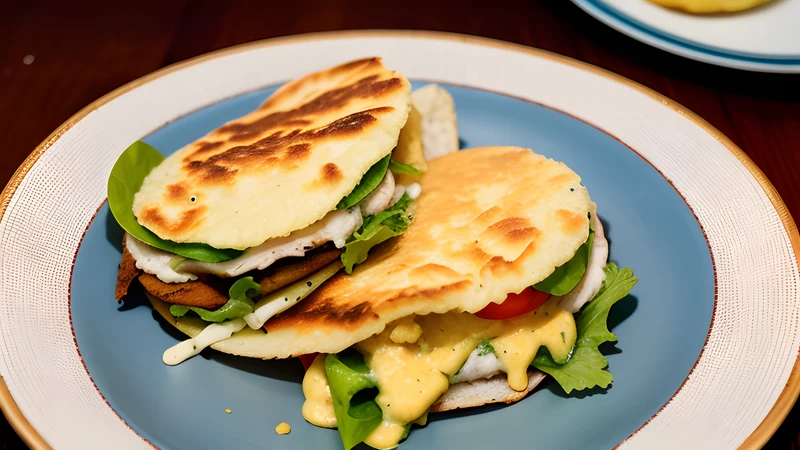
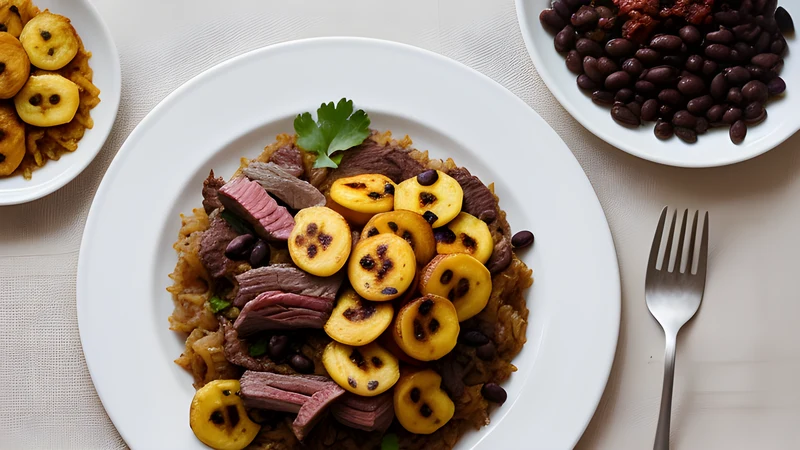
They belong to the same festive Venezuelan table as pabellón criollo, Venezuela’s plate of four things, and share their maize-and-annatto DNA with the everyday arepas reinas pepiadas.
The guiso: make it the day before
The heart of the hallaca is the guiso, a rich, slow-cooked stew of pork, beef and chicken in a sweet-savoury sauce built on annatto oil, sofrito, wine and a little sugar and vinegar. It is the flavour everyone remembers, and it must be made ahead. This is a matter of function as much as convenience. Warm guiso is loose and runs everywhere when you try to fill a parcel; cold, set guiso spoons neatly into the dough and stays put. Make it the day before, chill it overnight, and it firms up exactly right.
Season it boldly. It is competing with a thick blanket of maize dough, so a timidly seasoned guiso disappears. The balance you want is savoury and meaty with a gentle sweet-sour lift from the sugar and vinegar in the background. Every family adjusts this: some add more wine, some a splash of papelón (unrefined cane sugar), some capers straight into the stew. Taste and make it yours.
Annatto oil does the colouring. Annatto (achiote) seeds, warmed gently in oil until it turns a deep orange and then strained, give both the guiso and the dough their characteristic warm colour and a faint earthy, peppery flavour. You can buy it ready-made or make it in five minutes; it is the same colouring principle that stains so much Caribbean and Latin cooking golden.
The dough
Traditional hallaca dough is made from fresh maize, but the practical modern home version — used across Venezuela and by the diaspora everywhere — is built on masarepa, the pre-cooked maize flour sold as P.A.N. and other brands, the very same flour used for arepas. It is quick, reliable and gives a good texture.
The key is to mix it with warm, well-seasoned stock rather than plain water, and to enrich and colour it with annatto oil until it is a deep yellow-orange. Add liquid gradually and knead to a soft, smooth, pliable dough that spreads easily and does not crack at the edges when you flatten it. If it cracks, it is too dry — work in more warm stock a splash at a time. If it is sticky and slack, add a little more masarepa. It should feel like a soft, spreadable playdough. Season the dough too; bland dough is the second most common way to make a disappointing hallaca.
Banana leaves and the fold
Banana leaves are what make a hallaca a hallaca rather than a tamal in corn husk. They impart a subtle grassy aroma to the dough as it boils and make a beautiful, sturdy wrapper. Soften them first — a few seconds over a gas flame or a dip in hot water makes them supple and much less likely to split when you fold. Wipe them clean and cut into workable rectangles, keeping some smaller strips for the second wrap.
The fold takes a couple of goes to feel natural, and that is fine. Brush a leaf with annatto oil so nothing sticks, place a ball of dough in the centre, and press it out with oiled hands (or through a cut freezer bag) into a thin, even square. Spoon the cold guiso into the middle and add the garnishes — an olive, a few capers, a couple of raisins, a strip of red pepper, a ring of onion. These little jewels in the centre are traditional and pretty when the parcel is opened.
Then fold the leaf so the two dough edges meet and enclose the filling completely, and continue folding the leaf around into a neat, flat, sealed rectangle. Wrap in a second leaf or strip for security and tie with string crosswise, like a small present. The seal matters: any gap and water gets in during boiling and the dough goes soggy.
Setting up the production line
Hallacas are made in an assembly line for a reason, and even a home batch of fifteen goes far more smoothly if you organise the workspace before you start folding. Lay out, left to right, the stations in the order a parcel travels: a stack of oiled leaf rectangles, the bowl of dough with a small dish of annatto oil for your hands, the cold guiso with a serving spoon, small bowls of each garnish, and finally the string and scissors. Working in this order means you are never reaching across the table or getting guiso on the dough bowl.
Keep your hands lightly oiled throughout — the annatto oil stops the dough sticking to your fingers and to the leaf, and it is the single thing that makes spreading the dough thin and even actually possible. When you flatten the ball of dough, aim for a genuinely thin square; a common first-timer mistake is leaving the dough too thick, which gives a stodgy parcel where the maize overwhelms the filling. The dough should be a wrapper for the guiso, generous but not a duvet.
Portion control helps everything come out even. A rough guide is a dough ball a little larger than a golf ball and two tablespoons of guiso per parcel; measure the first few until your eye calibrates. Consistent portions mean the parcels cook evenly and you do not run out of dough halfway through the guiso, or the other way round.
What good hallacas taste like
A well-made hallaca, opened at the table, shows a thin, tender, orange-tinted maize wall around a dark, glistening pocket of meat studded with an olive and a bright strip of pepper. The dough should be soft and moist, faintly grassy from the leaf, and seasoned enough to eat on its own. The guiso should be rich and savoury with that quiet sweet-sour undertone, tender pieces of three meats holding their shape. The garnishes give little punctuation marks — the salt of a caper, the sweetness of a raisin against the savoury stew. It is a lot of flavour for a humble-looking green parcel, which is exactly why Venezuelans abroad go to such lengths to make them each December, banana leaves couriered across borders and grandmothers consulted by phone.
Boiling, serving and keeping
Boil the tied parcels in batches in well-salted water for around thirty minutes. The dough firms up and sets around the filling. Lift them out and stand them on end to drain — leaving them in a puddle makes the bottom soggy. Let them cool and settle before eating; they firm further as they rest.
To serve, snip the string, unwrap at the table (the reveal is part of the fun), and eat the hallaca off its leaf. They are traditionally served warm as part of the Christmas dinner, not as a snack on the run.
- Make-ahead and freezing. Hallacas are built for this. Fully boiled and cooled, they keep four to five days refrigerated and freeze superbly for up to three months. Reheat from frozen by boiling or steaming the wrapped parcel for fifteen to twenty minutes, or unwrap and warm in a low oven.
- Vegetarian. Fill with a guiso of mushrooms, black beans, peppers and green olives, colour the dough with annatto as usual, and keep all the garnishes.
- Scaling up. This is a dish made for a crowd. Double or triple everything, set up a little production line with jobs for everyone, and make a whole season’s worth in an afternoon — which is exactly how it is meant to be done.
Making hallacas is a day’s work and a family ritual more than a recipe, and that is precisely the point. Put some music on, hand out the jobs, and by evening you will have a stack of green parcels, a freezer that carries you through Christmas, and the particular satisfaction of a dish that only really works when people make it together.
Related Content