Haak: Kashmiri Greens with Mustard Oil
The everyday dish every Kashmiri kitchen actually cooks
Contents
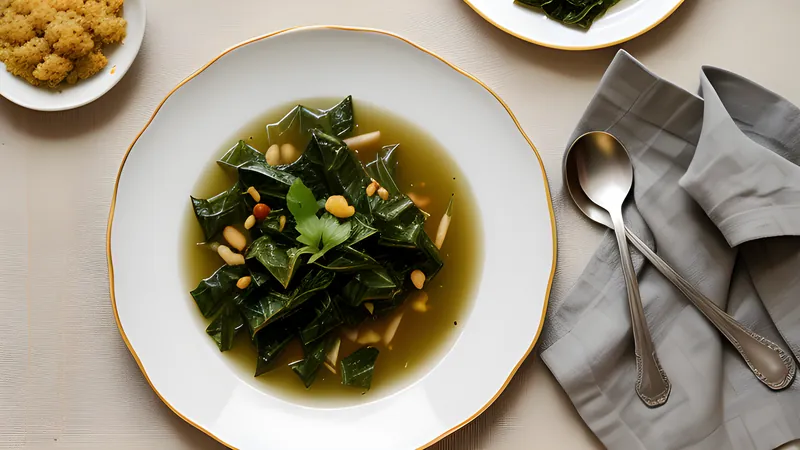
↓ Jump to recipeHaak is the dish every Kashmiri actually eats most days, far more often than the elaborate feast dishes that get all the attention outside the valley. It’s greens, mustard oil, whole dried chilli, a pinch of asafoetida, water, salt. Nothing else goes in: no onion, no garlic, no turmeric, no garam masala. What that restraint produces is a genuinely comforting, faintly bitter, oil-glossed bowl of greens that Kashmiris eat with rice most days of the week, the way a household elsewhere might reach for a simple green vegetable without a second thought.
The dish rewards taking mustard oil seriously and doing very little else. There’s no technique to master beyond getting the oil properly hot before the chilli goes in and giving the greens enough time under a lid to turn fully tender rather than merely wilted.
Haak: Kashmiri Greens with Mustard Oil
Ingredients
- 1kg haak greens, or collard greens/spring greens as substitute, roughly torn
- 3 tbsp mustard oil
- 2 whole dried red chillies
- 0.25 tsp asafoetida (hing)
- 250ml water
- Salt, to taste
Method
- Wash the greens thoroughly and tear the leaves off any thick, woody stems, tearing large leaves roughly by hand.
- Heat the mustard oil in a heavy pot until it smokes lightly, then take it off the heat for a minute to settle.
- Return to a medium heat, add the whole dried chillies and let them darken for 15 seconds without burning.
- Add the asafoetida and stir for 10 seconds.
- Add the greens in batches, letting each batch wilt down for a minute before adding the next.
- Add the water and a good pinch of salt, bring to a simmer, then cover and cook on low for 18-20 minutes, stirring occasionally, until the greens are fully tender.
- Uncover for the last 2 minutes if there's excess liquid, to let it reduce slightly, then taste and adjust the salt.
- Serve hot, with the cooking liquor spooned over rice.
The story: the dish behind the feast
Kashmiri food writing outside the valley tends to fixate on the wazwan, the elaborate multi-course meat banquet that includes dishes like rogan josh and yakhni, because it’s spectacular and photographs well. Haak is the opposite of spectacular, and that’s precisely why it matters more to daily life in Kashmir than any feast dish does. It’s the green vegetable eaten with rice at ordinary lunches and dinners across the valley, prepared identically in Pandit and Muslim households alike, one of the very few dishes that crosses that particular divide without variation, since it has no meat, onion or garlic in it for either tradition to adjust.
The greens themselves, called haak, are a variety of collard closely related to kale, grown widely in Kashmir’s kitchen gardens and sold in bunches at every local market. Most Kashmiri households grow their own supply through the warmer months, picking leaves as needed rather than harvesting the whole plant at once, and drying a portion for winter use when fresh greens are harder to come by; dried haak, rehydrated before cooking, is a genuine seasonal variation rather than a lesser substitute born of scarcity. Outside the valley they’re essentially impossible to find, which is why this recipe substitutes ordinary collard greens or spring greens; the flavour is close enough, and the cooking method transfers exactly. A related dish, monj haak, adds sliced kohlrabi to the pot alongside the greens, and is worth trying once you’ve made the plain version a few times. Kashmiri households outside the valley, in Delhi or Jammu or further afield in the diaspora, treat haak as something close to a taste of home rather than an everyday vegetable, precisely because it travels so poorly in dried or preserved form and depends on greens that simply aren’t sold outside Kashmir and a handful of specialist shops. A pot of it, made with whatever collard-family green is actually available, is often the closest substitute anyone can manage.
Mustard oil is not optional or interchangeable here in the way it sometimes can be in other Kashmiri dishes. Where yakhni or dum aloo have yoghurt, ground spice and a longer ingredient list to build flavour with, haak has almost nothing else to work with, so the oil itself is doing most of the flavouring. Its sharp, pungent raw character, mellowed by heating past the smoke point, is the entire seasoning alongside the chilli and asafoetida; make this with a neutral vegetable oil instead and you get soft greens in salted water, missing the whole point of the dish.
Technique: patience with the lid on
The only real technique here is resisting the urge to rush the covered simmer. Eighteen to twenty minutes sounds long for greens that would wilt in under five minutes in a hot pan, but haak is meant to cook down fully soft, closer to the texture of well-cooked spinach than a quickly sautéed green, and the flavour of the mustard oil and chilli needs that time to work its way through the leaves rather than just coating the surface. Lifting the lid too often lets steam escape and slows the cooking further, so leave it be and stir only occasionally.
The dried chillies are there for a background warmth and colour in the oil rather than genuine heat in the final dish; they’re not meant to be eaten, and most Kashmiri cooks either fish them out before serving or leave them in as a visual cue for anyone who wants an extra bite of chilli with their spoonful. If you’d like more actual heat in the dish itself, split the chillies open before adding them so more of the capsaicin gets into the oil.
Tearing the leaves by hand rather than cutting them with a knife is a small habit worth keeping, common across many greens-heavy cuisines. A torn edge cooks slightly differently to a clean cut one, breaking down a little faster and taking up more of the surrounding oil and liquid along its ragged surface, which matters in a dish with so few other ingredients to carry flavour. It also means discarding the toughest part of any stem is done by feel as you go, rather than needing a separate trimming step.
Salt is best added toward the end of the process and tasted for, rather than measured in confidently at the start, because the water content and bitterness of collard greens varies considerably between bunches, and haak is meant to taste clean and well-seasoned rather than either under-salted or aggressively so.
Haak also travels well as a reference point for anyone cooking greens outside an Indian kitchen entirely. The same logic — hot, well-flavoured oil as the primary seasoning, a long covered simmer rather than a quick sauté, salt added at the end once the water content has revealed itself — works just as well on chard, mustard greens or even tougher cabbage, and it’s a genuinely useful technique to have on hand for whatever bitter green shows up in a vegetable box that week.
The pot itself matters more than it might seem for a dish this simple. A heavy base, whether cast iron or a thick stainless steel, holds an even, gentle heat through the full covered simmer without hot spots that would scorch the greens touching the bottom directly; a thin pan needs more attentive stirring to avoid the same problem, since it heats unevenly and the oil at its hottest point can catch before you notice. A wide, shallow pan is a better choice than a tall, narrow one for the same reason a wide pan suits any leafy green: it lets the greens sit in a single, more even layer rather than piled deep, so the heat and the mustard oil reach every leaf at roughly the same rate instead of the top layer steaming gently while the bottom layer risks catching.
What to serve it with
Haak’s whole purpose is to sit next to something richer. A pale bowl of yakhni and a bowl of haak side by side on rice is close to what an ordinary Kashmiri family lunch actually looks like, far more than any wazwan spread. Against the deep red of dum aloo, the greens act as the plain, faintly bitter counterweight that keeps a meal from feeling one-note. If you’re building the full arc of a Kashmiri meal from starter to sweet, finish with modur pulav, the sweet saffron rice traditionally served at the end of a wazwan.
Storage, make-ahead and variations
Haak keeps for two days in the fridge, though the greens continue to soften and darken, so it’s genuinely best eaten the day it’s made or the day after. It doesn’t freeze well; the texture turns mushy and loses the character that makes it worth cooking in the first place.
Kohlrabi, added in thin slices alongside the greens at the start of the covered simmer, is the classic monj haak variation and adds a mild, faintly sweet crunch that holds up better than the greens themselves. A version with dried red kidney beans, called razma haak in some households, is another regional variant worth knowing, though it needs the beans soaked and part-cooked beforehand since they take considerably longer than the greens to soften. If collard greens are hard to find, spring greens, cavolo nero or even a mild variety of kale all work with the same timings, though very tough kale varieties may need an extra five minutes under the lid. Whatever green you use, buy it a day or two before cooking rather than the same day if you can, since a rest in the fridge lets the leaves relax slightly, which makes the initial washing and tearing noticeably easier and reduces the sandy grit that clings to freshly picked leaves. Store it loosely wrapped in a damp cloth rather than sealed in plastic, which traps moisture against the leaves and speeds up the yellowing and sliminess that ruins a bunch of greens well before it’s actually gone off. Skip the temptation to add garlic for extra savour; it’s a reasonable instinct in most greens dishes, but haak’s entire identity rests on the specific, restrained combination of mustard oil, chilli and asafoetida, and garlic simply turns it into a different, more generic dish.
Related Content