Gyudon: Simmered Beef and Onion Over Rice
Thin-sliced beef and onion in a sweet-salty dashi, spooned over hot rice
Contents
↓ Jump to recipeGyudon is the fastest good meal in the Japanese repertoire: thin beef and onion simmered in a sweet-salty dashi, poured over rice with enough sauce to soak into every grain. It takes twenty minutes from cold pan to table, and most of that time is spent waiting for water to boil rather than doing any real cooking.
Gyudon: Simmered Beef and Onion Over Rice
Ingredients
- 250g beef chuck or sirloin, sliced paper-thin against the grain
- 1 large white or yellow onion, sliced into 5mm half-moons
- 250ml dashi (made from 1 tsp dashi powder or a kombu-katsuobushi stock)
- 60ml soy sauce
- 45ml mirin
- 30g caster sugar
- 15ml sake
- 1 thumb ginger, peeled and finely julienned
- 2 servings cooked short-grain rice, kept hot
- 2 tbsp pickled red ginger (beni shoga), to serve
- 1 spring onion, finely sliced, to serve
- 1 raw or onsen egg per bowl (optional)
Method
- Freeze the beef for 20 minutes before slicing — it firms the meat enough to cut it wafer-thin without a meat slicer.
- Combine the dashi, soy sauce, mirin, sugar and sake in a wide, shallow pan or skillet and bring to a simmer.
- Add the sliced onion and simmer for 5 minutes until it softens and turns translucent at the edges.
- Lay the beef slices over the onion in a single layer rather than stirring it in — this keeps each slice tender instead of clumping into a tough knot.
- Simmer for 2-3 minutes, skimming any grey foam, until the beef just loses its pink colour.
- Add the ginger julienne, then rest off the heat for 2 minutes so the beef finishes cooking in residual heat rather than overcooking in the pan.
- Spoon the hot rice into bowls, then ladle the beef, onion and a generous pour of the cooking liquid over the top.
- Finish with pickled ginger, spring onion and a raw or onsen egg if using, and serve immediately.
Where this bowl comes from
Gyudon appeared in Tokyo in the 1860s, right as Japan reopened to trade after more than two centuries of near-isolation, and beef eating, long suppressed under Buddhist-influenced dietary norms, came back into fashion almost overnight. Beef was imported and expensive, so cooks stretched it by slicing it thin and simmering it with cheap onion in a seasoned broth, then serving the whole thing over rice to fill out the meal. The dish was first called gyunabe when it was served as a communal hot pot at the table, and only later, once vendors started ladling the same beef-and-onion mixture directly over a bowl of rice for a faster, single-serving meal, did it take the name gyudon — literally “beef bowl.”
Yoshinoya, the chain that turned gyudon into a national fast-food staple, opened its first stall at Tokyo’s Nihonbashi fish market in 1899, feeding market workers who needed a hot, cheap, fast meal between shifts. That origin explains the dish’s whole character: it’s built purely for speed and for stretching a small amount of meat a long way. The best versions still taste like that — humble, a little sweet, deeply savoury, and better the faster you eat them once they’re ladled into the bowl.
By the early twentieth century gyudon had spread well beyond market stalls into ordinary households, where the same basic method — thin beef, sweet-salty dashi, quick simmer — got adapted to whatever cut of meat and vegetables were on hand. That domestic flexibility is part of why the dish never really standardised into one fixed recipe the way, say, katsu curry did; every household and every chain has its own ratio of soy to sugar to mirin, and all of them are legitimately gyudon.
The cut matters more than the recipe
Gyudon lives or dies on how thin the beef is sliced. In Japan, butchers sell beef pre-cut for shabu-shabu and sukiyaki at almost see-through thickness, and that’s the cut you want here. UK supermarkets rarely stock it, so the trick is to buy a piece of beef chuck, flank, or a fattier cut of sirloin, wrap it tightly in cling film, and freeze it for 20-30 minutes until it’s firm throughout and easy to slice. At that stage you can slice it with a sharp knife into slices thin enough to see your fingers through. Cut against the grain, always across the direction of the muscle fibres, or the beef will chew like an old boot no matter how briefly you cook it.
Chuck and flank both work because they carry enough fat and connective tissue to stay tender even after a hot simmer; a lean fillet steak, by contrast, turns dry and stringy the moment it overcooks, so it’s not worth the expense here. Ask your butcher for a fattier, cheaper cut — this is one of the few dishes where marbling genuinely helps rather than just adding richness. If your butcher has a slicer and will cut it to order, even better; ask for it “shabu-shabu style” and most will know exactly what you mean.
Building the sauce
The broth is a warishita — the same base sauce used for sukiyaki — built from dashi, soy sauce, mirin, sugar and a splash of sake. Dashi carries the umami backbone; if you’re using powdered dashi, a teaspoon dissolved in 250ml hot water is entirely legitimate here, though a proper kombu-and-katsuobushi stock made the night before tastes rounder and less one-note. Soy sauce brings the salt and the colour, mirin brings a gentle sweetness and a lacquered sheen, and the sugar pushes that sweetness further so the finished sauce reads as genuinely sweet-savoury rather than just salty. Sake adds a little acidity and helps tenderise the meat as it simmers, and it also cooks off most of its alcohol in the five minutes the onion needs.
Get the ratio close to what’s listed and taste before you add the beef: it should taste slightly too strong on its own, because once it coats rice and beef and dilutes with the meat’s own juices, it mellows out considerably. Adjust sugar if you like your gyudon sweeter — some Tokyo shops lean noticeably sugary, others keep it drier and more savoury, and neither is more authentic than the other.
Cooking the onion and beef properly
Onion goes in first and needs a genuine five minutes at a simmer — the goal is fully softened, faintly sweet onion that has given up all its raw bite. Slice it into half-moons about 5mm thick; thinner and it disintegrates into the sauce, thicker and it won’t cook through in the time the beef needs.
Lay the beef over the onion in a single layer instead of stirring it through the pan. Stirring thin-sliced beef into a hot liquid encourages the slices to bunch together into dense little balls that stay tough in the centre even once the outside is grey. Laid flat and left largely undisturbed, each slice cooks evenly and stays tender. Two to three minutes is enough for the pink to disappear entirely; keep the heat gentle throughout. Skim off any grey foam that rises; it’s coagulated protein and it makes the finished sauce cloudy and slightly bitter if left in.
The single best trick for tender gyudon is to pull the pan off the heat once the beef just loses its colour and let it sit for two minutes before serving. Residual heat finishes the cooking gently, and the beef never gets the chance to seize up the way it would over continued direct heat.
Assembling and serving
Rice for gyudon should be short-grain and properly hot — this bowl doesn’t work with lukewarm rice, since a big part of the appeal is the contrast between the hot beef and sauce and rice steaming as you eat. Pack the rice into the bowl first, then ladle beef, onion and a generous amount of the cooking liquid over the top; the sauce should pool slightly at the base of the bowl and soak into the rice as you eat rather than sitting entirely on the surface.
Pickled red ginger, called beni shoga, is not optional garnish here — its sharp vinegar bite cuts through the sweetness of the sauce and resets your palate between bites, the way a pickle would with a rich stew. A scattering of finely sliced spring onion adds fresh crunch. Many gyudon shops in Japan offer a raw egg cracked directly over the hot bowl, or a lightly poached onsen egg with a barely-set yolk; broken into the rice, either turns the dish faintly custardy and even richer. Shichimi togarashi, the seven-spice chilli blend, is the standard table condiment if you want heat, and a small side of miso soup and pickles rounds the meal out the way most Yoshinoya-style counters serve it.
Variations worth trying
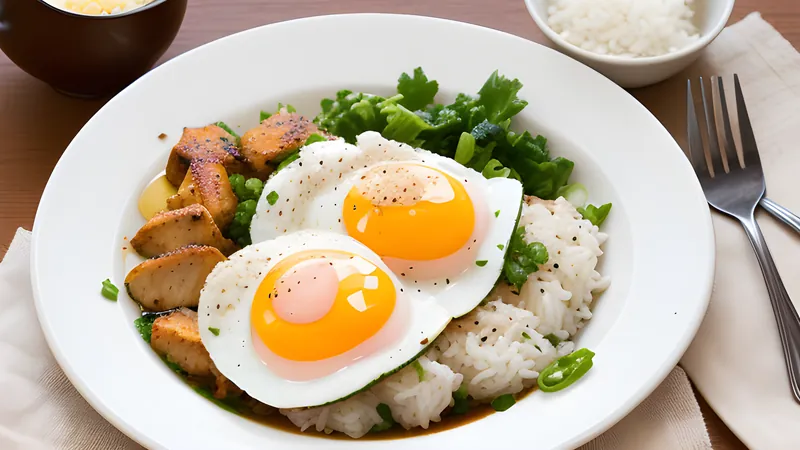
Add a soft-cooked or fried egg on top and you’ve essentially made a hybrid with oyakodon — the egg version is sometimes called gyu-tama-don in Japan. Swap the beef for thin-sliced pork belly and you get butadon, a Hokkaido speciality that leans even sweeter, often finished with a char from a hot pan rather than a pure simmer. Curry powder stirred into the warishita gives you a beef curry bowl close to what’s served at some Tokyo chains as a limited variant, closer in spirit to chicken katsu curry than to classic gyudon.
If you want more vegetables, sliced shiitake or a handful of shirataki noodles simmered alongside the onion both work well and don’t fight the flavour — this is closer to how the dish started as a stretched-out, communal gyunabe hot pot before it became a fast single bowl. A little grated daikon on the side, squeezed lightly of its liquid, adds a cooling, peppery contrast if the sauce feels rich.
Which chain got it right
Japan’s three big gyudon chains — Yoshinoya, Sukiya and Matsuya — all serve some version of this bowl, and regulars argue about the differences the way Britons argue about chip shops. Yoshinoya keeps its sauce simpler and saltier, with a thinner broth that lets the beef flavour lead. Sukiya, the newest and now the largest of the three, tends toward a sweeter, thicker sauce with more onion per bowl. Matsuya sits between the two and is the one most likely to offer a curry or cheese variant on the side menu. None of these is the definitive version — gyudon was never standardised the way some ramen shops claim lineage back to a single founder — so treat the ratio in this recipe as a solid middle ground and adjust it toward whichever chain’s bowl you remember fondest.
Troubleshooting
If your beef turns out tough, the most common cause is either cutting with the grain instead of against it, or letting the beef sit at a rolling simmer for too long instead of pulling it off heat early. Both are easy to fix next time: check which way the fibres run before you slice, and treat the two-to-three-minute cook time as a hard ceiling.
If the sauce tastes flat, it’s usually under-reduced or under-seasoned dashi; taste it on its own before adding the onion, and don’t be afraid to push the soy sauce and sugar slightly further than feels natural, since rice absorbs and mutes seasoning fast.
Storage and make-ahead
The beef-and-onion mixture keeps well in the fridge for up to two days in an airtight container and actually improves slightly overnight as the onion continues to absorb the sauce. Reheat gently in a small pan over low heat rather than the microwave, which tends to toughen thin-sliced beef by cooking it too hard and fast. Freezing isn’t recommended — the texture of the onion turns watery and slightly slimy on thawing, and the thin beef slices lose definition.
Cook rice fresh each time rather than trying to make it ahead; a rice cooker with a keep-warm function solves most of the timing problem, since gyudon comes together faster than rice does from scratch, and having both ready at the same moment matters more here than in almost any other rice bowl.
Gyudon sits alongside katsudon and oyakodon as one of Japan’s core donburi trio — different proteins, same basic logic of a savoury-sweet topping poured over hot rice, built originally for people who needed to eat fast and eat well on very little money.
Related Content