Guo Bao Rou: Dongbei Sweet and Sour Pork
Harbin's crackling pork loin in a mirror-glossy vinegar sauce
Contents
↓ Jump to recipeGuo Bao Rou: Dongbei Sweet and Sour Pork
Ingredients
- 400g pork loin, sliced into 5mm rounds
- 1/2 tsp salt
- 1 tbsp Shaoxing wine
- 100g potato starch, plus extra for coating
- 2 tbsp water
- 1 egg white
- vegetable oil, for deep-frying
- 3 tbsp rice vinegar
- 3 tbsp caster sugar
- 1 tbsp light soy sauce
- 2 tbsp water, for the sauce
- 1 tbsp finely julienned ginger
- 1 garlic clove, finely sliced
- 1/4 carrot, julienned
- 1 spring onion, julienned
- small handful coriander leaves
Method
- Pound the pork slices lightly with the back of a knife to tenderise them, then season with the salt and Shaoxing wine. Set aside for 10 minutes.
- Mix the potato starch with the water and egg white to make a thick, smooth batter, closer to double cream than pancake batter. Add a splash more water if it's too stiff to coat the meat evenly.
- Heat oil in a wok or deep pan to 160C. Dip each pork slice in the batter, coating fully, and fry in batches for 2 minutes until pale gold and just cooked through. Remove and drain.
- Raise the oil to 190C. Fry the pork a second time, in batches, for 45 seconds until deep golden and audibly crisp when tapped. Drain well.
- Whisk the vinegar, sugar, soy sauce and the 2 tbsp water for the sauce in a small bowl until the sugar dissolves.
- Heat 1 tbsp of the frying oil in a clean wok over high heat. Add the ginger and garlic and stir for 15 seconds until fragrant but not browned.
- Pour in the vinegar mixture and bring to a rapid boil, stirring, until it reduces slightly and coats the back of a spoon, about 1 minute.
- Add the carrot and spring onion and toss for 15 seconds so they soften just slightly but keep their crunch.
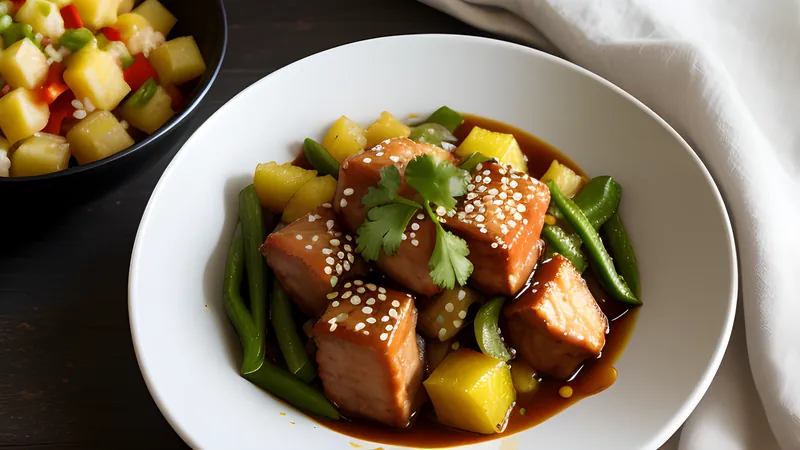
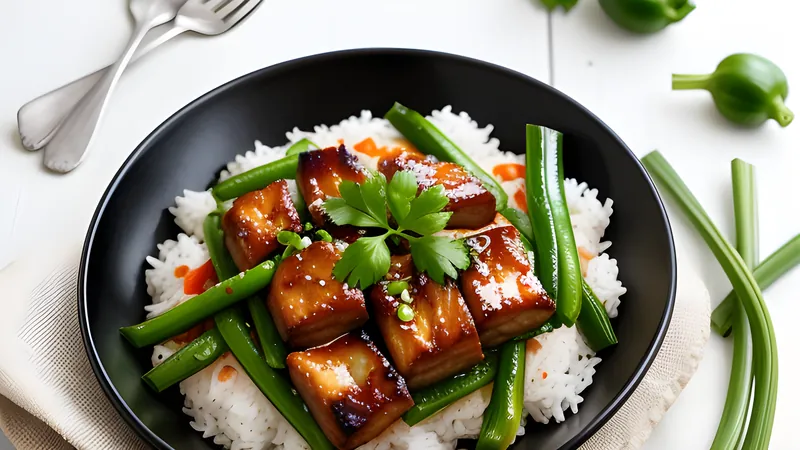
- Add the fried pork to the wok and toss quickly and thoroughly so every piece is coated in glossy sauce before it has time to soften the crust.
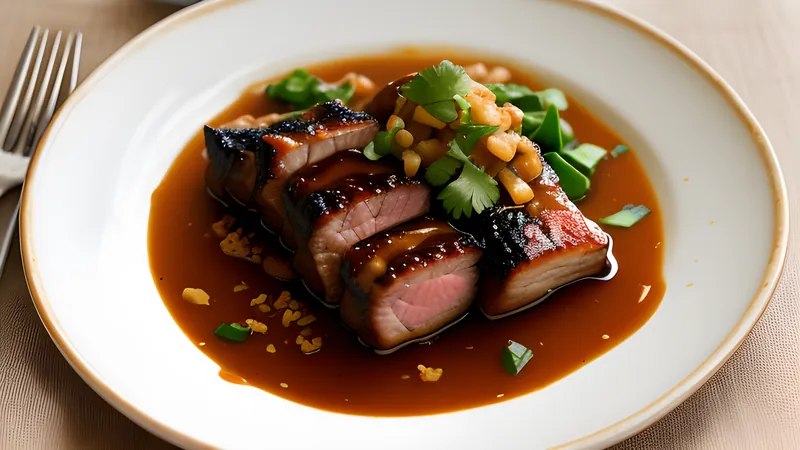
- Tip onto a serving plate immediately, scatter with coriander, and serve at once while the crust is still audibly crisp.
A dish built to sound out a foreign palate
Guo bao rou translates roughly as “pot-wrapped meat,” a name that describes the method rather than the flavour: thin slices of pork loin coated in a starch batter, fried twice until the crust is properly crisp, then tossed through a hot vinegar-and-sugar glaze that clings rather than pools. It reads, on paper, like a cousin of the sweet and sour pork found in Cantonese restaurants worldwide, and it shares a family tree with that dish, but the two taste nothing alike once you’ve had both side by side. There’s no ketchup, no pineapple, no thick orange sauce clinging in a heavy layer. The glaze here is closer to a reduction, clear and sharp, built to showcase a crust rather than smother it.
The dish comes from Harbin, the capital of Heilongjiang province in China’s far northeast, in a region collectively known as Dongbei. Dongbei cooking tends towards big, warming, hearty dishes suited to brutal winters, and guo bao rou fits that mould even though its origin story is more diplomatic than agricultural.
Zheng Xingwen and the Daotai’s Russian guests
The dish is credited to a chef named Zheng Xingwen, who worked at the Daotai Mansion in Harbin around 1907, during a period when the city had a substantial Russian population thanks to the construction of the Chinese Eastern Railway and the wave of Russian engineers, merchants and officials who settled there. Harbin at that time was as much a Russian outpost as a Chinese city, with onion-domed churches, Russian bakeries and a local cuisine that borrowed and adapted in both directions.
Zheng’s original dish was called “guo ta rou,” meaning pot-stuck meat, a savoury fried pork dish typical of the region. According to the story that’s been repeated in Chinese food writing for decades, Russian diplomats visiting the Daotai found the savoury version too plain for their taste and asked for something sweeter and more sour, closer to the flavour profiles they were used to at home. Zheng adjusted the sauce, swapping a savoury glaze for one built on vinegar and sugar, and the dish caught on well enough under its new guise that the pronunciation of “guo bao rou” travelled better on Russian tongues than the original name had, according to the same accounts, which is one theory for why the name shifted from “pot-stuck” to “pot-wrapped.”
Whether every detail of that origin story is exactly accurate a century on, the throughline is solid: Harbin’s unusually cosmopolitan food scene in the early twentieth century produced a dish that’s sweeter and more vinegar-forward than most Dongbei cooking, in a way that lines up with a documented Russian community whose tastes shaped several other local dishes, including Harbin’s distinctive red sausage and its style of borscht-adjacent soup. Guo bao rou has stayed a signature Harbin dish ever since, popular enough locally that most restaurants in the city serve their own version, and it’s spread across China as a well-known Dongbei export alongside dishes like Chairman Mao’s red braised pork.
Why the sauce stays clear instead of thick
The single biggest difference between guo bao rou and the sweet and sour pork most people have eaten in Cantonese restaurants is what happens to the sauce once it hits the wok. A Cantonese sweet and sour sauce is usually thickened with a cornstarch slurry into something viscous enough to coat and pool, often built around ketchup or tomato paste for colour and a rounder sweetness. Guo bao rou’s sauce is unthickened beyond what a quick reduction achieves: vinegar, sugar and a touch of soy, boiled hard for barely a minute until it’s syrupy enough to cling to the crust without turning it soggy.
That distinction matters for the eating experience. A thick, ketchup-based sauce coats fried pork in a wet layer that inevitably softens the crust within a couple of minutes. A thin, reduced glaze clings in a much thinner film, so a piece of guo bao rou fresh out of the wok still has an audible crackle when you bite into it, something the Cantonese version rarely manages once it’s sauced. This is why the dish has to be served immediately and eaten fast — the crust is the entire point, and it starts losing its structure the moment the hot glaze touches it.
The double fry, and why one pass isn’t enough
Frying the pork twice does two different jobs. The first fry, at a moderate 160C, cooks the meat through gently without letting the exterior colour too fast, so you end up with tender pork inside a pale, just-set crust. The second fry, at a much hotter 190C, is purely about the crust: a short, aggressive blast that drives out surface moisture and sets the batter into something genuinely crisp rather than merely cooked.
Skipping the second fry and just cooking the pork once at a high temperature tends to either burn the outside before the inside is done, or leave you with a soft, oil-soaked crust that can’t survive contact with the sauce. The two-stage approach, common across a lot of Chinese frying technique for exactly this reason, gives you a crust sturdy enough to hold its structure through the tossing-in-sauce stage that would otherwise ruin it.
Potato starch, rather than plain flour or cornstarch, gives the crispest, most glass-like crust here — it fries up lighter and shatters more cleanly than a flour-based batter, which tends towards a doughier finish. If you can’t get potato starch, cornstarch is the next best substitute, though the crust will be very slightly less brittle.
Building the glaze in the same wok
Once the pork is fried and resting, the glaze comes together in under two minutes. Ginger and garlic go in first, briefly, just long enough to release their aroma without browning, since scorched garlic turns bitter fast in a hot wok. The vinegar and sugar mixture follows and needs to boil hard rather than simmer gently — a slow reduction gives you time to develop a rounder flavour but risks the sugar catching and turning bitter on the sides of the pan, so keep the heat high and the reduction quick.
Carrot and spring onion go in for colour, crunch and a slightly grassy contrast to the sharp glaze, added right at the end so they barely cook. Then the pork goes back in for a fast, thorough toss, moving constantly so every piece gets an even coat without sitting in the sauce long enough to soften.
Choosing the cut and slicing it right
Pork loin is the standard cut for guo bao rou because it fries up tender without the fat content that would make it greasy under a double fry. Tenderloin works too and gives an even softer bite, but it’s a smaller cut with less surface area, so you’ll need more pieces to make a full portion. Whichever cut you use, slice against the grain into rounds no thicker than 5mm — thicker slices take longer to cook through in the first fry, which means more time in hot oil and a greater risk of the crust colouring before the centre catches up.
Pounding the slices lightly with the back of a knife or a meat mallet before marinating breaks down some of the muscle fibre and gives you a slightly more tender result once fried, a small step that a lot of home versions skip but that restaurant kitchens rarely do. It only takes a few seconds per slice and makes a genuine difference to the texture, especially if your loin is on the leaner side.
A note on the name’s odd history
The shift from “guo ta rou” to “guo bao rou” is one of those food-history details that’s hard to verify beyond the anecdote passed down through Harbin’s restaurant trade, but it’s worth sitting with for a moment because it says something about how cross-cultural dishes get named. If the story is accurate, the dish didn’t just change flavour to suit a new audience, its name changed too, adapting to whichever pronunciation caught on among the people ordering it. That’s a different kind of fusion from simply borrowing an ingredient or a technique — it’s a dish reshaped by the ear of the diner as much as by the chef’s hand, and it’s part of why guo bao rou reads as distinctly Harbin rather than generically Dongbei, tied to one specific moment of contact between two food cultures in one specific city.
What goes wrong and how to avoid it
The most common mistake is under-frying the second pass, which leaves a crust that’s crisp for the first thirty seconds and then collapses the moment the sauce touches it. The second fry should genuinely sound crisp when you tap a piece with a chopstick before it goes anywhere near the wok. If it doesn’t, give it another fifteen seconds in the hot oil.
The second common mistake is letting the sauce simmer too gently and too long, which reduces it past the point of a clean glaze into something closer to caramel, tipping the whole dish towards cloying rather than sharp. Keep the heat aggressive and pull the sauce off as soon as it coats a spoon rather than waiting for it to look thick in the pan, since it will continue to reduce slightly as it cools.
Finally, don’t sauce the pork until the moment you’re ready to serve. Guo bao rou doesn’t hold — the crust and the glaze are in active tension the whole time, and every minute the dish sits after tossing is a minute the crust is losing its structure.
Variations across Dongbei kitchens
Harbin restaurants vary the garnish more than the technique. Some versions skip the carrot entirely and rely on ginger, garlic and spring onion alone for aromatics; others add a few strands of dried chilli for a mild heat that isn’t part of the original recipe but has become common in modern versions. A handful of restaurants use pork tenderloin rather than loin for an even more tender bite, though loin gives a slightly firmer texture that holds up better through the double fry.
Some home cooks in the region substitute white vinegar for rice vinegar for a sharper, less rounded sourness, closer to what the earliest Russian-influenced versions may have tasted like before rice vinegar became the standard choice in most restaurant kitchens.
Storage and serving
Guo bao rou is not a dish that reheats well and isn’t designed to be one — the entire appeal collapses once the crust has gone soft, so treat it as a cook-and-eat-immediately dish rather than something to prep ahead. If you do have leftovers, the fried pork on its own (unsauced) keeps in the fridge for a day and can be re-fried briefly to restore some crispness before tossing through a freshly made batch of sauce.
Serve it as part of a shared table alongside plain steamed rice and something green to cut the richness. If you’re building out a wider Dongbei-leaning spread, it sits well next to Chairman Mao’s red braised pork for a rounder, longer-cooked contrast, or alongside dan dan noodles with toasted rice and sesame if you want a hit of chilli and sesame to balance the vinegar and sugar in the pork.
Related Content