Griot: Haiti's Twice-Cooked Pork
Braised soft, then fried hard, with a slaw that fights back
Contents
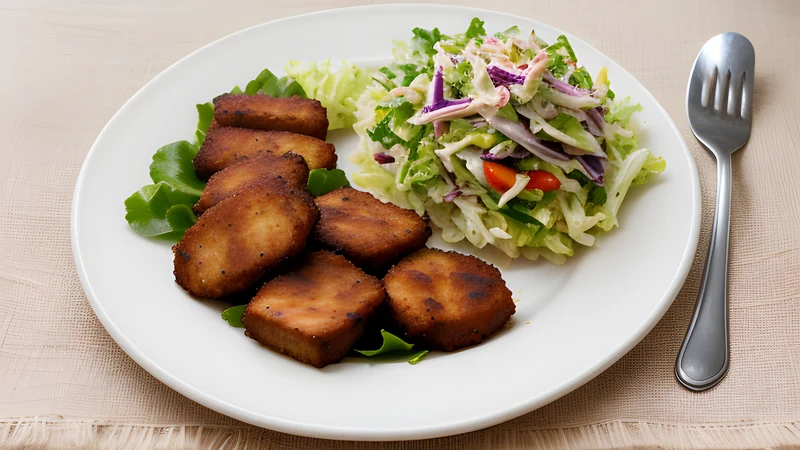
↓ Jump to recipeThe first time I ate proper griot I burned the roof of my mouth and did not care. A friend’s aunt had made it for a Sunday lunch in a flat that smelled of thyme and hot oil, and she handed me a chunk straight off the draining rack with the instruction to eat it before it cooled. The outside crackled. The inside was still soft enough to pull apart with my tongue. Then she pushed a fork of bright pink pikliz onto the plate and said the pork was only half the dish. She was right, and it took me years of making griot at home to understand exactly why.
Griot: Haiti's Twice-Cooked Pork
Ingredients
- 1.2 kg boneless pork shoulder, cut into 4 cm chunks
- 1 large onion, roughly chopped
- 6 garlic cloves
- 1 Scotch bonnet, stem removed and left whole
- Juice of 3 limes (about 90 ml)
- Juice of 1 bitter orange, or 1 sweet orange plus juice of 1 extra lime (about 80 ml)
- 1 tbsp fresh thyme leaves
- 3 spring onions, sliced
- 1 tbsp flat-leaf parsley, chopped
- 2 tsp fine salt
- 1 tsp coarsely ground black pepper
- 500 ml water
- Neutral oil for frying (about 400 ml)
Method
- Put the pork chunks in a large bowl. Blend the onion, garlic, Scotch bonnet, lime juice, orange juice, thyme, spring onions, parsley, salt and pepper into a rough paste (this is your epis marinade). Pour over the pork, toss to coat, cover and refrigerate at least 4 hours, ideally overnight.
- Tip the pork and all the marinade into a heavy pot. Add the water, bring to a simmer, cover and cook gently for 1 hour 30 minutes until the pork is fork-tender and the liquid has reduced to a sticky glaze.
- Lift the pork out and spread on a tray to cool and dry for 15 minutes. Reserve any thick pan juices. Discard the poaching liquid solids or strain and keep the liquor for rice.
- Heat the oil in a deep, wide pan to 180C. Fry the pork in batches, turning, for 4 to 6 minutes until deeply browned and the edges are crisp. Do not crowd the pan or the temperature drops and the pork stews instead of frying.
- Drain on a rack. Brush with a spoonful of the reserved glaze while hot. Serve immediately with pikliz and fried plantain.
What griot actually is
Griot (sometimes spelled griyo) is Haiti’s most beloved way with pork, and it works on a principle that sounds contradictory until you taste it: you cook the same meat twice, once wet and once dry, to get two textures in a single bite. The braise makes it tender and drives citrus and herbs deep into the meat. The fry gives you the lacquered, shattering crust that people queue for at street stalls in Port-au-Prince and Cap-Haïtien.
The word comes from the same French root as the West African griot, the oral historian and praise-singer, though the culinary and the musical meanings have long since gone their separate ways. What matters at the table is that griot is celebration food. You find it at baptisms, at New Year and at Sunday tables, sold from fritay stalls alongside fried plantain and akra (malanga fritters), always with pikliz on the side to cut the richness. It is portable, generous and built to be eaten with your hands.
The fritay stall is worth picturing, because it explains the dish. Fritay simply means fried things, and a good stall runs a rolling operation: a vat of oil kept hot all evening, meat braised in the afternoon and crisped to order, sweet plantain going in and out, a jar of pikliz sweating in the heat. Griot is engineered for that rhythm. The slow work happens ahead; the loud, fast, delicious work happens the moment someone hands over their money. Understanding that split is the whole secret to making it well at home.
Griot carries real national weight. Haitians will tell you it is the country’s signature dish, the thing served when there is something to celebrate and the thing emigrants miss most in Miami, Montreal and Brooklyn, where Haitian restaurants build their reputations on it. It appears at fèt of every kind, from a child’s first communion to a wake, and no Haitian New Year, when the whole country eats soup joumou in the morning, feels complete without griot arriving later in the day. That status is why every cook holds fierce opinions about it: the size of the chunks, the exact souring citrus, how dark to take the crust. There is no single correct griot, only the one your grandmother made.
The seasoning base is epis, the green herb-and-garlic paste that underpins most Haitian savoury cooking the way a sofrito does in the Spanish Caribbean. Every household has its own epis in a jar in the fridge; parsley, thyme, garlic, spring onion, Scotch bonnet and citrus are the constants. For griot the epis does double duty as a marinade, so I blend it fresh rather than reaching for the jar.
It is worth making a proper batch of epis regardless, because it is the backbone of Haitian cooking and keeps for weeks. Blitz flat-leaf parsley, thyme, spring onions, a whole head of garlic, a green pepper, a Scotch bonnet, and enough bitter orange juice and oil to loosen it into a coarse green paste. A spoonful lifts beans, rice, fish and every braise you make; a jar in the fridge is the Haitian equivalent of keeping stock in the freezer. For griot you simply use more of it, and fresh, so the herbs stay bright against the fried pork.
Why the two-stage method works
Pork shoulder is threaded with connective tissue and fat. Rush it and you get chewy, dry meat that no amount of frying will rescue. The slow braise does the chemistry: at a gentle simmer, collagen slowly converts to gelatine, which is what makes the meat feel succulent even after it hits hot oil. The citrus does more than flavour here. The acid in lime and bitter (Seville) orange helps break down the surface proteins, which is why the marinade is not optional and why overnight beats four hours.
The second stage is about the Maillard reaction, the browning that builds hundreds of new flavour compounds on the surface of the meat. For that you need the pork surface to be dry and the oil to be genuinely hot. Wet pork lowers the oil temperature, releases steam, and steamed pork simply will not crisp. That is the single most common way home griot goes wrong, and it is entirely avoidable.
Bitter orange is the traditional souring agent. If you have a Latin or Caribbean grocer nearby, look for naranja agria or Seville oranges. If you cannot find them, the standard fix is one sweet orange plus an extra lime, which lands close enough that no one at the table will complain.
Making it, step by step
Start the day before if you can. Blend your epis into a coarse, spoonable paste; you want it coarse and spoonable, well short of a smooth purée. Coat the pork thoroughly, cover, and leave it in the fridge overnight. The chunks should be a decent size, around 4 cm, because they shrink during cooking and small pieces dry out in the fryer.
The next day, tip everything into a heavy pot with the water and simmer, covered, for about an hour and a half. You are looking for meat that yields to a fork but still holds its shape. As it finishes, the liquid reduces to a thick, savoury glaze clinging to the chunks. Keep an eye on it in the last twenty minutes: once the water has gone and only the oily, herb-flecked glaze remains, the pork can catch and burn quickly. Fish the pork out, spread it on a tray, and let it dry and cool for a quarter of an hour. This resting step is where impatient cooks lose the crust, so use the time to fry your plantain or finish the pikliz.
Now heat your oil to 180C. If you have no thermometer, a cube of bread should turn golden in about 45 seconds. Fry the pork in batches with plenty of room around each piece. Crowd the pan and the temperature collapses; you will hear the sizzle die down to a mutter, and that mutter is the sound of the pork stewing rather than frying. Give each batch four to six minutes, turning, until the edges go mahogany and crisp. Drain on a rack, brush with a little reserved glaze, and eat as soon as your mouth can bear it.
The pikliz does real work
Griot is rich, fatty, deeply savoury. Left to its own devices it can flatten your palate halfway through the plate. Pikliz, the fierce Haitian slaw of cabbage, carrot and Scotch bonnet pickled in lime and vinegar, is the answer the cuisine evolved for exactly this problem. The acid resets your mouth between bites so the pork keeps tasting like the first one. Make it a few days ahead so the flavours mature; my full method is over in the pikliz recipe, and I would genuinely make it before I made the pork.
If you want to build a full plate, fried sweet plantain and a mound of rice and beans are the classic partners. The strained braising liquor, by the way, is liquid gold for cooking that rice; do not pour it down the sink. Reduced a little further it also makes a quick sauce for the meat: whisk in a knob of butter and a squeeze of lime and spoon it over the fried griot for a glossier, more restaurant-style plate, though a purist stall cook would raise an eyebrow at the gilding.
Tips, swaps and storage
Cut choice. Shoulder (Boston butt) is ideal for its fat and collagen. Belly works and is even richer, though you will want to render more of the fat during the braise. Leg is too lean and will dry out.
Heat control. The Scotch bonnet goes in whole so it perfumes the braise without shredding into the meat and making every bite blistering. Leave it whole and you control the heat; pierce or chop it and you commit everyone at the table to a serious sweat.
Air-fryer route. You can crisp the braised pork in an air fryer at 200C for about 12 minutes, shaking halfway. It gives up some of the deep-fry crackle, though it is a reasonable weeknight compromise with far less oil to deal with.
Make ahead. The braise holds beautifully. Cook the pork, cool it, and refrigerate for up to three days. Fry to order so the crust is fresh; reheated fried griot loses its crackle and turns leathery.
Freezing. Freeze the braised, un-fried pork in its glaze for up to two months. Defrost fully, pat dry, and fry from there.
If you like this style of slow-then-crisp pork, the Puerto Rican pernil works on a related idea of long cooking and a shattering skin, and the Caribbean-wide sancocho is the pot to make when you want the low, slow, herbal side of the same larder. Griot, though, is the one I reach for when I want something loud and joyful, the sort of food you eat standing up, over a plate, with pink slaw dripping off your fingers and no intention of apologising for it.
Related Content