Gratin Savoyard: The Stock and Beaufort Potatoes
Potatoes baked in charred-onion stock with Beaufort, the alpine answer to cream
Contents
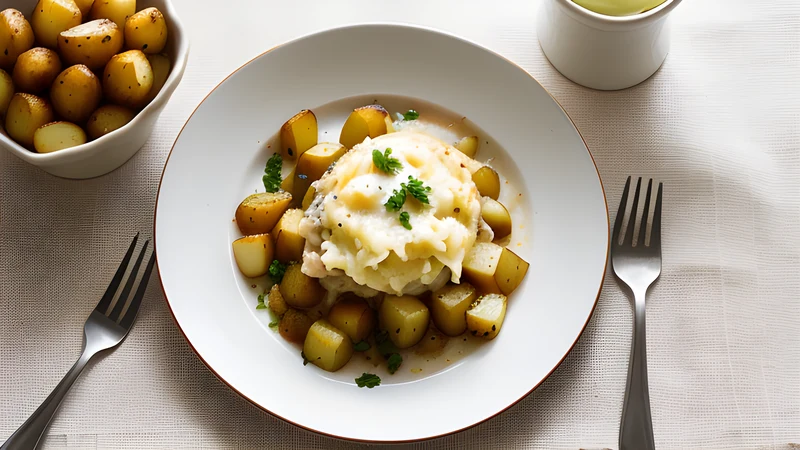
↓ Jump to recipeThe Savoie kept its potatoes in stock because it sold its cream. That’s the entire origin of this dish, and it explains why the alpine gratin and the dauphinois — made forty miles away, down the valley — took opposite turns.
Up in the Beaufortain, dairy was the cash crop. Milk went to the cooperative, the cooperative made 40 kg wheels of Beaufort, and the wheels went down the mountain to be sold. What stayed behind was whatever stock was on the stove and whatever cheese was too broken or too young to sell. So the gratin of Savoie is potatoes, stock, butter and cheese. The Dauphiné, lower down and further from the cheese economy, had cream to spare and used it, and their gratin traditionally has no cheese at all.
Two dishes, one ingredient apart, and the one made from the leftovers is arguably the better dish.
Gratin Savoyard: The Stock and Beaufort Potatoes
Ingredients
- 1.2 kg waxy potatoes, such as Charlotte or Belle de Fontenay
- 1 large onion, halved through the root, skin on
- 600 ml chicken stock, well flavoured and lightly salted
- 60 g unsalted butter, plus more for the dish
- 200 g Beaufort, coarsely grated
- 2 garlic cloves, halved
- 3 bay leaves
- 6 sprigs thyme
- 0.5 tsp freshly grated nutmeg
- 1 tsp fine salt
- 0.5 tsp freshly ground black pepper
Method
- Put a dry cast-iron pan over the highest heat for 4 minutes until it smokes. Lay the onion halves cut side down and leave them, untouched, for 6 to 8 minutes, until the cut faces are properly black — not brown.
- Add the charred onion halves, bay and thyme to the stock in a saucepan. Bring to a simmer and hold for 20 minutes. Strain and discard the solids. Keep the stock hot.
- Rub a 30 x 20 cm gratin dish hard with the cut faces of the garlic, then butter it generously.
- Peel the potatoes and slice them 3 mm thick on a mandoline. Do not rinse them — the surface starch is what thickens the gratin.
- Toss the slices in a bowl with the salt, pepper and nutmeg.
- Lay a third of the potatoes in overlapping rows in the dish. Scatter over a third of the Beaufort and dot with a third of the butter. Repeat twice, finishing with cheese.
- Pour the hot stock down the side of the dish until it reaches just below the top layer of potato. You may not need all of it. The top layer must stand clear of the liquid.
- Bake at 170C fan for 60 minutes, uncovered. Press the top down with a fish slice at 20 and 40 minutes to keep the surface basted.
- Raise the heat to 200C fan and bake a further 20 to 25 minutes, until the top is blistered and dark brown and a knife meets no resistance.
- Rest for 20 minutes before serving. The gratin will absorb the remaining liquid and firm up enough to cut into squares.
Why stock beats cream here
Cream is 40 per cent fat and it coats. It gives the dauphinois its famous silkiness and it also flattens the potato — after two forkfuls, everything on the plate tastes of dairy at the same pitch.
Stock is 98 per cent water, and water is a much better solvent for the things you actually want to taste. Gelatine from the stock gives body without the coating. The potato tastes of potato. And crucially, stock lets the Beaufort be the loudest thing in the dish, which is the point of making it in Savoie.
There’s a textural argument too. Cream sets to a custard around the potato slices and holds them apart. Stock gets absorbed into the slices as they cook, and the surface starch it carries glues them together, so a finished gratin savoyard cuts into clean squares that hold their shape on the plate. The dauphinois slumps, deliciously, and you spoon it.
The charred onion
Here’s the twist, and it fixes the one real weakness in the traditional recipe.
Stock made from a supermarket carton, or from a decent home chicken stock, is fine and it is thin. Bake potatoes in it for eighty minutes and what you taste is potato and cheese with a faint savoury background. The dish can read as under-seasoned even when the salt is right.
Char an onion first — properly char it, cut side down on smoking cast iron until the face is black rather than golden — and simmer it in the stock for twenty minutes, and the whole base changes. Blackening the cut surface pushes the Maillard reaction well past its usual stopping point and produces melanoidins: large, dark, bitter-sweet molecules that are water-soluble and that carry a roasted depth into the liquid. Twenty minutes is enough to extract them and short enough that the bitterness stays as an edge instead of taking over.
This is the same principle behind the charred onion in a bowl of pho, and it’s borrowed shamelessly. The Savoyards would not recognise it. They would, I think, eat it.
Take it all the way to black. Six to eight minutes untouched on a smoking dry pan. If you’re tempted to move it around, don’t — you need sustained contact with one face. Leave the skin on; it burns and contributes colour, and it gets strained out anyway.
Potatoes: waxy, and don’t rinse them
Charlotte, Belle de Fontenay, Nicola. Waxy potatoes hold together through eighty minutes in liquid because their cells are bound with more pectin and less free starch. Maris Piper and King Edward disintegrate into a sort of savoury mash, which has its pleasures and belongs in a different dish.
Slice 3 mm on a mandoline. By hand you will get 4 mm here and 6 mm there, and the thick ones will still be chalky when the thin ones have dissolved. Consistency matters more than the exact number.
Do not rinse the slices. This is the instruction people ignore because every recipe for chips says the opposite. Rinsing washes off the free surface starch, and that starch is the only thickener in this dish. Without it, the stock stays as stock and you serve potatoes in soup. Slice them straight into the seasoning bowl and get on with it; they’ll oxidise slightly and it will not matter under a cheese crust.
Beaufort, and what to use instead
Beaufort is a Gruyère-family alpine cheese made from Tarine and Abondance milk, aged five months minimum, and it melts better than almost anything. Its protein network is well-broken-down by the long age, so it flows rather than stringing, and its fat doesn’t split out at gratin temperatures.
Comté is the closest substitute and is easier to find. Gruyère works. Emmental is too rubbery and splits into oil and threads. Cheddar splits badly and tastes wrong.
Grate it coarse. Fine gratings melt in the first ten minutes and disappear into the stock. Coarse shreds survive long enough to form the crust.
The stock itself
600 ml, and its quality is 80 per cent of the dish. There is nowhere to hide.
Home chicken stock, made from a carcass with the wing tips and the feet if you can get them, is best. Feet are gelatine, and gelatine is what gives the finished gratin its slight lip-stick without any cream in the building. Two feet in a stockpot changes it entirely and they cost pennies.
A carton is acceptable if you doctor it: the charred onion does a great deal, and simmering it with the bay and thyme for twenty minutes does more. What a carton lacks is body, so if that’s what you’re using, add a teaspoon of powdered gelatine to the strained stock.
Season the stock lightly. It reduces and concentrates in the dish, and the Beaufort brings a lot of salt of its own. A stock that tastes correct in the pan will produce a gratin that tastes over-salted on the plate. Aim for slightly under.
Keep it hot when it goes in. Cold stock poured over layered potatoes drops the dish temperature and adds fifteen minutes to the bake, during which the top dries out.
Garlic, and the dish
Rub the dish hard with cut garlic before buttering — hard enough that the cloves wear down and you can see the paste smeared on the ceramic. That’s not a flourish. The garlic oils bind to the surface and perfume the layer of potato touching it, which is the layer that browns at the edges and the one people fight over.
Whole sliced garlic through the layers is a mistake here. It doesn’t soften enough in eighty minutes surrounded by starch, and you get sharp raw hits in an otherwise mellow dish. If you want more garlic, use four cloves on the dish rather than two in the potatoes.
Butter the dish generously after the garlic. The butter and the starch together form the release layer; a poorly buttered dish means the bottom stays in the dish and the top comes out on the spoon.
The construction rule that people get wrong
The top layer of potato must sit above the stock line.
Pour the stock down the side of the dish until it comes just short of the top layer. If you submerge the surface, it poaches, and you get a pale, wet gratin with no crust. Left standing proud, the top layer roasts in the steam coming off the liquid below, dries slightly, and takes colour.
The pressing helps. At 20 and 40 minutes, push the top down with a fish slice so the surface briefly meets the liquid and comes back up wet. That basting keeps it from drying to leather while it browns, and it settles the layers so the finished gratin holds together.
Then the last 25 minutes at 200C, which is where the crust actually forms. Two temperatures: an hour at 170C to cook the potato through gently without boiling the stock away, then heat to build the top.
What goes wrong
It’s soupy. Too much stock, or you rinsed the potatoes. The starch had nothing to grip. Bake it a further 15 minutes uncovered and rest it longer; next time, stop pouring earlier.
The potatoes are chalky in the middle. Sliced too thick, or the oven ran cool. Potato needs to get past about 80C for long enough to gelatinise its starch; over-thick slices in a crowded dish insulate each other. Cover with foil and give it another 20 minutes.
The cheese split into oil. Wrong cheese, almost always — Emmental or Cheddar. Alpine cheeses aged five months or more are engineered for this by their ageing.
No crust. The top layer was submerged. Next time stop the stock 5 mm lower.
Variations worth making
With bacon. 150 g of lardons, fried until crisp and scattered between the layers, turns this into something close to a meal. It also pushes it toward tartiflette, and at that point you may as well go the whole way.
With a bay-infused stock and no cheese at all. There is an austere older version of the gratin savoyard that predates easy access to Beaufort, made with stock and butter alone. It is quietly excellent and it needs a very good stock indeed, because there is nothing else in it.
Half stock, half cream. The compromise dish, and it’s a genuine improvement if you’re serving it beside something lean. 300 ml of each. You lose the clean-cutting squares and gain some of the dauphinois’s silk.
With Reblochon in place of Beaufort. Softer, funkier, and it melts into the layers rather than crusting. You’ll need a separate handful of Beaufort or Comté on top to get any browning at all.
Timing, storage and the rest
The 20-minute rest is compulsory. Straight out of the oven the gratin is still holding liquid between the layers and a spoon will find it. Twenty minutes and the starch has set and the remaining stock is absorbed, and you can cut squares.
It reheats better than most things — 170C, covered, 25 minutes, then five minutes uncovered to re-crisp. It keeps three days. It does not freeze well; the potato cells rupture and go mealy.
For the plate: this belongs beside something roasted and unfussy. A shoulder of lamb, a chicken, slow-roast pork. It is rich enough that it doesn’t want a rich neighbour, and if you’re already in alpine territory, tartiflette is the same valley’s answer to the same question with Reblochon and bacon on top, and roughly twice the fat.
Drink a Savoie white — Roussette or an Apremont — cold enough to hurt slightly. It’s what grows on the slopes below where the cheese was made, and the pairing has had six hundred years of testing.
Related Content