Gongura Mamsam: Mutton with Sorrel Leaves
Goat curry cooked down with a fistful of sour red-veined leaves until the tang and the fat meet in the middle
Contents
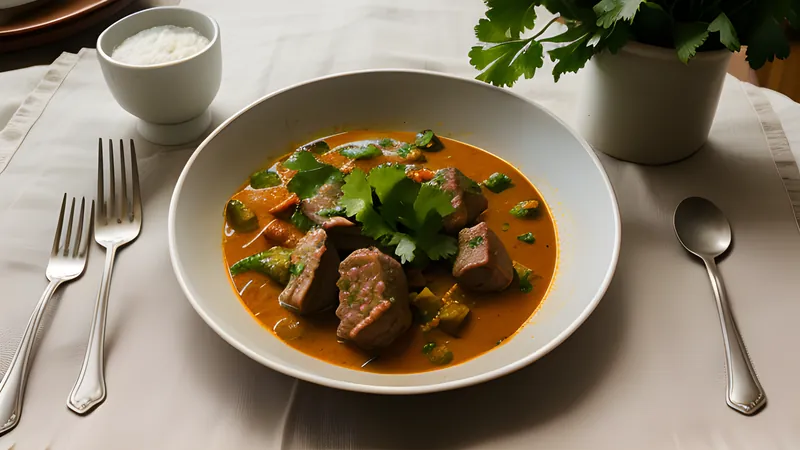
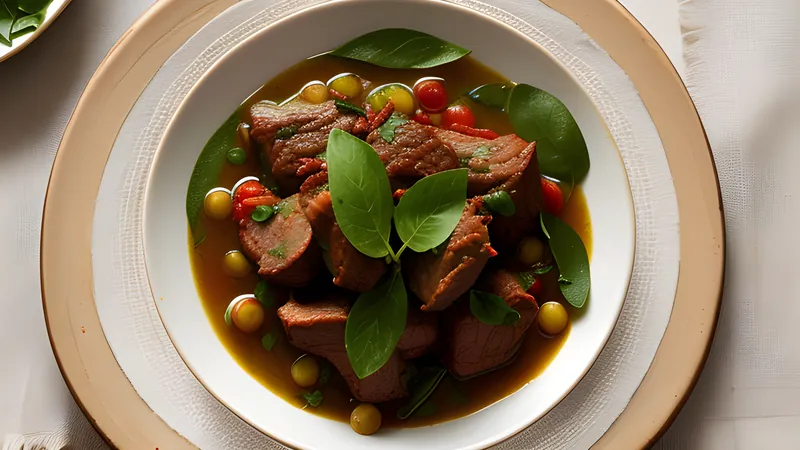
↓ Jump to recipeGongura mamsam is what happens when a curry is built to fight fat with acid instead of drowning it in cream. The gongura leaf — a red-stemmed sorrel grown across Andhra Pradesh and Telangana — carries a sharp, almost citric sourness that has nothing to do with tamarind or lemon; it comes from oxalic acid concentrated in the leaf itself, and it survives long cooking without turning bitter. Cooked down with slow-braised goat or mutton, it collapses into the gravy and cuts straight through the richness of the meat, leaving a curry that tastes cleaner the longer you eat it rather than heavier.
This is not a subtle dish and it was never meant to be. Gongura mamsam sits at the centre of Andhra’s reputation for the most aggressively flavoured cooking on the subcontinent — a region where chilli heat, souring agents and slow-fried onions are pushed harder than almost anywhere else in India. The dish turns up at weddings, Sunday lunches and roadside mess halls from Guntur to Warangal, usually eaten with plain rice and a spoon of ghee, the gravy soaking down through the grains until the plate is red-brown at the edges.
Gongura Mamsam: Mutton with Sorrel Leaves
Ingredients
- 800 g mutton or goat, bone-in, cut into 3 cm pieces
- 150 g gongura (red sorrel) leaves, washed and roughly torn, tough stems discarded
- 4 tbsp sesame or groundnut oil
- 2 large onions, finely sliced
- 1 tbsp ginger-garlic paste
- 3 green chillies, slit
- 2 tsp Kashmiri chilli powder
- 1 tsp ground turmeric
- 1.5 tsp coriander seeds, toasted and ground
- 1 tsp cumin seeds
- 1 tsp black mustard seeds
- 8 curry leaves
- 1 tsp fenugreek seeds
- 2 dried red chillies
- 1.5 tsp fine salt, plus more to taste
- 300 ml water
Method
- Bring the mutton to a simmer in a heavy pot with 300 ml water, half the salt and the turmeric. Cover and cook over a low heat for 40-45 minutes, until the meat is tender but not falling apart. Reserve the cooking liquid.
- Meanwhile, wilt the gongura leaves in a dry pan over a medium heat for 3-4 minutes, stirring, until they collapse and darken. Set aside.
- Heat the oil in a wide, heavy pan. Add the mustard seeds, cumin seeds, fenugreek seeds and dried red chillies, and fry for 30 seconds until the mustard seeds pop.
- Add the sliced onions and fry over a medium heat for 12-15 minutes, stirring often, until deeply golden and starting to catch at the edges.
- Stir in the ginger-garlic paste and green chillies and cook for 2 minutes until the raw smell is gone.
- Add the chilli powder and ground coriander and fry for 1 minute, splashing in a spoonful of the mutton cooking liquid if the spices catch.
- Tip in the cooked mutton with its liquid, the curry leaves and the remaining salt. Simmer uncovered for 15 minutes, until the gravy has thickened and darkened.
- Stir in the wilted gongura and its released juice. Simmer for a further 5-8 minutes, mashing some of the leaves against the side of the pan to thicken the gravy. Taste and adjust salt before serving.
The leaf itself
Gongura is Hibiscus sabdariffa, a relative of the roselle plant used for hibiscus tea, and two varieties are grown for the pot: erra gongura, red-stemmed and sharply sour, and tella gongura, green-stemmed and milder. Erra gongura is the one that goes into mamsam, because the dish needs its full sourness to stand up to the meat. The leaves are small, arrow-shaped and slightly furred, and they cook down fast — a full carrier bag of fresh leaves reduces to a few spoonfuls of dark, jammy pulp within minutes of hitting heat, which is why the quantities in most gongura recipes look deceptively small once you weigh the raw leaf.
Outside Andhra households and specialist Indian grocers, fresh gongura is genuinely hard to find in the UK. Frozen gongura leaves, sold vacuum-packed by South Indian suppliers, are a fair substitute and often what Andhra families abroad actually cook with — thaw and drain them well before wilting, since they release more water than fresh leaves. Failing that, a mix of sorrel (garden sorrel, Rumex acetosa, is a genuine cousin in flavour if not botany) and a small handful of baby spinach for bulk gets close, with a squeeze of lemon added at the end to compensate for the lost sharpness — close enough to honour the sour-through-greens principle even if the exact flavour differs.
Building the gravy
The method leans on two separate cooking processes that meet only at the end. The mutton braises on its own in a covered pot with just enough water to keep it from catching, which keeps the meat tender without diluting the final gravy with excess liquid; the gongura wilts separately in a dry pan, which drives off some of its water before it ever meets oil or spice, concentrating rather than washing out its sourness. Only once both are ready do they combine with a base of slow-fried onion, mustard and cumin tempering, and a spoon of coriander and chilli.
The onions need real time here — twelve to fifteen minutes, not the five most curries ask for — because Andhra cooking relies on deeply caramelised onion for body rather than cream, yoghurt or cashew paste, all more common further north. Rush this step and the gravy stays thin and the raw onion flavour never fully disappears, no matter how long the curry simmers afterwards. A fenugreek seed or two in the tempering oil, along with the mustard and cumin, adds a faint bitterness that Andhra cooks use deliberately to balance the sourness of the gongura; leave it out and the dish tastes one-note-sour rather than layered.
Bone-in mutton or goat is worth the extra cooking time over boneless cuts. The bone releases gelatine and marrow fat into the braising liquid, which is exactly what carries the gongura’s sourness through the dish rather than letting it sit as a separate, sharp note on top. If you can only find boneless meat, cut the initial braise by ten minutes to avoid overcooking, and consider adding a splash of stock in place of water for the same body.
Some cooks add a small tomato or two to the onion base for extra body, particularly outside Andhra where gongura’s sourness is sometimes tempered for a wider audience; purists in Guntur and Warangal generally leave it out; the whole point of the dish is the clean fight between fat and sour leaf, and a tomato blunts that edge rather than sharpening it. If you do add one, keep it to a single small tomato and cook it down properly first, so it disappears into the onion rather than turning the gravy sweet.
A dish with a family
Gongura’s sourness is put to work across several other Andhra staples, and knowing them helps explain why mamsam holds the place it does. Gongura pachadi, a raw chutney of pounded leaves, garlic and dried red chilli, is the everyday version — no meat, no long cooking, just a spoonful stirred through hot rice with ghee, and probably the more commonly cooked dish of the two in most Telugu households on a weekday. Gongura pappu folds the same leaf into toor dal for a soured lentil stew, and gongura is worked into pickles the same way mangoes or lemons are elsewhere in India, packed into jars with oil and chilli to keep for months. Mamsam is the version reserved for a proper occasion, because meat historically was, and it remains the dish most likely to be named when people outside Andhra are asked what the region’s food actually tastes like.
The Telugu-speaking diaspora — in Chennai, Bangalore, and further afield in the Gulf and North America — treats gongura with something close to sentimentality; expatriate Andhra and Telangana families often list it, unprompted, as the flavour they miss most, precisely because it resists substitution more stubbornly than most regional ingredients. A curry built on tamarind or tomato can be approximated almost anywhere; one built on a specific leaf’s specific acidity cannot, which is part of why frozen and pickled gongura has become a genuine export product rather than a niche one.
Timing the two elements
Because the mutton and the gongura are cooked separately before they meet, the timing of each matters on its own terms rather than as one continuous process. The mutton wants a full 40 to 45 minutes at a bare simmer — not a rolling boil, which toughens the outer fibres of the meat before the connective tissue inside has had time to break down into gelatine. Check it by pressing a piece against the side of the pot with a spoon: it should yield with light pressure but not shred apart, since it still has 15 to 20 minutes of further cooking once it joins the gravy.
The gongura, by contrast, only needs three or four minutes in a dry pan to collapse — push it much further and the leaves lose the fresh, slightly grassy top note that balances their sourness, leaving only a flat acidity behind. Cooking it separately rather than dropping raw leaves straight into the simmering gravy also means you can taste and judge its intensity before committing it to the pot; gongura varies noticeably in sourness batch to batch depending on how it was grown and how long it has been frozen, so a taste at this stage is worth more than following any recipe’s exact leaf weight to the gram.
What can go wrong
The most common failure is a gravy that tastes flat rather than bright, and it is almost always down to under-wilted or too-diluted gongura — either the leaves went in still full of water, or too much cooking liquid was added at the mutton stage and the sourness never concentrated. If the finished curry tastes muted, simmer it uncovered for another five minutes to drive off water and intensify what’s there, rather than reaching straight for more chilli.
The second failure is bitterness, which usually comes from burnt mustard seeds or scorched dried chillies in the tempering — both go from fragrant to acrid within seconds once the oil is hot enough. Keep the heat moderate for this step and have the onions ready to go in the moment the mustard seeds finish popping. If the gravy does turn bitter, a small pinch of jaggery stirred in at the end rounds it off without making the dish sweet.
Serving, substitutions and storage
Serve gongura mamsam with plain steamed rice and a spoon of ghee stirred through at the table — the fat carries the sourness rather than dulling it, and a simple curd or raita on the side gives the palate somewhere to rest. It sits well on a table alongside milder company; a bowl of rasam before it, or a plate of chettinad pepper chicken after, both share the same commitment to real heat and real sourness rather than diluting either.
If mutton isn’t available, chicken thighs work with a shorter initial braise of around 20 minutes, though the dish loses some of the depth the bone marrow gives it; for a vegetarian version, gongura pachadi — the same leaf pounded raw into a chutney with garlic and chilli — is the classic alternative rather than trying to force a meatless mamsam. This curry keeps for up to four days in the fridge, tightly covered, and genuinely improves after a day as the gongura’s sourness settles further into the meat. Reheat gently on the stove with a small splash of water, since the gravy thickens considerably once cold, and taste for salt again — chilled sourness always reads as milder than it will once the dish is hot. It also freezes well for up to two months in an airtight container, which is worth doing if gongura is hard to source near you — cook a double batch when you find frozen leaves and portion the rest away for a night when nothing else in the freezer looks half as appealing.
Related Content