Gimbap: Korean Seaweed Rice Rolls
Seasoned rice and bright fillings, rolled tight and sliced cold
Contents
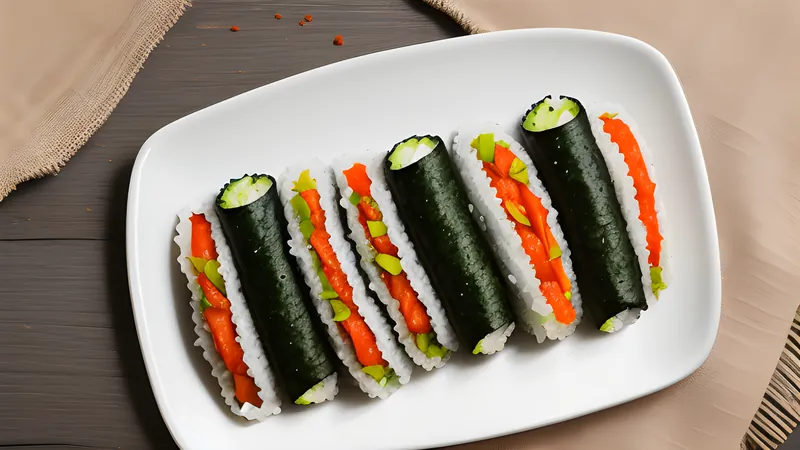
↓ Jump to recipeGimbap looks like sushi to anyone who hasn’t eaten it, and that resemblance has done it no favours. The rice isn’t vinegared. The fillings aren’t raw fish. The whole point of the roll is different: it’s built to survive hours in a lunchbox at room temperature, to be eaten with your hands on a train platform or a school playground bench, and to taste just as good cold as it did the moment it was cut. Once you stop comparing it to sushi, gimbap becomes its own thing entirely, and a genuinely useful one.
Gimbap: Korean Seaweed Rice Rolls
Ingredients
- 2 cups (400g) short-grain rice, cooked and still warm
- 1 tbsp toasted sesame oil, plus extra for brushing
- 1 tsp fine salt
- 3 sheets roasted nori (gim), full size
- 150g danmuji (yellow pickled radish), cut into long batons
- 1 large carrot, julienned
- 1 tsp vegetable oil, for frying
- 3 eggs, beaten with a pinch of salt
- 150g spinach, blanched 30 seconds and squeezed dry
- 1 tsp minced garlic
- 1 tsp soy sauce
- 150g beef bulgogi-style mince or strips (or imitation crab, sliced)
- 2 tbsp soy sauce, for the beef marinade
- 1 tbsp sugar, for the beef marinade
- 1 tsp toasted sesame oil, for the beef marinade
- 1 tsp toasted sesame seeds, for finishing
Method
- Toss the warm cooked rice with 1 tbsp sesame oil and the salt while it's still steaming; spread it on a tray to cool to room temperature so it doesn't turn the nori soggy.
- Fry the beaten egg as a thin, unbroken sheet in a lightly oiled pan over low heat, flipping once. Slide onto a board and cut into batons about the width of a finger.
- Toss the julienned carrot in a hot dry pan with a pinch of salt for 90 seconds until just softened, then set aside.
- Toss the squeezed spinach with the garlic, soy sauce and a few drops of sesame oil.
- Marinate the beef in soy sauce, sugar and sesame oil for 10 minutes, then fry over high heat until dark and slightly sticky, about 4 minutes.
- Lay a sheet of nori shiny-side down on a bamboo mat, rough side up. Spread a thin, even layer of rice over the bottom two-thirds, leaving the top third bare.
- Line up danmuji, carrot, egg, spinach and beef in horizontal bands across the rice, about a third of the way up from the bottom edge.
- Lift the near edge of the mat and roll firmly away from you, tucking the filling under on the first turn, then continue rolling into a tight cylinder, sealing the bare nori edge with a dab of water.
- Rub the outside of the roll lightly with sesame oil and repeat with the remaining sheets.
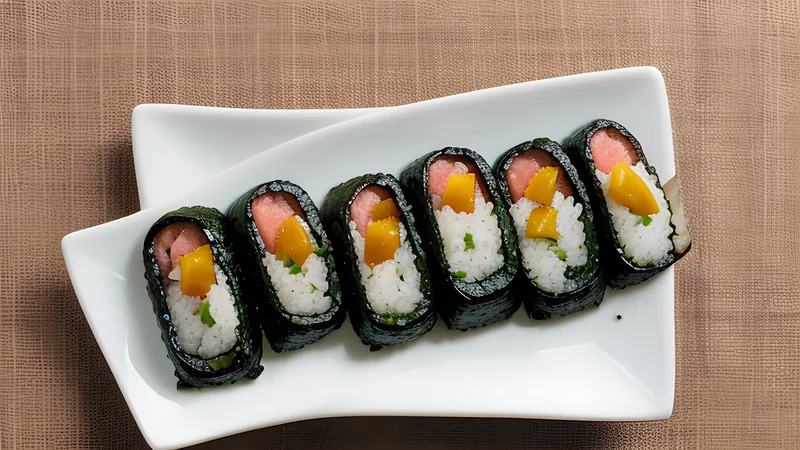
- Slice each roll with a sharp, wet knife into 8 discs, wiping the blade between cuts, and scatter with sesame seeds before serving.
What gimbap actually is
The name breaks down simply: gim is the roasted seaweed sheet, bap is rice. Together they describe the base of a dish that Koreans have carried to picnics, school trips and hiking paths for most of the last century. Sushi rice is seasoned with rice vinegar, sugar and salt and served cool or at room temperature specifically because vinegar suppresses bacterial growth in raw fish. Gimbap rice is seasoned with sesame oil and salt, and the fillings are all cooked, pickled or cured rather than raw. That single substitution changes the texture completely: sesame-oiled rice is glossier, richer, and holds together with less need for the tight compression sushi chefs work so hard to master.
The fillings tell the real story. Danmuji, the bright yellow pickled radish, turns up in almost every version and gives the roll its signature tang and crunch. Beyond that, gimbap is a use-up dish as much as a recipe: whatever vegetables need cooking down, whatever protein is in the fridge, gets sliced into batons and laid in a row. Spinach, carrot, egg and a protein are the baseline; from there you’ll find versions with tuna mayonnaise, spicy pork, cheese, or pickled burdock root depending on the region and the cook.
A dish shaped by movement
Gimbap’s popularity is inseparable from Korea’s school picnic culture. Sopoong — outdoor school outings — became common through the twentieth century, and gimbap was the meal that travelled best: no cutlery needed, no risk of soggy bread, and a full meal’s worth of rice, vegetable and protein in one compact roll. Mothers would get up before dawn to fry eggs, blanch spinach and roll dozens of gimbap into tin lunchboxes, and the smell of sesame oil on a school bus became, for a generation of Koreans, the smell of a day off.
There’s a persistent story that gimbap descended directly from Japanese norimaki during the colonial period (1910–1945), and there’s truth in the timeline — the technique of rolling rice in seaweed did spread from Japan in that era. But the dish that emerged diverged quickly, adapting to Korean tastes for sesame oil over vinegar and building out a much wider, more improvisational filling list. By the postwar decades gimbap had become distinctly its own food, sold from carts, packed into boxes, and eventually turned into a fast-casual restaurant category of its own — the gimbap-jip, or gimbap house, where a roll costs almost nothing and a full meal with soup costs barely more.
The 1997 Asian financial crisis gave the dish an unexpected second life. As household budgets collapsed, cheap, filling gimbap-jip chains multiplied across Seoul, offering a full roll for less than the price of a coffee. That era cemented gimbap’s reputation as the food of students and shift workers rather than a picnic-only treat, and the chains that emerged then are still some of the biggest names in casual Korean dining today. The dish has always tracked hardship and thrift as much as celebration — it’s cheap to make in bulk, forgiving of whatever’s in the fridge, and portable enough to eat standing up between jobs.
The rice is the whole job
Get the rice wrong and nothing else matters. Short-grain rice, cooked slightly firmer than you’d want for eating straight from the bowl, is essential — mushy rice makes a roll that squashes flat and falls apart on the cut. Season it while it’s still hot: sesame oil and salt need heat to distribute evenly through the grains rather than sitting in clumps. Then, critically, let it cool. Warm rice against a nori sheet releases steam that turns the seaweed limp and chewy within minutes, and a roll made with hot rice will be unpleasantly soft by the time you eat it, even ten minutes later. Spread the rice on a tray or a wide plate and let it come down to room temperature — it takes fifteen minutes and it’s the difference between a roll that holds its structure and one that doesn’t.
When you spread the rice on the nori, resist the urge to pile it thick. A thin, even layer — thin enough that you can still see faint green through it in patches — gives you a roll where the fillings dominate the bite rather than fighting through a wall of rice. Leave that bare strip at the top of the sheet uncovered; it’s what seals the roll shut once you dab it with water, and if you skip it you’ll be wrestling with a roll that keeps unwinding.
Rolling without a disaster
A bamboo sushi mat (called a kimbal in Korean kitchens) makes this dramatically easier, though a clean tea towel will do in a pinch. Lay the nori rough-side up — the smoother, shinier side should end up on the outside of the finished roll, since that’s the face that looks glossiest and holds its shape best. Line your fillings up in a tight horizontal band roughly a third of the way up the rice, not dead centre — this gives you more rice to wrap around the filling on the first turn, which is the turn that determines whether the roll ends up round or lopsided.
The first roll is the only one that matters technically: lift the near edge of the mat and fillings together, and tuck them under firmly before you keep rolling. If that first turn is loose, the whole roll will be loose. After that, keep even, steady pressure as you roll away from you, and give the finished cylinder one last firm squeeze through the mat before you unroll it.
Slicing is where a lot of home cooks lose points they’ve earned everywhere else. A dry knife drags through rice and nori and tears the roll into ragged ovals instead of clean discs. Wet the blade — genuinely wet it, under the tap, before every single cut — and wipe it clean between slices. The nori should shear rather than tear, and the exposed rice face should come away smooth rather than smeared. If the roll still squashes under the knife, it means the rice layer was too thick or the fillings weren’t distributed evenly along the length of the roll — a lopsided filling band collapses under pressure at its thin end.
Filling logic and variations
The classic filling set — danmuji, carrot, egg, spinach and a protein — works because it balances four things in every bite: sour crunch (radish), sweet crunch (carrot), soft richness (egg), savoury green (spinach), and whatever protein carries the seasoning. Once you understand that structure, you can swap almost any element. Tuna gimbap replaces the beef with tuna mixed with Kewpie mayonnaise and a little black pepper — one of the most common convenience-store versions in Korea. Cheese gimbap tucks a strip of processed cheese alongside the egg, which melts slightly against the warm rice if you eat it fresh. Vegetarian versions drop the meat entirely and add pickled burdock root (ueong) or seasoned fried tofu for the missing savoury note.
Whatever you choose, keep every component pre-seasoned before it goes anywhere near the rice. Gimbap has no dipping sauce and very little seasoning added at the table — unlike a sushi roll dipped in soy, a gimbap roll is eaten as-is, so if the spinach isn’t properly seasoned with garlic and sesame oil, or the carrot has no salt in it, that gap shows up in every bite. Undersalting any single filling is the most common reason a homemade gimbap tastes flat compared with the version from a gimbap-jip, where every component has been seasoned individually and generously before assembly.
Kimchi gimbap is worth calling out separately: well-drained, finely chopped kimchi laid alongside the rice gives a sharper, more fermented edge than danmuji alone, and pairs particularly well with pork belly instead of beef. If you go this route, squeeze the kimchi hard first — excess brine will seep into the rice and turn the whole roll soft within an hour.
Storage and the next day
Gimbap keeps at room temperature for a few hours, which is exactly why it became picnic food in the first place, but the texture is best within the first six hours or so — after that the rice starts to firm up and dry slightly at the edges. Refrigerate anything you’re not eating same-day, wrapped tightly in cling film to stop the exposed rice faces drying out, and bring it back towards room temperature before eating; cold gimbap straight from the fridge has a stodgy, tight texture that doesn’t do the filling any favours. It doesn’t freeze well — the rice turns grainy and the vegetables weep water on thawing.
If you’ve got leftover, slightly dried-out gimbap the next day, don’t try to eat it cold as-is. Slice it thickly and pan-fry the cut sides in a little oil until the exposed rice crisps and browns — a trick borrowed from leftover sushi that works just as well here, turning day-old rolls into something closer to a rice cake with crunchy edges. It’s a genuinely good use for a roll that’s past its best, and one of the few times gimbap improves on reheating rather than just surviving it.
Serve gimbap with a simple radish or cucumber pickle on the side and, if you want the full lunchbox experience, a flask of light broth — the kind you’d find at a gimbap-jip counter. It’s not a dish that needs embellishing. The whole appeal is in how little it asks of you once it’s rolled: no reheating, no plate, just a box of neat discs and a fork you probably won’t even need.
For more Korean rice and vegetable dishes, see bibimbap with crisp rice crust and gochujang butter and japchae with charred vegetables and sesame. If you want another rolled rice project, onigiri with three fillings covers the Japanese cousin.
Related Content