Gibanica: The Serbian Layered Cheese Pie
Crumpled filo, salty white cheese, and a custard that soaks the lot
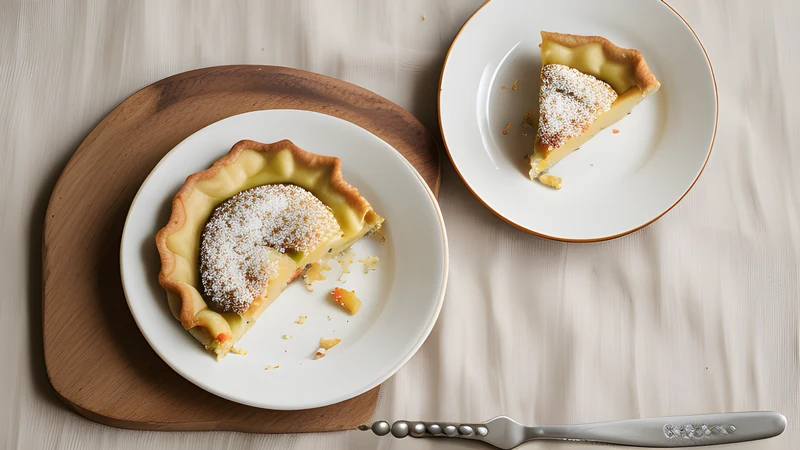
Contents
↓ Jump to recipeEvery Serbian household makes gibanica and every one of them makes it differently, and the disagreements are ferocious in the way that only disagreements about a dish nobody writes down can be. Flat layers or crumpled. Feta or sir or both. Oil or butter or lard. Water in the custard or no water. Someone’s grandmother did it a particular way and that way is correct, and every other way is a corruption practised by people from a suburb forty minutes away.
I am going to advocate for the crumpled version, which is the one that produced the best gibanica I have eaten and which is also, conveniently, by far the easiest. The flat-layered version demands that you handle whole sheets of wet filo without tearing them. The crumpled version is improved by tearing.
Gibanica: The Serbian Layered Cheese Pie
Ingredients
- 500g filo pastry, thawed, at room temperature
- 500g feta, crumbled
- 250g full-fat cottage cheese or curd cheese, drained
- 150g kajmak or full-fat cream cheese
- 5 large eggs
- 400ml soured cream
- 150ml sparkling mineral water
- 100ml sunflower oil, plus more for the tin
- 75g unsalted butter, melted
- 1 tsp fine sea salt
- 1/2 tsp coarsely ground black pepper
- 1/4 tsp freshly grated nutmeg
Method
- Heat the oven to 180C fan. Oil a 30 x 23cm baking tin generously, including the corners.
- Crumble the feta into a large bowl and mash it with a fork until the pieces are pea-sized. Add the cottage cheese and the kajmak and mash together.
- Beat 4 of the eggs into the cheese mixture one at a time. Stir in 250ml of the soured cream, the salt, the pepper and the nutmeg.
- Whisk in the sparkling water last. The mixture should be loose enough to pour from a ladle.
- Combine the oil and the melted butter in a small bowl. This is your brushing fat.
- Lay one sheet of filo flat in the base of the tin, trimming to fit, and brush it with the fat. Lay a second sheet on top and brush again. These two flat sheets are the floor.
- Take a sheet of filo, hold it over the bowl of cheese mixture, and drag it through so both sides are coated. Scrunch it loosely into a rough ruffled bundle with your fingers.
- Drop the bundle into the tin. Repeat with the remaining sheets, packing the bundles in loosely side by side until the tin is full. Leave air between them.
- Whisk the remaining egg with the remaining 150ml soured cream and 2 tbsp of the brushing fat.
- Pour this evenly over the whole surface, making sure it runs into the gaps between the bundles.
- Brush any dry filo peaks with the last of the fat, then flick a tablespoon of cold water across the surface.
- Bake for 45-50 minutes until the top is deep gold, the peaks are dark at the tips, and the centre is set with no wobble.
- Rest in the tin for 25 minutes before cutting. Gibanica served hot from the oven collapses.
What it is and where it sits
Gibanica is a filo pie filled with fresh white cheese and eggs, baked in a tin, cut into squares, eaten warm at any hour. It is a breakfast, a party dish, a funeral dish, a New Year dish, and the thing that appears when someone arrives unexpectedly. In Serbia it is sold in bakeries by the slice next to burek, and the two are cousins with different ambitions: burek is a coiled tube of pastry around a dense filling, engineered to be eaten standing up, while gibanica is a slab that is deliberately soft and custardy inside.
The name comes from gibati, to fold or to bend, which describes the pastry handling rather than the filling. Versions run across the whole region — Slovenia has prekmurska gibanica, which is a completely different animal involving poppy seeds, walnuts, apple and curd cheese in strict layers and is a dessert. The Serbian and Bosnian gibanica is savoury and improvisational.
Its ancestry is Ottoman, like almost everything laminated in the Balkans: the börek tradition, which arrived with the empire and settled into every kitchen between Sarajevo and Skopje. What made gibanica local is the cheese. The dish is built around young, salty, wet, unripened white cheese — the fresh sheep or cow cheese that every rural household had in a bucket — and the whole architecture is a way of making a lot of that cheese into a meal with a small amount of flour.
The best version of this dish depends on cheese you probably cannot buy in Britain, so let us deal with that honestly.
The cheese problem
Serbian mladi sir is a fresh white cheese, curd-set, lightly salted, crumbly and wet, with a clean lactic tang and about 25% fat. It has no exact British equivalent.
The workable substitution is a blend, and the blend matters more than any single component. Feta on its own — the obvious choice — is too salty, too dry and too sharp, and gibanica made with feta alone comes out aggressive and slightly rubbery. Cottage cheese on its own is bland and watery and gives you a pale, wet pie. Together, in a ratio of roughly two parts feta to one part cottage cheese, they land close to the target: the feta supplies salt and tang and structure, the cottage cheese supplies moisture and mildness and body.
The kajmak is the third element and it is the one that takes the mixture from good to right. A hundred and fifty grams adds fat and a fermented richness that neither of the others has, and it is exactly what the real cheese has and the substitutes lack. Full-fat cream cheese does the fat job without the tang, and is a reasonable fallback.
Drain the cottage cheese. Tip it into a sieve for twenty minutes and you will lose 50-80ml of whey, and that whey is otherwise going straight into your custard and loosening it past the point of setting.
Do not add salt until you have tasted the mixture. Feta varies wildly — a Bulgarian barrel-aged one can be twice as salty as a supermarket block.
The twist: sparkling water in the custard
A hundred and fifty millilitres of sparkling mineral water, whisked into the cheese mixture at the very end.
This is a real Balkan trick rather than my invention, and it took me a while to work out what it does. It has nothing to do with lightness in the way people usually claim. The effect is on the filo. Gibanica lives or dies on the contrast between the soaked, custardy interior of each pastry bundle and the crisp dry ruffles on top, and that contrast requires a filling wet enough to penetrate the pastry properly. Add plain water and you dilute the flavour. Add more soured cream and you thicken it past the point where it will wick into a crumpled sheet.
Carbonated water thins the mixture while it is being handled — the dissolved gas keeps it fluid and pourable at fridge temperature — and then leaves entirely in the first four minutes of the bake, taking nothing with it. It is a temporary viscosity modifier. The filling you pour is loose, the filling that bakes is not.
Use proper sparkling mineral water and use it cold and last. Flat water works about half as well, and it works less the longer the mixture sits.
Crumpling, and why flat is worse
Here is the argument. Flat-layered gibanica gives you alternating strata of pastry and cheese, and it bakes into something dense and even and slightly heavy, with a crisp top layer and everything below it soft. It is good. Crumpled gibanica gives you the same total ingredients arranged so that the pastry has roughly four times the surface area, folded into ruffles that stand up into the air.
That geometry produces two textures that flat layering cannot. The peaks that break the surface dry out and go shatteringly crisp and dark gold. The valleys underneath sit in custard and go silky. Every square you cut has both, in every mouthful, instead of having the crisp bit on top and the soft bit underneath.
The method is simple and slightly unpleasant to do. Drag a sheet of filo through the bowl of cheese mixture so it is coated on both sides, lift it out dripping, scrunch it loosely with your fingers, and drop it into the tin. Loosely is the operative word: a tightly balled bundle steams in its own centre and stays raw and pasty. You want it to look like a badly folded handkerchief, with air in it.
Tears are irrelevant. Holes are irrelevant. The two flat sheets in the base are the only structural pastry in the dish and everything above them is decoration you eat.
Pack the bundles in with gaps. The gaps fill with the egg and soured cream mixture you pour over at the end, and that pour is what fuses the whole thing into a sliceable slab.
The bake, and the water flick
Forty-five to fifty minutes at 180C fan. The tin needs to be metal — glass and ceramic insulate, and the base stays pale and greasy.
The flick of cold water across the surface before it goes in is the last small thing and it earns its place. It buys the exposed filo peaks about six minutes of grace at the start of the bake, so the interior custard gets closer to setting before the tips go dark. Without it, the peaks are almost black by the time the centre is done.
Done is when the centre has no wobble. Push the tin gently; if the middle ripples, it needs another eight minutes. An underbaked gibanica weeps when you cut it.
The rest is mandatory. Twenty-five minutes in the tin. Hot from the oven the custard has not set and the squares slump into wet piles. This is the most common way to ruin an otherwise perfect one, and it is done out of enthusiasm.
Filo, shop-bought and otherwise
The orthodox position is that gibanica requires hand-pulled kore — sheets stretched by hand across a floured table until they are thin enough to read a newspaper through, the same technique as apfelstrudel pastry. Serbian grandmothers pull their own, and Balkan grocers sell fresh kore in 500g stacks, damp and pliable and noticeably thicker than supermarket filo.
Fresh kore are better here for a specific reason. Supermarket filo is machine-rolled to about 0.3mm and dried slightly for shelf life, which makes it brittle and, more importantly, means it dissolves. Drag a supermarket sheet through a wet cheese mixture and it starts disintegrating in your hands within about fifteen seconds. Fresh kore are thicker, softer and hold together wet, so the ruffles stay distinct and you can taste pastry in the finished pie.
If you can find them, use them, and cut the soaking time to a quick dunk. If you cannot, supermarket filo makes a perfectly good gibanica — this is the version I make most weeks — and the trick is speed. Have the tin oiled and the bowl next to it, drag each sheet through in one movement, scrunch, drop, move on. Sheets that sit in the mixture while you fuss will turn to porridge.
Hand-pulling your own is a genuinely satisfying afternoon and it is hard to justify for this dish specifically. The pastry gets torn up and drowned. Save the pulling for a strudel, where the sheet stays whole and its thinness is the entire point, and buy the kore for the pie that crumples them.
Failures, storage and variations
Soggy base. Ceramic dish, or the two floor sheets were skipped, or the tin was underoiled.
Weeping, wet slices. Underbaked, or unrested, or the cottage cheese was undrained.
Dry, bready interior. Bundles packed too tight, or not enough filling per sheet. Drag the filo through properly.
Fiercely salty. Feta straight in without tasting.
Filo shattering as you handle it. Cold filo. It needs a full hour out of the fridge, still wrapped.
Gibanica keeps three days covered at room temperature and reheats well at 170C for twelve minutes, which crisps the peaks again. Refrigerating it makes the pastry leathery; if you must, take it out an hour before. It freezes baked, in squares, for two months.
Common variations: 200g of chopped spinach wrung dry, folded into the cheese; 150g of diced smoked ham; a version with young nettles in spring. Some households add a handful of semolina to the filling to guarantee a set, which works and costs you a little silkiness. Serve it with a glass of yoghurt, which is what it is drunk with, or alongside a bowl of soup, or with a spoonful of ajvar on the plate.
Related Content