Gevulde Speculaas: The Almond-Filled Spiced Slab
Two sheets of spiced biscuit dough with a seam of almond paste
Contents
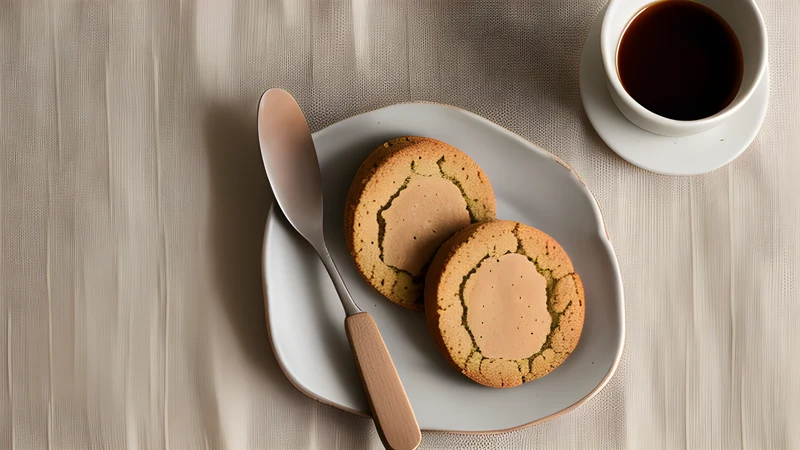
↓ Jump to recipeGevulde speculaas is a slab of spiced biscuit with a centimetre of almond paste running through the middle of it, and it is the reason Dutch supermarkets smell of cinnamon from September onwards. Plain speculaas — the thin, snapping, windmill- stamped biscuit — is the everyday version. This is the one you buy in a square, cut into fingers, and eat with coffee while pretending you will stop after one.
The distinction matters because the two doughs are the same and the eating experience is nothing alike. Thin speculaas is dry and brittle and all spice. The gevulde version is dense and slightly chewy, and the almond paste keeps it moist for days, which turns the spice from a sharp hit into something that unfolds slowly. It is a better biscuit by a considerable margin, and the only reason it isn’t the default is that it takes two days to make properly.
Gevulde Speculaas: The Almond-Filled Spiced Slab
Ingredients
- 250 g plain flour
- 150 g dark brown soft sugar
- 175 g cold unsalted butter, cubed
- 1 tsp baking powder
- 1/2 tsp fine salt
- 3 tbsp whole milk
- 4 tsp speculaaskruiden (see below, or use the blend given)
- For the speculaaskruiden: 4 tsp ground cinnamon, 1 tsp ground nutmeg, 1 tsp ground cloves, 1/2 tsp ground ginger, 1/2 tsp ground cardamom, 1/4 tsp ground white pepper, 1/4 tsp ground coriander seed, 1/4 tsp ground mace
- For the almond filling: 250 g ground almonds
- 250 g caster sugar
- 1 large egg, plus 1 egg beaten for glazing
- Finely grated zest of 1 unwaxed lemon
- 1/4 tsp almond extract
- 1/4 tsp fine salt
- 40 g blanched whole almonds, for the top
Method
- Make the filling first: blitz the ground almonds, caster sugar, whole egg, lemon zest, almond extract and salt in a food processor for 30 seconds until it forms a stiff paste. Wrap and refrigerate for at least 4 hours, ideally overnight.
- Grind or measure the speculaaskruiden and mix thoroughly.
- Rub the butter into the flour, brown sugar, baking powder, salt and spice mix with your fingertips until it resembles coarse damp sand. Add the milk and bring together into a dough without kneading.
- Wrap the dough and refrigerate overnight, or for a minimum of 12 hours. This rest is not optional.
- Line a 20 cm square tin with baking parchment, leaving an overhang on two sides.
- Divide the dough in two. Roll one half between two sheets of parchment to a 20 cm square, about 5 mm thick, and press it into the base of the tin.
- Roll the almond paste to a 20 cm square between parchment and lay it on the dough. Press it flat to the edges.
- Roll the second dough half to a 20 cm square and lay it on top. Press the edges together and smooth the surface.
- Brush the top with beaten egg and press the blanched almonds into it in rows. Brush again.
- Bake at 175C fan for 35-40 minutes until deep brown and firm at the centre.
- Cool completely in the tin, at least 3 hours, before lifting out and cutting into 12 squares with a long sharp knife.
Where the spice came in
Speculaas is a direct edible consequence of the Dutch East India Company. The VOC was founded in 1602 and by the mid-seventeenth century held a working monopoly on nutmeg and mace from the Banda Islands, cloves from Ambon, and cinnamon from Ceylon after they took it from the Portuguese in 1658. Amsterdam became the place where those spices were weighed, warehoused and priced for the rest of Europe. In practical terms, a Dutch baker in 1680 could afford to put more nutmeg in a biscuit than a baker anywhere else on the continent, and the national palate adjusted accordingly.
That is why speculaaskruiden is heavy on the tropical spices and light on the ones that grew closer to home. Cinnamon leads, cloves and nutmeg follow hard, and there is a whisper of white pepper that most people cannot identify and would miss immediately. The blend became fixed enough that Dutch shops sell it ready-made in tins, and every family claims a slightly different ratio. Grind it yourself if you can — pre-ground cloves in particular lose their volatile eugenol within months, and a tired clove tastes medicinal rather than warm.
The biscuit is tied to Sinterklaas, 5 December, when Dutch children find speculaas in their shoes. The carved wooden moulds that give plain speculaas its raised figures date to at least the seventeenth century, and the word probably comes from the Latin speculum, a mirror — the mould is a mirror image of the biscuit. The gevulde version is a later, richer development, and it dispenses with the mould entirely because you cannot stamp a pattern through two layers and a filling.
Why the dough must rest overnight
This is the step everyone skips and it is the step that makes the biscuit. Ground spices are mostly cell-wall material with volatile oils trapped inside. Those oils are fat-soluble and slow to migrate. Give the dough twelve hours in the fridge and the butter draws the oils out of the spice particles and distributes them through the fat phase, so the spice reads as one round flavour rather than as a series of gritty individual hits. Bake it after an hour and you get cinnamon in one bite and cloves in the next, with a faint dustiness underneath.
The rest does a second job. Brown sugar is hygroscopic and pulls water out of the butter and milk; the flour hydrates fully; gluten that formed during mixing relaxes. A rested dough rolls without springing back and bakes to an even crumb. An unrested one shrinks in the tin and can crack across the top as it sets.
The almond filling wants the same treatment for the same reason. Fresh almond paste tastes flatly sweet. After a night in the fridge the lemon zest oil and the almond extract distribute through the ground almonds’ own fat, and the sugar dissolves into the egg, so the paste firms up and stops being grainy.
Building the spice blend
Speculaaskruiden has no legally fixed formula, and the ratios below are a working Dutch middle. Cinnamon carries roughly half the total by volume, which sounds timid until you taste what happens when it drops to a third — the cloves take over and the biscuit turns aggressive. Use cassia rather than true Ceylon cinnamon here. Cassia is coarser and much higher in cinnamaldehyde, and it stands up to 40 minutes at 175C; Ceylon is delicate, floral and largely gone by the time the slab is baked. Most supermarket cinnamon in Britain is cassia already.
Nutmeg and mace come from the same fruit — mace is the lacy red aril wrapped around the nutmeg seed — and they are not interchangeable in the pot. Nutmeg is sweeter and heavier; mace is brighter and slightly peppery. Using both, as this blend does, is what gives speculaas its particular warmth. Grate nutmeg fresh; the pre-ground jar loses most of its sabinene inside six months and tastes of sawdust after a year.
The white pepper is the one people leave out. Do not. A quarter teaspoon across 250 g of flour is undetectable as pepper and does something specific: piperine lengthens the finish and stops the sugar from closing the flavour down too quickly. Take it out and the biscuit tastes shorter and sweeter, and you will spend a while trying to work out what changed.
Toast nothing. Speculaaskruiden goes in raw. The spices toast in the dough as it bakes, and pre-toasting drives off the volatiles you have just paid for.
Getting the layers right
The classic failure is a slab where the filling has vanished — you cut it and find a thin beige stripe where you expected a proper seam. This happens because the paste was rolled too thin, or because it was warm enough to soak into the dough. Roll it cold, straight from the fridge, and aim for a full 8-10 mm. It looks like too much. In the baked slab it will be about right.
Roll everything between parchment sheets. This dough is 175 g of butter to 250 g of flour, which is a very high fat ratio, and it will glue itself to a work surface and to a rolling pin the moment it warms past about 18C. Parchment means you never add flour, and added flour is what turns a tender biscuit tough.
Work fast once the dough is out of the fridge. You have perhaps ten minutes before the butter softens enough to make rolling miserable. If it gets away from you, slide the whole parchment sandwich back into the fridge for fifteen minutes and start again; there is no penalty for a second chill, and there is a considerable penalty for wrestling warm dough into a tin.
Press the top layer’s edges down onto the bottom layer all the way round. If you leave a gap, the almond paste — which is sugar and egg and will liquefy before it sets — finds it and leaks down the side of the tin, where it caramelises onto the parchment and welds the slab in place.
What goes wrong
The centre is raw and the edges are dark. Your tin was too small or the slab too thick. A 20 cm square tin gives roughly 3 cm of total depth, which 35-40 minutes at 175C fan will cook through. Go to 18 cm and the middle is still wet when the edges have gone.
It crumbles when cut. You cut it warm. Almond paste is molten sugar and egg at baking temperature and needs a full three hours to set. Cutting at 30 minutes gives you rubble. Use a long knife, one clean downward press, and wipe the blade between cuts.
The spice tastes harsh. Old ground cloves, almost always. Cloves are 80-90% eugenol by essential-oil weight and it oxidises to something sharp and dental. Buy whole and grind them.
The top is pale. Two coats of egg wash, and the second one goes on after the almonds. One coat browns; two coats lacquer.
Variations and the honest case against
Some bakers spread a thin layer of apricot jam under the almond paste, which adds acidity and is a real improvement if your paste came from a packet. Others swap a third of the ground almonds for ground hazelnuts, which is closer to what the filling would have been in the eastern Netherlands where almonds were expensive. A version with candied orange peel folded into the paste turns up around Christmas. Amandelspijs — a paste made from whole almonds ground with sugar and aged for weeks — is the traditional filling and is noticeably better than the quick version here, though it requires planning measured in months.
The honest objection is sugar. There is 400 g of it across the dough and the filling, against 250 g of flour, and no amount of spice hides that. This is a biscuit that wants to be cut small and eaten with black coffee, and a large square of it is genuinely too much. It is also relentlessly one-note in texture: dense throughout, with no contrast beyond the almonds on top. If you want the Dutch spice palette with more going on, the fried version in appelflappen gives you the same cinnamon register with fruit acidity and a crisp shell. For a butter-forward Dutch bake with a shorter timeline, make boterkoek — same tin, a third of the work, and it wants no resting at all.
Caramel is the other Dutch route to a biscuit, and stroopwafels do it better than anything else in the country.
Serving
Cut it small — 5 cm squares from a 20 cm tin gives 12 pieces and each is plenty. The Dutch eat it with coffee at about eleven in the morning and consider anything larger an error of judgement. It also works cut into fingers alongside a bowl of thick yoghurt, where the acidity does useful work against the sugar.
A slice warmed for a few minutes is a different biscuit again: the almond paste softens, the spice oils volatilise, and the whole thing smells like a Dutch high street in December. Do not push it past lukewarm, though, or the filling goes runny and the structure collapses on the plate.
Storage
Gevulde speculaas keeps for a week in an airtight tin at room temperature and gets better for the first three days as the almond paste’s moisture equalises through the biscuit. Do not refrigerate it — the fridge dries the dough and firms the paste into something waxy. It freezes well, whole or in squares, for three months; thaw at room temperature for two hours and give it 5 minutes at 160C to wake the spice back up.
Related Content