Gaeng Som: The Sour Orange Curry of the South
No coconut milk, no restraint on the sour — southern Thailand's fiercest everyday curry
Contents
↓ Jump to recipeGaeng Som: The Sour Orange Curry of the South
Ingredients
- 500g firm white fish fillets (snapper or seabass), cut into large chunks
- 8 dried red chillies, soaked and deseeded
- 1 tbsp fresh turmeric, chopped, or 1 tsp ground turmeric
- 4 shallots, chopped
- 3 tbsp fermented shrimp paste (kapi)
- 1 tbsp dried shrimp, soaked
- 1 litre water or light fish stock
- 4 tbsp tamarind pulp, mixed with 100ml warm water and strained
- 3 tbsp palm sugar
- 3 tbsp fish sauce
- 200g green beans, cut into 4cm lengths
- 150g pineapple, cut into chunks
- 150g daikon radish, sliced
- 1 tsp salt, or to taste
Method
- Pound or blend the soaked chillies, turmeric, shallots, kapi and dried shrimp into a smooth, orange-red paste, adding a splash of water if needed to keep it moving in the blender.
- Bring the water or stock to a boil in a pot. Stir in the paste and simmer for 5 minutes until fragrant and the raw shallot smell has cooked off.
- Add the tamarind water, palm sugar and fish sauce. Taste — the broth should hit sour first, then salty, then a background sweetness. Adjust with more tamarind or sugar as needed.
- Add the daikon and simmer for 5 minutes, then add the green beans and pineapple. Cook for a further 5 minutes until the vegetables are just tender.
- Slide in the fish chunks and simmer gently for 4-5 minutes, until just cooked through. Do not stir vigorously or the fish will break apart.
- Season with salt if needed. Serve hot with steaming jasmine rice.
The curry that isn’t creamy
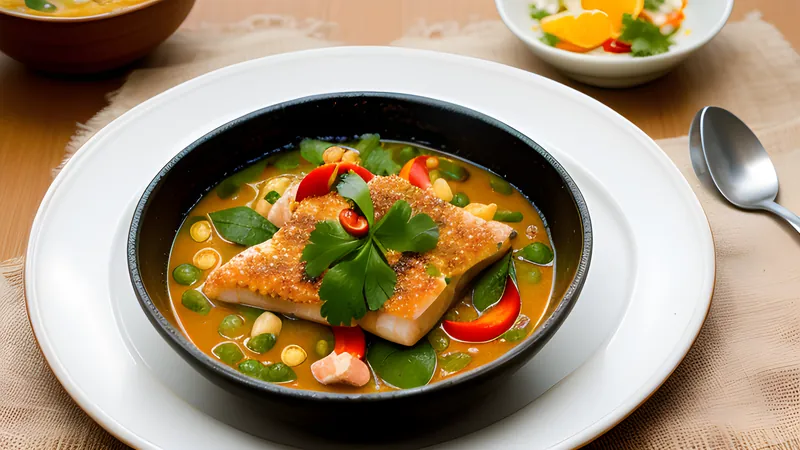
Most people’s mental image of Thai curry runs through coconut milk — green, red, massaman, all built on that rich, cooling base. Gaeng som breaks the pattern entirely. There’s no coconut milk anywhere in it. What holds the dish together instead is a thin, fiercely sour, orange-red broth, built on tamarind and a fresh turmeric-and-chilli paste, with nothing to soften the sourness or the chilli’s heat. It’s the everyday curry of southern Thailand, eaten constantly and without ceremony, and it tastes like almost nothing else in the wider Thai repertoire that most people outside the region have encountered.
The name translates plainly as “sour curry,” and in the south — where it’s sometimes called gaeng leuang, “yellow curry,” a name that causes its own confusion with the coconut-based yellow curries found elsewhere in the country — it’s built around whatever fish and vegetables are in season along the coast. Snapper, seabass, mackerel, prawns, even fish maw or roe show up depending on the catch and the cook. Vegetables follow the same logic: green papaya, pineapple, morning glory, bamboo shoots and daikon all appear in different households’ versions, chosen for what’s fresh rather than fixed by any single canonical recipe.
Southern Thai food runs hotter and sourer than the rest of the country
Thai cuisine varies enormously by region, and gaeng som is one of the clearest signals of how far south Thai cooking sits from the more internationally familiar central-Thai style. The south, closer to Malaysia and with a stronger historical Muslim and Malay influence in some areas, leans harder on fresh turmeric, on fiery bird’s eye chilli, and on sour agents like tamarind used with a heavier hand than in Bangkok cooking. Gaeng som exemplifies all of it at once — turmeric-yellow colour from the fresh root rather than coconut cream, a sourness calibrated to make your eyes water slightly, and a chilli level that assumes the diner wants real heat rather than a gentle suggestion of it.
Fermented shrimp paste, kapi, is doing more work in this curry than in almost any other Thai dish, since there’s no coconut milk to round out or mellow its funk. It needs to be cooked properly into the paste at the start — simmered in the broth for a full five minutes before anything else goes in — so its raw, aggressively fishy edge softens into something deep and savoury rather than sharp and overpowering. Skimping on the kapi, or skipping the simmering step, leaves the curry tasting thin and one-dimensionally sour, missing the umami backbone that makes the sourness interesting instead of just harsh.
Balancing the sour, salty and sweet
Because there’s no fat to buffer the acidity, getting the balance of tamarind, fish sauce and palm sugar right matters more here than in almost any coconut-based curry. Taste as you go, and taste again after each addition — the broth should announce itself as sour first, immediately and unmistakably, with the salt from fish sauce arriving a beat later and the palm sugar sitting quietly underneath, present enough to round the acid without making the dish taste sweet. If the first taste is “salty” rather than “sour,” the dish isn’t gaeng som yet; add more tamarind water until sourness leads.
Fresh tamarind pulp, soaked and strained rather than poured straight from a jarred concentrate, gives a rounder, fruitier sourness with less of the flat, one-note acidity that some bottled tamarind concentrates carry. If you’re using concentrate, start with less than the recipe calls for and build up, since concentrates vary hugely in strength between brands.
Choosing the fish and vegetables
Firm white fish holds together best in a curry this acidic and this actively simmering — snapper and seabass are the standard choices, but any firm-fleshed fish that won’t disintegrate on contact with a rolling boil will work. Add the fish last, and resist stirring the pot vigorously once it’s in; the tamarind-heavy broth is already working to break down the fish’s structure, and any extra agitation will shred it into flakes before it’s even fully cooked through.
Green beans, pineapple and daikon in this recipe reflect one common seasonal combination, chosen partly for how well they hold their shape and partly for how their individual sweetness — pineapple most obviously, but also the daikon once it’s cooked through — plays against the aggressive sourness of the broth. Green papaya, cut into batons the way it’s cut for som tam, is a classic swap for the daikon in many households, contributing a similar crunch with a slightly grassier flavour. Bamboo shoots, if you can find them fresh or well-drained from a tin, are another traditional addition, added at the same stage as the daikon.
Serving and what to expect
Gaeng som is eaten with plain steamed jasmine rice, and it’s meant to be an assertive, palate-waking dish rather than a comforting one — closer in spirit to a proper tom yum than to a mellow curry. It’s often part of a larger southern Thai meal alongside a dry, punchy stir-fry and a plate of raw or blanched vegetables meant specifically to cool the mouth down between spoonfuls of curry. Don’t be tempted to cut the sourness or the chilli level significantly to make the dish more approachable — doing so changes it into something else entirely, since the whole identity of gaeng som rests on that unmediated sour-hot intensity that coconut milk would otherwise smooth away.
Make-ahead and storage
The curry keeps well for up to three days refrigerated, and like most sour, tamarind-forward dishes, the flavour deepens rather than fades after a day in the fridge. Reheat gently on the stovetop rather than boiling hard, which can overcook the fish further and turn it mushy. It’s not a great candidate for freezing — the fish’s texture suffers noticeably after freezing and thawing, turning watery and loose, so it’s best made in a quantity you’ll finish within a few days.
The paste itself, made without the fish and vegetables, freezes well on its own for up to two months in a small sealed container or ice-cube portions, which makes it worth doubling the paste quantity on a day you’re already out the mortar and pestle, so a future curry only needs fresh fish and vegetables added to a quick simmer.
For more of the sour-hot register that defines so much southern and central Thai cooking, tom yum goong shares the same sour-forward instinct in soup form, while som tam uses the same green papaya that sometimes stands in for the daikon here. If you want something richer to follow a meal built around gaeng som, massaman curry sits at the coconut-heavy, mellow end of the spectrum this dish deliberately avoids.
Why the paste needs a mortar, not just a blender
A blender will get the paste smooth, and for a home cook in a hurry that’s a perfectly reasonable shortcut, but a mortar and pestle produces a genuinely different result. Pounding the shallots, chillies and turmeric bruises the cell walls and releases their oils in a way that shearing in a blender doesn’t replicate quite as well, and the fresh turmeric in particular benefits from being pounded rather than blitzed — blending tends to leave small fibrous threads from the turmeric root that a mortar grinds down more thoroughly. If you do use a blender, add the dried shrimp and kapi last, pulsing briefly rather than running it continuously, since both can turn gluey and stick to the blades if over-processed.
Fresh turmeric root, sold at most Asian and South Asian grocers, stains everything it touches a deep persistent yellow — wear gloves if you’re precious about your hands, and expect the chopping board to need a proper scrub afterwards. Ground turmeric is an acceptable substitute when fresh isn’t available, but use noticeably less than the fresh weight suggests, since the dried spice is far more concentrated, and add it directly to the paste rather than trying to rehydrate it separately.
Regional variations worth knowing
Along Thailand’s southern coast, gaeng som made with fish maw or fish roe is considered something of a delicacy version, prized for the different textures those cuts bring compared to plain fillets. Inland versions swap the fish for prawns or a firm white fish depending on what’s available, and some households add a handful of raw peanuts or cashews toward the end of cooking for a subtle textural contrast against the soft-cooked vegetables. Muslim communities in the deep south sometimes make a version leaning even further into the Malay-influenced end of the spice profile, adding more fresh turmeric and slightly less shrimp paste, which shifts the dish’s colour toward a brighter, more saturated yellow-orange.
It’s also worth knowing that “gaeng leuang” and “gaeng som” aren’t strictly interchangeable everywhere — in some parts of the south they refer to the same dish under two regional names, while in others gaeng leuang specifically implies a version made without tamarind, relying instead on the natural tartness of unripe fruit or a different souring agent. If a recipe or a menu specifies one name over the other, it’s worth asking what the difference is locally rather than assuming the two are always identical, since regional practice varies more than most single-recipe accounts admit.
What to do if it tastes flat
A gaeng som that tastes flat or oddly thin despite following the ratios above is almost always missing either enough kapi or enough cooking time on the paste before the liquid ingredients go in. Raw or undercooked kapi carries a sharp, almost ammonia-like edge rather than the rounded savoury depth it develops once properly fried into the paste and simmered — if the finished curry tastes odd rather than simply sour, try simmering the paste in the broth for a couple of extra minutes before adding the souring agents, which usually resolves it. A curry that tastes sour but empty, lacking any real backbone, generally just needs more fish sauce rather than more tamarind — sourness and saltiness are easy to conflate when a dish is new to you, and the fix is rarely more of whichever one you added last.
Related Content