Fuqi Feipian: Sliced Beef in Sichuan Chilli Oil
A cold-plate classic built from offal, ox tongue and a glossy red oil
Contents
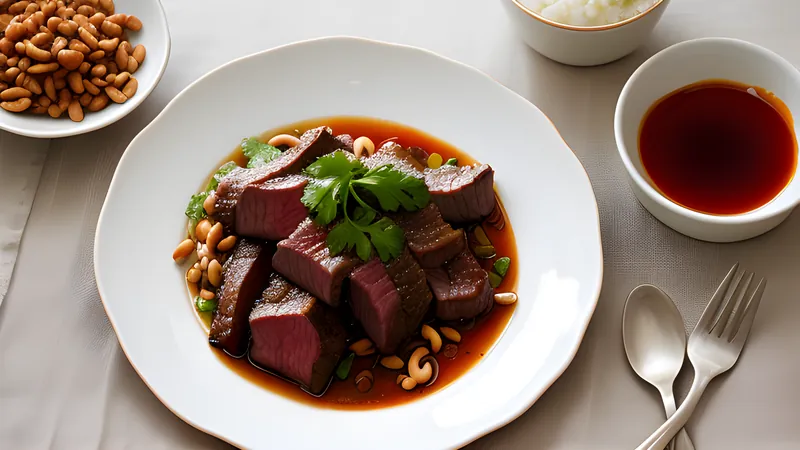
↓ Jump to recipeThe name translates, unglamorously and accurately, to “husband and wife lung slices,” and the dish contains no lung at all in most modern versions. That contradiction is the first thing anyone learns about fuqi feipian, and it’s a decent primer for the dish as a whole: a plate that looks austere, sounds faintly off-putting to anyone unfamiliar with it, and turns out to be one of the most technically precise cold dishes in the Sichuan repertoire.
Fuqi Feipian: Sliced Beef in Sichuan Chilli Oil
Ingredients
- 400g beef shin or flank
- 200g cooked ox tongue or honeycomb tripe, thinly sliced
- 2 spring onions, plus 2 for the poaching liquid
- 3 slices fresh ginger, plus 3 for the poaching liquid
- 2 star anise
- 1 cinnamon stick
- 1 tbsp Shaoxing wine
- 1 tsp whole Sichuan peppercorns, for poaching
- 5 tbsp chilli oil, with sediment
- 1 tbsp light soy sauce
- 1 tsp dark soy sauce
- 1 tsp Chinkiang black vinegar
- 1 tsp sugar
- 1 tsp ground roasted Sichuan peppercorns
- 2 garlic cloves, finely grated
- 3 tbsp roasted peanuts, crushed
- 1 tbsp toasted white sesame seeds
- 1 small handful coriander leaves
Method
- Place the beef shin in a pot with the poaching spring onions, ginger, star anise, cinnamon stick, Shaoxing wine and whole Sichuan peppercorns. Cover generously with cold water.
- Bring to the boil, skim off any grey scum, then reduce to a bare simmer and cook, covered, for about 2 hours, until the beef is tender but still sliceable, not falling apart.
- Lift the beef out and let it cool completely, ideally in the fridge, still whole. Reserve the poaching liquid.
- Once fully cold and firm, slice the beef as thinly as you can manage against the grain, using a very sharp knife.
- Arrange the sliced beef and tongue or tripe on a plate, slightly overlapping.
- Mix the chilli oil, both soy sauces, black vinegar, sugar, ground Sichuan pepper and garlic together with 2 tbsp of the reserved poaching liquid to loosen it into a pourable sauce.
- Pour the sauce evenly over the sliced meat.
- Scatter with crushed peanuts, sesame seeds, the remaining fresh spring onion (sliced) and coriander leaves just before serving.
A street-cart name that outlived the ingredient
The story goes that a Chengdu couple in the 1930s sold cold, sliced beef offal — heart, tongue, tripe, and yes, sometimes lung — dressed in chilli oil from a street cart, and the dish became known by their partnership rather than any restaurant name: fuqi, husband and wife. Offal was cheap and plentiful at the time, the trimmings other vendors didn’t want, and the couple’s skill was entirely in the slicing and the sauce rather than the raw ingredient itself. Over the following decades, as the dish moved from street cart to restaurant menu, lung dropped out almost everywhere — modern hygiene standards and changing tastes made it a harder sell — but the name stuck, the way plenty of dish names outlive their literal ingredients once the reputation is established.
Today’s version is built more commonly from beef shin, ox tongue and sometimes tripe or honeycomb, still occasionally with a little heart for texture contrast, but always thinly sliced, always cold, always dressed in the same glossy red Sichuan chilli oil that defines so much of Chengdu’s cold-dish repertoire. It’s sold as a starter almost everywhere it appears, meant to wake the palate up before a heavier meal rather than to fill you.
Poaching for texture, not for flavour alone
The beef shin poaches for a genuinely long time — around two hours at a bare simmer — but the goal isn’t the fall-apart tenderness you’d want from a braise. You’re after a texture that’s tender enough to eat comfortably cold but still firm enough to hold together under a very thin slice. Beef shin works well here because its connective tissue breaks down slowly and predictably over that stretch of time, giving you a piece of meat that’s gone from tough to yielding without collapsing into shreds the way a quicker-cooking cut might if pushed too far.
Skimming the scum in the first ten minutes of simmering matters more here than in a dish where the poaching liquid gets strained and discarded — some of that liquid comes back later as the thinning agent for the sauce, and a cloudy, scummy poaching liquid will carry that murkiness straight into the finished dressing. Aromatics in the poaching liquid — star anise, cinnamon, ginger, spring onion, Shaoxing wine — are there to perfume the meat subtly rather than dominate it; this isn’t a red-braised dish where the spice mix is meant to be the headline flavour, so don’t overload the pot.
Cooling the beef fully, and ideally chilling it, before slicing is not a step to rush. Warm beef shin is soft and slightly springy in a way that makes thin, clean slicing almost impossible — the knife drags and tears rather than cutting cleanly. Cold, firm meat slices thin and even, which matters enormously for how the dish eats: fuqi feipian lives or dies on the thinness of its slices, since a too-thick piece of shin is chewy in a way the dish was never meant to be.
Slicing against the grain, properly this time
Beef shin has visible, obvious grain running through it, and slicing against that grain — perpendicular to the direction the muscle fibres run — is the single technique point that separates a good plate from a tough, stringy one. With the grain, even a beautifully poached piece of shin will chew like elastic; against the grain, each slice cuts through the fibres rather than along them, giving you a texture that shears cleanly between your teeth. Take the time to identify the grain direction before you start slicing rather than assuming — shin can run in slightly different directions depending on which part of the muscle you’re working with.
A sharp knife matters more here than almost anywhere else in home cooking. A dull blade compresses and tears cold meat rather than slicing it, giving you ragged, uneven pieces that don’t lie flat on the plate and don’t take the sauce evenly. If you can get your hands on a proper slicing knife, this is the dish to use it for; if not, at minimum sharpen whatever knife you’re using immediately before you start.
The sauce, layered like the noodle dishes it’s related to
Fuqi feipian’s dressing shares its backbone with the chilli oil noodle dishes of the same region — chilli oil with its sediment, both soy sauces, black vinegar, a touch of sugar, ground toasted Sichuan pepper and grated garlic — but here it’s loosened with a spoonful of the reserved poaching liquid rather than hot noodle water, which ties the sauce back to the specific meat it’s dressing rather than treating it as a generic chilli oil base. That poaching liquid carries a little gelatin from the shin, which gives the finished sauce a very slight body and cling that plain water or stock wouldn’t provide.
Pour the sauce over the arranged meat just before serving rather than tossing everything together in a bowl — fuqi feipian is presented as a composed plate, slices fanned or overlapping, sauce poured over the top so the red oil pools attractively between the pieces rather than coating everything into a uniform mess. This is one of the few Sichuan chilli oil dishes where presentation genuinely matters to the eating experience, since part of the appeal is seeing the pale meat through the glossy red sauce before you dig in.
Tongue and tripe, and why they’re worth the extra step
Ox tongue brings a completely different texture from the shin: denser, slightly fattier, with almost no grain to fight against, so it slices into rounds rather than long strips. Most butchers or Asian grocers sell it ready-cooked, which saves you a separate two-to-three-hour poach, though if you’re cooking it from raw, expect closer to three hours of simmering and a skin to peel off once it’s cooled. Honeycomb tripe, thoroughly cleaned and pre-cooked (again, usually bought ready-prepared from a Chinese grocer to skip the lengthy cleaning process), adds a genuinely different chew — springy, slightly gelatinous — that plays off the denser beef shin nicely on the same plate. Neither is essential if you’d rather keep this to shin alone, but the mix of textures is a large part of what makes a proper Chengdu-style plate more interesting than a single-protein version.
Where fuqi feipian sits on a Sichuan menu
Cold dishes as a category, liang cai, occupy a specific slot in Sichuan dining that doesn’t map neatly onto a Western starter course. They arrive early, often before you’ve even settled on the rest of the order, and they’re meant to be picked at slowly over the course of the meal rather than cleared before the mains land — a plate of fuqi feipian might still have a few slices left on it when the last hot dish of the meal arrives. That grazing pace matters for how you should think about portioning it at home: this isn’t a dish to plate up individually and finish in one sitting, but a shared plate meant to punctuate a longer meal with periodic hits of cold, numbing heat between richer, hotter dishes.
The dish also sits at an interesting point in Sichuan cooking’s relationship with offal more broadly. Where fuqi feipian once relied entirely on the cheap cuts other vendors discarded, its rise to menu prominence across China and internationally has pushed many restaurants toward beef shin as the primary or even sole protein, offal reduced to a garnish or dropped altogether. That’s a reasonable accommodation for squeamish diners, but it does lose something: the textural contrast between dense shin, gelatinous tongue and springy tripe was always part of what made the original street-cart version interesting to eat, each slice landing slightly differently in the mouth even under the same sauce.
A note on heat calibration
Because the sauce here shares its backbone with dishes like Chongqing xiaomian and mapo tofu, it’s tempting to treat the ratios as fixed across all three. Resist that. A cold dish reads chilli heat and numbing sensation differently from a hot one — cold fat coats the tongue and mutes both sensations slightly compared with a piping-hot bowl of noodles, so a sauce that tastes perfectly balanced on paper can taste flat once poured over chilled beef. It’s worth tasting the sauce on a small piece of the cold meat before committing the whole batch, and nudging the chilli oil or ground Sichuan pepper up slightly if it reads as muted rather than trusting the same measurements you’d use for a hot dish.
Serving and timing
This is a starter, not a main, and a small, punchy one — the chilli oil and Sichuan pepper are aggressive enough that a large portion tips from exciting into overwhelming. Serve it at the start of a Sichuan-leaning meal alongside something to cut the heat, like plain steamed rice or a simple cucumber salad, and pace it against richer dishes to follow. It doesn’t keep well once dressed — the sauce continues to season and slightly cure the surface of the meat the longer it sits, and after a few hours in the fridge the texture turns firmer and less pleasant. Slice and poach the beef a day ahead if you like, keeping it whole and undressed in the fridge, but mix and pour the sauce only right before you serve.
For more Sichuan chilli oil dishes, see dan dan noodles with toasted rice and sesame and mapo tofu with toasted Sichuan peppercorn oil. For the everyday noodle version of the same chilli oil base, try Chongqing xiaomian, which uses the identical sauce logic in a hot bowl rather than over cold sliced meat — a good side-by-side lesson in how one base sauce reads completely differently depending on temperature and vehicle.
Related Content