Frikadeller: Danish Pan-Fried Pork Meatballs
Soft, oval, fried in butter, shaped with a spoon
Contents
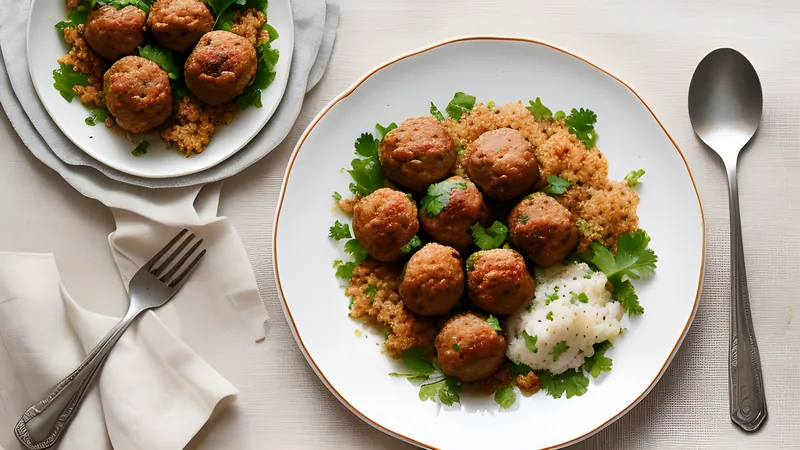
↓ Jump to recipeThe Danish frikadelle is a meatball that has decided against being spherical, and the shape tells you how it is made. It is oval, slightly flattened, with one face that carries the deep brown of a long contact with hot butter and a soft, faintly bouncy interior. It is shaped with a spoon, dipped in the frying fat, scooped and pressed against the side of the bowl in a motion every Danish adult has watched a parent perform several hundred times.
There is no single Danish recipe for frikadeller and there is a great deal of national feeling about them anyway. This is the dish Danes name when asked what their mother cooked. It appears in canteens, in supermarkets ready-made and much maligned, at children’s birthdays, in packed lunches on rye, and at Christmas alongside the roast. It is the plainest thing imaginable and Denmark is quietly serious about it.
Frikadeller: Danish Pan-Fried Pork Meatballs
Ingredients
- 500 g minced pork, about 15-20% fat
- 250 g minced veal (or a further 250 g minced pork)
- 1 medium onion (about 150 g), grated on the coarse side of a box grater
- 1 large egg
- 50 g plain flour
- 1 tbsp fine breadcrumbs
- 200 ml whole milk, cold
- 1.5 tsp fine sea salt
- 0.75 tsp ground white pepper
- 0.25 tsp ground allspice
- 60 g unsalted butter, for frying
- 1 tbsp sunflower oil, for frying
Method
- Put the pork, veal, grated onion, egg, flour, breadcrumbs, salt, white pepper and allspice in a large bowl.
- Work the mixture hard with a wooden spoon or your hand for 3-4 minutes until it changes from crumbly to a smooth, sticky, uniform paste that clings to the spoon.
- Beat in the cold milk 50 ml at a time, working each addition fully in before the next. The mixture will look alarmingly loose. Keep beating and it will come back together into a soft, glossy farce.
- Cover and chill for at least 1 hour, and up to 12. This is not optional — the mixture firms up and the flour hydrates.
- Heat the butter and oil in a wide frying pan over medium heat until the butter foams and the foam subsides.
- Dip a dessert spoon in the hot fat, scoop a heaped spoonful of the mixture, and shape it against the side of the bowl into an oval about 7 cm long. Slide it into the pan. Repeat, re-dipping the spoon each time, until the pan is comfortably full — leave 2 cm between each.
- Fry for 5-6 minutes on the first side without moving them, until deep golden brown. Turn once and fry for 5-6 minutes on the second side.
- Turn the heat down to medium-low and cook for a further 4-5 minutes, turning once more, until the centre reads 70°C. Total time is 14-16 minutes per batch.
- Rest on a warm plate for 3 minutes while you fry the next batch, wiping the pan and adding fresh butter if the milk solids have gone dark.
- Serve hot with boiled potatoes and pickled red cabbage, or cold in a rye sandwich the next day.
A German word, a Danish dish
Frikadelle is borrowed, probably from the Italian frittatella by way of German, and the German Frikadellen are a real and separate thing — flatter, beefier, closer to a burger, often eaten cold in a roll. The word travelled north with German cooks and got adopted across Scandinavia, and each country bent it into a different shape.
The Danish version settled on pork, which is not a surprise. Denmark has produced pigs at industrial scale since the 1880s, when the British market for Danish bacon reorganised the entire Danish agricultural economy around the animal. The country still runs roughly five pigs per person. When your national livestock is pork, your national meatball is pork.
The Danish frikadelle also settled on milk, in quantity, and this is the choice that separates it from its neighbours. Swedish köttbullar are smaller, rounder, made with a soaked-bread panade, and served swimming in cream sauce. Norwegian kjøttkaker are bigger, beefier and arrive under brown gravy. Finnish lihapullat sit somewhere between. The Dane fries the thing in butter and puts it on the plate with no sauce at all, which takes a certain confidence.
The paste is the technique
Here is the thing that makes a frikadelle different from a hamburger, and it is the opposite of everything you have been told about handling mince.
You work it. Hard. For minutes. A burger is treated gently to keep the muscle fibres loose and the texture crumbly; a frikadelle is beaten until it becomes a single cohesive mass.
The mechanism is salt and myosin. Add salt to raw minced meat and work it, and the salt dissolves myosin — the principal muscle protein — out of the fibres. Dissolved myosin is sticky and forms a continuous protein network through the mixture, exactly as it does in a sausage. That network is what lets the frikadelle hold 200 ml of milk without falling apart, and what gives the finished meatball its characteristic soft springiness. Danes call the mixture fars, and getting the fars right is the whole job.
You can watch it happen. The mixture starts crumbly and separate. After two or three minutes of hard work it visibly changes state: it goes glossy, it clings to the spoon in one lump, and it makes a slapping noise against the bowl. That is the myosin network forming, and that is when the milk can go in.
The milk, and holding your nerve
Two hundred millilitres of milk into 750 g of meat sounds like a mistake, and when you start adding it the mixture will look like it is curdling and separating. This is the point at which people panic and stop.
Keep beating. Add it in four goes, and work each one in completely before the next. The protein network can absorb far more liquid than seems reasonable, and it does so gradually. By the last addition the fars should be soft, wet, glossy and holding together in one mass.
The milk is doing two jobs. It is water, and water in the mixture becomes steam in the pan, which is what keeps a frikadelle moist where a lean beef patty goes dry. And milk protein and lactose contribute to the browning — this is part of why Danish frikadeller brown so hard and taste so much of the crust.
The flour is the other stabiliser. Fifty grams seems a lot; it hydrates during the chill and holds water that would otherwise escape.
Chill it. An hour minimum. Cold fars is firmer, shapes cleanly off the spoon, and holds its shape in the pan. Fars straight from the bowl slumps into a puddle. The flour also needs the time to hydrate fully.
The spoon, and why it matters
Wet the spoon in the hot frying fat before each frikadelle. Fat stops the fars sticking to the metal, and a spoon that releases cleanly gives you the smooth, tight surface that browns evenly.
Scoop a heaped dessert spoon, press it against the inside of the bowl to shape a rough oval, and slide it into the pan. Do not roll them between your palms — hand heat softens the fat in the mixture and you will end up with a greasy, dense meatball. Danish grandmothers do not touch the fars with their hands and neither should you.
Aim for about 7 cm long, slightly flattened, roughly 60 g each. Bigger than a köttbulle, smaller than a burger.
Frying, honestly
Medium heat and patience. The most common failure is a pan that is too hot, which gives you a black crust over a raw middle in six minutes.
Butter with a spoon of oil in it is the right fat: butter for flavour and browning, oil to raise the smoke point enough that the milk solids do not burn immediately. Even so, the butter will darken over a couple of batches. Wipe the pan out and start with fresh butter when the residue goes past nut-brown, or the third batch will taste bitter.
Leave them alone on the first side. Five or six minutes, no poking, no shuffling. The crust needs uninterrupted contact to form, and moving them early tears the surface and releases juice into the pan, which then steams rather than fries.
Turn once. Then drop the heat and let the centre come up gently to 70°C. Total fourteen to sixteen minutes, which is longer than most recipes say and is why most home frikadeller are dry — people cook them hot and fast, overshoot the interior, and the milk they worked so hard to incorporate ends up in the pan.
Do not crowd. Two centimetres between them. A crowded pan drops in temperature and the frikadeller boil in their own liquid.
Eating them, and the leftovers
Hot, the classic accompaniment is boiled potatoes, pickled red cabbage and a spoonful of remoulade or brown gravy. At Christmas they share a plate with brunede kartofler and a great deal else.
Cold, they are arguably better, and this is the genuinely Danish part. A cold frikadelle sliced onto buttered rye bread with pickled cucumber and a scrape of remoulade is a standard lunch across the country. Danes make a double batch on purpose. They keep four days in the fridge and freeze well cooked — reheat from frozen at 170°C for fifteen minutes.
The case against the pan
There is a version of this argument I should make honestly, because plenty of Danish households have stopped frying frikadeller altogether.
The oven method — shape them, put them on a buttered tray, bake at 200°C for 25 minutes — is enormously less work, produces no spitting fat, and lets you cook forty at once instead of eight. Danish canteens do it this way. For a children’s party it is the obviously correct decision.
What you lose is the crust. Frying gives a hard, uneven, deeply browned face where the fars has been in direct contact with metal at 160°C or so, and an oven at 200°C surrounded by circulating air simply cannot reproduce it: the surface dries and browns lightly all over instead of searing in one place. The frikadelle comes out pale, uniform and a little bland, and the contrast between crust and soft interior — which is most of the pleasure — is gone.
Fry them if you are cooking for four. Bake them if you are cooking for twenty and be at peace with it.
Variations and substitutions
Veal. The classic ratio is half pork, half veal, and the veal gives a paler, finer, more delicate texture. All-pork is perfectly normal and slightly richer. Beef makes them firmer and coarser and takes you towards Germany.
Onion. Grate it. Chopped onion stays crunchy inside a fifteen-minute frikadelle and interrupts the texture; grated onion dissolves into the fars and seasons all of it. Grate on the coarse side and include the juice.
Allspice is my quarter-teaspoon and it is not universal. Danes are split between plain salt-and-white-pepper and something warmer. Nutmeg is the other common choice. White pepper is standard and worth respecting — black pepper is a different, sharper flavour and it looks wrong.
Fat content. Fifteen to twenty per cent. Lean mince gives dry frikadeller, and no amount of milk will rescue them. If your butcher only has 5% pork mince, ask for 100 g of pork back fat minced in with it.
Fish frikadeller. Fiskefrikadeller are a real and much-loved parallel dish — cod or plaice minced with the same milk-and-flour fars, fried the same way, eaten cold on rye with remoulade. The technique transfers directly; use 750 g of white fish, cut the milk to 120 ml, and add the zest of a lemon and a tablespoon of chopped dill.
Herbs. Chopped parsley or chives, a tablespoon, folded in at the end after the milk. Any earlier and the beating shreds them into green mush.
Seasoning check. The fars is raw pork, so taste by frying a teaspoonful flat in the pan for a minute a side. Do this before you chill. Under-salted frikadeller are the most common seasoning fault, partly because 1.5 tsp on 750 g of meat looks like a lot in the bowl and is roughly 1.2% — about right for a sausage, which is essentially what this is.
Related Content