French Onion Soup with Cider and Gruyère
Sweet, deep and bubbling
Contents
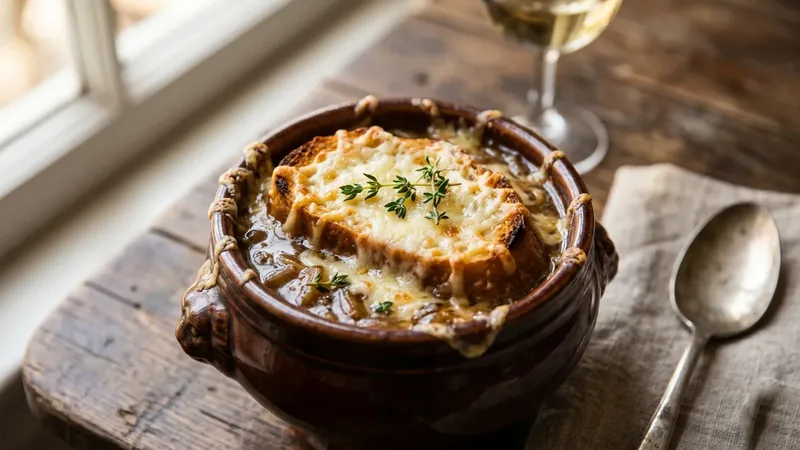
↓ Jump to recipeFew soups reward patience like this one: onions coaxed slowly into a dark, sweet tangle, then loosened with stock until they melt into a glossy broth. My twist is a splash of dry cider in the deglaze, which lifts the whole pot with a gentle orchard sharpness where most cooks reach for white wine. Topped with toast and a blistered Gruyère lid, it is the most comforting bowl you can put under a grill.
I will be honest about the one thing this recipe demands: your time and your attention for the better part of an hour. There is no shortcut worth taking. I have tried the “quick” versions that promise caramelised onions in fifteen minutes, and they taste exactly like what they are, which is onions that have been rushed. Put the radio on, pour yourself something, and treat the stirring as the point rather than a chore. The reward is a soup that tastes like it came from a Parisian bistro rather than a packet.
French Onion Soup with Cider and Gruyère
Ingredients
- 1 kg brown onions, halved and thinly sliced
- 50 g unsalted butter
- 1 tbsp olive oil
- 1 tsp caster sugar
- 2 garlic cloves, crushed
- 2 tbsp plain flour
- 150 ml dry cider
- 1.2 litres good beef stock
- 2 sprigs fresh thyme
- 1 bay leaf
- Sea salt and freshly ground black pepper
- 4 thick slices of baguette or sourdough
- 150 g Gruyère, coarsely grated
Method
- Melt the butter with the oil in a large heavy pan over a medium-low heat. Add the onions and a pinch of salt.
- Cook gently for 35-45 minutes, stirring often, until deeply golden and jammy. Add the sugar halfway through to encourage colour.
- Stir in the garlic and flour and cook for 2 minutes.
- Pour in the cider, scraping up every sticky bit from the base of the pan, and let it bubble for a minute.
- Add the stock, thyme and bay leaf. Simmer gently for 20 minutes, then season to taste.
- Heat the grill. Toast the bread slices until dry and golden on both sides.
- Ladle the soup into four ovenproof bowls and float a slice of toast on each.
- Pile the Gruyère over the toast and grill until molten, bubbling and patched with brown.
- Serve at once, warning everyone the bowls are hot.
The Story
French onion soup belongs to a long tradition of thrifty cooking that turns the cheapest larder staple into something that tastes lavish. Onions keep for months, ask little of the purse, and yield extraordinary depth when cooked long enough for their natural sugars to caramelise. Versions of onion soup go back to at least Roman times and appear in French cookbooks of the eighteenth century, but the dish as we know it, served gratinéed under a crust of toast and melted cheese, became closely associated with the bistros and late-night cafés of Paris.
Its most famous home was Les Halles, the vast central market of Paris that operated on the site until it was demolished in 1971. The soup earned a reputation as a restorative for the porters and butchers working the small hours, and for well-dressed revellers stumbling in from the clubs at dawn, both groups united over the same steaming bowl. That mix of the practical and the indulgent is the soup in a sentence: a labourer’s supper dressed up in a cheese hat.
The technique is the whole point. Rushed onions taste harsh and thin; properly cooked ones turn the colour of mahogany and carry a sweetness that no added sugar can fake. Low heat to start, then a wide pan and a willingness to stand and stir, are what separate a memorable bowl from a disappointing one. The flour is a quiet workhorse, giving the broth just enough body to cling to the spoon without turning it into gravy.
What goes wrong, and why
The two failures I see most often both come from impatience. The first is pale, sweet-but-thin onions, which happen when the heat is too low and the pan too crowded: the onions steam in their own liquid instead of browning. Give them a wide, heavy pan and, once they have softened and released their water, nudge the heat up a little so that water can evaporate and the sugars can finally caramelise against the metal. Stir often to lift the fond, the sticky brown film on the base, back into the onions before it burns.
The second is a bitter, scorched note, which comes from the opposite mistake: heat too high, walking away, and letting that fond blacken rather than brown. Bitter is not the same as deep. If you see genuinely black flecks catching, pull the pan off, add a splash of water to loosen everything, and carry on more gently. The line between “mahogany and sweet” and “burnt” is real, and standing over the pan is how you stay on the right side of it.
Substitutions, storage and make-ahead
Gruyère is the classic crowning cheese for good reason. This firm Alpine cheese, produced in the Swiss canton of Fribourg and protected by an appellation since 2001, melts smoothly without splitting and brings a nutty, faintly savoury note that stands up to the sweet broth beneath. Comté, its French cousin from the Jura, works just as well and leans a touch more caramel. Whatever you choose, grate it generously and let the grill do its theatrical work.
The cider is this recipe’s small departure. Traditional versions lean on dry white wine or a measure of brandy to deglaze the pan. Dry cider does the same job with a softer, fruitier edge that flatters the caramelised onions, and it nods to Normandy and Brittany, where cider has long been the everyday drink rather than wine. Use a proper dry cider, not a sweet commercial one, or the soup turns cloying. For a vegetarian version, swap the beef stock for a well-made mushroom or dark vegetable stock and add a teaspoon of soy or miso for savoury depth.
The soup base actually improves overnight, so it is an excellent make-ahead: cook it through step five, cool and refrigerate for up to three days, then reheat and grill the toast and cheese fresh to order. It also freezes well for up to three months without the topping. Never freeze it with the bread and cheese already on, or you get a sodden mess on thawing.
A few final details. Use ovenproof bowls so the whole thing can go under the grill in one piece, and toast the bread thoroughly so it holds its shape rather than dissolving into the broth. The thyme and bay should be added early enough to perfume the soup but lifted out before serving. And do not be tempted to hurry the onions; the long, slow cook is not a step you can shorten without losing the very thing that makes the dish worth making.
Choosing your onions and stock
Brown or yellow onions are the standard choice because they carry the most sugar and hold their structure through the long cook. Red onions turn muddy and lose their colour; sweet varieties such as Vidalia caramelise faster but can tip cloying, so if you use them, cut the added sugar. Slice them evenly and not too thin, or they disintegrate before they colour; a scant few millimetres is right. Halving the onions before slicing gives you neat half-moons that soften into ribbons rather than a shapeless mush.
The stock matters as much as the onions. A weak, salty cube will undo all your patient caramelising, so use a genuinely good beef stock, ideally homemade or a quality fresh one, and taste before you add extra salt because the cheese on top brings its own. A spoonful of brandy or dry sherry stirred in with the cider adds a warming backbone if you have it, and a dash of Worcestershire sauce or soy deepens the savoury note without anyone being able to name it. Season at the very end, once the flavours have concentrated, rather than early when you might overdo it.
Serving
This is a soup that asks to be eaten straight from the grill, when the cheese is still molten and stretching and the toast has soaked up just enough broth to yield to a spoon while keeping some bite. A crisp green salad with a sharp mustard dressing is the ideal foil for all that richness, and the classic pairing is a glass of the same dry white or cider you cooked with. It makes a generous starter for four or a full supper for two, and there is no shame in the second bowl.
If you like a bowl that leans on slow-built sweetness, my spiced carrot and ginger soup works the same magic on humble roots, while the tuscan white bean and cavolo nero soup is another thrifty pot that eats like a feast.
Related Content